Banana Pudding Cheesecake: Creamy Fusion
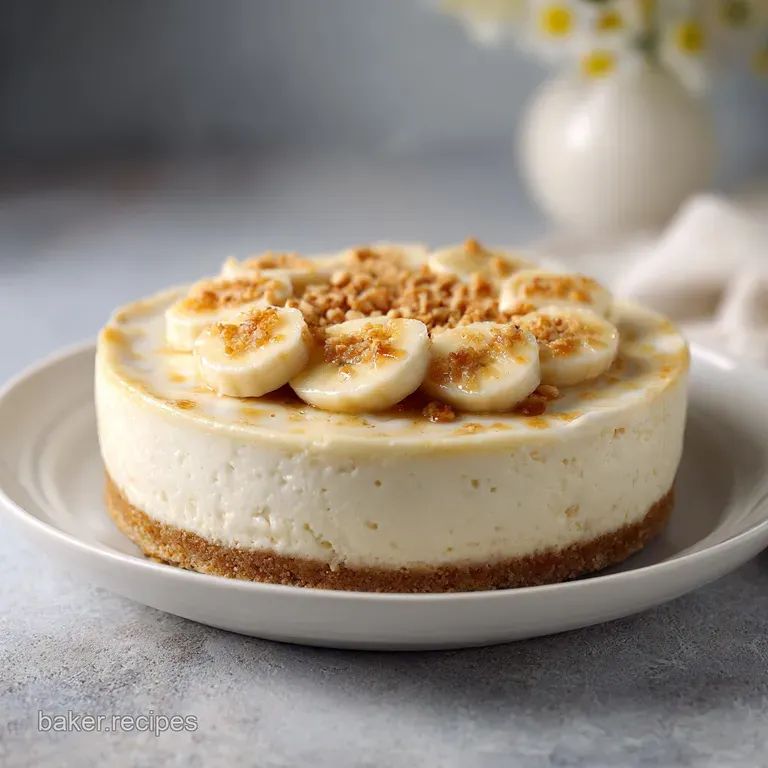
- Time: Active 30 minutes, Passive 75 minutes, Total 105 minutes
- Flavor/Texture Hook: Velvety banana cream with a salty sweet wafer crunch
- Perfect for: Family gatherings, holiday dinners, or the ultimate weekend project
- Why This Creamy Recipe Works
- Choosing the Best Cooking Method
- Component Analysis of the Batter
- Required Ingredients and Smart Swaps
- Step-by-Step Baking Guide
- Solving Common Baking Hurdles
- Adjusting the Yield and Size
- Flavor Variations and Creative Twists
- Debunking Common Baking Legends
- Storage and Zero Waste Tips
- Recipe FAQs
- 📝 Recipe Card
Why This Creamy Recipe Works
Getting the texture of a fruit based cheesecake right is a bit of a balancing act because bananas bring a lot of moisture to the party. If we just threw them into a standard batter, we might end up with something soggy or, heaven forbid, something that separates. That is where the science of the ingredients comes in.
We are using specific components to manage that moisture and ensure every slice is as stable as it is silky.
- Starch Stabilization: The instant pudding mix contains modified cornstarch which acts as a secondary binding agent, absorbing excess moisture from the mashed bananas and preventing the cheesecake from becoming "weepy" as it sets.
- Acidic Brightness: Fresh lemon juice does more than just stop the bananas from turning a muddy brown, it actually cuts through the heavy fat of the cream cheese, making the banana flavor pop instead of getting buried.
- Thermal Buffering: Using a water bath (bain marie) ensures that the edges of the cheesecake don't cook faster than the middle, which keeps the proteins in the eggs from tightening too quickly and causing those dreaded cracks.
- Sugar Interaction: The granulated sugar in the batter doesn't just sweeten, it actually interferes with the egg protein bonds, resulting in a more tender, creamy crumb rather than a rubbery texture.
Choosing the Best Cooking Method
When it comes to cheesecake, there is always a debate about whether the oven is the only way to go. While some people swear by the pressure cooker or stovetop steaming for a "no crack" finish, each method produces a very different sensory experience.
For this specific banana heavy batter, the oven provides a depth of flavor that a stovetop method simply cannot match.
| Method | Time | Texture | Best For |
|---|---|---|---|
| Traditional Oven | 75 minutes | Densely creamy with a toasted crust | Maximum flavor development |
| Pressure Cooker | 35 minutes | Lighter, almost mousse like | Quick prep without the heat |
| Stovetop Steam | 50 minutes | Very soft and humid | Smaller kitchens with no oven |
The oven is the clear winner here because it allows the Nilla Wafer crust to stay crisp and slightly caramelized. In a moist stovetop environment, that 300g of wafer crumbs can sometimes absorb too much steam and turn into a paste. We want that "shatter" when the fork hits the bottom.
The dry heat of the oven, moderated by the water bath, gives us the best of both worlds: a perfectly set filling and a base that still has some structural integrity.
Component Analysis of the Batter
Every single element in this recipe has a job to do. We aren't just tossing things in a bowl; we are building a structure. The chemistry between the fat in the 900g of cream cheese and the air we whip into it at the start is what creates that signature mouthfeel. If you want to learn more about how these flavors come together in other formats, you might find my Banana Pudding Trifle interesting as it uses similar components in a different architectural way.
| Ingredient | Science Role | Pro Secret |
|---|---|---|
| Full Fat Cream Cheese | Structural base and primary fat source | Always use block style, never the whipped tub version |
| Instant Pudding Mix | Starch binder and flavor booster | Whisk it into the sour cream first to avoid lumps |
| Overripe Bananas | Flavor and natural sugar provider | Freeze then thaw bananas to release maximum juice |
| Vanilla Bean Paste | Aromatic depth and visual "specks" | Rub the paste into the sugar to release the oils |
Chef Note: If your bananas aren't brown enough, you can bake them in their skins at 150°C for 15 minutes until they turn black. This concentrates the sugars and mimics the natural ripening process perfectly.
Required Ingredients and Smart Swaps
I always tell people that for a recipe this big, you shouldn't skimp on the quality of the basics. We are using 115g of unsalted butter because it allows us to control the salt level ourselves with that 0.25 tsp of kosher salt. If you use salted butter, the crust can end up tasting a bit too much like a savory snack.
Also, that 240g of sour cream is non negotiable for me. It adds a level of tang that cream alone just can't provide.
- 300g Nilla Wafers: The classic choice. Why this? They provide a specific vanilla malt flavor that is essential to the "pudding" profile.
- Substitute: Digestive biscuits or Graham crackers (add 0.5 tsp vanilla extract to the crumbs).
- 900g Full Fat Cream Cheese: The foundation. Why this? Lower fat versions have higher water content which leads to a grainy texture.
- Substitute: Neufchâtel cheese (note: will be slightly softer and less rich).
- 3 Overripe Bananas (300g): The star. Why this? They provide the moisture and aroma that under ripe fruit lacks.
- Substitute: 300g high-quality banana puree (avoid "artificial" flavored syrups).
- 3.4 oz Instant Banana Pudding Mix: The stabilizer. Why this? The modified starch ensures the cheesecake holds its shape after slicing.
- Substitute: 30g cornstarch + 1 tsp extra vanilla (note: flavor will be less "banana forward").
- 480ml Heavy Whipping Cream: The topping. Why this? High fat content (36%+) is required to hold stiff peaks against the weight of the garnish.
- Substitute: Cold coconut cream (note: adds a tropical note and is slightly less stable).
step-by-step Baking Guide
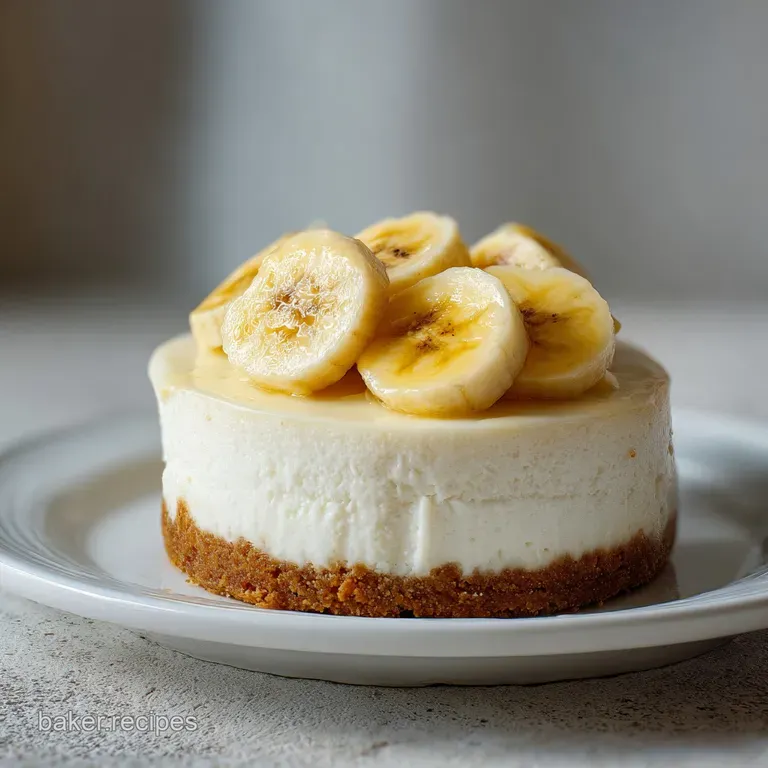
- Prep the base. Preheat your oven to 175°C (350°F). Combine your 300g of wafer crumbs, 115g melted butter, 30g brown sugar, and salt. Note: The brown sugar helps the crust caramelize and stick together.
- Form the crust. Press the mixture firmly into a 9 inch springform pan. Go about 1 inch up the sides. Bake for 10 minutes until you smell a toasty, sugar cookie aroma. Set aside to cool completely.
- Cream the cheese. Beat the 900g cream cheese and 200g granulated sugar on medium high. Note: You are looking for a completely smooth, aerated texture with no tiny lumps of cheese left.
- Incorporate aromatics. Add the 240g sour cream, 300g mashed bananas, pudding mix, 1 tbsp vanilla paste, and 1 tsp lemon juice. Mix until the batter looks uniform and a pale yellow color.
- Add eggs carefully. Reduce speed to low and add 4 eggs one at a time. Note: Do not overmix here; you only want the yolk to disappear. Overmixing eggs is the number one cause of surface bubbles.
- Seal the pan. Double wrap the springform pan in heavy duty foil. Place it in a roasting pan. Pour the batter onto the cooled crust. Note: This protects the crust from the water bath.
- The Water Bath. Fill the roasting pan with hot water halfway up the sides. Bake for 1 hour and 15 minutes until the edges are set but the center still has a slight, gelatinous jiggle.
- Cooling phase. Turn off the oven and crack the door. Let it sit for 1 hour. Note: This slow temperature drop is vital for preventing the surface from snapping or cracking.
- Chill time. Remove from the water and refrigerate for at least 8 hours. Note: The starch and fats need this time to fully bond and create that clean slice.
- Final garnish. Whip 480ml heavy cream with 60g powdered sugar to stiff peaks. Spread over the top and add fresh banana slices and whole wafers right before serving to ensure the fruit stays bright and the cookies stay crunchy.
Solving Common Baking Hurdles
One of the most frustrating things is pulling a beautiful cake out of the oven only to see a giant fault line across the middle an hour later. Or worse, the "soggy bottom" syndrome where the water from the bath leaks in.
These aren't signs of a bad cook; they are just technical glitches we can easily bypass with a few tricks.
Why Your Cheesecake Cracked
Cracking usually happens because of a sudden change in temperature or because the batter was too full of air. When the air bubbles heat up, they expand, and when they cool, they shrink, pulling the surface apart.
By keeping the mixer on low once the eggs are added, and by using the "crack the door" cooling method, you keep the internal pressure stable.
Why Your Crust Is Soggy
Even with foil, water can sometimes find a way in. This usually happens if the foil is too thin or if there is a seam at the bottom of the pan. The solution is to use extra wide, heavy duty foil or to place the springform pan inside a slightly larger cake pan, then place that into the water bath.
This creates a physical wall that water cannot climb.
| Problem | Root Cause | Solution |
|---|---|---|
| Lumpy Filling | Cold cream cheese | Ensure cheese is room temp (21°C) before mixing |
| Watery Slices | Bananas weren't ripe enough | Use bananas with heavy brown spotting for better starch to sugar ratio |
| Cracked Surface | Over whipping eggs | Mix eggs on the lowest speed just until combined |
Common Mistakes Checklist:
- ✓ Pat the bananas dry if they seem excessively watery after mashing.
- ✓ Don't skip the lemon juice; it prevents the "graying" of the fruit inside the bake.
- ✓ Use room temperature eggs (dip them in warm water for 5 minutes if you forgot to take them out).
- ✓ Ensure the water for the bath is hot, not boiling, to avoid shocking the pan.
- ✓ Avoid opening the oven door during the first 60 minutes of baking.
Adjusting the Yield and Size
If you are cooking for a smaller crowd, you might want to scale this down. For a 6 inch pan, you can generally halve the recipe, but keep an eye on the bake time it usually drops by about 15 to 20 percent.
For the eggs, since you can't easily halve 4 large eggs if you're doing a odd sized batch, I recommend whisking 2 eggs and then removing a tablespoon of the mixture to get the ratio right.
When scaling up for a large party (like making two 9 inch cakes), do not just double the mixing time. Work in two separate batches if your stand mixer is smaller than 5 quarts. Overloading the bowl prevents proper aeration, which will result in a dense, heavy cheesecake that feels more like fudge than pudding. If you are looking for a different way to serve this flavor profile to a large group without the bake time, check out my Classic Warm Banana Pudding for a comforting alternative.
Flavor Variations and Creative Twists
While the classic Southern version is hard to beat, there are ways to make this recipe your own. I once added a layer of salted caramel between the crust and the batter, and it was a total revelation. The saltiness played perfectly with the sweet banana.
- The Boozy Banana: Add 2 tablespoons of dark rum to the batter. The alcohol burns off, but the molasses like flavor of the rum deepens the vanilla notes.
- Chocolate Chip Twist: Fold in 100g of mini dark chocolate chips after adding the eggs. Use the mini ones so they don't all sink to the bottom of the heavy batter.
- Biscoff Base: Swap the Nilla Wafers for Biscoff cookies. The cinnamon and ginger in the cookies provide a spicy contrast to the creamy banana filling.
If you want to go even further with the "toasted" flavor profile, you could look into a Brown Butter Wafer Crust which adds a nuttiness that regular melted butter just can't touch. It is those small changes that turn a standard recipe into a "signature" dish.
Debunking Common Baking Legends
There is a lot of "old wives' tale" advice floating around the internet about cheesecakes. Let's clear some of that up so you can bake with confidence. One big myth is that you must use a springform pan.
While it makes removal easier, you can actually bake a cheesecake in a standard deep cake pan lined with parchment paper "slings." You just have to be more careful when lifting it out.
Another myth is that "cracks don't matter because you can cover them with topping." While true for aesthetics, a crack is often a sign that the cheesecake was overbaked. Overbaked cheesecake loses its velvety texture and becomes grainy or dry.
The goal isn't just to hide the crack with whipped cream; it is to avoid the crack so the texture remains perfect. Finally,, people say bananas should never be refrigerated. That is true for ripening, but once they are in this cheesecake, the cold is your best friend for setting the fats.
Storage and Zero Waste Tips
Once you have finished your masterpiece, you need to store it correctly. Because of the fresh dairy and fruit, this cannot sit on the counter. Keep it in the fridge, tightly covered, for up to 5 days. If you want to freeze it, I suggest doing so without the whipped cream topping.
Wrap the chilled cheesecake in plastic wrap, then foil, and it will stay fresh for up to 2 months. Thaw it overnight in the fridge before adding the final garnish.
For a zero waste approach, don't throw those banana peels away! If you have a garden, they are packed with potassium and make a great "tea" for your plants just soak them in water for 48 hours.
If you have leftover wafer crumbs that didn't make it into the crust, toss them with a little melted butter and cinnamon and use them as a "crunch" topping for your morning yogurt or oatmeal. Even the leftover egg whites (if you scaled the recipe and had extras) can be frozen for a future meringue or a healthy omelet.
Nothing in this kitchen goes to waste!
Recipe FAQs
How to prevent the cheesecake from cracking?
Bake using a water bath and allow for a gradual cooling period. Placing your springform pan in a roasting pan filled with hot water creates a gentle, humid environment that prevents the edges from setting too quickly, while leaving the cake in the turned off oven for one hour ensures a slow, controlled
temperature drop.
Can I use frozen bananas for this recipe?
No, stick with fresh, overripe bananas. Frozen bananas release too much excess moisture when thawed, which will alter the final texture and prevent the cheesecake from setting properly.
How to tell when the cheesecake is finished baking?
Look for a slight wobble in the center when you gently shake the pan. If you enjoyed mastering the sensory doneness cues here, apply them to our rich chocolate pudding dessert recipe to ensure your custards reach the perfect consistency every time.
Is it necessary to use room temperature ingredients?
Yes, this is critical for a smooth batter. Cold cream cheese, sour cream, and eggs will cause lumpy streaks in your filling that are nearly impossible to beat out once the pudding mix is added.
How to store leftovers properly?
Keep the cheesecake tightly covered in the refrigerator for up to 5 days. Because it contains fresh dairy and fruit, it must remain chilled; do not leave it on the counter.
Can I freeze this cheesecake for later?
Yes, but freeze it without the whipped cream topping. Wrap the chilled, plain cheesecake in plastic wrap followed by a layer of heavy duty foil, and it will stay fresh in the freezer for up to 2 months.
Is it true I can substitute cornstarch for the instant pudding mix?
No, this is a common misconception. The instant pudding mix provides specific stabilizers and flavoring agents that are essential for the structural integrity and signature banana flavor of this specific cheesecake.
Banana Pudding Cheesecake 2
Ingredients:
Instructions:
Nutrition Facts:
| Calories | 827 kcal |
|---|---|
| Protein | 9g |
| Fat | 57g |
| Carbs | 68g |
| Fiber | 2g |
| Sugar | 46g |
| Sodium | 485mg |
