Korean Bbq Steak Rice Bowl For: 30-Minute Flavor Bomb
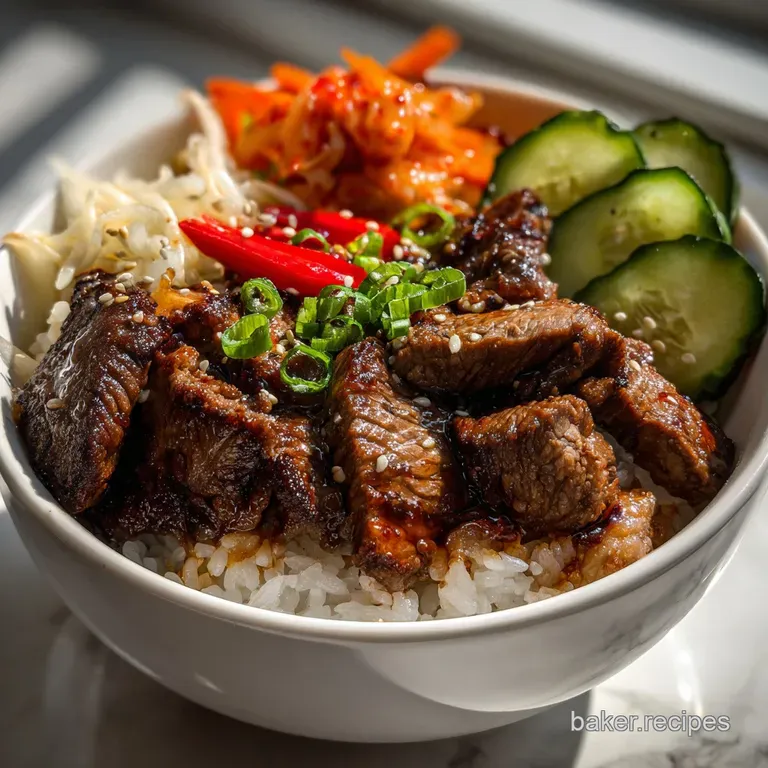
- Effort/Time: Low-effort prep, 15 minute active cook time.
- Flavor Hook: Savory-sweet glazed sirloin paired with a fermented gochujang "fire" sauce.
- Perfect for: High-protein meal-prep and impressive-but-lazy Friday nights.
Master the Ultimate Korean BBQ Steak Rice Bowl for Quick Weeknight Dinners
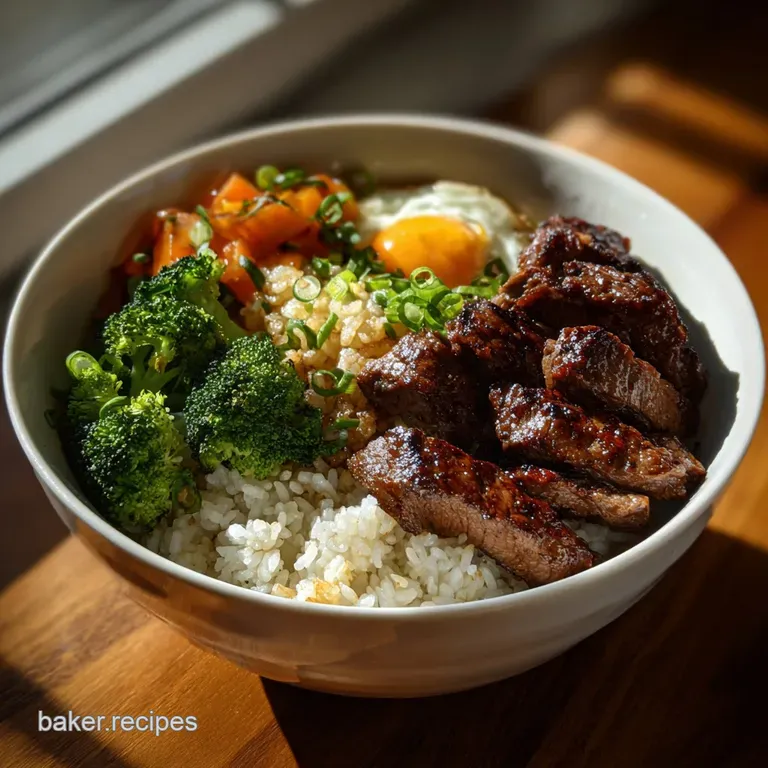
Why You Need This Korean BBQ Steak Rice Bowl for Your Rotation
We’ve all been there: you’re craving that deep, caramelized Korean BBQ flavor, but you don't have the time for a full tabletop grill session. Most "quick" versions end up with gray, boiled looking meat because the marinade has too much moisture and the pan isn't hot enough.
I used to make this mistake constantly, overcrowding my Lodge Cast Iron Skillet and wondering why my steak tasted like a salt lick rather than a masterpiece.
After a few "gray meat" disasters, I realized the secret isn't just the heat it's the chemistry of the marinade. This Korean BBQ Steak Rice Bowl for your weeknight survival relies on a specific balance of sugars and acids that creates a shatter crisp crust while keeping the interior velvety.
If you've ever struggled with tough, chewy steak in a stir fry, this version is the scientific solution you've been waiting for.
The aroma of toasted sesame oil hitting a hot pan combined with the pungent kick of kimchi is a sensory trigger that signals dinner is ready. We’re going to use a few chef tricks, like utilizing Asian pear for protein breakdown, to ensure every bite of this Korean BBQ Steak Rice Bowl for your family is better than the last.
Let's get into the mechanics of why this works.
The Science of Why it Works
- Enzymatic Tenderization: The calpain enzymes in the 2 tbsp grated Asian pear act as a natural meat tenderizer by breaking down tough muscle fibers (proteolysis) before the meat even hits the heat.
- Maillard Reaction Optimization: The 2 tbsp brown sugar lowers the temperature required for browning, creating a deep mahogany crust on the 1.5 lbs sirloin steak within seconds.
- Emulsification Stability: Using 1/4 cup mayonnaise as the base for the gochujang sauce creates a stable emulsion that carries fat-soluble flavor compounds across the palate more effectively than water based sauces.
The Science Behind the Sirloin Steak
- What It Does
- Provides the primary protein structure and "beefy" flavor profile.
- The Chemistry
- During over high heat searing, protein denaturation occurs, causing the muscle fibers to contract and expel moisture while forming a browned exterior.
- Why This Matters
- Slicing against the grain shortens these fibers, ensuring the final texture is tender rather than ropey or chewy.
The Science Behind the Asian Pear
- What It Does
- Acts as the primary chemical tenderizing agent in the marinade.
- The Chemistry
- Asian pears contain a protease called calpain that specifically targets and dissolves connective tissue proteins.
- Why This Matters
- This allows us to use a leaner, more affordable 1.5 lbs sirloin steak while achieving the texture of a premium ribeye.
The Science Behind the Gochujang
- What It Does
- Provides deep umami, heat, and a characteristic fermented funk.
- The Chemistry
- The fermentation process creates glutamates, which are the molecular keys to the "umami" taste sensation on the tongue.
- Why This Matters
- It balances the sweetness of the honey and brown sugar, preventing the Korean BBQ Steak Rice Bowl for Quick Weeknight Dinners from tasting one-dimensional.
Ingredients You'll Need for Your Korean BBQ Steak Rice Bowl for Success
The Protein:1.5 lbs Sirloin Steak (thinly sliced against the grain): Why this? It's lean but has enough beefy flavor to stand up to the bold soy-based marinade. Substitute = Flank steak (marinate for an extra 10 minutes).
- 2 tbsp Grated Asian Pear
- Why this? As mentioned, the enzymes are non-negotiable for tenderizing lean sirloin. Granny Smith apples are a backup.
- 2 tbsp Brown Sugar
- Substitute = Coconut sugar.
- 1 tbsp Toasted Sesame Oil
- Why this? The high smoke point of refined oils won't give you this nutty, toasted aroma.
- 1/4 cup Hellmann's Mayonnaise
- Why this? The high fat content tempers the heat of the gochujang for a velvety finish.
- 1 tbsp Gochujang
- Substitute = Sriracha mixed with a pinch of miso paste.
- 1 tsp Fresh Lime Juice
- Why this? Acid cuts through the heavy fat of the mayo and the sweetness of the steak.
- 1 tsp Honey
- Why this? Adds a floral sweetness and a glossy sheen to the final drizzle.
The Bowl Components:3 cups Cooked Jasmine Rice: Why this? Its floral scent and slightly sticky texture are the perfect canvas for the steak juices.1 cup Kimchi (chopped): Why this? The fermentation adds a
necessary probiotic tang and crunch to the Steak Rice Bowl for Quick Weeknight Dinners. 1 Cucumber (thinly sliced) 2 Scallions (thinly sliced) 1 tbsp Toasted Sesame Seeds
Masterclass Instructions for the Korean BBQ Steak Rice Bowl for
Step 1: Place 1.5 lbs sirloin steak in the freezer for 15 minutes. Note: Par-freezing firms the muscle fibers, allowing for paper thin, professional grade slices.
Step 2: Slice the steak against the grain into 1/8 inch thick strips using a sharp chef's knife. Note: Cutting against the grain physically breaks the protein strands for maximum tenderness.
Step 3: In a medium glass bowl, whisk together 1/4 cup low sodium soy sauce, 2 tbsp brown sugar, 1 tbsp toasted sesame oil, minced garlic, grated ginger, 2 tbsp grated Asian pear, and 1/4 tsp black pepper. Note: The sugar must be fully dissolved to ensure even caramelization in the pan.
Step 4: Submerge the steak slices in the marinade, tossing to coat every surface, and let sit for at least 15 minutes. Note: This is the window where the Asian pear enzymes begin their proteolysis work.
Step 5: Whisk 1/4 cup mayonnaise, 1 tbsp gochujang, 1 tsp lime juice, and 1 tsp honey in a small ramekin until smooth and pale orange. Note: This is an emulsion; whisking vigorously ensures the lime juice doesn't separate the mayo.
Step 6: Heat a Lodge Cast Iron Skillet over high heat for 3 4 minutes until it is wisps of smoke begin to rise. Note: High thermal mass is required to sear the meat before it can release too much steam.
Step 7: Add steak to the skillet in a single, uncrowded layer and sear for 2 minutes until the edges are charred and the meat easily releases from the pan. Note: If the meat sticks, the Maillard crust hasn't fully formed yet.
Step 8: Flip the steak and cook for an additional 1 2 minutes until the sauce has reduced to a sticky, glossy glaze that coats the meat. Note: Avoid overcooking; sirloin becomes rapidly tough once it passes medium well.
Step 9: Remove meat from the skillet and let it rest on a warm plate for 3 minutes. Note: Resting allows the internal temperature to equalize and the juices to thicken.
Step 10: Divide 3 cups cooked jasmine rice into four bowls and top with the seared steak, 1 cup kimchi, sliced cucumber, and scallions. Note: Assembling while the rice is steaming helps soften the cold kimchi and cucumber slightly.
Step 11: Drizzle the gochujang sauce over each Bowl for Quick Weeknight Dinners and garnish with 1 tbsp toasted sesame seeds. Note: The seeds add a final layer of texture and "pop" to the dish.
Why Your Korean BBQ Steak Rice Bowl for Quick Weeknight Dinners Might Fail
Why Your Steak Turns Out Tough
When lean cuts like sirloin are exposed to high heat for too long, the protein fibers undergo extreme denaturation, shrinking and squeezing out all moisture. This results in "leather" steak. If you skip the Asian pear, you lose the enzymatic help that keeps these fibers loose. This is similar to the care needed when preparing the protein in a Steak and Mushroom recipe.
| Problem | Root Cause | The Fix | Pro Protocol |
|---|---|---|---|
| Chewy Steak | Sliced with grain | Slice against grain | Look for parallel lines; cut perpendicular |
| Gray Meat | Overcrowded pan | Cook in batches | Max 50% pan coverage to allow steam to escape |
| Bland Bowl | Kimchi too fresh | Use "old" sour kimchi | Look for kimchi that has bubbled and smells sharp |
| Soggy Rice | Excess marinade in bowl | Drain steak before searing | Use tongs to lift meat from marinade, leaving liquid behind |
Why Your Sauce Separates
If your gochujang mayo looks curdled, it’s usually due to "acid shock." Adding the lime juice too fast or to cold mayo can break the emulsion. Always whisk while drizzling the acid slowly. If you enjoy the balance of sweet and tangy, you might notice similar flavor profiles in our Kickin Classic Coleslaw recipe.
Doubling This Recipe for Meal Prep
Can You Double This Recipe? Yes, but you must be careful with pan logistics to avoid steaming the meat.
CRITICAL SCALING RULES:
Steak Searing (The "Half Batch" Rule):
- ❌ Don't double the amount of meat in the pan at once.
- ✅ Do sear in 4 batches instead of 2.
- Why? Doubling the cold meat drops the skillet temperature instantly, leading to "boiled" beef.
Salt and Soy (Non-Linear):
- ❌ Don't use a full 1/2 cup of soy sauce for 3 lbs of meat.
- ✅ Do use 1/3 cup first, then adjust.
- Why? Large batches of marinade don't evaporate as quickly, which can lead to over salting.
| Original | Doubled | Note |
|---|---|---|
| 1.5 lbs Steak | 3 lbs | Sear in smaller batches |
| 1/4 cup Soy Sauce | 1/3 cup | Prevents sodium overload |
| 1/4 cup Mayo | 1/2 cup | Scale 1:1 for the sauce |
Common Myths About This Rice Bowl for Quick Weeknight Dinners
Myth: You can substitute any pear for Asian pear. Truth: While a Bosc pear has flavor, it lacks the high concentration of calpain enzymes found in Asian pears. You won't get the same "melt-in-your mouth" texture.
Myth: The marinade needs to sit overnight. Truth: Because the steak is sliced so thin, a long soak will actually turn the meat mushy. The enzymatic reaction is powerful; 15 30 minutes is the sweet spot for this BBQ Steak Rice Bowl for Quick Weeknight Dinners.
Storage, Freezing, and Zero Waste
Fridge Storage: Store the components separately. The steak and rice will stay fresh for up to 4 days. Keep the cucumber and kimchi in their own containers to prevent the rice from becoming soggy. For a refreshing drink to pair with your leftovers, try learning How to Make recipe for Korean Banana Milk.
Reheating: Microwave the rice with a damp paper towel over it to re-steam the grains. Reheat the steak in a dry pan over medium heat for 60 seconds just to take the chill off over microwaving will turn it into rubber.
💡 Zero Waste Tip: Don't discard the leftover kimchi juice at the bottom of the jar. Kimchi Juice: Stir it into the rice while cooking or add it to the gochujang mayo for an extra probiotic punch.
Why it works: The juice is a concentrated brine of garlic, ginger, and chili that acts as an instant flavor booster.
Freezing: You can freeze the sliced steak in the marinade for up to 3 months. This is a massive time saver for future Korean BBQ Steak Rice Bowl for dinners. Simply thaw in the fridge overnight and sear as directed.
This Korean BBQ Steak Rice Bowl for your weekly menu is more than just a meal; it's a technical exercise in flavor balance and heat management. By respecting the science of the marinade and the power of a hot skillet, you'll never settle for mediocre takeout again.
Trust me, once you hear that first sizzle, you’ll know you’ve nailed it.
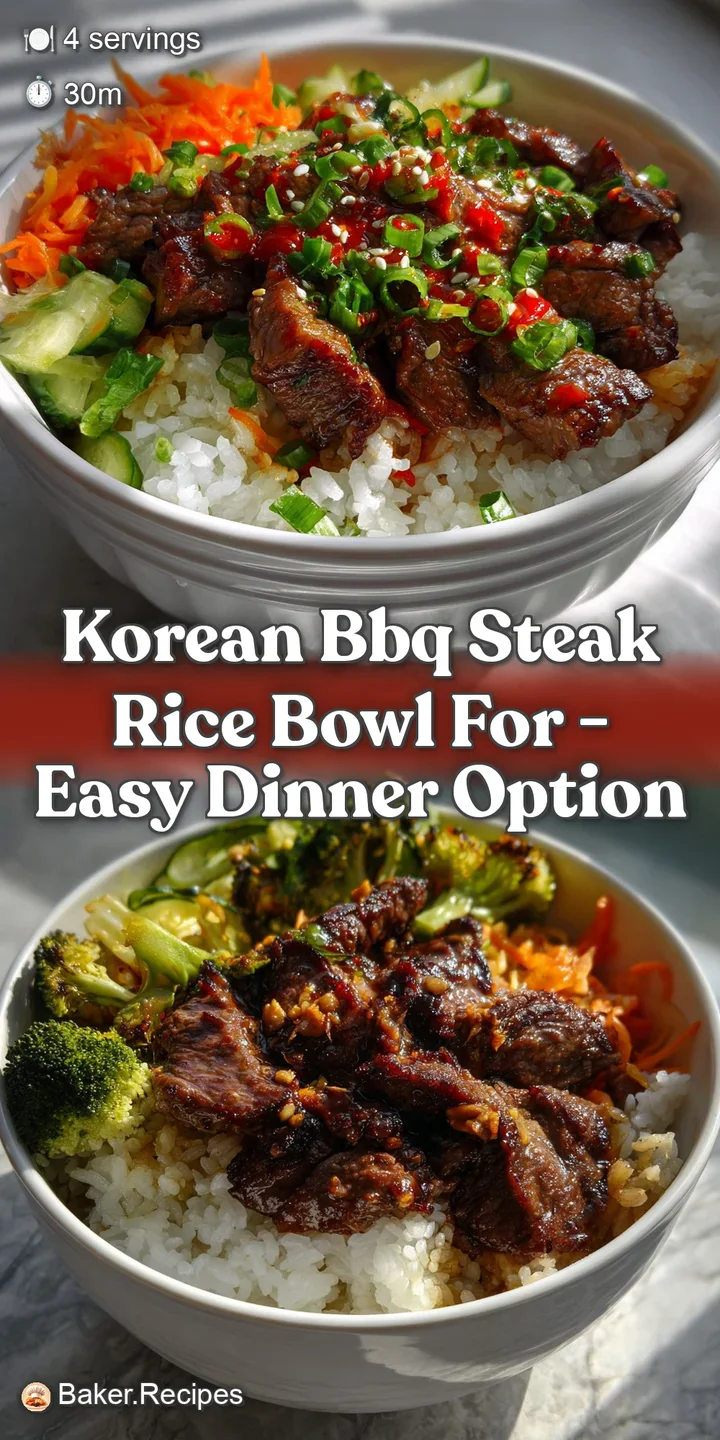
Recipe FAQs
What is the fastest cut of beef for this recipe?
Sirloin steak or flank steak. These cuts are naturally tender enough for high heat searing without lengthy marination, achieving the target char quickly.
Can I use store-bought bulgogi marinade instead of making the glaze?
No. Pre-made marinades are too thin and often lack balance. Commercial sauces lack the necessary sugars and high molecular-weight compounds for optimal caramelization, leading to scorching before the interior is cooked.
Why is my steak chewy despite the 30-minute timeframe?
The steak was cut improperly before serving. Against the grain slicing separates the muscle fibers, which shortens them and maximizes tenderness after cooking. If you enjoyed mastering the sensory doneness cues here, apply them to our The Ultimate Steak Sandwich: A Juicy British Classic with a Twist for perfect results.
- Always rest meat 5 minutes post sear
- Identify the direction of the visible muscle lines
- Slice thinly against perpendicular lines
Is this recipe better suited for grilling or pan-searing?
Pan-searing is recommended for consistency indoors. Cast iron provides superior heat retention and direct, even contact necessary for developing the Maillard reaction crust uniformly across the small steak pieces.
Myth: You must soak rice before cooking Korean BBQ Bowls.
Myth: You must soak rice before cooking Korean BBQ Bowls. Reality: Soaking is optional for traditional Asian rice but unnecessary for modern quick cook methods, especially if using a rice cooker or following precise absorption instructions like those in Fluffy Jasmine Rice: How to Cook it Perfectly!.
What can I substitute for gochujang in the fire sauce?
Doubanjiang with a dash of maple syrup. Doubanjiang offers fermented depth but requires additional sweetness because it lacks gochujang’s inherent high sugar content; this mimics the crucial flavor profile.
Myth: Over marinating tenderizes the steak more effectively.
Myth: Over marinating tenderizes the steak more effectively. Reality: Extended exposure to acidic marinades breaks down proteins too much, leading to a mushy texture instead of firm tenderness; 30 minutes is optimal for surface flavor penetration.
Bbq Steak Rice Bowl Quick
Ingredients:
Instructions:
Nutrition Facts:
| Calories | 732 kcal |
|---|---|
| Protein | 38.6 g |
| Fat | 34.5 g |
| Carbs | 53.2 g |
| Fiber | 2.8 g |
| Sugar | 13.5 g |
| Sodium | 1445 mg |
