Tender Thumbprint Cookies Recipe
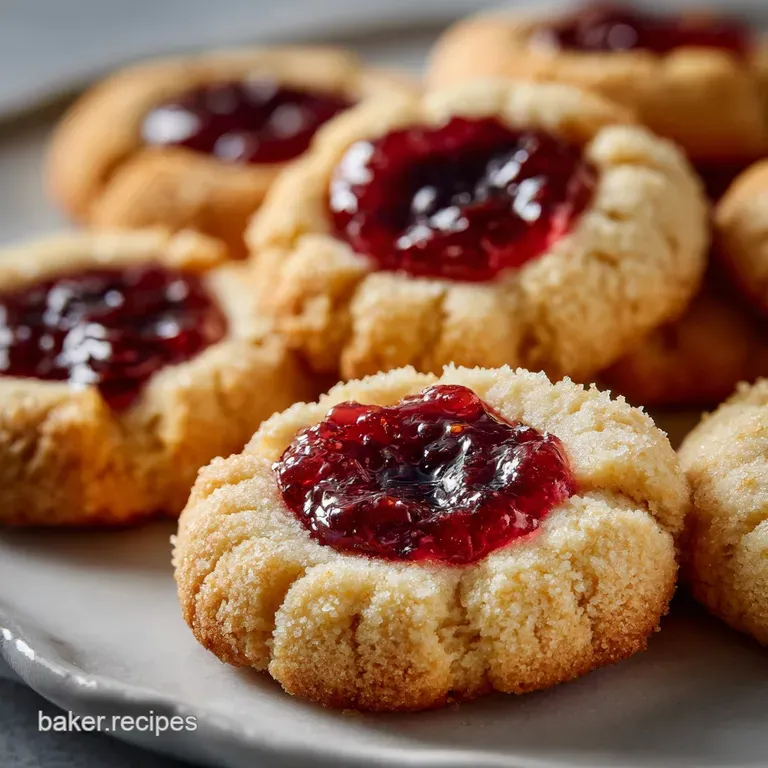
- Time: Active 40 minutes, Passive 12 minutes, Total 52 minutes
- Flavor/Texture Hook: Buttery, crumbly shortbread with a sticky, concentrated fruit center.
- Perfect for: Holiday cookie swaps, budget-friendly gifting, or a rainy afternoon project with kids.
- The Biological Mechanics of Buttery Shortbread
- Identifying the Functional Components of the Dough
- Sourcing the Best Value Ingredients
- Necessary Tools for Efficient Baking
- Executing the Cookie Shaping Process
- Managing Potential Baking Failures
- Adjusting the Batch Size
- Shortbread Superstitions and Realities
- Storage and Sustainable Practices
- Creative Serving Selections
- Recipe FAQs
- 📝 Recipe Card
I’ll never forget the first time I tried to make these for a neighborhood cookie swap. I was totally broke, living in a tiny apartment, and I tried to "save money" by using a tub of margarine and some watery grape jelly. The result? A flat, greasy puddle of sadness that tasted mostly of regret.
I learned the hard way that while these cookies are budget friendly, you have to be smart about where you cut corners and where you stick to the rules.
Nowadays, my kitchen smells like a dream whenever I pull a tray of these out of the oven. There is something so satisfying about that specific sizzle when the cold dough hits the hot pan, and the way the house fills with the aroma of toasted butter and sweet vanilla.
It’s a scent that practically begs you to put the kettle on and forget about your to do list for a while.
We’re going to make a batch of 24 cookies that actually stay round, don't shatter when you bite them, and look absolutely stunning on a plate. Trust me, once you master the balance of the shortbread to jam ratio, you’ll never go back to those dry, store-bought versions.
Let’s get into the nitty gritty of why this specific method works so well for those of us watching our grocery bills.
The Biological Mechanics of Buttery Shortbread
- Fat Emulsification: Beating the butter at exactly 65°F allows the sugar to create tiny air pockets, ensuring a light texture rather than a dense brick.
- Protein Inhibition: Using powdered sugar instead of granulated in the dough limits gluten development, which is what gives the cookie that signature "short" and crumbly bite.
- Starch Gelatinization: The high ratio of flour to moisture ensures the cookie sets quickly in the oven, preventing the dreaded "spreading" that ruins the thumbprint shape.
| Preparation Method | Total Time | Resulting Texture | Best For |
|---|---|---|---|
| Hand Mixed Dough | 55 minutes | Coarser, rustic crumb | Minimal cleanup/No mixer |
| Stand Mixer Method | 45 minutes | Uniform, silky melt | Large batches and gifting |
| Chilled Dough Prep | 2 hours | Defined edges, no spread | Preparing a day in advance |
It's vital to choose your method based on the equipment you have. If you don't have a stand mixer, don't sweat it a sturdy wooden spoon and some elbow grease will get the job done, though your cookies might have a slightly more "handmade" look.
The key is making sure that butter is truly softened but not melting, or the whole structure collapses.
Identifying the Functional Components of the Dough
| Ingredient | Science Role | Pro Secret |
|---|---|---|
| Unsalted Butter | Provides structure and flavor through fat solids. | Use "store brand" blocks; they often have the same fat content as name brands for 40% less cost. |
| Powdered Sugar | Dissolves instantly to create a fine, velvety crumb. | Sift it! Even small lumps can cause uneven air pockets and lead to cracking. |
| All Purpose Flour | Provides the protein framework to hold the jam. | Spoon and level your flour; packing the cup too tight makes the cookies dry and "floury." |
Sourcing the Best Value Ingredients
For this recipe, we are using 1 cup (227g) of unsalted butter. I always suggest letting it sit on the counter for about 45 minutes to hit that sweet spot of 65°F. You’ll also need 2/3 cup (80g) of powdered sugar.
If you only have granulated sugar, you can actually pulse it in a blender for 30 seconds to make your own "budget" powdered sugar just add a pinch of cornstarch if you’re storing it.
The rest of the list is straightforward: 1 large egg yolk (save the white for an omelet!), 1 tsp vanilla extract, and 1/4 tsp almond extract. The almond extract is my "secret weapon" for making cheap cookies taste like expensive wedding cake.
For the bulk of the dough, use 2 1/4 cups (280g) all purpose flour and 1/2 tsp fine sea salt. Finally, grab 1/3 cup (80ml) of fruit preserves and 1/2 cup (100g) granulated sugar for that crunchy outer coating.
Chef's Tip: If you're out of almond extract, a half teaspoon of lemon zest provides a similar "high end" floral note without any extra cost.
Necessary Tools for Efficient Baking
You don't need a high tech kitchen to pull these off. A standard baking sheet, some parchment paper (or a silicone mat), and a mixing bowl are the essentials. If you have a KitchenAid or a hand mixer, it makes creaming the butter easier, but a fork and a bowl work in a pinch.
To get those "thumbprints" looking uniform, I actually like to use the back of a rounded 1/2 teaspoon measuring spoon rather than my actual thumb. It creates a cleaner well for the jam and keeps your hands clean.
If you’re looking to branch out after mastering these, the buttery base of this dough is quite similar to the technique used in our NYC BakeryStyle Black recipe. Both rely on that careful balance of fat and sugar to create a specific mouthfeel. For these thumbprints, having a wire cooling rack is also a huge plus so the bottoms don't get soggy from the steam as they cool.
Executing the Cookie Shaping Process
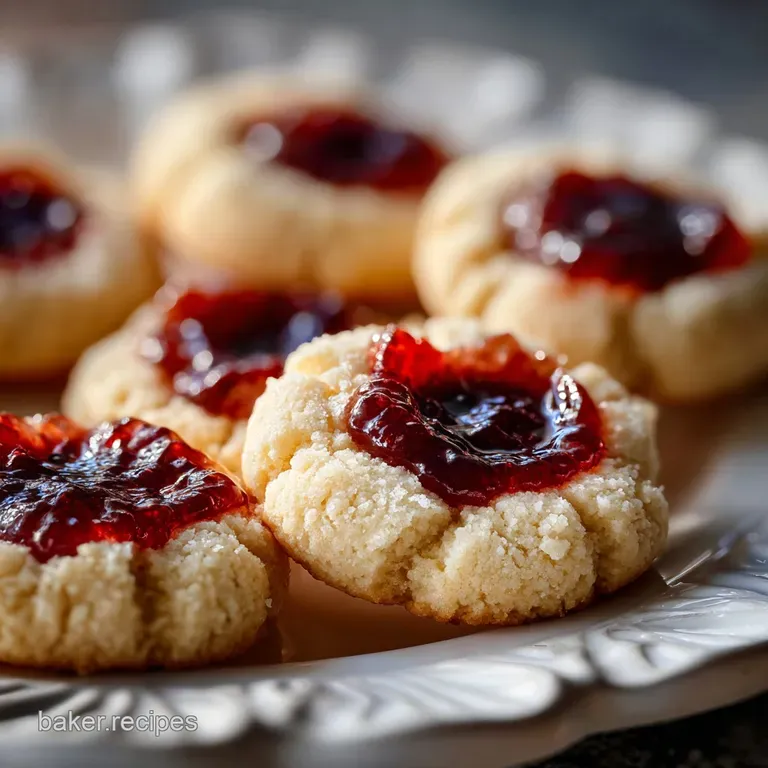
- Cream the butter. Beat the 1 cup (227g) of softened butter and 2/3 cup (80g) powdered sugar until pale and fluffy (about 3 mins). Note: This aeration is what makes the cookie light.
- Add the binders. Mix in the egg yolk, vanilla, and almond extract. Continue beating until fully incorporated.
- Incorporate the dry. Gradually add the 2 1/4 cups (280g) flour and 1/2 tsp salt. Mix until the dough just comes together and no white streaks remain.
- Chill the dough. Wrap the dough and refrigerate for 20 minutes. Note: Chilling prevents the butter from melting too fast in the oven.
- Roll the balls. Scoop 1 tablespoon portions and roll into smooth 1 inch balls.
- Sugar coating. Roll each ball in the 1/2 cup (100g) granulated sugar until completely encrusted and sparkling.
- Create the well. Place on a lined sheet and press your thumb (or a spoon) into the center. Press down about halfway through the dough.
- Fill with jam. Drop about 1/2 teaspoon of preserves into each well. Don't overfill or it will boil over.
- Bake the cookies. Bake at 350°F for 12 minutes until the edges are just set and the jam is bubbling.
- Cool completely. Let them sit on the pan for 5 minutes before moving to a rack. The centers need to firm up.
Managing Potential Baking Failures
Why Your Dough Crumbles
If the dough is falling apart while you roll it, it’s likely too cold or the flour was packed too tightly into the measuring cup. You can fix this by letting the dough sit at room temperature for 10 minutes or by adding 1 teaspoon of milk to bring it back together.
| Problem | Root Cause | Solution |
|---|---|---|
| Cookies Spread Flat | Butter was too warm/melted | Chill the shaped dough for 15 minutes before baking. |
| Jam Bubbles Over | Well was too shallow | Use a measuring spoon to press a deeper, wider hole. |
| Bottoms are Burnt | Dark baking sheet | Move the rack to the upper third of the oven. |
Common Mistakes Checklist
- ✓ Ensure the egg yolk is at room temperature so it doesn't seize the butter.
- ✓ Sift your powdered sugar to avoid "sugar spotting" on the finished cookie.
- ✓ Don't skip the salt; it balances the sweetness of the jam perfectly.
- ✓ Use "preserves" or "jam" rather than "jelly," which has too much water and will run.
But what about the sogginess? If you find the bottom of your cookies getting soft after a day, it’s usually because the jam had too much moisture. You can actually simmer your jam in a small saucepan for 5 minutes before filling the cookies to thicken it up and concentrate the flavor.
It’s a bit of extra work, but it makes a massive difference in the shelf life.
Adjusting the Batch Size
Scaling Down (Making 12 Cookies): Cut all ingredients exactly in half. Since the recipe calls for one egg yolk, you’ll need to lightly beat one yolk in a small bowl and then use roughly 1 tablespoon of it. Use a smaller 8x8 inch baking pan to keep the heat distribution consistent.
Scaling Up (Making 48 Cookies): Double everything, but be careful with the extracts. Only use 1.5x the amount of almond extract (3/8 tsp) so it doesn't become overpowering. Work in batches; keep half the dough in the fridge while the first tray is in the oven.
This prevents the butter in the second batch from getting too soft on the counter.
| Ingredient Quality | Budget Swap | Flavor Impact | Savings |
|---|---|---|---|
| Pure Vanilla | Imitation Vanilla | Slightly more "candy like" | $5 - $10 |
| High End Preserves | Store Brand Jam | Thicker texture, less fruit chunks | $2 - $4 |
| Organic Butter | Conventional Butter | Virtually unnoticeable in cookies | $3 - $5 |
If you love the flavor profile of these but want something even more decadent, you might enjoy the White Chocolate Peanut recipe, which uses a similar thumbprint style technique but with a creamy filling.
Shortbread Superstitions and Realities
Many people believe you have to use "European style" butter with high fat content for a good cookie. Honestly, don't even bother with the expensive stuff for this specific recipe. Because we are rolling these in sugar and filling them with jam, the subtle nuances of $8 butter are completely lost.
Standard "AA" grocery store butter works perfectly fine.
Another common myth is that you can't use frozen jam. Actually, I’ve found that putting my jam in the freezer for 10 minutes before filling the cookies helps it stay put during the bake. It doesn't freeze solid, but it gets viscous enough that it doesn't boil over as easily.
Storage and Sustainable Practices
Storage: These cookies stay fresh in an airtight container at room temperature for up to 5 days. If you live in a humid climate, put a piece of parchment paper between layers to prevent the jam from sticking to the bottoms of the other cookies.
Freezing: You can freeze the unbaked dough balls (without the jam) for up to 3 months. When you're ready to bake, let them thaw for 15 minutes, roll in sugar, indent, fill, and bake as usual. You might need to add 1-2 minutes to the bake time.
Zero Waste Tip: If you have leftover jam at the bottom of the jar that isn't enough for a cookie, add a splash of balsamic vinegar and olive oil to the jar, shake it up, and you’ve got a "fruit scrap" vinaigrette for your dinner salad. Also, remember to save that leftover egg white!
You can freeze egg whites in an ice cube tray for up to two months they're great for making a quick meringue or adding protein to your morning oats.
Creative Serving Selections
These cookies are the ultimate companion for a hot cup of Earl Grey tea. The bergamot in the tea plays beautifully with the almond extract in the dough. If you're serving these at a party, I love to do a "rainbow" platter using three different colors of jam: raspberry (red), apricot (orange), and blackberry (purple).
It looks incredibly sophisticated but costs the same as using one jar.
For a more intense flavor experience, try pairing them with a spicy cider. The warmth of the cinnamon and cloves in a drink like the Caramel Apple Spice recipe complements the buttery shortbread base in a way that feels like a big, cozy hug. If you have extra dough, you can even press it into a small tart tin, fill it with a lot of jam, and bake it as a "budget" fruit galette. Truthfully, there’s no wrong way to eat a cookie this good. Just make sure you get one for yourself before the tray disappears and trust me, it will disappear fast!
Recipe FAQs
Is it better to fill thumbprint cookies before or after baking?
Fill before baking. The jam needs the heat to slightly set and form a proper well within the shortbread base, preventing the cookie from looking unfinished.
Are thumbprint cookies just sugar cookies with jam in the center?
No, they are distinct from traditional sugar cookies. Thumbprint cookies rely on a higher fat ratio and often use powdered sugar, resulting in a tender, crumbly shortbread texture rather than a chewy or crisp sugar cookie structure.
What are Taylor Swift's cookies that people reference online?
She is famous for her Chai Spiced Sugar Cookies, often featuring a glaze. While not technically traditional thumbprints, the spice balance used in many holiday cookies shares a similar flavor profile goal: balancing warm spices with a buttery base, a technique also used in our NYC Bakery Style Cookies recipe.
Do you need to put thumbprint cookies in the fridge before baking?
Yes, chilling the shaped dough balls is highly recommended. Chilling for at least 15-20 minutes solidifies the butter, which ensures the cookies hold their shape and don't spread into thin discs while baking.
How do I stop the jam from boiling over and running out of the well?
Simmer the jam lightly before filling to thicken it. Cooking the preserves down for a few minutes removes excess moisture and concentrates the pectin, allowing the jam to stay perfectly contained during the bake cycle.
Can I substitute granulated sugar for the powdered sugar in the dough?
No, stick with powdered sugar for the dough. Granulated sugar creates air pockets differently and can lead to tougher gluten development, preventing the signature "short" and crumbly mouthfeel you want in this shortbread base.
What is the best way to make the cookie centers uniform if I don't want to use my thumb?
Use the back of a rounded measuring spoon. A 1/2 teaspoon measuring spoon works perfectly to create a clean, consistent indentation deep enough to hold the filling without tearing the dough edges.
Buttery Thumbprint Cookies
Ingredients:
Instructions:
Nutrition Facts:
| Calories | 153 kcal |
|---|---|
| Protein | 1.3 g |
| Fat | 8.0 g |
| Carbs | 18.9 g |
| Fiber | 0.3 g |
| Sugar | 10.0 g |
| Sodium | 50 mg |
