Chicken Fried Steak Recipe with Gravy
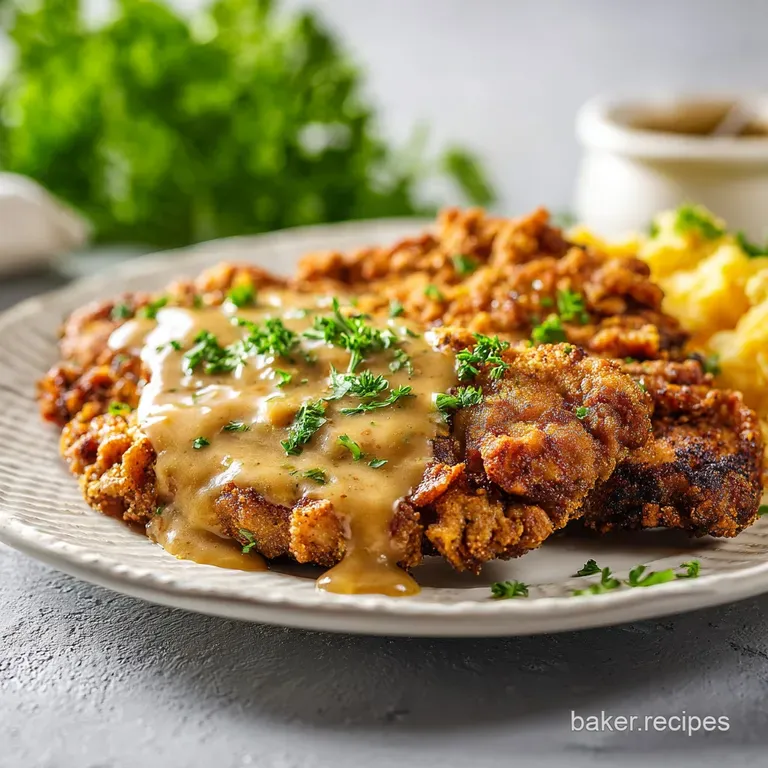
- Time: Active 20 minutes, Passive 15 minutes, Total 35 minutes
- Flavor/Texture Hook: Shatter crisp exterior with a peppery, buttery finish
- Perfect for: Sunday family dinner or when you need a high protein soul hug
- The Science of Why it Works
- Deep Dive Into Key Components
- Necessary Elements and Substitutions
- Required Preparation Tools
- Detailed Cooking Process
- Solving Texture Issues
- Adjusting Yield for Any Crowd
- Busting Common Fry Up Legends
- Preservation and Sustainability
- Complete Meal Suggestions
- Very High in Sodium
- Recipe FAQs
- 📝 Recipe Card
You know that sound? That aggressive, high pitched sizzle when a cold, flour dusted steak hits a pool of shimmering oil? That is the sound of a good morning or a very, very good evening.
If you have ever suffered through a plate of "sad steak" where the breading is soggy or, even worse, the crust completely detaches from the meat the second your fork touches it, I feel your pain. I have been there, staring at a naked piece of beef while the crust sat lonely on the other side of the plate.
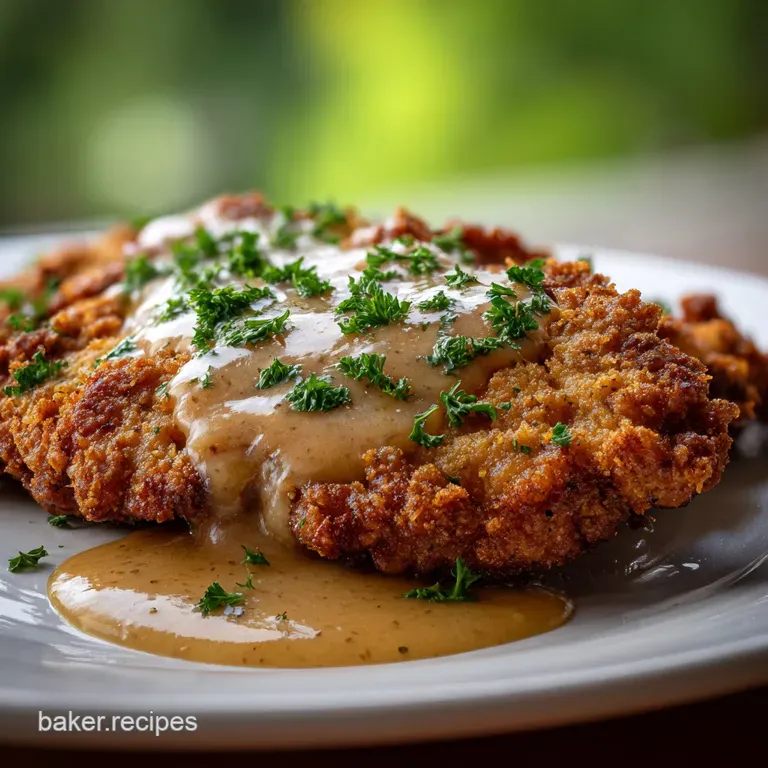
But after years of messing this up in my own kitchen, I finally figured out the trick. It is not just about the frying; it is about the chemistry of the dredge. We are looking for a specific kind of crunch one that is rugged and uneven, full of little nooks and crannies that catch every drop of that peppery gravy.
This is not a dainty dish. This is the kind of meal that demands a nap afterward, and honestly, you deserve it.
We are going to use a double dredge method and a secret ingredient in the flour that makes all the difference. Right then, let's get the cast iron skillet out and talk about why this actually works. You are about to become the hero of your own kitchen.
The Science of Why it Works
Leavening Power: The addition of baking powder creates tiny carbon dioxide bubbles when it hits the heat, resulting in a lighter, more aerated crust that shatters rather than crunches.
Protein Denaturation: The buttermilk soak uses lactic acid to gently break down tough connective tissues in the beef sirloin, ensuring the meat stays tender despite the over high heat fry.
| Thickness | Internal Temp | Rest Time | Visual Cue |
|---|---|---|---|
| 1/2 inch | 145°F | 5 minutes | Golden brown crust with no visible steam escaping |
| 1/4 inch | 150°F | 3 minutes | Breading turns deep amber and feels hard to the touch |
| 3/4 inch | 140°F | 7 minutes | Oil bubbles slow down significantly around the edges |
The magic of this specific fry lies in the moisture management. When we talk about the crust staying attached, we are really talking about creating a protein bond. By allowing the flour to hydrate slightly on the meat before it hits the oil, we create a "glue" that survives the thermal shock of the hot fat.
Deep Dive Into Key Components
| Ingredient | Science Role | Pro Secret |
|---|---|---|
| Whole Buttermilk | Acidic tenderizer | Let steaks soak for at least 10 minutes to soften fibers. |
| Baking Powder | Aeration agent | It creates those tiny "craters" in the crust that hold more gravy. |
| Coarsely Cracked Pepper | Flavor & Texture | Use a coarse grind to provide a localized "pop" of heat and crunch. |
Understanding these parts helps you pivot if you run out of something. The buttermilk isn't just for flavor; its thickness helps the flour cling to the beef much better than regular milk ever could. If you want a similar depth of flavor in other poultry dishes, you might enjoy the technique used in The Homemade Chicken recipe.
Necessary Elements and Substitutions
To get this right, you need the right building blocks. Here is exactly what is in my pantry when I pull this together:
- 4 cube steaks: These are typically top round or sirloin that have been run through a mechanical tenderizer. Why this? The "dimples" from tenderizing act as anchors for the heavy flour breading.
- 2 cups all purpose flour: Divided into two stations for the double dredge. Why this? The protein content is high enough to provide structure without being tough.
- 1 tsp baking powder: Our secret for the "shatter" factor.
- 2 tsp smoked paprika: Adds a subtle depth and a beautiful red gold hue to the fry.
- 1 tsp garlic powder & 1 tsp onion powder: Essential for that "diner" aromatic profile.
- 1.5 tsp fine sea salt: To season throughout the layers.
- 2 tsp coarsely cracked black pepper: The soul of the gravy and the crust.
- 1.5 cups whole buttermilk: The thick, acidic base for our wet dredge.
- 2 large eggs: Added to the buttermilk for extra structural "glue."
- 1 tbsp hot sauce: Not for heat, but for a vinegar based punch that cuts the fat.
- 1 cup high smoke point oil: Peanut or Canola is best here.
- 3.5 cups whole milk: The base for our velvety gravy.
| Original Ingredient | Substitute | Why It Works |
|---|---|---|
| Whole Buttermilk (1.5 cups) | Plain Yogurt thinned with milk | Similar acidity and thickness. Note: Slightly tangier flavor profile. |
| Peanut Oil | Lard | Traditional Southern choice. Note: Adds a richer, more savory undertone. |
| Cube Steak | Pounded Pork Tenderloin | Lean but tender. Note: Becomes "Pork Tenderloin Sandwich" style. |
Choosing the right fat is vital for the heat levels we are using. If you have extra milk and want to practice your sauce skills on something else, the Turkey Gravy with Drippings recipe uses a very similar roux based approach.
Required Preparation Tools
You don't need a professional kitchen, but a few specific tools make this much easier. A heavy bottomed skillet is your best friend here because it holds heat even when you drop a cold piece of meat into it.
- Cast Iron Skillet: A 12 inch Lodge skillet is the gold standard for even heat distribution.
- Wire Cooling Rack: Placing the fried steaks on a rack instead of paper towels prevents the bottom from steaming and getting soggy.
- Whisk: For ensuring the gravy is completely lump free.
- Three Shallow Bowls: For your "assembly line" dredging station.
Detailed Cooking Process
- Prep the Beef: Pat the 4 cube steaks dry with paper towels. Note: Dry meat allows the first layer of flour to stick better.
- Mix Dry Station: In a shallow bowl, combine 1.5 cups of the flour, baking powder, smoked paprika, garlic powder, onion powder, salt, and pepper.
- Mix Wet Station: In a second bowl, whisk together the 1.5 cups buttermilk, 2 eggs, and 1 tbsp hot sauce.
- First Dredge: Press each steak firmly into the flour mixture, shaking off any excess.
- Double Dip: Submerge the floured steak into the buttermilk mixture, then immediately return it to the flour bowl. Press down hard to pack the flour onto the wet surface until the steak looks rugged and shaggy.
- Set the Crust: Let the breaded steaks rest on a plate for 10 minutes. Note: This allows the flour to hydrate and form a bond with the meat.
- Heat the Oil: Pour the 1 cup oil into your skillet and heat over medium high until a pinch of flour sizzles immediately.
- Fry: Carefully lay two steaks in the pan. Fry for 3-4 minutes per side until the exterior is deep golden and the edges look brittle. Move to a wire rack.
- Build the Gravy: Pour off all but 4 tbsp of the oil/drippings (keep the brown bits!). Whisk in the remaining 0.5 cup flour and cook for 2 minutes until it smells toasted and turns light tan.
- Finish the Sauce: Slowly whisk in the 3.5 cups whole milk. Simmer for 5-7 minutes until the gravy coats the back of a spoon. Season aggressively with black pepper and salt.
Chef's Tip: Freeze your butter for 10 minutes and grate a tiny bit into the milk as it simmers. The cold fat hitting the hot liquid creates a glossier, more stable emulsion for the gravy.
Solving Texture Issues
Why is my breading falling off?
This usually happens because the surface of the meat was too wet before the first dredge, or you didn't let the breaded steaks rest. If the flour doesn't have time to form a paste like bond, the steam from the meat will push the crust away during frying.
Why did my gravy turn out lumpy?
Lumpy gravy is the result of adding the liquid too fast or not whisking enough during the initial flour and fat stage. If it happens, don't panic. You can run the gravy through a fine mesh strainer or give it a quick pulse with an immersion blender.
| Problem | Root Cause | Solution |
|---|---|---|
| Breading is dark but meat is raw | Oil is too hot | Lower heat and use a neutral oil with a higher smoke point. |
| Crust is greasy/soggy | Oil is too cold | Ensure oil reaches 350°F before adding the steaks. |
| Gravy is too thin | Not enough roux | Simmer longer or whisk in a "slurry" of 1 tsp cornstarch and water. |
Common Mistakes Checklist
- ✓ Pat the steaks completely dry before the very first flour dip.
- ✓ Use a heavy skillet to prevent massive temperature drops when frying.
- ✓ Don't overcrowd the pan; fry in two batches to keep the oil hot.
- ✓ Let the meat rest on a wire rack, never directly on a flat plate.
- ✓ Season the gravy at the very end to account for the salt in the drippings.
Adjusting Yield for Any Crowd
When scaling this recipe down for two people, it's pretty straightforward. Use half the meat and ingredients, but keep the pan size the same so you have plenty of room to work. For the eggs, just beat one large egg and use about half of it in the buttermilk.
If you are scaling up for a big Sunday dinner, remember that you'll need to work in batches. Don't try to cram six steaks into one skillet. You will also need to wipe out the skillet halfway through if the flour bits in the bottom start to burn.
Keep the finished steaks in a 200°F oven on a wire rack to stay warm while you finish the rest.
| Method | Time | Texture | Best For |
|---|---|---|---|
| Classic Skillet | 15 minutes | Maximum crunch, rustic edges | Traditional Sunday dinner |
| Fast (Pre made Gravy) | 10 minutes | Consistent, smooth sauce | Quick weeknight cravings |
If you want X, do Y: If you want a thicker crust, do a triple dredge (Flour Milk Flour Milk Flour). If you want a spicier kick, add 1 tsp of cayenne pepper to the flour mix. If you want a lighter meal, use this same dredge on thin chicken breasts.
Busting Common Fry Up Legends
One of the biggest myths is that you need a deep fryer to get a good crust. That is absolutely false. A shallow fry in a cast iron skillet actually creates better "character" on the steak because the contact with the hot metal creates those iconic dark, crispy patches that a deep fryer misses.
Another myth is that you shouldn't flip the steak more than once. While you want to let the crust set, flipping it a couple of times can actually help it cook more evenly without burning the exterior. Just wait at least 3 minutes before that first flip so the breading is locked in place.
Preservation and Sustainability
Storage: Keep leftovers in an airtight container in the fridge for up to 3 days. However, be warned: the crust will lose its shatter crisp texture. To reheat, avoid the microwave at all costs.
Use a toaster oven or an air fryer at 350°F for about 5 minutes to bring the crunch back to life.
Zero Waste: If you have leftover gravy, it's a crime to throw it out. Use it the next morning over toasted biscuits or as a sauce for roasted potatoes. If you have extra seasoned flour, don't toss it! If it hasn't touched the raw meat, you can sift it and keep it in a jar for your next fry up.
If it has touched meat, discard it for safety.
Complete Meal Suggestions
This steak is a heavy hitter, so I usually pair it with something that can stand up to the richness. Mashed potatoes are the obvious choice you need a "well" for all that extra gravy but a side of vinegary coleslaw or garlicky green beans helps cut through the fat.
If you're in the mood for a different kind of savory sauce, you might want to try this RestaurantQuality Chicken in recipe, which uses a completely different flavor profile but the same focus on perfect protein texture. For a more hands off approach to a saucy chicken dish, this Crock Pot Chicken recipe is another great way to master the art of the velvety sauce without standing over a stove.
At the end of the day, the best chicken fried steak is the one you make in your own kitchen, where you can add as much black pepper as your heart desires. Don't be afraid of the mess; the kitchen can be cleaned, but the memory of a perfect, crunchy steak lasts much longer. Happy frying!

Very High in Sodium
1180 mg mg of sodium per serving (51% % of daily value)
The American Heart Association recommends limiting sodium intake to about 2,300mg per day.
Tips to Reduce Sodium in Your Cube Steak Recipe
-
Reduce Added Salt-25%
The recipe calls for 1.5 tsp of fine sea salt in the flour mixture. Reduce this by half, using only ¾ tsp or eliminate it completely. Also, avoid adding extra salt to the gravy. Taste and adjust seasoning after cooking instead of adding preemptively.
-
Choose Untenderized Steak-20%
Pre-tenderized cube steaks often contain added sodium. Opt for non-tenderized beef sirloin or round and tenderize it yourself using a meat mallet. This gives you control over the sodium content.
-
Enhance Flavor with Spices-15%
The recipe already uses smoked paprika, garlic powder, and onion powder. Increase the amounts of these spices or add other sodium free spices like dried oregano, thyme, or rosemary to boost the flavor without adding sodium. Consider adding a pinch of red pepper flakes for heat.
-
Lower Sodium Hot Sauce-10%
Hot sauce can contribute to the overall sodium content. Look for a lower sodium hot sauce option, or use a smaller amount. Read the nutrition labels carefully to compare sodium levels between brands.
-
Fresh Herbs Are Your Friend
While this recipe doesn't use fresh herbs, they are a great way to add flavor to many dishes without adding sodium. Consider adding fresh parsley or chives to the gravy at the end for a burst of fresh flavor.
Recipe FAQs
What is the best cut of beef for chicken fried steak?
Cube steak is ideal. It's already been mechanically tenderized, creating nooks and crannies that help the breading adhere better. This makes it perfect for capturing that delicious gravy.
Why does my breading fall off when I fry chicken fried steak?
The beef wasn't dry enough before dredging, or the breaded steaks didn't rest. A dry surface allows the flour to form a paste like bond that solidifies during frying. Letting the breaded steaks sit for about 10 minutes allows this bond to strengthen.
How do I make my chicken fried steak extra crispy?
Use a double dredge and baking powder in your flour. The baking powder creates small bubbles that expand in the hot oil, resulting in a lighter, shatter crisp crust. Ensure your oil is hot enough (around 350°F) before frying.
How do I prevent my gravy from being lumpy?
Whisk the liquid in slowly and ensure your roux is properly cooked. Adding milk gradually while whisking constantly prevents lumps from forming. A well cooked roux (light tan and toasted smelling) also contributes to a smoother sauce.
Can I use something other than buttermilk for the chicken fried steak dredge?
Yes, thinned plain yogurt works as a substitute. It provides a similar acidity for tenderizing the meat and the thickness helps the flour cling well. This technique is also key for dishes like Easy Homemade Bang Bang Chicken Bites Recipe Sweet Spicy Drizzle.
How should I reheat leftover chicken fried steak?
Never use the microwave; opt for a toaster oven or air fryer. These methods will help restore the crust's crispness. Reheat at around 350°F for about 5 minutes, avoiding the microwave which will steam the breading and make it soggy.
What are good side dishes for chicken fried steak?
Classic pairings include mashed potatoes and a crisp salad. Mashed potatoes are perfect for soaking up extra gravy, and a side of something acidic, like coleslaw, balances the richness of the fried steak. For another savory sauce option, check out Mum's Salisbury Steak: Best Homemade Recipe!.
Chicken Fried Steak Recipe
Ingredients:
Instructions:
Nutrition Facts:
| Calories | 942 kcal |
|---|---|
| Protein | 58g |
| Fat | 56g |
| Carbs | 52g |
| Fiber | 2g |
| Sugar | 12g |
| Sodium | 1180mg |
