Christmas Cookies: the Classic Cut-Out Recipe That Never Spreads

- The Definitive Guide to Classic Christmas Cookies
- Mastering Texture: Why These Cut-Outs Hold Their Shape
- Essential Ingredients for Flawless Christmas Cookies Dough
- Rolling, Cutting, and Baking: The Step-by-Step Method
- Troubleshooting Common Cut-Out Cookie Problems
- Storing Your Festive Cookie Bounty
- Perfect Pairings and Festive Presentation
- Recipe FAQs
- 📝 Recipe Card
The Definitive Guide to Classic Christmas Cookies
The aroma of these baking is what truly signals the start of the holidays. Seriously, forget the calendar; the combination of browned butter, warm vanilla, and that faint hint of nutmeg means Christmas is officially here.
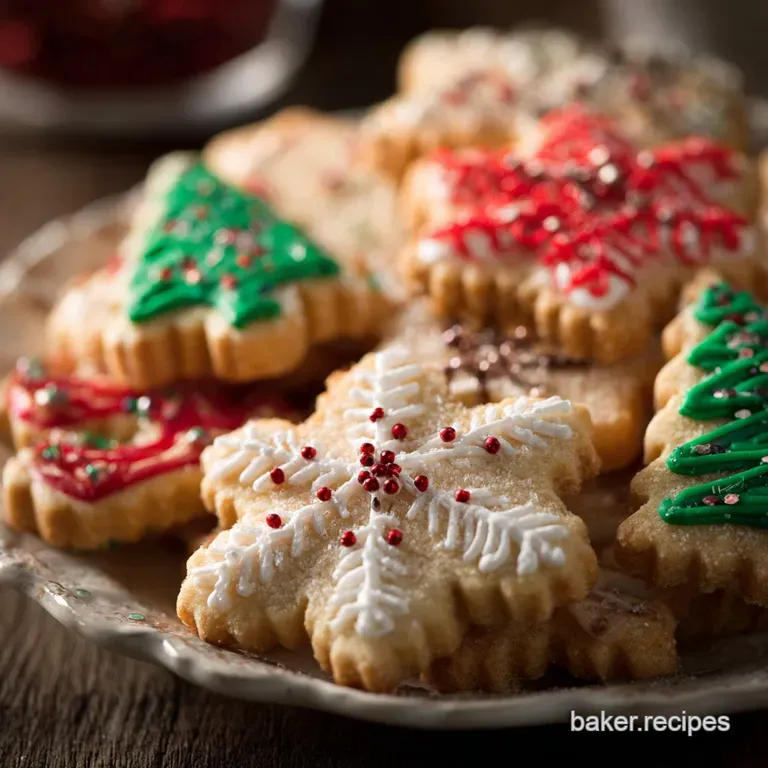
They bake up perfectly flat, offering a crunchy edge but retaining that delightful, soft centre we all crave.
Look, every year someone panics about making the best christmas cookies recipe . But this classic cut out cookie dough is truly foolproof, which is why I call it the festive all-rounder.
You mix it quickly, you chill it properly, and you get dozens of reliable cookies that won't spread into shapeless blobs. This recipe saves time and sanity during the busiest month of the year.
This guide tackles all the tricky bits: why your dough spreads, how long to chill it, and the absolute best way to decorate them for gifting. Trust me, if I can stop my dough from melting into a messy puddle (a mistake I definitely made in 2018), you can too.
Let’s crack on and make the best Christmas cookies you’ve ever baked.
Mastering Texture: Why These Cut-Outs Hold Their Shape
The Legacy of the Classic Cut-Out Cookie
Everyone needs a reliable, buttery base cookie for their holiday decorating arsenal. These aren't fancy, highly spiced gingerbread (though those are wonderful, too); this is the traditional, reliable canvas. They are sturdy enough to handle piping, stacking, and shipping, which is key for holiday gifting.
The secret to this specific recipe is balancing the flour and butter ratios perfectly.
Why We Call Them the Festive All-Rounder (Buttery and Reliable)
This recipe uses softened, rather than melted, butter and relies heavily on creaming to incorporate air. This structured foundation prevents the dough from completely relaxing in the heat of the oven.
We also use a touch of baking powder, which gives a gentle lift without causing extreme puffiness or spreading. They are the definition of easy christmas cookies recipe.
Quick Overview: Prep Time, Bake Time, and Yield
| Stage | Time Estimate |
|---|---|
| Active Prep | 30 minutes |
| Mandatory Chill | 60– 90 minutes |
| Bake Time | 10– 12 minutes per tray |
This batch yields about three dozen medium sized festive cut out cookies.
The Secret to No-Spread Edges
The most crucial step is chilling the dough and I mean seriously chilling it. Cold fat is locked fat, and locked fat won’t melt out instantly and cause your beautiful reindeer to look like blobs. If your dough is cold, your cookies hold their shape.
Achieving the Perfect Buttery Crumble
We achieve that lovely melt-in-your mouth texture by thoroughly creaming the butter and sugar until it's super pale and fluffy. This aeration process, followed by the minimal mixing once the flour goes in, ensures a tender crumb. Don't worry about them being ultra crisp; these should be delicately soft in the centre.
The Role of Nutmeg and Vanilla in Festive Flavor
These two workhorse ingredients provide warmth without overpowering the buttery flavour. The tiny quarter teaspoon of nutmeg is absolutely critical; it elevates the taste from "plain sugar cookie" to "classic Christmas cookie." Use a high-quality vanilla extract here; you really notice the difference.
Essential Ingredients for Flawless Christmas Cookies Dough
Precise Measurement Checklist
Always measure your flour correctly by spooning it into the measuring cup, then leveling it off. Scooping directly can compact the flour, giving you far too much and resulting in dry, tough dough.
Ingredient Notes: The Importance of Cold Butter
While we start by softening the butter to cream it with the sugar, the final dough must be chilled. The contrast is key. If your butter is too hot when you start, the dough will be greasy and impossible to roll without adding excess flour.
Room temperature butter should yield slightly to a gentle press, but your finger shouldn't sink right through.
Flour Variations and gluten-free Alternatives
| Ingredient | Substitute Tip |
|---|---|
| All-Purpose Flour | Use a quality 1 to-1 GF baking blend (needs xanthan gum). |
| Nutmeg | 1/2 tsp finely ground cardamom or a pinch of cinnamon. |
| Unsalted Butter | Cold vegetable shortening (for extra tender cookies) or vegan butter sticks. |
| Granulated Sugar | Caster sugar works too, providing a slightly finer crumb. |
Expert Swaps for Nutmeg and Vanilla Essence
If you find nutmeg too polarising, swap it entirely for a 1/2 teaspoon of good almond extract instead of vanilla. This gives your Christmas cookies a distinct, slightly marzipan like flavour that is incredibly festive.
Alternatively, you could skip the nutmeg and amp up the vanilla to 3 teaspoons for a rich, pure vanilla flavour.
Rolling, Cutting, and Baking: The step-by-step Method
Creaming and Combining: Building the Dough Foundation
Start slow! Beat your softened butter and sugar on medium high for a full 3– 4 minutes until they resemble pale, fluffy whipped cream. This is where the air goes in.
Once you add the dry ingredients, keep the mixer on low speed and stop mixing the moment you see the flour disappear. Seriously, stop the second it looks combined.
The Essential Chill Time: Dough Preparation
Wrap those flat discs of dough tightly in plastic wrap. I find that a minimum of 90 minutes in the fridge is ideal for maximum firmness. If you are baking tomorrow, leaving it overnight is even better.
I used to rush this step, and my cute gingerbread men ended up looking like fat amoebas don’t be like past me!
Achieving Uniform Thickness When Rolling
Uniform thickness is crucial for even baking. If some cookies are thick and some are thin, you'll have burnt edges and raw centres. I use a rolling pin with adjustable rings, which guarantees a perfect 1/4 inch (6 mm) every time. This thickness provides the best structure for decorating. If you want a fun alternative to these, check out my recipe for Christmas Cookies: Buttery Stained Glass Shortbread Recipe , which uses an even thicker base.
Bake Times and Visual Cues for Doneness
Preheat your oven properly and use parchment paper (non-negotiable). Bake for 10– 12 minutes at 350°F (180°C). Do not wait for them to look golden brown across the entire surface. They are done when the edges just barely start to take on a light, golden hue.
They will firm up considerably as they cool.
Chef's Note: If you notice your cut-out cookies have slightly softened while waiting to bake, put the entire baking sheet into the freezer for 5 minutes. That cold shock will prevent spreading guaranteed!
Troubleshooting Common Cut-Out Cookie Problems
Stop the Spreading: Dough Temperature Control
This is the number one issue people face! If you roll the dough too thin, or if you skipped the chill time, they will spread. Fix: If your kitchen is warm, work in small batches, keeping the rest of the dough refrigerated. Also, make sure your baking sheets aren't still hot from the last batch.
When to Re-roll Dough Scraps Safely
You will inevitably have leftover dough scraps after cutting. Gather them gently, press them together (don't knead them aggressively!), and form a new disc. Crucially, chill this re-rolled dough for at least 30 minutes before cutting again.
Overworked dough tends to become tough, but chilling minimizes this.
Preventing Stuck Dough (Flouring Techniques)
If you have to heavily flour your surface to roll the dough, you have two problems: too much flour in the recipe, or the dough is too warm. Fix: Roll the dough between two sheets of parchment paper. This eliminates the need for any extra flour and makes clean-up a breeze.
Storing Your Festive Cookie Bounty
Freezing Baked vs. Unbaked Dough
The dough is a fantastic make-ahead option. You can form the discs and wrap them tightly, freezing them for up to 3 months. Thaw them overnight in the fridge before rolling. You can also cut out the shapes and freeze them raw on the tray; once frozen, transfer them to an airtight container.
Bake from frozen, adding 2– 3 minutes to the total bake time.
Optimal Shelf Life for Decorated Cookies
Once baked and completely cooled, these christmas cookies can be stored in an airtight container at room temperature for up to two weeks. If you use royal icing (which hardens), wait until the icing is rock solid (4+ hours) before stacking them between sheets of parchment paper.
Perfect Pairings and Festive Presentation
Best Frostings and Icing for Cookie Decoration
For detailed, intricate decoration that holds up, royal icing (made with meringue powder) is king. If you prefer a softer, slightly chewier cookie, use a simple powdered sugar glaze mixed with milk and vanilla. For quick gifting options, these are fantastic paired with my recipe for Christmas Treats: Easy White Chocolate Truffles for Holiday Gifting — they look incredible together on a tiered stand.
Presentation Ideas
Layer these cookies on a festive platter with other small treats, like my quick Christmas Sweet Treats: Easy Shortbread Bites for Gifting . For a truly impressive dessert spread, serve them next to a slice of warm Christmas Desserts: Sticky Toffee Pudding with Brandy Custard . They offer a wonderful contrast in texture and temperature to the rich, warm puddings. Stack them high, add a ribbon, and enjoy the praise!

Recipe FAQs
Why did my Christmas cut-out cookies spread and lose their shape?
Spreading is usually caused by the butter being too warm or insufficient chilling time. Ensure you follow the recipe closely by chilling the dough for at least two hours so the butter is fully solidified before baking.
If your kitchen is very warm, consider chilling the cut-out shapes on the baking sheet for 10 minutes before placing them in the oven.
My cookies turned out tough and dry; how can I achieve a soft center?
A tough texture often results from overworking the dough, which overdevelops the gluten. Only mix the flour until the ingredients are just combined and no streaks remain. Additionally, avoid adding excessive flour when rolling; use light dusting and rely on chilling to manage stickiness, and always slightly underbake (remove when the edges are just barely golden).
Can I freeze this cookie dough or the baked cookies?
Yes, both methods work wonderfully for preparing ahead. Wrap flattened disks of raw dough tightly in plastic wrap and freeze for up to 3 months; thaw overnight in the refrigerator before rolling. Baked, un-iced cookies can be stored in an airtight container in the freezer for about 6 weeks.
How long will these Christmas cookies stay fresh once decorated?
If decorated with royal icing, ensure the icing is fully hardened (usually 6-8 hours) before stacking or storing. Decorated cookies should be kept in an airtight container at room temperature and are best enjoyed within 3 to 5 days. For longer storage, keep them plain and ice them closer to the gifting date.
Can I use this recipe to make gluten-free or dairy-free variations?
For a gluten-free version, substitute the standard flour with a high-quality 1:1 gluten-free baking blend that includes xanthan gum. To make them dairy-free, substitute the butter with a solid plant based baking stick, ensuring it has a high fat content for the best texture.
Note that GF dough often requires increased chilling time.
What’s the best way to handle the dough if my kitchen is very warm?
Warm environments are the enemy of cut-out cookies. Work with small portions of dough at a time, keeping the rest refrigerated until needed. If the dough starts to stick during rolling, place the entire sheet of rolled dough back in the fridge or freezer for 10-15 minutes before cutting out shapes.
I want a stronger gingerbread flavor; can I increase the spices?
Absolutely, adjusting the spice blend will not affect the structural integrity of the cookie. Feel free to increase the nutmeg and add 1/2 teaspoon of ground ginger and 1/4 teaspoon of cinnamon to the dry ingredients for a warmer, spicier flavor profile. Ensure the spices are well distributed for even taste.
Classic Christmas Cut Out Cookies
Ingredients:
Instructions:
Nutrition Facts:
| Calories | 165 calories |
|---|---|
| Fat | 8 g |
| Fiber | 1 g |
