Velvety Mashed Potato Casserole
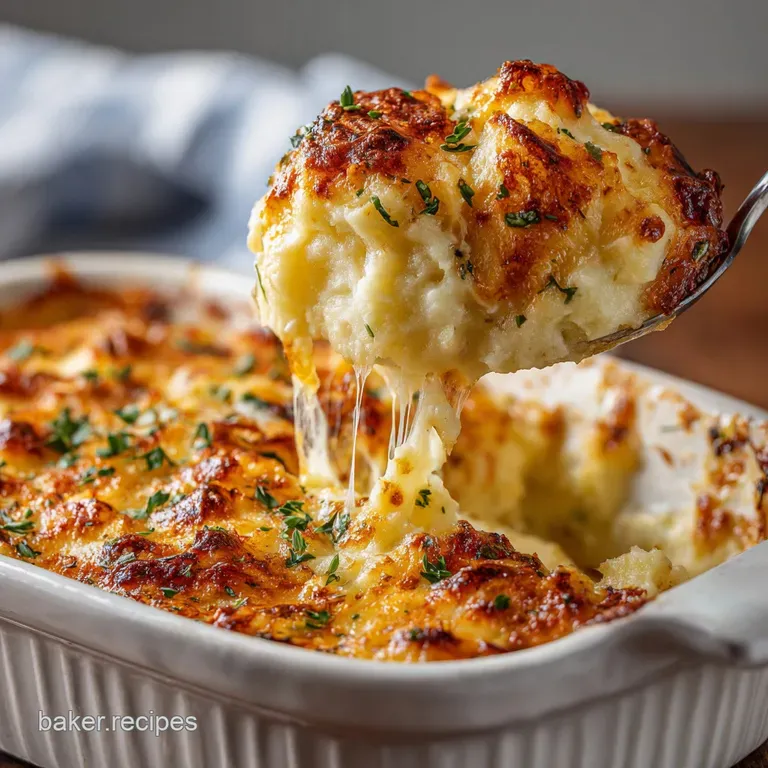
- Time: Active 20 minutes, Passive 45 minutes, Total 1 hour 5 mins
- Flavor/Texture Hook: Velvety smooth interior with a salty, shatter crisp bacon topping
- Perfect for: Thanksgiving dinner, Sunday roast, or meal prep comfort food
- Creating the Ultimate Mashed Potato Casserole
- Why This Casserole Stays Fluffy
- Why Your Spuds Stay Fluffy
- Essential Ingredients and Smart Swaps
- Minimal Tools for Maximum Flavor
- Step by Step Cooking Guide
- Fixing Common Potato Texture Issues
- Scaling for Different Crowd Sizes
- Debunking Common Kitchen Myths
- Storage and Smart Zero Waste
- Serving Ideas and Perfect Pairings
- Recipe FAQs
- 📝 Recipe Card
Creating the Ultimate Mashed Potato Casserole
I remember the first time I tried to bring mashed potatoes to a holiday potluck. I did what most people do: mashed them in a hurry, threw them in a bowl, and hoped they'd stay warm. By the time we sat down to eat, they were a cold, gluey, unappealing lump. It was a total kitchen heartbreak.
That was the day I realized that if you want potatoes to survive a party, you have to turn them into a proper casserole.
This Mashed Potato Casserole is the result of years of tinkering with fat ratios and starch levels. We aren't just making dinner here, we're building a side dish that actually holds its structure.
The secret lies in the way the cream cheese and sour cream interact with the hot potato starch, creating a texture that stays silky even after it sits on a buffet line for an hour.
You’re going to love how the sharp cheddar melts into the little nooks and crannies on top, creating these little pockets of toasted cheese. When you pull this out of the oven, the aroma of garlic and smoked paprika hitting that hot butter is honestly enough to make anyone hungry.
It’s one of those recipes where people will ask you for the secret, and you can just smile knowing it’s all about the prep.
Why This Casserole Stays Fluffy
Starch Gelatinization: Russet potatoes release amylose when mashed, which bonds with the fats in cream cheese to prevent the potatoes from turning into a sticky, gluey mess.
Fat Stabilization: The high fat content in sour cream and butter coats the potato granules, acting as a barrier that prevents moisture from escaping during the long bake.
Maillard Reaction: The protein in the cheddar and milk reacts with the heat to create a deeply savory, browned crust that adds a structural "snap" to every bite.
| Component | Fresh Russet Potatoes | Frozen Pre Mashed Spuds | The Difference |
|---|---|---|---|
| Texture | Fluffy and light | Often dense or watery | Fresh allows for better fat absorption |
| Flavor | Earthy and clean | Can have a metallic aftertaste | Fresh potatoes carry the garlic better |
| Structure | Holds upright when scooped | Tends to "slump" on the plate | Starch integrity is higher in fresh |
This comparison highlights why starting from scratch is worth the peeling time. While shortcuts exist, the chemical structure of a fresh potato is simply better at holding onto the rich dairy we're adding. If you’re looking for more holiday inspiration, you might enjoy my Sweet Potato Casserole recipe which uses a similar focus on texture and topping contrast.
Why Your Spuds Stay Fluffy
Choosing the High Starch Hero
Not all potatoes are created equal. For a casserole, we need Russets. Their high starch and low moisture content mean they'll soak up the butter and cream like a sponge. If you use waxy red potatoes, you'll end up with a dish that feels heavy and "slick" rather than fluffy.
Trust me, peel the Russets; it’s the only way to get that cloud like finish.
Stabilizing with Cream Cheese
Many people wonder why we don't just use milk. The cream cheese is the secret weapon here. It provides a thick, lactic acid driven tang that cuts through the richness, but more importantly, it provides structural body.
It prevents the casserole from weeping or becoming watery at the bottom of the dish after it’s been sliced.
Mastering the Maillard Crust
That golden brown top isn't just for looks. By topping the dish with cheddar and bacon before the final bake, we create a protective seal. This allows the interior to steam gently while the top undergoes the Maillard reaction, turning the sugars and proteins into a complex, savory crust that provides a much needed crunch against the velvety interior.
| Ingredient | Science Role | Pro Secret |
|---|---|---|
| 5 lbs Russet Potatoes | Starch provider | Cube them small for even cooking |
| 8 oz Cream Cheese | Emulsifier/Stabilizer | Must be completely soft to avoid lumps |
| 1 cup Sour Cream | Acidic tenderizer | Adds a subtle tang that balances the fat |
| 2 cups Cheddar | Protein/Fat crust | Grate it yourself for a better melt |
Essential Ingredients and Smart Swaps
- 5 lbs Russet potatoes: Peeled and cut into 1 inch cubes. Why this? Russets have the highest starch for fluffiness.
- 8 oz full fat cream cheese: Softened to room temperature. Why this? Provides the creamy structure needed for baking.
- 0.5 cup unsalted butter: Melted and ready to pour.
- 1 cup full fat sour cream: Adds moisture and a necessary tang.
- 0.5 cup whole milk: Adjusts the final consistency before baking.
- 2 tsp fine sea salt: Enhances every other flavor in the dish.
- 1 tsp garlic powder: Provides a background savory note without raw bite.
- 2 cups sharp cheddar cheese: Freshly shredded for the best melt.
- 6 slices thick cut bacon: Cooked until they shatter when crumbled.
- 0.25 cup fresh chives: Minced for a pop of color and onion flavor.
- 0.5 tsp smoked paprika: Adds a tiny hint of woodsmoke and color.
| Original Ingredient | Substitute | Why It Works |
|---|---|---|
| Full fat Sour Cream | Plain Greek Yogurt | Similar acidity and thickness. Note: Slightly more tart finish. |
| Whole Milk | Heavy Cream | Higher fat content. Note: Makes the dish significantly richer. |
| Sharp Cheddar | Smoked Gouda | Melts beautifully. Note: Changes the flavor profile to be more "woodsy." |
| Bacon Slices | Smoked Almonds | Provides salt and crunch. Note: Best for a vegetarian version. |
If you find yourself running low on oven space during a big meal, you can actually adapt these ingredients for a Crockpot Sweet Potato Casserole recipe style of cooking, though the Russets in this recipe really benefit from the dry heat of the oven to set the crust.
Minimal Tools for Maximum Flavor
You don't need a kitchen full of gadgets for this. In fact, keeping it simple usually leads to better texture. A large heavy bottomed pot (like a Dutch oven) is best for boiling the potatoes because it holds heat evenly.
For mashing, a traditional wire masher is actually better than a food processor; the processor can overwork the starch and turn your potatoes into literal glue.
A 9x13 inch (approx. 3 liter) baking dish is the standard here. I prefer ceramic or glass because they look great on the table, but a metal pan works if that's what you have. Finally, a sturdy spatula is your best friend for folding in the cream cheese and sour cream without deflating the air you've just whipped into the spuds.
Chef's Tip: Freeze your block of cheddar for 10 minutes before grating. It makes the cheese firmer and prevents it from clumping, resulting in a much more even "cheese blanket" on top of your Mashed Potato Casserole.
step-by-step Cooking Guide
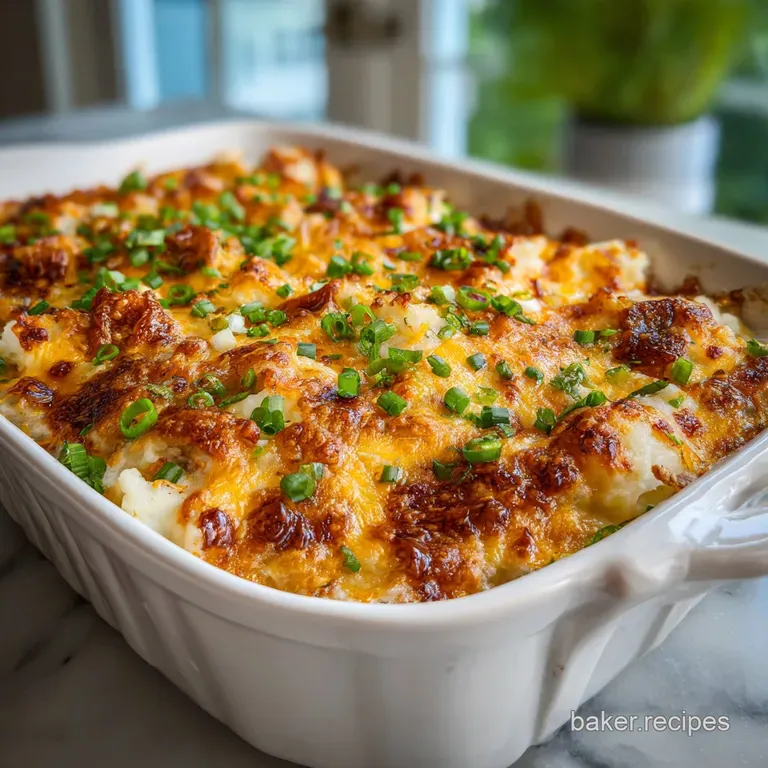
- Boil the potatoes. Place the 5 lbs of cubed Russets in a large pot and cover with cold water. Note: Starting with cold water ensures the outside doesn't turn to mush before the center is cooked.
- Simmer until tender. Bring to a boil, then reduce heat and simmer 15-20 minutes until the potatoes slide easily off a fork.
- Drain and dry. Drain the potatoes thoroughly. Note: Return them to the hot pot for 1 minute to steam off any excess moisture.
- Mash the base. Use a masher to break down the potatoes while they are still steaming hot.
- Add the fats. Fold in the 8 oz softened cream cheese and 0.5 cup melted butter until no white streaks remain.
- Incorporate the liquids. Stir in the 1 cup sour cream, 0.5 cup milk, 2 tsp salt, and 1 tsp garlic powder.
- Whip it up. Beat the mixture vigorously with a wooden spoon for 30 seconds until the texture looks velvety and light.
- Transfer to dish. Spread the mixture evenly into a greased 9x13 inch baking dish.
- Top it off. Sprinkle the 2 cups of shredded cheddar, crumbled bacon, and 0.5 tsp smoked paprika over the top.
- Bake the casserole. Bake at 190°C (375°F) for 30-35 minutes until the cheese is bubbling and the edges are golden. Garnish with chives before serving.
Fixing Common Potato Texture Issues
Fixing Gluey Texture Issues
If your potatoes feel sticky or gummy, you’ve likely overworked the starch. This happens often when using a hand mixer or a blender. Once it's gluey, you can't really "un glue" it, but you can save the dish by adding more melted butter and folding it in very gently to lubricate the starch strands.
Preventing Liquid Separation
Sometimes, if the potatoes aren't drained well enough, a layer of water forms at the bottom. The cream cheese usually prevents this, but if it happens, it's because the potatoes "steamed" in the dish.
Next time, ensure you let the boiled potatoes sit in the hot pot for a minute after draining to evaporate that surface water.
| Problem | Root Cause | Solution |
|---|---|---|
| Lumpy Texture | Cold cream cheese | Ensure dairy is room temp before mixing. |
| Dry Potatoes | Not enough milk | Fold in extra warm milk 1 tablespoon at a time. |
| Burnt Cheese | Oven rack too high | Move the dish to the middle or lower rack. |
Common Mistakes Checklist
- ✓ Never use a food processor to mash potatoes (it ruins the starch structure).
- ✓ Always salt the boiling water (potatoes need to be seasoned from the inside out).
- ✓ Don't skip the "steaming" step after draining the water.
- ✓ Use full fat dairy for the best stability and mouthfeel.
- ✓ Shred your own cheese to avoid the waxy anti clumping agents in pre bagged shreds.
Scaling for Different Crowd Sizes
If you're cooking for a smaller group, you can easily halve this recipe. Use a smaller 8x8 inch baking dish and reduce the baking time by about 10 minutes. When halving, I still use a full 8 oz of cream cheese because I love the extra richness, but you can stick to 4 oz if you want it more traditional.
Scaling up for a massive party (10 lbs of potatoes!) requires working in batches. Don't try to boil 10 lbs of potatoes in one pot unless it's a massive stockpot, as they won't cook evenly. When doubling the spices, use only 1.5x the salt and garlic powder initially, then taste and adjust.
Spices can become overwhelming when strictly doubled in large volume dishes.
| Servings | Potato Weight | Pan Size | Cook Time |
|---|---|---|---|
| 5 People | 2.5 lbs | 8x8 inch | 25 minutes |
| 10 People | 5 lbs | 9x13 inch | 45 minutes |
| 20 People | 10 lbs | Two 9x13 pans | 50 minutes |
Debunking Common Kitchen Myths
One big myth is that you should add potatoes to already boiling water. This is a mistake! Starting with cold water allows the potato to heat through evenly. If you drop them into boiling water, the outside will cook and start to disintegrate before the middle is even soft. Always start cold.
Another myth is that you need to peel potatoes after boiling to "save flavor." While that works for potato salad, for a Mashed Potato Casserole, peeling beforehand is much more efficient. The starch loss is minimal if you don't over boil them, and it saves you from burning your fingers trying to peel hot spuds.
Storage and Smart Zero Waste
Storage: This casserole is a champion of leftovers. It will stay fresh in the fridge for up to 4 days if covered tightly. To reheat, add a splash of milk and cover with foil before popping it back in the oven at 175°C. This prevents the top from burning while the middle gets hot.
Freezing: You can freeze this! Assemble the casserole (but leave the cheese and bacon off), wrap it in a double layer of foil, and freeze for up to 2 months. Thaw in the fridge overnight before adding the toppings and baking as directed.
Zero Waste: Don't toss those potato peels! Toss them with a little oil, salt, and pepper, and bake them at 200°C until they are crispy. They make a fantastic "kitchen snack" while you're waiting for the main dish to finish.
Also, any leftover chive stems can be tossed into a freezer bag to flavor your next batch of vegetable stock.
Serving Ideas and Perfect Pairings
This rich, savory side dish needs a main course that can stand up to its creamy texture. It's the absolute best friend to a roast chicken or a thick cut steak. The smoked paprika and bacon notes also make it a surprising but wonderful partner for grilled pork chops.
If you're looking for a vegetable to round out the plate, something with a bit of acidity or snap is perfect. A bright green bean almondine or a simple arugula salad with a lemon vinaigrette helps cut through the decadence of the potatoes. For more holiday table ideas, take a look at my other sweet potato casserole recipe to give your guests two different, yet equally delicious, potato options.
Recipe FAQs
What is mashed potato casserole?
It is a baked side dish of mashed potatoes mixed with rich binders. This transforms simple mash into a stable, deeply flavorful, and often cheese topped comfort food designed to hold heat and texture on a buffet line.
What's in a John Wayne casserole?
The John Wayne casserole traditionally contains ground beef, cream of mushroom soup, and cheese. It is usually topped with Bisquick or biscuit dough, making it more of a savory hotdish than a standard creamy potato bake.
What is in Tucci's 4 ingredient potato casserole?
Tucci's popular version typically uses potatoes, cream of chicken soup, sour cream, and cheddar cheese. This recipe relies on the canned soup as the primary binder and flavor agent for a quick preparation.
What are the common casserole mistakes?
The most common mistake is overworking the potatoes, resulting in a gluey texture. Another frequent error is failing to drain the boiled potatoes sufficiently, leading to a watery separation at the bottom of the dish.
How do I ensure my casserole topping gets perfectly golden and crisp?
Bake the casserole on the middle or lower rack to promote deep heat penetration before the top burns. Ensure your cheese is freshly grated, as the anti caking agents in pre-shredded cheese inhibit proper browning.
Can I make this casserole ahead of time?
Yes, assembling the casserole completely, excluding the top cheese layer, is ideal for make-ahead. Cover it tightly and refrigerate for up to 48 hours; add the cheese and increase the bake time slightly when cooking straight from the fridge.
Should I use Russet or Yukon Gold potatoes for the best texture?
Use Russet potatoes for a light, fluffy interior, as their high starch content absorbs the dairy beautifully. Yukon Golds are waxy and lower in starch, which can result in a slicker texture, similar to what happens if you don't manage starch release correctly when making our Proper Job Green Bean Casserole Scratch Mushroom Sauce Crispy Shallots.
Creamy Mashed Potato Casserole
Ingredients:
Instructions:
Nutrition Facts:
| Calories | 524 kcal |
|---|---|
| Protein | 14g |
| Fat | 31g |
| Carbs | 48g |
| Fiber | 7g |
| Sugar | 3g |
| Sodium | 654mg |
