Sweet Potato Casserole with Marshmallows: Our Ultra-Creamy Holiday Classic
- The Essential Guide to Sweet Potato Casserole with Marshmallows
- Ingredients List for the Best Sweet Potato Casserole with Marshmallows
- Baking the Golden Crown: Detailed Step-by-Step Method
- Mastering the Balance: The Science Behind the Creamy Texture
- Troubleshooting Your Sweet Potato Casserole (Avoiding Common Pitfalls)
- Making the Most of Leftovers: Storage and Reheating Guide
- Perfect Pairings: What to Serve Alongside This Decadent Side Dish
- Recipe FAQs
- 📝 Recipe Card
The Essential Guide to Sweet Potato Casserole with Marshmallows
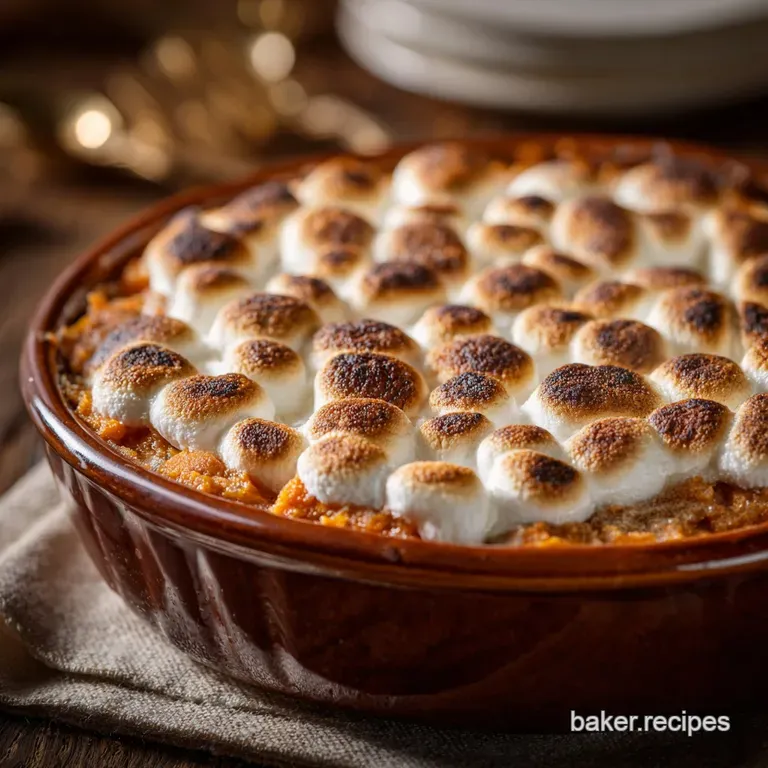
Listen, when that sweet potato casserole comes out of the oven, everyone stops talking. That intoxicating aroma brown sugar, cinnamon, and roasting marshmallows is the true signal the holiday has begun.
It’s bubbly, incredibly creamy, and topped with a glorious golden crown that makes mouths water instantly.
And here’s the secret: this recipe is ridiculously easy to pull off, even when your kitchen is absolute chaos. You can make the whole creamy sweet potato base the day before, which is a total lifesaver when oven space is limited and time is short.
Seriously, it’s cheap, uses pantry staples, and guarantees compliments every single time.
Forget those dry, gritty versions you might have tried before; we are aiming for velvety smooth, custard like perfection here. I’ve learned all the tricks for maximum flavor and creaminess, ensuring that every spoonful of this Sweet Potato Casserole with Marshmallows is absolutely perfect.
Ready to make the best version ever? Let's crack on.
Why This Dessert Like Side Steals the Holiday Show
The reason this dish becomes the star isn't just the sugar; it's the texture contrast. You have the silky, spiced base meeting that crunchy, sticky, gooey top layer of toasted marshmallow. It’s culinary magic.
We also melt the butter and brown sugar directly into the hot, just drained potatoes, which creates a fudgier, denser base rather than an airy or runny one.
Defining the Perfect Custard Like Sweet Potato Base
The secret to that signature creaminess involves balancing fat, liquid, and binder. We lean on eggs here; they are the unsung heroes, helping to bind the mixture into a lovely, custard like consistency so it doesn't just flop apart on the plate. Don't skimp on the vanilla or nutmeg , either.
Use pure vanilla extract and, if you can, grate your nutmeg fresh; the difference in aroma is phenomenal.
Prep Time and Equipment Checklist for an Easy Medium Recipe
While the mixing is easy, waiting for the potatoes to boil takes time, and you need to watch that final marshmallow broil like a hawk. You’ll want a sturdy masher or, ideally, a handheld electric mixer to truly eliminate all lumps.
This is an easy medium recipe because the steps are simple, but the timing is crucial.
Ingredients List for the Best Sweet Potato Casserole with Marshmallows
The list is short, sweet, and mostly things you already have lurking in the spice drawer. We focus on balancing the sweetness so that it complements the marshmallows without becoming sickeningly sweet.
| Ingredient | Role | Substitution Tip |
|---|---|---|
| Sweet Potatoes | The heart of the dish | Roast them instead of boiling for deeper flavor. |
| Butter | Richness, depth | Use coconut oil for a dairy-free version. |
| Brown Sugar | Caramel note | Maple syrup works beautifully, but reduce milk slightly. |
| Whole Milk/Cream | Creaminess | Use full fat canned coconut milk for ultimate richness. |
| Eggs | Binder | Omit if necessary, but the texture will be looser. |
| Marshmallows | The golden crown | Use a meringue topping if you hate the sticky factor. |
Choosing the Right Sweet Potatoes (Yams vs. Jewel/Garnet Varieties)
Always aim for the bright orange fleshed varieties like Jewel or Garnet. These are generally labeled "sweet potatoes" in the U.S. and have a naturally high sugar content and a moist flesh, making them perfect for mashing into a creamy filling.
The drier, whiter potatoes often called "yams" simply won't give you the same beautiful texture or color.
Dairy Swaps: Making the Casserole Lactose Free
I know dairy isn't always an option! Instead of whole milk or heavy cream, use full fat canned coconut milk. It adds zero coconut flavour once mixed with the spices, but the high fat content keeps the casserole incredibly creamy. Another good alternative is unsweetened oat milk.
Marshmallow Varieties: Miniature vs. Standard Sizing Notes
I strongly prefer miniature marshmallows for the topping. They melt faster, cover the surface more evenly, and give you better distribution of that wonderful gooey charred texture across the whole casserole.
If you only have standard large marshmallows, you absolutely must cut them in half; otherwise, they'll create giant, sticky domes that slide off the edge.
Baking the Golden Crown: Detailed step-by-step Method
This is where we transform simple ingredients into holiday gold.
Stage 1: Preparing the Sweet Potatoes
- Boil and Drain: Place your peeled, 1 inch sweet potato chunks into a large pot and cover with cold, heavily salted water. Boil until they are fork tender (about 15– 20 minutes), then drain them completely in a colander. This is critical: let them sit for 2– 3 minutes to steam off excess moisture.
- Mash: Transfer the hot potatoes back into the empty pot or a large mixing bowl. Use an electric mixer if you have one; it is the fastest way to achieve maximum smoothness. Mash until totally lump free and slightly fluffy.
Stage 2: Assembling the Casserole Base
- Preheat and Combine: Preheat your oven to 350°F (175°C) and grease a 9x13 inch baking dish. Add the softened butter, brown sugar, milk/cream, vanilla, cinnamon, nutmeg, and salt to the warm mashed potatoes. Stir this vigorously until everything is fully incorporated and the mixture is super smooth.
- Add Binder: Lightly beat your two large eggs in a separate bowl. Fold them into the sweet potato mixture until just combined. Do not overmix at this stage!
- Initial Bake: Spread the filling evenly into the prepared dish. Bake for 25– 30 minutes, or until the filling is set and slightly firm around the edges.
Stage 3: The Marshmallow Finish
- Top It Off: Remove the casserole from the oven. Evenly distribute the miniature marshmallows (or halved large ones) over the entire surface.
- Broil for Gold: This is the fast part. Switch your oven to the broiler setting (medium high). Place the casserole dish on the top rack, watching it the entire time. Broil for just 1– 2 minutes, rotating the dish if one side browns faster than the other. They go from golden to black in seconds!
- Rest: Remove it immediately when the marshmallows are perfectly toasted and bubbly. Let the dish rest for 10 minutes before serving so the filling can settle and set properly.
Mastering the Balance: The Science Behind the Creamy Texture
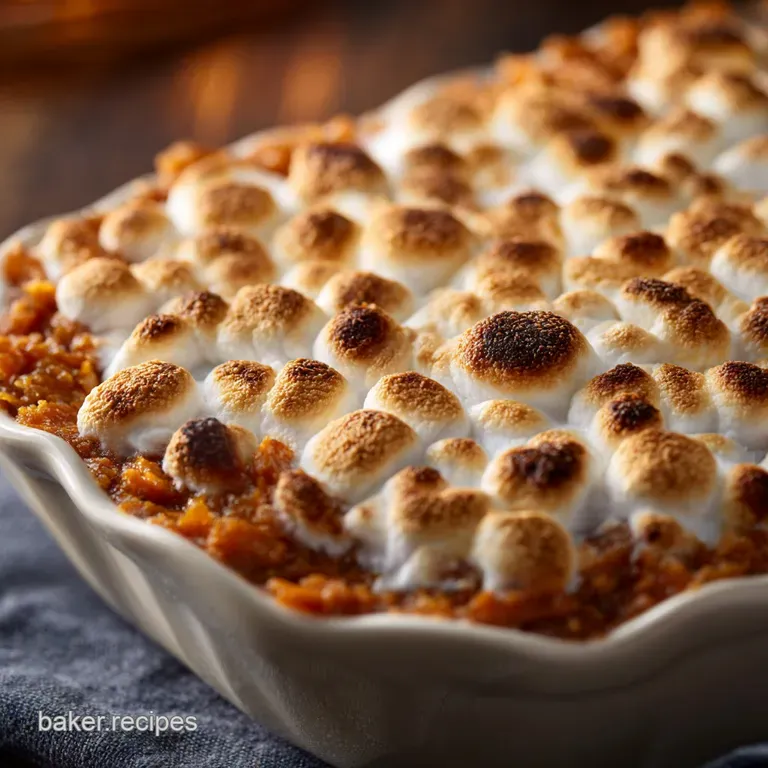
Preparing and Mashing the Sweet Potatoes for Maximum Smoothness
Drying out the potatoes is step one in avoiding a watery casserole base. When you drain them, the residual heat helps evaporate excess moisture. Do not add cold dairy to hot potatoes . This will cool them too quickly and make the butter seize up, resulting in a grainy texture instead of creamy.
Mixing the Filling: Ensuring Uniform Spice Distribution
Always add the spices and sugar before the eggs. This ensures that the cinnamon and nutmeg are fully dissolved and evenly distributed throughout the buttery mixture before the eggs set the structure. Uniform flavor is the goal, and that means lots of stirring right here.
The Final Assembly: Layering and Crowning with Marshmallows
Spread the base layer thick and even. I usually take a spoon and create a slight well in the middle; this prevents the marshmallows in the center from sinking too much while baking.
Remember, we only add the marshmallows during the last 10 minutes of baking time, or better yet, under the broiler.
The Maillard Reaction: Achieving Golden, Toasted Marshmallows
That glorious caramel brown color is the Maillard reaction in action sugars reacting to heat. You want high heat, fast exposure. The broiler achieves this perfectly, creating a crispy outer shell while keeping the inside gooey and molten.
If you try to bake them too long at 350°F, they just deflate into a sticky puddle without getting that beautiful char.
Crucial Chef’s Note: If you are nervous about using the broiler, use the oven method, but bake at 400°F (200°C) for five minutes instead of 350°F. It speeds up the browning process safely.
Troubleshooting Your Sweet Potato Casserole (Avoiding Common Pitfalls)
Preventing a Runny Filling: Don't Over Mash the Potatoes
This sounds counterintuitive, but over mashing or over processing sweet potatoes (especially with a food processor) can release too much starch, making the final dish gluey or thin. Mash until smooth, then stop.
If your filling seems slightly loose after mixing, try spreading it into the dish and letting it sit in the fridge for 30 minutes before baking to firm up the butter.
The 'make-ahead' Secret: Preparing the Base 24 Hours Early
This is my favorite trick for hosting. Complete all the steps up to Stage 2, Step 5 (The Initial Bake) . Spread the raw, mixed filling into the prepared casserole dish, cover it tightly with plastic wrap, and stick it in the fridge for up to 24 hours.
When you're ready to bake, pull it out 30 minutes early to take the chill off, then proceed with the initial 30 minute bake. This trick frees up valuable stove time!
If you are really tight on oven space, you might even consider making a version in the slow cooker; I have a great recipe for a [Crockpot Sweet Potato Casserole: Ultra Creamy, No Oven Space Needed] if you’re interested.
Safe Refrigeration: Storing Baked and Unbaked Casserole Base
Both baked and unbaked bases store beautifully. The unbaked base keeps for 1 day; the baked base (without marshmallows) keeps for 3 4 days. Always cover tightly with foil or plastic wrap.
Making the Most of Leftovers: Storage and Reheating Guide
This dish holds up surprisingly well, even with the sticky marshmallow top.
Fridge Shelf Life: Store leftovers covered in the refrigerator for 3 4 days.
Freezing Instructions: Yes, you can freeze it, but only freeze the base —never freeze it with the marshmallows. Scoop the base into a freezer safe container or tightly wrapped portions. It keeps well for up to 3 months. Thaw overnight in the fridge before reheating.
Reheating: For the best texture, reheat in a 300°F (150°C) oven covered loosely with foil until warmed through (about 15– 20 minutes). If your marshmallows were already toasted, reheating them uncovered can make them hard and chewy.
I usually scrape off any seriously charred bits before storing and re-broil a few fresh marshmallows on top when I serve leftovers!
Perfect Pairings: What to Serve Alongside This Decadent Side Dish
Ideal Savory Counterparts (Contrast is Key)
Because this casserole is so sweet, you need sharp, salty, and savory flavors to provide contrast. You definitely want rich, hearty savory options to prevent sugar overload. Think about serving it alongside sharp cranberry sauce and a proper savory dish like [Homemade Stuffing: Classic Sage Onion Recipe with Crispy Top].
The herbaceous sage in the stuffing cuts the sweetness beautifully.
If you are looking for another sweet potato dish, but maybe one with a little crunch, I also love making my version with a nutty topping instead it's very different but equally delicious. Check out my recipe for [Sweet Potato Casserole Recipe Easy: Creamy, Spiced Pecan Topping].
Enjoy this glorious dish, my friend. It truly is the best part of the meal!
Recipe FAQs
Can I prepare the Sweet Potato Casserole base ahead of time?
Absolutely, preparing the base in advance is ideal for holiday planning. You can assemble the entire filling (excluding the marshmallows) up to two days before baking; cover the dish tightly and refrigerate.
When ready to bake, add 10-15 minutes to the overall cooking time since the casserole is starting from cold, and then proceed to add the marshmallows as instructed.
Why is my casserole watery or not setting up correctly?
A watery texture often results from excess moisture retained by the sweet potatoes. Ensure you drain the boiled potatoes exceptionally well, or better yet, roast them to naturally reduce water content.
The egg is crucial for binding, so do not omit it; if the mixture seems very loose before baking, stir in one tablespoon of cornstarch or flour for added stability.
When should I add the marshmallows to prevent them from burning?
The marshmallows should only be added during the last 5 to 7 minutes of the baking cycle. Alternatively, you can bake the casserole completely, remove it, cover it with marshmallows, and place it under a preheated broiler for 60 to 90 seconds.
Watch them very carefully, as they toast extremely fast and can burn instantly under high heat.
Can I use canned sweet potatoes instead of boiling fresh ones?
Yes, you may use canned sweet potatoes for a time saving shortcut, but they hold significantly more moisture than fresh ones. Drain the potatoes thoroughly and pat them dry with paper towels before mashing.
You might also need to slightly reduce the liquid (cream or milk) in the recipe to maintain the intended thick, custard like consistency.
How can I make this casserole dairy-free or vegan?
To make this recipe vegan, replace the heavy cream with full fat canned coconut milk or rich cashew cream, and use a high-quality vegan butter substitute in place of dairy butter.
The binding egg can be swapped for a flax egg (1 tablespoon flaxseed meal mixed with 3 tablespoons water), or you can use vegan marshmallows which are widely available in most stores.
Is it possible to freeze the sweet potato casserole?
While safe to freeze, freezing can sometimes alter the creamy texture of the custard base, making it slightly grainy upon thawing. If you choose to freeze, do so before baking and absolutely without the marshmallow topping.
Thaw the casserole overnight in the refrigerator before baking, and add the topping fresh right before serving.
I don't like marshmallows. What is a good crunchy topping alternative?
For a sophisticated, crunchy topping, create a streusel mixture using 1/2 cup all-purpose flour, 1/2 cup packed brown sugar, 1/2 cup chopped pecans, and 4 tablespoons of cold butter cut into pieces.
Sprinkle this mixture over the unbaked casserole base before placing it in the oven; it will bake into a delicious, golden brown crust.
Creamy Sweet Potato Casserole With Marshmallows
Ingredients:
Instructions:
Nutrition Facts:
| Calories | 480 kcal |
|---|---|
| Fat | 22 g |
| Fiber | 5 g |
