Extreme Shatter Crisp Onion Rings Recipe
- Time: Active 20 minutes, Passive 15 minutes, Total 35 minutes
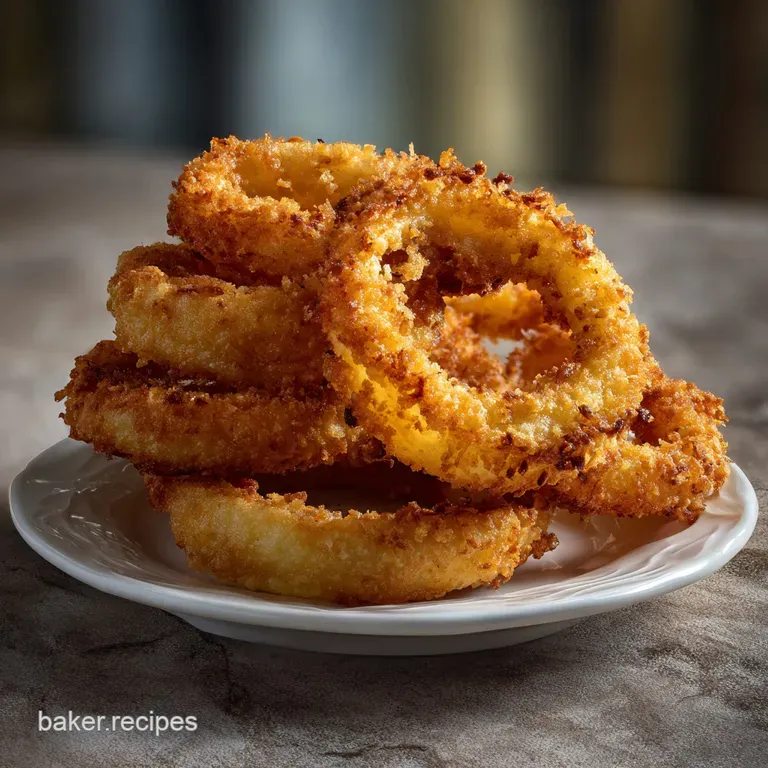
- Flavor/Texture Hook: Extreme shatter crisp exterior with a velvety, sweet interior
- Perfect for: Weekend burger nights, budget-friendly appetizers, or impressive game day snacking
- My Secrets For This Onion Rings Recipe
- Technical Breakdown of Key Components
- Building the Flavorful Ingredient Base
- Necessary Tools for Frying Success
- Step by Step Frying Instructions
- Fixing Common Frying Mistakes Fast
- Smart Swaps for Any Budget
- Keeping Leftovers Fresh and Crispy
- Great Sides to Serve Alongside
- Solving Frequent Kitchen Battering Hurdles
- Recipe FAQs
- 📝 Recipe Card
Listen to that sound. It is a sharp, distinct shatter that happens the second your teeth hit the crust. Most people struggle with onion rings because the breading either slides off like a wet blanket or turns into a greasy sponge within minutes.
I have spent years messing around with different batters, from heavy beer mixes to thin tempura, and I finally found the one that actually works every single time.
You do not need a fancy deep fryer or expensive pre made mixes to get restaurant quality results at home. This onion rings recipe relies on basic pantry staples like cornstarch and seltzer water to create a light, airy coating that clings to the onion.
It is about working with the physics of moisture and heat rather than just throwing flour at a vegetable and hoping for the best.
We are going to walk through the process of prepping those Vidalia onions so they lose their bite and turn sweet, followed by a double coating technique that acts like glue for your batter.
By the time you finish reading, you will know exactly how to achieve that golden, crackling finish that makes everyone at the table reach for just one more. Let's get into the details of why this specific approach beats the classic diner version.
My Secrets For This Onion Rings Recipe
The magic of this onion rings recipe lies in the structural integrity of the batter. By replacing a portion of the all purpose flour with cornstarch, we significantly reduce gluten development, which is the main culprit behind "bread like" or chewy rings.
This creates a brittle, delicate shell that snaps rather than pulls.
Another vital factor is the use of seltzer water or a light lager. The carbon dioxide bubbles in these liquids provide immediate aeration when the batter hits the hot oil. These tiny pockets of air expand rapidly, creating a surface area that is incredibly thin and crispy.
This light texture is further enhanced by keeping every component as cold as possible until the very last second.
Starch Gelatinization: When the cornstarch hits the 1 liter neutral oil, it creates a rigid, dehydrated layer that blocks oil from soaking into the onion.
Carbonation Expansion: The CO2 bubbles in the 240 ml ice cold seltzer water push the batter outward, preventing it from becoming a dense, heavy mass.
Protein Denaturation: The 1 large egg acts as a binder, coagulating quickly in the heat to lock the coating onto the slick surface of the onion.
Technical Breakdown of Key Components
| Ingredient | Science Role | Pro Secret |
|---|---|---|
| Cornstarch (70g total) | Prevents gluten bonds | Use 30g in the dredge to create a sandpaper like surface for the batter to grip. |
| Ice Cold Seltzer (240 ml) | Rapid steam release | Open the bottle or can right before mixing to keep the maximum volume of bubbles. |
| Vidalia Onions (2 large) | High sugar content | Slice them to exactly 1.5cm to ensure the onion softens at the same rate the crust browns. |
| Smoked Paprika (3g) | Maillard reaction aid | The sugars in the paprika caramelize quickly, giving you that deep golden hue without overcooking. |
Building the Flavorful Ingredient Base
To get the best results, you need to be specific about your selections. I always reach for a heavy, high-quality neutral oil like Mazola Corn Oil or Crisco Vegetable Oil because they have high smoke points and won't impart a funky taste.
For the onions, Walla Walla or Vidalia are non negotiable if you want that natural sweetness that balances the salty crust.
- 2 large Vidalia onions: Sliced into 1.5cm rounds. Why this? These have the highest natural sugar and lowest sulfur content.
- Substitute: Yellow onions soaked in milk for 30 minutes.
- 500 ml ice water: For the initial soak. Why this? It shocks the onion and removes the harsh, stinging bite.
- Substitute: Cold tap water with a tray of ice cubes.
- 190 g All purpose flour: Divided into 65g and 125g portions. Why this? Provides the protein structure needed to hold the spices and egg.
- Substitute: Wondra flour for an even finer, lighter texture.
- 70 g Cornstarch: Divided into 30g and 40g portions. Why this? This is the secret to a shatter crisp texture that doesn't get soggy.
- Substitute: Potato starch or arrowroot powder.
- 5 g Garlic powder: Mixed into the dry dredge. Why this? Adds savory depth that complements the sweetness of the fried onion.
- Substitute: Onion powder for a more concentrated onion on-onion flavor.
- 3 g Smoked paprika: Adds color and a hint of woodsy flavor. Why this? Provides a vibrant golden red tint to the finished rings.
- Substitute: Cayenne pepper if you want a spicy kick.
- 1 large egg: Beaten well. Why this? The proteins act as a structural bridge between the onion and the batter.
- Substitute: 2 tablespoons of heavy cream.
- 240 ml Ice cold seltzer water: Or a light lager like Bud Light. Why this? Carbonation creates air pockets for a lighter, more delicate crust.
- Substitute: Club soda or very cold ginger ale (for a unique sweetness).
- 6 g Kosher salt: I prefer Diamond Crystal. Why this? The larger flakes stick better to the hot oil after frying.
- Substitute: Sea salt, but reduce the volume by half.
- 2 g Black pepper: Freshly cracked is best. Why this? Adds a sharp contrast to the rich fried coating.
- Substitute: White pepper for a more subtle heat.
- 1 liter neutral oil: For deep frying. Why this? Essential for complete submersion and even cooking of the rings.
- Substitute: Peanut oil if there are no allergies in the house.
Necessary Tools for Frying Success
You don't need a specialized machine, but a few specific tools make this much easier. A Lodge Cast Iron Dutch Oven is my favorite for frying because it holds heat better than stainless steel, meaning the temperature won't drop as much when you drop the onions in.
You will also want a Taylor Precision Thermometer to monitor that 1 liter of oil; guessing the temperature is the fastest way to greasy rings.
Finally,, use a stainless steel wire spider or a slotted spoon to fish them out. This allows the oil to drain away instantly. If you use a solid spoon, you'll trap oil against the batter, which leads to soggy spots.
Setting up a wire cooling rack over a baking sheet is also better than paper towels, as it allows air to circulate around the entire ring.
Chef's Tip: Put your flour and cornstarch in the freezer for 10 minutes before mixing the batter. The colder the ingredients, the more "shock" they get in the hot oil, resulting in a crispier shell.
step-by-step Frying Instructions
Phase 1: The Prep & Soak
- Slice the onions. Cut your 2 large Vidalia onions into consistent 1.5cm rounds and separate them into individual rings. Note: Uniformity ensures even cooking times.
- Ice water bath. Submerge the rings in 500 ml ice water for 15 minutes. Until the onions feel firm and lose their sharp scent.
- Dry thoroughly. Remove the onions and pat them completely dry with a lint free towel. Note: Batter will not stick to wet onions.
Phase 2: The Two Step Coating
- Create the dry dredge. Mix 65g flour, 30g cornstarch, 5g garlic powder, and 3g smoked paprika in a shallow bowl.
- Whisk the wet batter. In a separate bowl, combine 125g flour, 40g cornstarch, 1 large egg, 6g salt, and 2g black pepper. Gently stir in 240 ml ice cold seltzer. Until the consistency resembles thin cream.
- The first coat. Toss each dry onion ring into the dry dredge mixture. Note: This creates a "primer" for the wet batter.
Phase 3: The Precision Fry
- Heat the oil. Pour 1 liter neutral oil into your pot and heat to 375°F. Until a drop of batter sizzles and floats immediately.
- The second coat. Dip a floured ring into the wet batter, let the excess drip off, and carefully drop it into the oil.
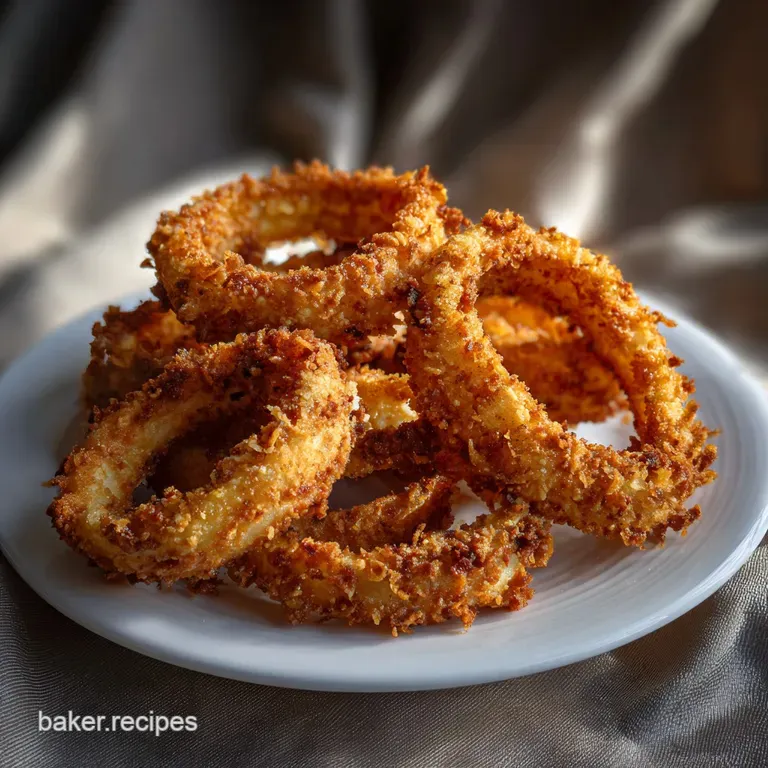
- Fry in batches. Cook for 2 to 3 minutes per side. Until the exterior is deeply golden and crackling.
- Drain and season. Transfer the rings to a wire rack and immediately sprinkle with extra salt while still glistening.
Fixing Common Frying Mistakes Fast
The biggest issue I see is the breading falling off. This usually happens because the onion wasn't dried properly or the oil temp was too low. When the oil is hot enough, it instantly sears the batter onto the onion. If it is too cool, the batter just sits there and gets soggy, eventually sliding off.
Another pain point is the "onion pull out," where you bite the ring and the whole onion comes out, leaving an empty shell. To prevent this, make sure your 1.5cm slices are accurate. If the onion is too thick, it won't soften enough to be "bitten through" easily.
| Problem | Cause | Fix |
|---|---|---|
| Breading is soggy | Oil temperature dropped below 350°F | Fry in smaller batches to maintain heat. |
| Breading is falling off | Onion was wet or not dredged in dry flour | Pat onions bone dry and ensure a full flour coating first. |
| Onions are still crunchy | Slices were too thick or fry time was too short | Slice to 1.5cm and ensure oil is at exactly 375°F. |
Why is my breading falling off?
This usually stems from the membrane on the onion. Onions have a thin, slippery skin between the layers. If you find your batter isn't sticking, try lightly tossing the raw rings in a bit of vinegar before the dry dredge. The acid helps break down that slick surface, giving the flour something to grab onto.
Why are the rings dark but raw inside?
Your oil is too hot. If the outside is browning in under a minute, the onion doesn't have time to steam and soften. Use a thermometer to keep the 1 liter of oil between 375°F and 380°F. If it climbs higher, turn off the heat for a minute before continuing.
Smart Swaps for Any Budget
If you are looking to save a few dollars, you don't need to buy the most expensive seltzer. A generic store brand club soda works perfectly fine. Also, if you don't have smoked paprika, regular paprika or even a pinch of chili powder will give you that color boost without needing a special trip to the store.
If you find yourself making these often, consider using this same batter for other vegetables. It works brilliantly for zucchini fries or even pickles. This [onion rings recipe] is extremely versatile because the base is neutral but structurally sound.
Comparison of Methods
| Metric | This Carbonated Recipe | Classic Milk/Flour Method |
|---|---|---|
| Texture | Shatter crisp and light | Bready and dense |
| Longevity | Stays crunchy for 20+ mins | Gets soft within 5 mins |
| Difficulty | Requires temperature control | Very beginner friendly |
Decision Shortcut - If you want a thick, diner style crust: Use whole milk instead of seltzer. - If you want a tempura style light crunch: Use only cornstarch and ice water. - If you want maximum flavor: Add 2g of dried oregano to the dry dredge.
Keeping Leftovers Fresh and Crispy
Storage: You can keep these in an airtight container in the fridge for up to 3 days. However, do not expect them to stay crispy in the refrigerator environment. The moisture from the onion will inevitably soften the crust.
Freezing: These actually freeze surprisingly well. Lay the fried and cooled rings on a baking sheet in a single layer and freeze until solid. Then, transfer to a freezer bag for up to 2 months.
Reheating: Never use a microwave. It will turn your hard work into a rubbery mess. Instead, put them in an air fryer at 375°F for 3 to 4 minutes, or in a 400°F oven for about 8 minutes.
This will re crisp the oil in the batter and bring back that "shatter" texture.
Zero Waste: Don't throw away the small "centers" of the onions that are too tiny for rings. Chop them up, toss them in the leftover dredge and batter, and fry them as little "onion fritters." They make a great snack for the cook while you finish the main batch.
You can also use the leftover 1 liter neutral oil for other savory frying projects within the next week just strain it through a coffee filter first.
Great Sides to Serve Alongside
These rings are the ultimate sidekick for a heavy meal. I love serving them with a sharp, tangy dip to cut through the richness of the fried batter. A classic choice is a Blooming Onion Sauce recipe which has that perfect horseradish kick.
If you're doing a full BBQ spread, these pair beautifully with a Kickin Classic Coleslaw recipe. The creaminess of the slaw and the crunch of the rings provide a great textural contrast. They also work surprisingly well next to a bowl of Classic Irish Vegetable recipe if you want a "soup and crunch" lunch that feels much fancier than it actually is.
- Scaling DOWN: For a single serving, use 1 onion and half an egg (whisk the egg first, then measure out 2 tablespoons). Reduce the fry time by 10% as the oil will stay hotter with fewer rings.
- Scaling UP: If you are feeding a crowd, do not double the salt and spices immediately. Use 1.5x the seasonings first and taste. Work in small batches so the oil temperature doesn't plummet.
Solving Frequent Kitchen Battering Hurdles
How do I know when the oil is ready without a thermometer?
The most reliable "old school" trick is the wooden spoon method. Dip the handle of a wooden spoon into the 1 liter neutral oil. If steady bubbles start rising from the wood and floating to the top, you are likely in the 350°F to 375°F range.
If it bubbles violently, it is too hot.
Can I use red onions for this recipe?
You can, but be aware they have a much higher sulfur content. They will be significantly more "pungent" than Vidalia or Walla Walla. If using red onions, I recommend doubling the soak time in the 500 ml ice water to help mellow out that aggressive flavor.
What if I don't have seltzer water?
The goal is carbonation. If you are out of seltzer and beer, you can use a mixture of 230 ml cold water and 1 teaspoon of baking powder added to the dry ingredients. It won't be quite as light as the CO2-infused version, but it provides enough lift to prevent the batter from being a lead weight.
Is it possible to bake these instead of frying?
I'll be honest: baking this specific batter doesn't work well because it relies on the instant "shock" of the oil to set the structure. If you want to bake onion rings, you would be better off using a Panko breadcrumb coating.
This [onion rings recipe] is designed specifically for the beautiful, bubbling science of deep frying.
Common Misconceptions
Many people believe that "searing" the onion rings at a super high temperature locks in the juices. In reality, the high heat is there to dehydrate the batter as fast as possible. The onion inside actually steams from its own internal moisture.
Also, adding more egg doesn't make it crispier; it actually makes the batter more "cake like" and soft. Stick to the 1 large egg for the best balance of bind and crunch.
Trust me, once you see that first batch come out of the oil, glowing golden and smelling like heaven, you'll never go back to the frozen bag again. This onion rings recipe is about the joy of the crunch and the simple satisfaction of turning a couple of onions and some flour into a world class snack. Happy frying!
Recipe FAQs
What is the secret to making onion rings crispy and prevent sogginess?
Yes, structure and temperature are key. The secret is using a high ratio of cornstarch to flour in your batter, which creates a brittle shell that dehydrates quickly in hot oil. Keeping your batter and ingredients ice cold until the moment they hit the fryer maximizes the contrast and structural set.
Should I use regular soda water or seltzer water for the batter?
Stick to unflavored, highly carbonated seltzer. The carbonation from the CO2 creates essential air pockets when the batter hits the heat, leading to a lighter, less dense final product.
If you wanted to explore similar aeration techniques for a different texture profile, see how we use rapid expansion principles in our [Neiman Marcus Chicken Casserole with Wild Rice Velvety Sauce] base.
Why does my batter keep sliding off the onion rings?
The onion surface is likely too slick or wet. You must thoroughly pat the onions dry after the ice water soak, and the first step of dredging in the dry flour mixture acts as a crucial adhesive layer.
If you struggle with adherence in other breading projects, learning about mastering stable coating foundations is vital.
What is the ideal oil temperature for frying these rings?
Maintain 375°F (190°C) strictly. If the temperature drops below 350°F, the batter absorbs too much oil before it can set, leading to greasiness. If it runs much higher than 380°F, the outside will burn before the onion inside has a chance to soften.
Can I substitute the Vidalia onions with a stronger variety?
Yes, but you must adjust the pre-soak time. Stronger onions like yellow or white onions have more sulfur compounds, so soak them in the ice water for 30 minutes instead of the recommended 15. This mellows out the harsh bite, similar to how we treat vegetables when making a classic savory side dish.
How do I reheat leftover onion rings to restore their crispiness?
No, never use the microwave. Use an air fryer set to 375°F for about 3 to 4 minutes, or a hot oven (400°F) for 8 minutes. These methods re-crisp the crust by heating the residual oil on the surface without steaming the batter, which is what the microwave does.
Is it necessary to slice the onions to exactly 1.5cm?
Yes, consistency is crucial for even cooking. The 1.5cm thickness ensures the crust browns and sets at the exact moment the onion inside has steamed fully and become tender. Thicker rings result in an undercooked center, while thinner rings overcook before the batter sets properly.
Crispy Onion Rings Recipe
Ingredients:
Instructions:
Nutrition Facts:
| Calories | 462 kcal |
|---|---|
| Protein | 8 g |
| Fat | 17 g |
| Carbs | 69 g |
| Fiber | 3.8 g |
| Sugar | 6.2 g |
| Sodium | 585 mg |
