Seafood Chowder Recipe: Silky & Fast
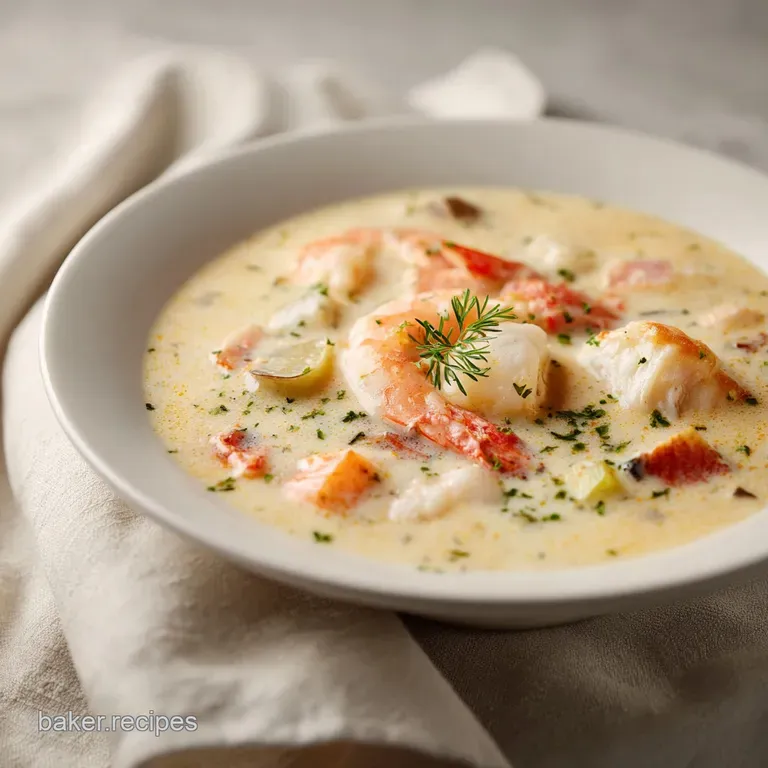
- Time: Active 15 minutes, Passive 15 minutes, Total 30 mins
- Flavor/Texture Hook: Silky, cream based broth with flaky white fish and snap tender shrimp.
- Perfect for: A quick weeknight luxury or an impressive but low stress dinner party.
- Master This Easy Seafood Chowder Recipe
- The Molecular Secrets Of A Velvety Seafood Base
- Choosing The Freshest Components For Maximum Flavor
- Essential Minimalist Tools For Efficient Home Cooking
- Step By Step Guide To Building Rich Flavors
- Troubleshooting Your Chowder For The Best Texture
- Simple Adaptations For Different Dietary Requirements
- Debunking Coastal Kitchen Tales
- How To Safely Store And Reheat Your Leftovers
- The Best Side Dishes To Pair With Chowder
- High in Sodium (⚠️)
- Recipe FAQs
- 📝 Recipe Card
Master This Easy Seafood Chowder Recipe
The sound of 115g of thick cut bacon hitting a cold heavy bottomed pot is the first signal that something special is happening. As the fat renders out, the kitchen fills with a smoky, salty aroma that makes everyone wander in to ask what’s for dinner.
I used to think a truly rich chowder required a complex roux and hours of simmering, but a rainy Tuesday in Seattle changed my mind. A local chef showed me that the secret isn't more time; it's better timing.
We’ve all had those chowders that are either watery like a sad soup or thick like library paste. I spent months making those mistakes so you don't have to. The trick I learned is all about the potato choice and the order of operations.
This seafood chowder recipe is designed to give you that iconic "New England" feel thick enough to coat the back of a spoon but light enough that you’ll want a second bowl. It’s soul warming, decadent, and surprisingly fast once you get the hang of it.
You won't find any canned condensed soups or artificial thickeners here. We are leaning on 480ml of heavy cream and the natural starches of Yukon Gold potatoes to do the heavy lifting. By the time you finish this guide, you’ll be able to pull off a restaurant quality meal in 30 mins flat.
Trust me, once you see those bay scallops and shrimp poaching in the wine spiked broth, you’ll never go back to the stuff in the tin.
The Molecular Secrets Of A Velvety Seafood Base
The Physics of the Emulsion: The heavy cream (36% milkfat) binds with the starches released from the Yukon Gold potatoes, creating a stable, velvety suspension that won't separate.
This interaction is further stabilized by the acidity in the 120ml of white wine, which prevents the dairy proteins from clumping during the simmer.
- Starch Gelatinization: As the 450g of diced potatoes cook, they release amylopectin molecules into the 480ml of seafood stock, acting as a natural thickener.
- Cold Fat Integration: Adding the 2 tbsp of unsalted butter alongside the aromatics creates a fat rich foundation that coats the onion and celery, preventing them from turning mushy.
- Protein Preservation: Adding the fish and shrimp at the very end utilizes residual heat to poach them, ensuring the fibers don't tighten into rubbery knots.
- Acid Balance: The 120ml of dry white wine cuts through the heavy fat content of the 480ml cream, brightening the briny notes of the 185g of canned clams.
| Seafood Type | Thickness | Internal Temp | Rest Time | Visual Cue |
|---|---|---|---|---|
| Large Shrimp | 1 inch | 145°F | 1 min | Opaque and "C" shaped |
| Fresh Cod | 1 inch chunks | 145°F | 2 mins | Flakes easily with fork |
| Bay Scallops | 0.5 inch | 130°F | 1 min | Milky white and firm |
The temperature of your seafood is the single most important factor in avoiding a rubbery texture. Since we are using a mix of shrimp, cod, and scallops, we add them all at once because their smaller sizes allow them to cook at roughly the same rate in the hot liquid.
Choosing The Freshest Components For Maximum Flavor
| Ingredient | Science Role | Pro Secret |
|---|---|---|
| Heavy Cream (480ml) | Provides the luxurious mouthfeel and fat base. | Always use 36% milkfat to prevent curdling when boiling. |
| Yukon Gold (450g) | Medium starch levels provide both structure and thickening. | Don't soak them in water after cutting; you need that surface starch! |
| Dry White Wine (120ml) | Provides acidity to balance the rich dairy. | Use a crisp Sauvignon Blanc or Pinot Grigio, never "cooking wine." |
| Seafood Stock (480ml) | The primary flavor carrier for the ocean notes. | If using store-bought, look for low sodium to control the salt. |
Selecting your fish is where you can really have fun. While this recipe calls for 225g of fresh cod, you can easily swap it for haddock or halibut. If you're looking for more inspiration on how to treat white fish, check out this How to Make recipe.
- 115g thick cut bacon, diced: Why this? Provides the smoky fat base that defines a classic coastal chowder profile. (Substitute: Salt pork or pancetta)
- 1 large yellow onion, finely diced: Why this? Adds sweetness and depth to the aromatic base. (Substitute: Two large leeks, white parts only)
- 2 stalks celery, sliced thin: Why this? Offers a subtle herbal crunch and earthiness. (Substitute: 1/4 tsp celery seed)
- 3 cloves garlic, minced: Why this? Adds a sharp, savory bite to balance the cream. (Substitute: 1 tsp garlic powder)
- 2 tbsp unsalted butter: Why this? Enhances the fat content for a silkier finish. (Substitute: Ghee or additional bacon fat)
- 450g Yukon Gold potatoes, peeled/cubed: Why this? They hold their shape better than Russets but still thicken the broth. (Substitute: Red potatoes)
- 480ml seafood stock: Why this? The liquid gold that provides the deep oceanic flavor. (Substitute: Clam juice or chicken stock)
- 120ml dry white wine: Why this? The acidity brightens the entire dish. (Substitute: 1 tbsp lemon juice + extra stock)
- 480ml heavy cream: Why this? Creates the signature velvety texture. (Substitute: Full fat coconut milk for a different profile)
- 1 tsp dried thyme & 1 bay leaf: Why this? Classic aromatics that cut through the richness. (Substitute: Fresh thyme sprigs)
- 0.5 tsp Old Bay seasoning: Why this? The "secret" blend of celery salt and paprika for authenticity. (Substitute: Dash of cayenne and smoked paprika)
- Seafood Bounty (225g each shrimp, cod, scallops): Why this? A variety of textures makes every spoonful interesting. (Substitute: Any firm white fish or shellfish)
- 185g canned minced clams with juice: Why this? The juice is a concentrated flavor bomb you shouldn't waste. (Substitute: Chopped fresh clams)
- 0.5 tsp salt & 0.25 tsp white pepper: Why this? White pepper keeps the broth looking pristine without black flecks. (Substitute: Black pepper)
- 2 tbsp fresh chives: Why this? A necessary pop of color and mild onion finish. (Substitute: Fresh parsley)
Essential Minimalist Tools For Efficient Home Cooking
Right then, let's talk gear. You don't need a pantry full of gadgets to make this work. A solid 5 quart Dutch oven (like one from Lodge) is your best friend here. It holds heat evenly, which is vital when you're trying to keep a steady simmer without scorching the cream at the bottom.
The heavy lid also helps if you need to take the pot off the heat to let the seafood finish poaching.
I also recommend a sharp chef's knife for dicing those Yukon Golds into consistent 1/2 inch cubes. If they are different sizes, some will turn to mush while others stay crunchy and nobody wants a crunchy potato in their chowder.
A simple wooden spoon is better than a metal one here because it won't scrape the bottom of your pot too harshly, and it’s easier to feel if the potatoes are starting to stick.
Chef's Tip: Freeze your bacon for 10 minutes before dicing. It makes it much easier to get those clean, even cubes that render out beautifully instead of tearing into ragged strips.
step-by-step Guide To Building Rich Flavors
- Render the bacon. Place 115g diced bacon in a large pot over medium heat. Cook 5-7 mins until crispy and fat has pooled. Note: Starting in a cold pot helps the fat render before the meat burns.
- Sauté aromatics. Add 1 large diced onion and 2 sliced celery stalks to the bacon fat. Cook 5 mins until the onions turn translucent and soft.
- Bloom the garlic. Stir in 3 cloves minced garlic and 2 tbsp unsalted butter. Sauté for 1 min until the aroma hits your nose. Note: Don't let the garlic brown, or it will turn bitter.
- Deglaze the pot. Pour in 120ml dry white wine. Scrape the bottom with a wooden spoon until all the brown bits (fond) dissolve.
- Simmer the base. Add 450g cubed potatoes, 480ml seafood stock, 1 tsp thyme, 1 bay leaf, and 0.5 tsp Old Bay. Simmer 10-12 mins until potatoes are fork tender but not falling apart.
- Incorporate the cream. Pour in 480ml heavy cream. Bring to a gentle simmer until small bubbles form around the edges. Note: Do not let it reach a rolling boil!
- Add the seafood. Stir in 225g shrimp, 225g cod chunks, 225g bay scallops, and 185g canned clams with their juice.
- Finish poaching. Reduce heat to low. Cook 3-5 mins until the shrimp turn pink and the cod flakes easily.
- Season and serve. Remove the bay leaf. Stir in 0.5 tsp salt and 0.25 tsp white pepper. Garnish with 2 tbsp fresh chives.
- Rest briefly. Let the pot sit for 2 mins off the heat until the flavors settle and the broth slightly thickens.
Troubleshooting Your Chowder For The Best Texture
Why is my chowder too thin?
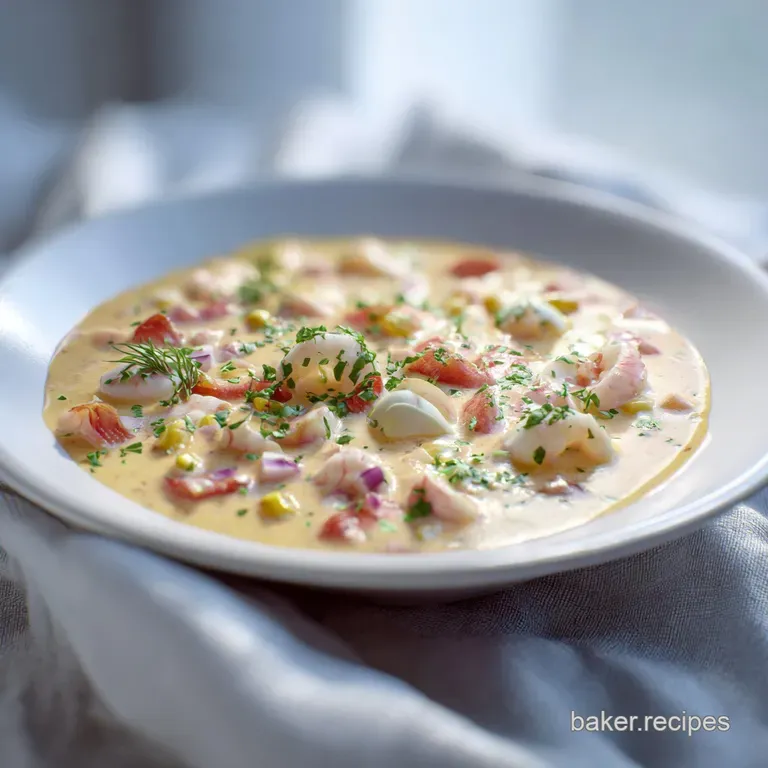
If your broth looks more like a milky soup than a thick chowder, it’s likely because the potatoes haven't released enough starch. This often happens if the simmer wasn't steady enough or if the potatoes were rinsed too thoroughly.
You can fix this easily by taking a ladle of the potatoes and broth, mashing them into a paste in a separate bowl, and stirring it back into the pot.
Why does my seafood taste rubbery?
The most common mistake is boiling the seafood. High heat causes the protein fibers in shrimp and scallops to contract violently, squeezing out moisture and leaving behind a "bouncy" texture. Always ensure you drop the temperature to a low simmer before adding your fish bounty.
| Problem | Root Cause | Solution |
|---|---|---|
| Broth looks curdled | Boiled too hard after adding cream | Whisk in a splash of cold cream and lower the heat immediately. |
| Too salty | Canned clam juice or stock was over seasoned | Add a splash of water or more cream to dilute the saltiness. |
| Pot bottoms are burnt | Heat was too high during the cream simmer | Transfer to a clean pot immediately; do not scrape the burnt bits. |
Common Mistakes Checklist
- ✓ Never boil the chowder once the heavy cream and seafood are in the pot.
- ✓ Use Yukon Gold potatoes instead of Russets to ensure they hold their shape.
- ✓ Don't discard the liquid from the canned clams; it’s pure flavor.
- ✓ Pat the fresh cod dry before cubing to prevent excess water from thinning the base.
- ✓ Wait to salt the dish until the very end, as the bacon and clams are already salty.
Simple Adaptations For Different Dietary Requirements
If you need to make this seafood chowder recipe gluten-free, you’re already in luck! This specific version doesn't use a flour based roux, relying instead on the potato starch.
However, if you are scaling the recipe and find you need more thickness without adding more potatoes, a cornstarch slurry (1 tbsp cornstarch mixed with 1 tbsp cold water) works brilliantly.
For a dairy-free alternative, you can swap the 480ml of heavy cream for full fat coconut milk. While it changes the flavor profile to something more tropical, it maintains that necessary fat content. If you go this route, I’d suggest adding a squeeze of lime at the end to bridge the flavors.
- Scaling Down (½)
- Use a smaller 3 quart pot. Reduce the simmer time for potatoes by about 2 mins since there is less thermal mass.
- Scaling Up (2x)
- Use a large stockpot. Increase the aromatics (onion/celery) fully, but only increase the salt and Old Bay by 1.5x to start. You can always add more later!
- Seafood Prep
- If doubling, work in two batches for the final poaching to ensure the temperature of the broth doesn't drop too low, which would lead to unevenly cooked fish.
Debunking Coastal Kitchen Tales
One big myth is that you must sear the seafood before adding it to the broth. Honestly, don't even bother. Searing 225g of small scallops or shrimp usually results in them overcooking before they even hit the soup.
Poaching them directly in the flavored cream and wine base keeps them incredibly tender and allows them to absorb the aromatics from the inside out.
Another misconception is that you need "seafood seasoning" specifically for the fish. While Old Bay is a classic, the real depth comes from the 115g of bacon fat and the 120ml of white wine. The seafood should taste like the ocean, not like a spice cabinet.
How To Safely Store And Reheat Your Leftovers
Storing chowder requires a bit of care because of the dairy. It will stay fresh in the fridge for up to 3 days in an airtight container. In fact, many people (myself included) think it tastes even better the next day after the flavors have had a chance to mingle.
However, the potatoes will continue to absorb liquid, so you might need to add a splash of milk when reheating.
- Storage: Keep in the fridge for 2-3 days. I do not recommend freezing this, as the cream can separate and the potatoes often turn grainy when thawed.
- Zero Waste: If you have leftover seafood but no broth, toss the fish into a pasta dish the next day. If you have extra broth, use it as a base for a seafood risotto or a poaching liquid for salmon.
The Best Side Dishes To Pair With Chowder
A chowder this rich needs something to cut through the fat. I always serve this with a stack of oyster crackers or a thick slice of sourdough bread. The "shatter" of a crisp crust dipped into the velvety broth is arguably the best part of the meal. If you want something even more substantial, this My GoTo Seafood recipe provides a great contrast if you're serving a larger seafood spread.
If you’re looking for a lighter pairing, a simple green salad with a sharp lemon vinaigrette works wonders. The acidity in the dressing resets your palate between those heavy, cream laden spoonfuls. Whatever you do, make sure you have plenty of fresh chives on top for that final hit of freshness.
It's the little things that turn a Tuesday night meal into something truly memorable.

High in Sodium (⚠️)
845 mg mg of sodium per serving (37% % of daily value)
The American Heart Association recommends limiting sodium intake to about 2,300mg per day for overall cardiovascular health.
Tips to Reduce Sodium in Your Seafood Chowder
-
Low-Sodium Stock-30%
Replace the regular seafood stock with a low-sodium or no-salt added version. This can significantly reduce the overall sodium content without sacrificing flavor.
-
Reduce Bacon-25%
Bacon is a major sodium contributor. Try using half the amount of bacon or substitute with a lower sodium option like turkey bacon or consider omitting it entirely for a healthier chowder.
-
Omit Added Salt-25%
Eliminate the 0.5 tsp of added salt. With salty bacon and other ingredients, you may not need it. Taste the chowder before serving and add salt only if absolutely necessary.
-
Low-Sodium Clams-20%
Use fresh clams instead of canned, or opt for low-sodium canned clams. Rinse the clams thoroughly to remove excess sodium before adding to the chowder.
-
Herb Power!
Enhance the flavor of your chowder with fresh herbs and spices like parsley, dill, or a pinch of red pepper flakes. These additions can boost flavor without adding sodium.
-
Spice it Up!
Instead of relying on salt for flavor, experiment with other spices! Try a pinch of smoked paprika, a dash of cayenne pepper, or a blend of herbs to add depth and complexity to the chowder's taste.
Recipe FAQs
What are the ingredients for seafood chowder?
The core components are: Bacon, onion, celery, garlic, butter, cubed Yukon Gold potatoes, seafood stock, dry white wine, heavy cream, dried thyme, bay leaf, Old Bay seasoning, a mix of fresh shrimp, cod, and scallops, canned minced clams, salt, white pepper, and fresh chives.
What three ingredients must a chowder have to be considered a chowder?
Generally, you need: A rich, creamy or milk based broth, diced potatoes for thickening and texture, and substantial seafood or corn.
What are common mistakes when making chowder?
The most common mistake is boiling the dairy. Boiling the chowder after adding the heavy cream causes it to curdle and break the smooth emulsion.
What is the secret to great chowder?
The secret is controlling texture through starch and fat integration. By using Yukon Gold potatoes and allowing them to release their starch into the stock before adding cream, you create a stable, velvety thickener naturally.
Is it true I should avoid soaking cut potatoes before adding them to the chowder base?
Yes, avoid soaking them. You need the surface starch from the potatoes to gelatinize during the simmer, which is crucial for naturally thickening the broth.
How do I avoid rubbery shrimp and scallops in my chowder?
Remove the heat and use residual warmth for the final cook. Never allow the broth to boil once the seafood is added; reduce the heat to low and poach gently for only 3-5 minutes until the shrimp are pink.
Can I substitute the fresh cod with a different white fish in this recipe?
Yes, substituting firm white fish works well. Halibut or haddock are excellent replacements for cod in this application. If you enjoyed mastering the texture control here, see how the same principle applies when you learn [How to Make recipe] with other fish preparations.
Easy Seafood Chowder Recipe

Ingredients:
Instructions:
Nutrition Facts:
| Calories | 612 calories |
|---|---|
| Protein | 37 g |
| Fat | 41 g |
| Carbs | 22 g |
| Fiber | 2.5 g |
| Sugar | 4 g |
| Sodium | 845 mg |
