Flaky Kolaczki Polish Cookies Recipe
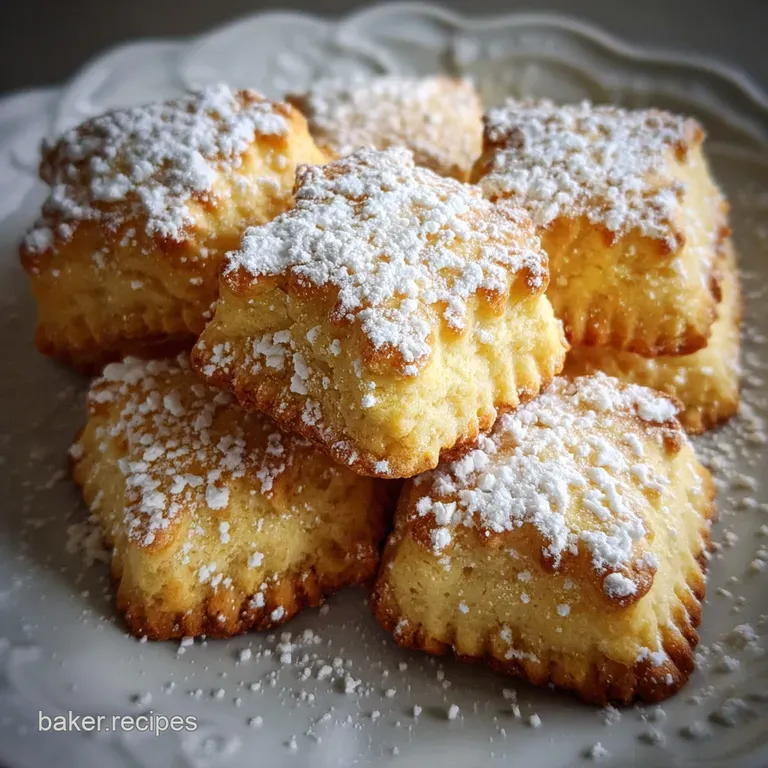
- Time: Active 40 minutes, Passive 1 hour 52 mins, Total 2 hours 32 mins
- Flavor/Texture Hook: Flaky, buttery layers with a velvety fruit center
- Perfect for: Holiday gift boxes and traditional family gatherings
Secrets to Flaky Kolaczki Polish Cookies
I remember the first time I attempted this kolaczki polish cookies recipe in my tiny first apartment. The kitchen was covered in a fine mist of powdered sugar, and the scent of cold butter hitting the hot oven air was nothing short of intoxicating.
I had made the mistake of using a cheap, watery jam, and half my cookies looked like they had suffered a fruit flavored blowout. It was a mess, but even the "failed" scraps had that incredible, melt in-your mouth texture that only a cream cheese dough can provide.
These cookies are the backbone of my holiday baking routine now. There is something deeply satisfying about rolling out a chilled, velvety dough and folding it over a dollop of ruby red raspberry jam.
It's a meditative process that rewards you with a pastry that is not quite a cookie and not quite a croissant, but somewhere in the glorious middle. You want that specific "shatter" when you bite into the corner, followed by the soft, chewy center of the fruit.
We are going for a result that looks like it came from a professional Polish bakery. This means no shortcuts on the chilling time and definitely no low-fat substitutions. If you have ever felt intimidated by pastry dough, think of this as the beginner friendly version.
It is forgiving as long as you keep things cold and handle the dough with a bit of confidence.
Science Behind the Flaky Layers
Fat to Flour Ratio: The high fat content from both the butter and cream cheese coats the flour particles, which physically prevents long gluten strands from forming. This results in a "short" dough that breaks easily and remains tender rather than bread like.
Lamination Effect: Since the butter and cream cheese are kept cold, they remain as distinct solid bits within the flour. When the heat hits the oven, the water in these fats evaporates rapidly, creating steam that lifts the layers of dough apart for a signature shatter.
Acidity and Protein: The lactic acid in the cream cheese tenderizes the flour's proteins even further. This ensures that even after rolling and folding, the cookies stay delicate instead of becoming tough or gummy.
| Servings | Ingredient Adjustments | Pan Size | Cook Time |
|---|---|---|---|
| 18 cookies | Half all quantities (use 1.25 cups flour) | 1 standard baking sheet | 10-12 minutes |
| 36 cookies | Standard recipe quantities | 2 standard baking sheets | 12 minutes |
| 72 cookies | Double all quantities (use 5 cups flour) | 4 standard baking sheets | 12-15 minutes (rotate pans) |
Getting the quantity right is essential because these disappear faster than you would expect. If you are planning a larger spread, you might also want to include my Christmas Cookies recipe to add some variety to the dessert table. The contrast between a spiced shortbread and this buttery cream cheese dough is always a hit with guests.
Component Analysis for Pastry Success
| Ingredient | Science Role | Pro Secret |
|---|---|---|
| Cream Cheese | Tenderizer | Always use the block style, never the whipped tub versions. |
| Unsalted Butter | Structure and Flavor | high-quality European butter provides less water and better flakiness. |
| All Purpose Flour | Binding Agent | Sifting is non negotiable here to prevent clumps in the cold dough. |
| Jam/Preserves | Moisture and Sweetness | Use "stiff" preserves to prevent the filling from running during the bake. |
When you are looking at the ingredients, remember that the quality of your fat is the primary driver of flavor. Using a high fat butter makes the dough easier to handle and provides a more luxurious mouthfeel.
Selecting Your Ingredients
- 8 oz Full Fat Cream Cheese: Use the cold and cubed block version. Why this? Provides the characteristic tang and ultra tender texture without making the dough soggy.
- 1 cup Unsalted Butter: Keep it cold and cut into small pieces. Why this? Creates the steam pockets necessary for those flaky, laminated pastry layers.
- 2.5 cups All Purpose Flour: Ensure it is sifted before measuring. Why this? Sifting keeps the dough light and prevents overworking while mixing ingredients.
- 0.5 tsp Fine Sea Salt: Dissolves quickly into the cold fat. Why this? Sharpens the flavor of the butter and balances the sweet fruit filling.
- 0.5 cup Apricot Preserves: Choose a thick pastry style. Why this? High pectin content ensures the filling stays inside the cookie during baking.
- 0.5 cup Raspberry Jam: Seedless and very stiff. Why this? Avoids a messy appearance and provides a concentrated, punchy fruit flavor.
- 1 Egg White: Lightly beaten for the wash. Why this? Acts as the "glue" that keeps the folded corners from popping open.
- 0.5 cup Powdered Sugar: For the final dusting. Why this? Adds a professional finish and a hit of immediate sweetness on the tongue.
| Original Ingredient | Substitute | Why It Works |
|---|---|---|
| Apricot Preserves | Prune Butter (Lekvar) | Traditional Polish filling with a thick, non runny consistency. |
| Raspberry Jam | Strawberry Jam | Similar sweetness. Note: Ensure it is very thick or the cookies will be soggy. |
| Fine Sea Salt | Table Salt | Use slightly less. Fine sea salt has a cleaner flavor profile. |
If you are looking for a slightly different sweet treat that is a bit faster to put together, my Healthy Chocolate Chip recipe is a great alternative when you don't have time for the long chilling process required here.
step-by-step Guide
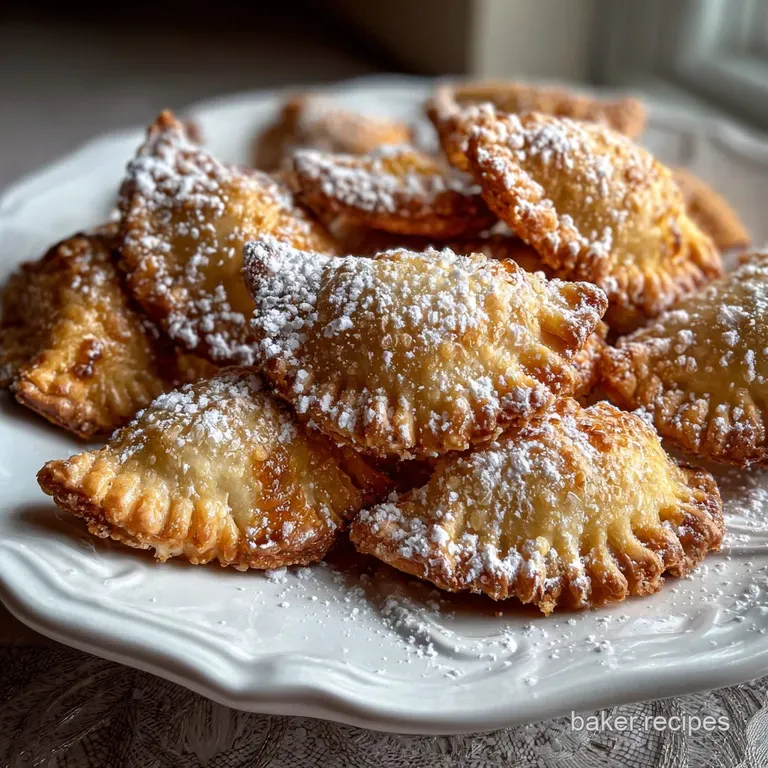
- Cream the fats. Combine the 8 oz cream cheese and 1 cup butter in a large bowl. Note: Use a pastry blender or a stand mixer on low to keep the fats cold.
- Incorporate the flour. Gradually add the 2.5 cups sifted flour and 0.5 tsp salt. Note: Mix just until a shaggy dough forms to avoid developing too much gluten.
- Chill the dough. Shape the dough into a flat disc, wrap tightly in plastic, and refrigerate for at least 2 hours. Note: This allows the flour to hydrate and the fats to re solidify for flakiness.
- Preheat and prep. Set your oven to 350°F and line your baking sheets with parchment paper. Wait until the oven is fully up to temperature before proceeding.
- Roll the dough. On a surface dusted with powdered sugar, roll the dough to 1/8 inch thickness. Note: Using sugar instead of flour prevents the dough from becoming dry and tough.
- Cut the squares. Use a pizza cutter to slice the dough into 2 inch squares. Ensure the edges are sharp for a clean rise.
- Fill the centers. Place a scant half teaspoon of preserves in the center of each square. Note: Overfilling is the number one cause of "leaking" cookies.
- Seal the corners. Brush one corner with the egg white, fold it over the filling, and bring the opposite corner over it, pressing firmly. Pinch hard to lock them together.
- Bake the cookies. Place on the sheets and bake for 12 minutes until the edges are just barely golden.
- Cool and dust. Let them rest on the pan for 5 minutes before moving to a wire rack. Dust with 0.5 cup powdered sugar once completely cool.
Chef's Tip: Freeze your rolling pin for 20 minutes before using it. This helps keep the dough chilled while you work, ensuring those butter layers don't melt prematurely.
Fixing Common Cookie Issues
The Filling Leaked Everywhere
This usually happens because the jam has too much water or too little pectin. If your jam looks runny at room temperature, it will definitely run in the oven. Always look for "pastry style" or "preserves" rather than jelly. Also, check that you aren't overfilling the squares; a little goes a long way.
The Dough Is Too Sticky
If the dough is sticking to your hands or the rolling pin, the fats have likely begun to melt. This is common in warm kitchens. Simply pop the dough back into the freezer for 10 minutes to firm it back up.
Working in small batches while keeping the rest of the dough in the fridge is a great way to manage this.
The Cookies Popped Open
This is the most frustrating part of making traditional kolaczki polish cookies. If the "seal" doesn't hold, the cookie unfolds into a flat square. The egg white wash is your best friend here. It acts as a protein based glue that hardens quickly in the heat of the oven, holding the dough in place.
| Problem | Root Cause | Solution |
|---|---|---|
| Cookies are tough | Overworked dough | Mix only until flour disappears; avoid excessive kneading. |
| Bottoms are burnt | Thin baking sheets | Use heavy duty pans or double up the sheets for insulation. |
| Filling is chewy | Baked too long | Reduce oven time. The cookies should look pale, not brown. |
Common Mistakes Checklist
- ✓ Keep all dairy ingredients ice cold until the moment they are mixed.
- ✓ Sift the flour to ensure a delicate, airy crumb structure.
- ✓ Use powdered sugar on the rolling surface to add sweetness without toughness.
- ✓ Avoid low-fat cream cheese as it contains too much moisture for this pastry.
- ✓ Press the folded corners together very firmly to ensure they stay closed.
Managing Batch Sizes
When you need to scale this recipe down, it is relatively simple. For a half batch, you can easily divide the weights of the butter, cream cheese, and flour. However, when scaling up for a large party, I recommend making separate batches of dough rather than one massive one.
A massive ball of dough is harder to chill evenly, and the center often stays too warm, leading to a greasy texture.
If you are doubling the recipe, you will find that the dough requires more room to chill effectively. Flatten the dough into several smaller discs rather than one large one. This increases the surface area exposed to the cold air in your fridge, cutting down the passive waiting time significantly.
For those who want to save time, you can also look into alternative methods if you find the oven process too tedious for large crowds.
| Method | Time | Texture | Best For |
|---|---|---|---|
| Standard Oven | 12 minutes | Shattering, light layers | Traditional presentation and flavor. |
| Convection Oven | 10 minutes | Maximum crispness | Achieving an even gold color on all sides. |
| Toaster Oven | 14 minutes | Slightly denser | Small batches or quick snacks. |
Bakery Myths Debunked
Many people believe you must use yeast to get a rise in polish cookies. That is simply not true for this specific style. The combination of cream cheese and butter provides all the leavening you need through steam.
Adding yeast would change this from a delicate pastry into a soft, bread like roll, which is a different dessert entirely.
Another common misconception is that you should grease your baking sheets. In reality, the high fat content in the dough means these cookies are self greasing. Adding extra oil or butter to the pan often causes the bottoms of the cookies to fry rather than bake, leading to a greasy finish and potentially burnt edges.
Use parchment paper instead for the cleanest result.
Keeping Your Cookies Fresh
These cookies handle storage surprisingly well because of the high fat content. You can keep them in an airtight container at room temperature for about 3 days. However, for the best texture, I recommend storing them in the refrigerator for up to a week. The cold actually helps maintain that "snap" in the pastry.
If you live in a humid environment, the powdered sugar may dissolve into the cookie over time, so you might need a fresh dusting before serving.
For long term storage, these are excellent candidates for freezing. You can freeze the baked cookies for up to 2 months. To reheat, don't use a microwave as it will make the pastry rubbery. Instead, pop them into a 300°F oven for about 5 minutes to recrisp the layers.
If you find yourself with leftover jam, don't toss it. It can be whisked into a simple glaze for muffins or used as a base for a quick vinaigrette. Any leftover dough scraps can be rolled out, sprinkled with cinnamon sugar, and baked as "chef's snacks" so nothing goes to waste.
Recipe FAQs
What is a Polish kolaczki?
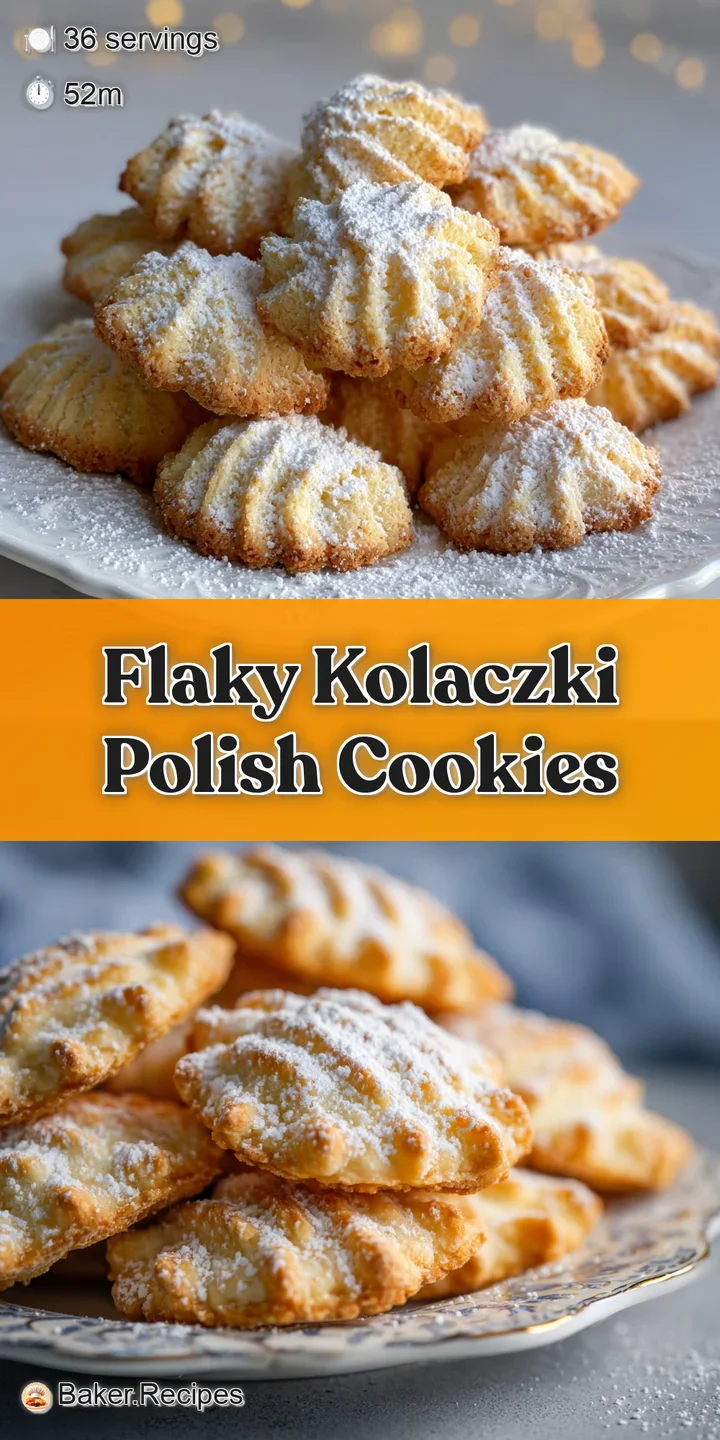
It is a traditional, tender Polish pastry cookie. They are made from a delicate, rich cream cheese dough folded around a dollop of fruit preserve or nut filling. This folding technique creates a signature square or diamond shape.
How do you pronounce kolaczki?
Pronounce it roughly as "ko-WACH kee." The emphasis is on the second syllable, and the 'cz' makes a 'ch' sound, similar to the word 'cheese'. It is a very buttery, flaky cookie that is worth mastering the pronunciation for.
Are kolaches Polish or German?
Kolaczki cookies are distinctly Polish in origin. While there are similar Central European pastries, the specific cream cheese dough structure that defines kolaczki is rooted in Polish baking traditions. Many people confuse them with German kolaches, which are yeast risen fruit tarts, not cookies.
What are the best fillings for kolaczki cookies?
Use stiff preserves like apricot, raspberry, or prune butter (lekvar) for best results. Thicker fillings prevent leakage and maintain the cookie's shape during the bake. If you enjoy rich, nutty flavors, consider a variation similar to the center used in the My GoTo Walnut recipe.
Why are my kolaczki cookies leaking jam during baking?
Your filling is likely too watery or you overfilled the center. The dough must completely encase the filling, and the seal needs to be pinched firmly, often reinforced with an egg white wash, to keep the moisture contained. If you enjoy controlling the texture of your filling, see how precision balancing is used in the Caramel Apple Spice recipe.
How can I make the dough extra flaky?
Keep every ingredient, especially the butter and cream cheese, ice cold. The flakiness comes from the steam created when tiny, distinct pieces of cold fat vaporize rapidly in the hot oven, separating the dough layers. Handling the dough as little as possible maintains these necessary cold fat pockets.
Is it necessary to chill the dough for a full two hours?
Yes, a minimum of 1.5 to 2 hours of chilling is crucial for texture. This time allows the flour to fully hydrate and the high fat dough to solidify completely, which is necessary before rolling thinly. Rushing this step results in tough, greasy cookies rather than delicate, shattering pastries.
Flaky Kolaczki Polish Cookies
Ingredients:
Instructions:
Nutrition Facts:
| Calories | 127 kcal |
|---|---|
| Protein | 1.4 g |
| Fat | 7.3 g |
| Carbs | 13.9 g |
| Fiber | 0.4 g |
| Sugar | 6.2 g |
| Sodium | 48 mg |
