Maple Glazed Sheet Pan Salmon
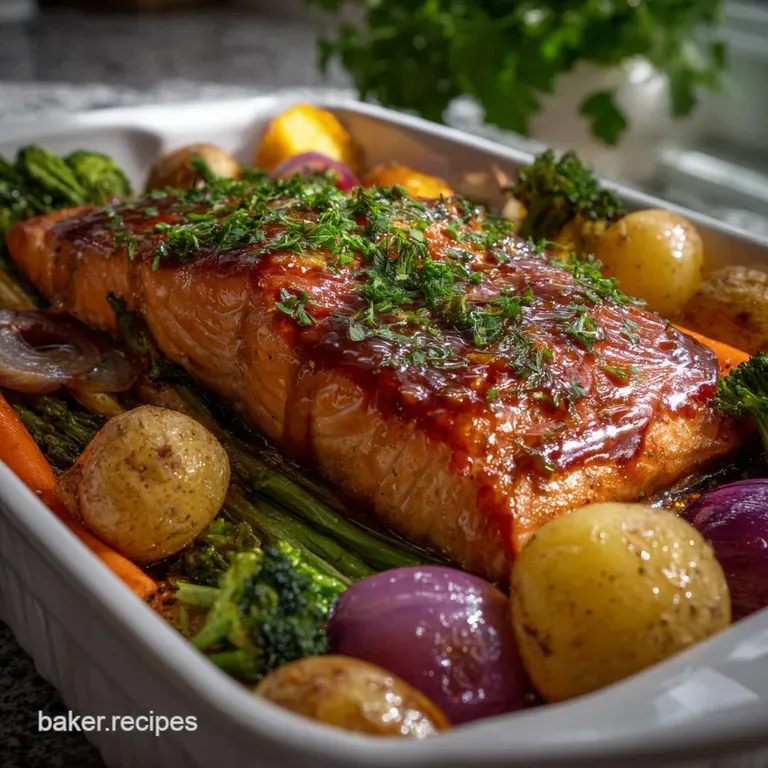
- Effort/Time: Low-effort / 22 minutes total
- Flavor Hook: Sweet-savory umami glaze with a smoky finish
- Perfect for: High-protein weeknight fuel or budget-smart meal prep
- Master the Ultimate Maple Glazed Sheet Pan Salmon
- The Culinary Physics Behind This One-Pan Meal
- Precision Temperature Control and Performance Benchmarks
- The Alchemy of Umami: Selecting Your Elements
- Thermal Conductivity Tools for Superior Results
- The Eight-Phase Assembly and Roasting Protocol
- Common Pitfalls and Troubleshooting Your Salmon
- ⚗️ The Scaling Lab: Physics of Batch Cooking
- Common Myths
- Flavor Architecture and Budget-Friendly Substitutions
- Storage Strategies and Zero-Waste Salmon Philosophy
- Maximizing Sensory Impact with Presentation and Pairings
- Recipe FAQs
- 📝 Recipe Card
Master the Ultimate Maple Glazed Sheet Pan Salmon
There is nothing quite as soul crushing as spending $30 on fresh fish only to pull a tray of gray, weeping protein out of the oven. I’ve been there staring at a piece of salmon that had the texture of a pencil eraser and a pile of asparagus that had turned into stringy mush.
It’s a financial and emotional gut-punch when your "healthy dinner" ends up in the bin because you didn't account for the thermal mass of your pan or the sugar-to-salt ratio of your marinade when making Maple Glazed Sheet Pan Salmon.
I used to think that more heat meant more flavor, but I was wrong. In my early days, I would crank the oven to 450°F and wonder why the outside was charred while the inside remained translucent and cold. I realized I was fighting against the physics of protein denaturation.
I had to learn that salmon isn't just "food"; it’s a delicate matrix of fats and connective tissues that requires a specific thermal protocol to remain velvety and succulent.
The breakthrough came when I understood the science of the glaze. It’s not just for flavor it’s a protective barrier. By whisking together Pure Maple Syrup and Dijon Mustard, we create an emulsion that coats the muscle fibers, slowing down moisture evaporation.
This technique ensures that when the heat hits, the exterior undergoes a beautiful Maillard reaction while the interior stays lush. This Maple Glazed Sheet Pan Salmon is the result of those failed batches, perfected into a foolproof system that delivers a shattering glaze and tender flakes every single time.
The Culinary Physics Behind This One-Pan Meal
- Hygroscopic Glazing: The sugars in the Maple Syrup act as humectants, pulling moisture toward the surface of the fish while simultaneously creating a physical barrier against the dry oven air. This is why the glaze on our Maple Glazed Sheet Pan Salmon never burns easily.
- Emulsified Protection: Using Grey Poupon Dijon Mustard provides lecithin, which binds the oil and syrup into a stable coating, ensuring the glaze clings to the salmon rather than sliding off onto the pan.
- Asparagus Thermal Conductivity: Trimming the woody ends of the Fresh Asparagus exposes the porous core, allowing the Extra Virgin Olive Oil to penetrate and conduct heat faster for a snappy finish.
- Albumin Management: Maintaining a steady roasting temperature prevents the rapid contraction of muscle fibers, which is what forces that unsightly white protein (albumin) to the surface.
Precision Temperature Control and Performance Benchmarks
To achieve a professional result, you need to understand how the heat reaches your food. A sheet pan relies on convection (air movement) and conduction (contact with the metal). Achieving the perfect result for Maple Glazed Sheet Pan Salmon depends heavily on this balance.
| Feature | Stovetop Searing | Sheet Pan Roasting |
|---|---|---|
| Heat Distribution | Intense bottom-up heat; high risk of skin sticking. | Even 360 degree heat; gentle on delicate fats. |
| Texture Outcome | Shattering skin, but prone to uneven internal temps. | Uniform flakiness with a consistent "lacquered" top. |
| Cleanup Profile | Minimal; single Nordic Ware Rimmed Baking Sheet. | Single Nordic Ware Rimmed Baking Sheet. |
Decision Shortcut
- If you want a deeper crust: Position the oven rack in the top third of the oven.
- If you want softer vegetables: Toss the asparagus in the oil and salt 5 minutes before the salmon to begin breaking down cellulose.
- If you want a thicker glaze: Whisk the glaze 10 minutes early and let it sit; the mustard solids will hydrate and thicken the mixture, ensuring a perfect finish for your Maple Glazed Sheet Pan Salmon.
The Alchemy of Umami: Selecting Your Elements
Selecting the right ingredients isn't just about taste it's about the chemistry of the final bite. If you're looking for a similar flavor profile but in a different format, you might enjoy the techniques used in this How to Cook recipe which focuses on a different heat application. Ultimately, the core flavor of this method comes from the glaze applied to the Maple Glazed Sheet Pan Salmon.
Ingredient Chemistry Breakdown
| Ingredient | Chemical/Physical Role (Science) | The Pro Secret (Why This Matters) |
|---|---|---|
| Salmon Fillets | Myofibrillar protein structure with high fat content. | Center cut fillets provide uniform thickness for even heat penetration. |
| Pure Maple Syrup | Complex sucrose/glucose chain for caramelization. | Real syrup has a lower pH, which helps tenderize the fish surface. |
| Soy Sauce | Glutamic acid for umami and osmotic seasoning. | Low-sodium soy allows for flavor depth without over extracting moisture. |
| Dijon Mustard | Emulsifier and surfactant via mustard seed mucilage. | Prevents the glaze from "breaking" or separating under high heat. |
Component Analysis
- 4 (6 oz / 170g) Salmon Fillets: Why this? Center cut pieces have consistent thermal mass, preventing the thin tail from overcooking.
- 1 lb Fresh Asparagus: Why this? Medium thickness spears match the roasting time of the fish perfectly.
- 1 tbsp Extra Virgin Olive Oil: Why this? Provides the fat medium necessary for heat transfer to the vegetables.
- 1/4 cup Pure Maple Syrup: Why this? High sugar content facilitates the Maillard reaction at lower temps.
- 2 cloves Garlic: Why this? Allicin release adds aromatic depth that balances the syrup's sweetness.
Thermal Conductivity Tools for Superior Results
The gear you use is just as important as the salmon itself. A flimsy pan will warp, causing your glaze to pool in one corner and burn. Using the right equipment is vital for successful Maple Glazed Sheet Pan Salmon.
- Nordic Ware Rimmed Baking Sheet: Essential for even heat distribution. Heavy gauge aluminum prevents "hot spots" that cause the soy sauce to scorch.
- Lodge 10.25 Inch Cast Iron Skillet (Alternative): If you are only making two fillets, use cast iron for its incredible heat retention.
- Pyrex Glass Mixing Bowl: Use this for whisking the glaze to ensure no metallic aftertaste from reactive metals.
- Oxo Good Grips Silicone Basting Brush: Crucial for "painting" the glaze into every crevice of the fillet.
- Instant Read Digital Thermometer: The only way to guarantee a velvety interior without guessing.
The Eight Phase Assembly and Roasting Protocol
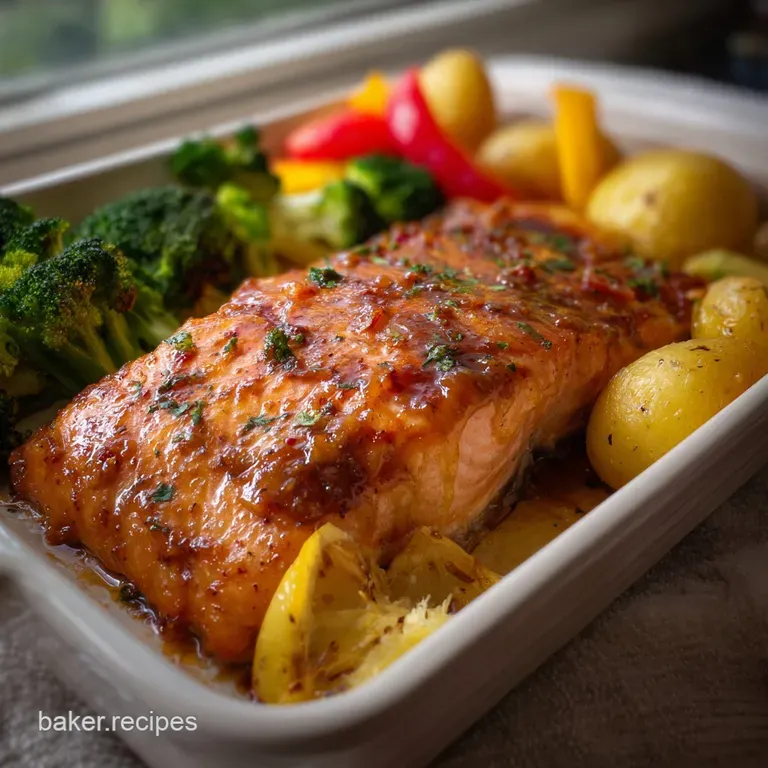
Success with Maple Glazed Sheet Pan Salmon requires mise en place. Have everything ready before the tray goes into the heat.
- Preheat oven to 400°F (200°C) until the internal sensor pings and the air feels radiatingly hot.
- Pat the 4 Salmon Fillets bone dry with paper towels until the skin and flesh have zero visible moisture. Note: Dry surface prevents steaming.
- Arrange 1 lb Fresh Asparagus on the Nordic Ware Rimmed Baking Sheet until the tray is evenly covered without overlapping.
- Drizzle 1 tbsp Extra Virgin Olive Oil over asparagus, tossing until every spear glimmers with a thin, oily coat.
- Season everything with 1/2 tsp Diamond Crystal Kosher Salt and 1/4 tsp Cracked Black Pepper until a fine dust covers the surface.
- Whisk 1/4 cup Pure Maple Syrup, 2 tbsp Soy Sauce, 1 tbsp Dijon Mustard, minced Garlic, 1/2 tsp Smoked Paprika, and 1 tsp Lemon Juice in a Pyrex bowl until the mixture is glossy and emulsified.
- Nestle the salmon fillets among the asparagus until they have at least 1 inch of "breathing room" around them.
- Brush half of the maple glaze onto the salmon until the tops are fully saturated and mahogany colored.
- Roast for 10 12 minutes until the salmon flakes easily with a fork and the asparagus tips look slightly charred and sizzle.
- Apply the remaining glaze immediately upon removal until the heat of the fish sets the syrup into a thick, tacky lacquer. This final step seals the flavor into the Maple Glazed Sheet Pan Salmon.
Precision Checkpoints
- Internal Temp: Pull the salmon at 130°F for medium rare; carryover heat will bring it to 135 140°F.
- Asparagus Snap: The spears should bend slightly but not go limp when lifted with tongs.
- Glaze Consistency: The glaze should cling to a spoon like warm honey, not run off like water.
Common Pitfalls and Troubleshooting Your Salmon
Why Your Salmon is Leaking White Fluid
This white "goop" is albumin. When salmon is heated too aggressively, the muscle fibers contract like a wrung out sponge, pushing this internal protein to the surface where it coagulates. It's safe to eat, but it indicates the fish is losing moisture fast, which is exactly what we try to prevent when making this dish.
| Problem | Root Cause | The Fix | Pro Protocol |
|---|---|---|---|
| Rubbery Asparagus | Overcrowding the pan. | Spread spears in a single layer. | Use two pans if doubling the recipe. |
| Burnt Glaze Edges | High sugar content + thin pan. | Use a heavy gauge rimmed sheet. | Place a parchment liner under the fish only. |
| Mushy Fish | Steaming from excess moisture. | Pat salmon extremely dry before oiling. | Salt the fish 10 mins early to "set" the protein. |
The Glaze is Too Runny
If your glaze isn't adhering, the emulsion has likely failed or the fish was too wet. Ensure the Dijon Mustard is thoroughly whisked in; it acts as the bridge between the water based syrup and the fat in the fish. If it's still too thin, simmer the glaze in a small saucepan for 2 minutes to reduce the water content before brushing. This is a strategy I often use when making my Air Fryer Salmon recipe to ensure a thick coating, which is crucial for the aesthetic of the Maple Glazed Sheet Pan Salmon.
⚗️ The Scaling Lab: Physics of Batch Cooking
When you decide to double this Maple Glazed Sheet Pan Salmon for a dinner party, the thermodynamics change instantly.
- Flavor Saturation: Do not double the Smoked Paprika or Garlic. Scale these to 1.5x. The aromatic compounds can become overwhelming and "soapy" when scaled linearly.
- Pan Crowding (The Maillard Killer): Adding 8 fillets to one tray will drop the oven temperature by nearly 50°F instantly. This causes the fish to release juices that cannot evaporate, leading to "boiled" salmon. Mandatory instruction: Use two separate pans on different racks and rotate them halfway through.
- The Evaporation Paradox: With more fish in the oven, the humidity levels rise. This means your glaze will take ~20% longer to "set."
- Carry Over Cooking: A larger mass of food on the tray retains more thermal energy. Pull the salmon 5°F earlier (at 125°F) because the collective heat of the crowded tray will continue cooking the fish for up to 8 minutes after it leaves the oven.
Common Myths
Myth: You must marinate the salmon for hours to get flavor. Truth: Salmon is a dense protein; marinades only penetrate about 1 2mm. A thick, high viscosity glaze applied during and after cooking provides more flavor than an overnight soak for your Maple Glazed Sheet Pan Salmon.
Myth: Leaving the skin on makes the fish fishy. Truth: The skin acts as an insulator, protecting the delicate flesh from the direct heat of the pan. Even if you don't eat it, roasting skin side down keeps the fish juicy.
Flavor Architecture and Budget Friendly Substitutions
Cooking should be accessible. If you don't have Pure Maple Syrup, don't panic. You can still achieve a great result with smart swaps. For a completely different flavor profile that still uses these one-pan principles, check out the Cream Sauce Magic recipe for a decadent alternative.
Substitution Table
| Original Ingredient | Substitute | Why It Works |
|---|---|---|
| Pure Maple Syrup | Honey or Brown Sugar | Similar sugar density; Honey adds floral notes, Sugar adds molasses depth. |
| Low-Sodium Soy Sauce | Tamari or Liquid Aminos | Provides the same salty umami. Tamari is naturally gluten-free. |
| Asparagus | Broccoli Florets or Green Beans | Similar roasting times; Broccoli absorbs the glaze beautifully. |
| Dijon Mustard | Whole Grain Mustard | Same emulsification properties but adds a "popping" texture. |
Storage Strategies and Zero Waste Salmon Philosophy
Storage: Store leftovers in an airtight container for up to 3 days. To reheat without drying it out, place the salmon in a pan with a splash of water, cover with a lid, and heat on low for 4 5 minutes. This creates a steam chamber that revives the fats.
Freezing: I do not recommend freezing cooked salmon as the cell walls rupture upon thawing, leading to a mushy texture. However, you can freeze the raw fillets in the maple marinade for up to 2 months, ready for your next batch of Maple Glazed Sheet Pan Salmon.
💡 ZERO WASTE: Don't discard the asparagus woody ends. Transform: Simmer them with a bit of onion and water for 20 minutes, then blend into a "cream of asparagus" base.
Science: The fibrous ends contain intense vegetable sugars and chlorophyll that provide a deep, earthy base for soups.
Maximizing Sensory Impact with Presentation and Pairings
To round out the meal, serve this salmon over a bed of fluffy quinoa or jasmine rice to catch the extra glaze. The acidity of the lemon juice in the recipe is key, but a final "shatter" of fresh parsley or toasted sesame seeds provides a tactile contrast to the velvety fish.
If you are looking for a hearty side that can handle the sweetness of the maple, consider a rustic bread or even a savory pastry. The techniques found in this Savory Beef Empanada Recipe show how to balance rich fillings with flaky crusts a principle that applies perfectly to balancing this glazed salmon.
The final result should be a tray of salmon that looks like it’s been dipped in glass, paired with asparagus that still has its structural integrity. It’s a masterclass in balance: sweet vs. salty, soft vs. snappy, and effort vs. reward.
Let's crack on and get that oven preheated for our perfect Maple Glazed Sheet Pan Salmon.
Recipe FAQs
What internal temperature indicates doneness for the salmon?
Pull at 130°F for medium rare. Carryover cooking will raise the internal temperature to 140°F after removal from the oven, preventing the muscle fibers from contracting too severely. This avoids drying the delicate structure of the fish.
Can I substitute honey for the pure maple syrup in the glaze?
Yes, honey works similarly. Honey provides comparable sugar density for caramelization, but it carries distinct floral notes compared to maple's earthiness. For a different application of balancing sweet and savory, see our technique in the Easy Air Fryer Teriyaki Chicken Thighs: 30-Minute Glazed Dinner.
Why is my salmon releasing white, gummy fluid onto the pan?
Rapid, excessive heat causes protein denaturation. When muscle fibers contract too quickly under high temperature, they force coagulated albumin protein to the surface, resulting in the white leakage.
- Ensure the oven rack is in the middle position
- Do not exceed 400°F initially
- Pat the fillet completely dry before glazing
Should I use foil on the sheet pan for easier cleanup?
Parchment paper is superior to foil for this recipe. Foil conducts heat too efficiently, potentially scorching the glaze where it contacts the metal directly. Parchment creates a slight buffer, ensuring the heat transfers more gently to the fish.
Does the asparagus need to be on the pan for the entire cooking time?
No, asparagus benefits from a slight head start. Denser vegetables require longer to tenderize than the fish needs to cook. If using thick spears, add them to the oiled pan 5 minutes before adding the salmon to ensure a matching crisp tender finish.
Is it better to use parchment or aluminum foil on the sheet pan?
Parchment paper prevents localized scorching. Aluminum foil transfers direct conduction heat too aggressively, which can burn the maple sugars where they pool against the metal surface. This direct heat management is crucial; if you are looking for a different approach to crispy exteriors, see the technique for dough sealing in Korean Hotteok Potato Cheese Pancakes Recipe: Chewy & Gooey.
Myth: A very cold oven ensures the glaze doesn't burn.
Myth: A very cold oven ensures the glaze doesn't burn. Reality: Starting cold results in steamed fish that releases moisture, preventing the Maillard reaction necessary for the glaze's color and texture. Preheat fully to 400°F for immediate, rapid setting.
Maple Glazed Sheet Pan Salmon

Ingredients:
Instructions:
Nutrition Facts:
| Calories | 458 kcal |
|---|---|
| Protein | 37g |
| Fat | 26g |
| Carbs | 18g |
| Fiber | 3g |
| Sugar | 14g |
| Sodium | 780mg |
