Overnight French Toast Casserole with Crisp Topping

- Time: Active 20 minutes, Passive 8 hours 45 mins, Total 9 hours 5 mins
- Flavor/Texture Hook: Shatter crisp oat topping meets a silky, pudding like center
- Perfect for: Lazy Sunday brunches or holiday mornings when you want zero kitchen chaos
- Mastering the Perfect Overnight French Toast Casserole
- Essential Recipe Specs and Timing
- Building Blocks for Better Flavor
- Essential Tools for This Recipe
- Simple Steps for Golden Results
- Solving Your Common Baking Issues
- Smart Swaps and Flavor Variations
- Storing and Freezing Your Meal
- Best Ways to Serve Breakfast
- Recipe FAQs
- 📝 Recipe Card
Imagine waking up to the smell of warm cinnamon and toasted pecans wafting through the house before you've even touched the coffee pot. That is the magic of this dish. Instead of standing over a hot griddle flipping individual slices while your guests eat without you, you simply slide a prepared dish into the oven and wait for the magic to happen.
The biggest hurdle with breakfast casseroles is usually the "sog factor," but we are going to fix that. We are looking for a specific contrast between a soft, custardy interior and a top that has enough crunch to make things interesting.
It is a budget smart way to feed a crowd using basic pantry staples like eggs, milk, and that half loaf of sourdough you forgot to finish.
Right then, let's get into how we make this work. We’re moving away from the greasy, overly sweet versions of the past and toward something balanced, textured, and deeply satisfying. Trust me, once you try the overnight method, you will never go back to the stovetop version for a group again.
Mastering the Perfect Overnight French Toast Casserole
The Science of Why it Works: The long soak allows for "capillary action," where the liquid custard fully penetrates the dried starch cells of the bread. This creates a homogenous, pudding like structure that won't leak liquid when cut.
- Starch Retrogradation: Using day old bread is vital because the recrystallized starches are more stable, allowing them to absorb liquid without collapsing into mush.
- Protein Coagulation: The 6 large eggs provide the structural framework; as they heat, the proteins uncoil and bond, turning the milk into a solid, sliceable custard.
- Osmotic Pressure: The maple syrup in the soak helps draw the vanilla and cinnamon flavors deeper into the bread cubes than plain milk would.
- Maillard Reaction: The combination of sugars in the syrup and proteins in the milk creates that deep brown, flavorful crust on the edges of the Pyrex dish.
Chef's Tip: For a deeper flavor profile, whisk a teaspoon of instant espresso powder into your custard. It won't make it taste like coffee, but it makes the cinnamon and nutmeg pop. Also, freeze your butter for 10 minutes before grating it into the topping for a flakier finish.
Ingredient Deep Dive
| Ingredient | Science Role | Pro Secret |
|---|---|---|
| Sourdough Bread | Structural Base | Use the crusty ends for extra texture. |
| Large Eggs | Emulsifier/Binder | Room temp eggs whisk smoother into milk. |
| 2% Milk | Liquid Medium | Higher fat than skim prevents a "watery" bake. |
| Maple Syrup | Hygroscopic Sweetener | Use Grade A Dark for more mineral depth. |
Essential Recipe Specs and Timing
When you are planning a big brunch, timing is everything. This recipe relies on a long, slow hydration period. If you try to bake it immediately, the bread will be dry in the middle and swimming in liquid on the outside. You need at least 8 hours for the bread to act like a sponge.
| Feature | Fast Method (Stovetop) | Classic Overnight Casserole |
|---|---|---|
| Texture | Crispy outside, often dry inside | Uniformly velvety with a crunchy lid |
| Prep Stress | High (Cook to order) | Zero (Bake and serve) |
| Flavor Depth | Surface level | Deeply infused spices |
- 1. Bread Cubes
- Aim for exactly 1 inch (2.5 cm) cubes. Too small and they vanish; too large and they won't soak through.
- 2. Internal Temp
- The center should reach 160°F (71°C) to ensure the eggs are fully set.
- 3. Resting Time
- Let it sit for 10 minutes after baking. This allows the steam to redistribute so the slices hold their shape.
Building Blocks for Better Flavor
Creating a standout breakfast doesn't require expensive imports. It requires understanding how your components interact. For example, similar to how we balance fats in a Neiman Marcus Chicken recipe, the ratio of milk to eggs here determines if you get a bread pudding or a soggy mess.
For the Foundation
You need 500g of day old sourdough or brioche. Sourdough adds a nice tang that cuts through the sugar, while brioche makes it feel like a dessert. If your bread is fresh, toss the cubes in a low oven for 10 minutes to dry them out first.
For the Protein Rich Custard
We use 6 large eggs and 480ml of 2% milk (or almond milk if you're keeping it lighter). This is the "glue." We add 120ml of pure maple syrup directly into the mix. Don't use the fake pancake syrup here; the consistency is too thick and it won't soak into the bread properly.
15ml of pure vanilla extract and 5g of cinnamon provide that classic aroma.
For the Crispy Topping
This is where the magic happens. 40g of rolled oats and 30g of crushed pecans provide the "shatter" factor. We bind it with 15g of melted coconut oil or butter and a pinch of cinnamon. This layer protects the custard from drying out while adding a much needed crunch.
Essential Tools for This Recipe
You don't need a professional kitchen, but a few specific items make a difference. I prefer a Lodge Ceramic Casserole Dish or a standard Pyrex 9x13 because glass and ceramic distribute heat more evenly than thin metal pans.
- Large Mixing Bowl: A KitchenAid Stainless Steel Bowl is great for whisking the custard without splashing.
- Whisk: Use a balloon whisk to get plenty of air into the eggs.
- Serrated Knife: A Wüsthof Bread Knife is essential for cubing the sourdough without squishing the airy holes in the crumb.
- Measuring Jug: Accurate liquid measurements (480ml milk) are non negotiable for the right set.
Simple Steps for Golden Results
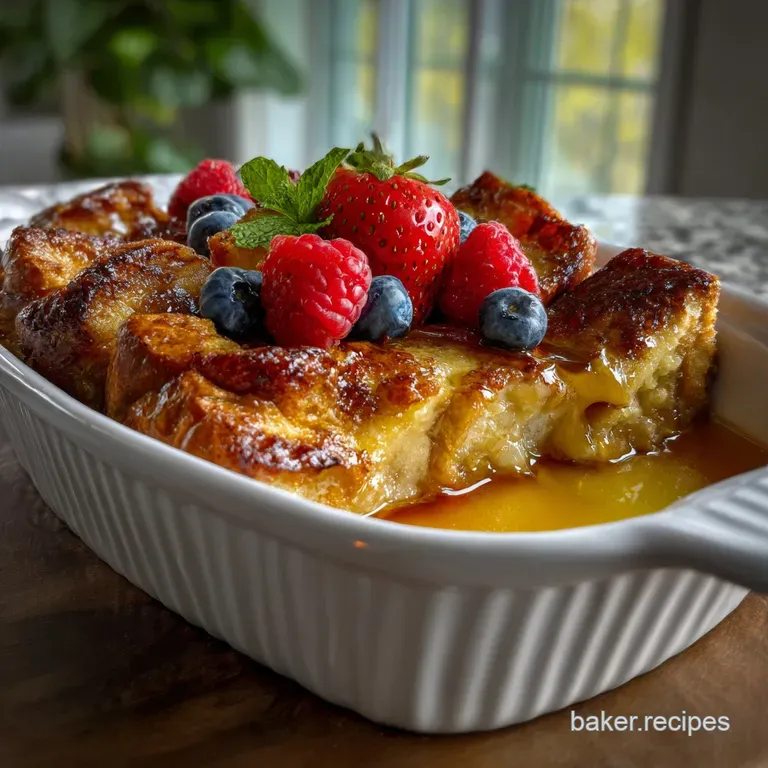
- Prep the vessel. Rub 15g of unsalted butter all over the inside of your baking dish. Note: This prevents sticking and adds a toasted milk flavor to the edges.
- Cube the bread. Cut your 500g of sourdough into 1 inch pieces. Toss them into the dish until it is evenly filled.
- Whisk the custard. In a large bowl, beat 6 large eggs. Add 480ml milk, 120ml maple syrup, 15ml vanilla, 5g cinnamon, 2g nutmeg, and 1g sea salt. Whisk until no streaks of egg remain.
- Drench the bread. Pour the mixture evenly over the bread cubes. Press down with a spatula until every piece is submerged.
- Chill overnight. Cover tightly with foil and refrigerate for 8 hours. Note: This is the "hydration phase" where the science happens.
- Mix the topping. In a small bowl, combine 40g oats, 30g crushed pecans, 15g melted coconut oil, and 2g cinnamon. Stir until it looks like wet sand.
- Preheat the oven. Set your oven to 175°C (350°F) and remove the casserole from the fridge while it heats.
- Add the crunch. Sprinkle the oat mixture over the top of the soaked bread.
- Bake the casserole. Place in the oven for 45 minutes until the top is golden and the center doesn't jiggle.
- Rest and serve. Let it sit for 10 minutes. Wait for the custard to firm up before slicing.
Solving Your Common Baking Issues
Even the best cooks run into trouble. Most issues with a toast casserole stem from either the moisture content of the bread or the oven temperature.
Preventing a Raw Center
If the edges are browning but the middle is still liquid, your oven might be running hot. Cover the dish with foil for the first 20 minutes of baking to let the center catch up, then uncover to crisp the top.
Fixing Dry Spots
If some cubes look like toasted bread rather than custard, they weren't submerged properly. Next time, use a heavy plate to weigh the bread down for the first hour of the soak.
Salvaging Over Soaked Bread
If you used a very soft sandwich bread and it looks like mush, don't panic. Increase the oven temp by 10 degrees and bake it for an extra 10 minutes. The extra heat will help evaporate some of the excess moisture.
| Problem | Cause | Fix | Pro Tip |
|---|---|---|---|
| Soggy bottom | Bread was too fresh | Toast bread cubes first | Use sourdough for better structure |
| Burnt pecans | Topping added too early | Add topping halfway through | Soak nuts in water for 5 mins first |
| Bland flavor | Not enough salt | Increase sea salt to 2g | Add a splash of bourbon to custard |
Smart Swaps and Flavor Variations
Being budget smart means using what you have. If you don't have pecans, use sunflower seeds or extra oats. If you're out of maple syrup, a brown sugar slurry works too.
Creating a Berry Burst Version
Fold in 150g of frozen blueberries or raspberries before the overnight soak. The fruit will bleed slightly, creating beautiful purple swirls in the custard. This provides a similar fruity punch to my Classic Warm Banana recipe.
Making it Plant Based
You can swap the milk for unsweetened almond milk easily. For the eggs, a commercial egg replacer works best for the structure, though the texture will be slightly softer. Use coconut oil for the greasing and topping.
| Original Ingredient | Substitute | Why It Works |
|---|---|---|
| 2% Milk | Unsweetened Almond Milk | Same volume; lighter mouthfeel. Note: Reduces calories but also creaminess. |
| Sourdough | Challah or Brioche | Higher fat/sugar content. Note: Results in a much softer, dessert like texture. |
| Pecans | Sliced Almonds | Provides the same crunch with a more neutral flavor. |
Storing and Freezing Your Meal
This dish is a meal prep dream. You can store leftovers in an airtight container in the fridge for up to 4 days. When reheating, avoid the microwave if possible; it makes the bread chewy. Instead, pop a slice into the toaster oven at 150°C for 10 minutes to bring back that crunch.
Freezing Instructions: You can freeze the baked casserole for up to 2 months. Slice it into individual portions first, wrap them in parchment paper, and then foil. To eat, thaw overnight in the fridge and reheat in the oven.
I don't recommend freezing the unbaked version, as the bread tends to break down too much during the thaw.
Zero Waste Tip: Don't throw away the crumbs at the bottom of the bread bag! Toss them into the oat topping for extra texture. If you have leftover custard liquid, save it for your morning coffee or use it to make a small batch of pancakes.
Best Ways to Serve Breakfast
Presentation makes a budget meal feel like a luxury. Dust the top with a little extra powdered sugar right before serving for that "restaurant look." I like to serve this with a side of thick cut bacon to balance the sweetness.
- The Fresh Finish: A handful of fresh mint or sliced strawberries on top adds a bright acidity.
- The Savory Balance: Serve with a dollop of Greek yogurt instead of extra syrup to keep the sugar levels in check.
- Syrup Drizzle: Warm up some extra maple syrup with a pinch of salt and pour it over the individual slices at the table.
- If you want it like pudding
- Use heavy cream instead of 2% milk.
- If you want it crispy
- Double the oat topping and bake on the top rack.
- If you want it festive
- Add a teaspoon of orange zest and a handful of dried cranberries.
Myth Busting
A common myth is that you must use expensive "artisan" bread. Honestly, even a cheap loaf of Italian bread works if you let it get stale enough. Another misconception is that more eggs equal a better set. If you over egg it, the casserole starts to taste like an omelet rather than a pastry.
Stick to the 6 egg ratio for 500g of bread for that perfect balance. Finally, people think you can't use frozen bread. You absolutely can; just defrost it before cubing so it can absorb the liquid.
This overnight french toast casserole is all about working smarter, not harder. It’s the ultimate "set it and forget it" breakfast that feels much more expensive than it actually is.
Give it a try this weekend your future self will thank you when you’re sipping coffee instead of cracking eggs at 7 AM.

Recipe FAQs
What is the minimum soaking time required before baking the casserole?
No less than 8 hours. The long soak is essential for capillary action, allowing the custard to fully penetrate the starch cells, which prevents a dry middle and ensures a uniformly velvety texture when baked.
Can I use fresh bread instead of day-old bread?
No, day-old or slightly dry bread is crucial. Fresh bread has not undergone starch retrogradation, meaning it absorbs liquid too quickly and will collapse into a soggy mess rather than holding the pudding like structure you want.
What is the ideal internal temperature I should aim for when baking?
The center must register 160°F (71°C). This temperature ensures that the egg proteins have fully coagulated, which creates the structural framework that sets the liquid milk into a sliceable custard.
Can I substitute maple syrup with pancake syrup?
No, pure maple syrup is highly recommended. Pancake syrup is generally too thick and doesn't have the same hygroscopic properties, meaning it won't draw the flavor components deep into the bread during the overnight soak.
How do I prevent the top pecan and oat topping from burning?
Cover the dish with foil for the first part of the bake. Covering shields the sugars in the topping from direct high heat while the internal custard sets; remove the foil for the last 15 minutes to achieve the perfect crunch.
What technique can I use to make this dish taste richer without adding more sugar?
Add a small amount of instant espresso powder to the custard. It won't taste like coffee, but it deepens the existing notes of vanilla and cinnamon by utilizing flavor enhancement principles similar to those used when building depth in savory stews like Coq au Vin My Easy Take on Classic French Chicken Dishes.
How long should the casserole rest after it comes out of the oven?
Allow a mandatory 10-minute rest period. This resting time is essential because it allows the trapped steam inside the hot custard to redistribute evenly, ensuring your slices hold their beautiful shape when you cut into them.
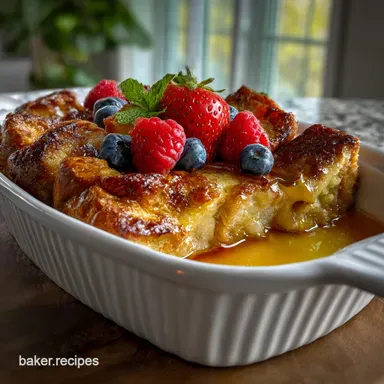
Overnight French Toast Casserole
Ingredients:
Instructions:
Nutrition Facts:
| Calories | 378 kcal |
|---|---|
| Protein | 13.1 g |
| Fat | 13.2 g |
| Carbs | 51.4 g |
| Fiber | 3.2 g |
| Sugar | 16.8 g |
| Sodium | 385 mg |
