Steak and Onions: Perfect Pub-Style Seared Sirloin
- Introducing the Classic: The Perfect Pub-Style Steak Dinner
- The Science of Flavour: Why Steak and Onions are a Perfect Pairing
- Essential Components: Ingredients for the Ultimate Steak and Onion Dish
- Mastering the Method: Step-by-Step Guide to Cooking Steak and Onions
- Expert Tips and Troubleshooting for Your Steak Dinner
- Preparation, Storage, and Reheating Best Practices
- Perfect Pairings: What to Serve Alongside Pub-Style Steak
- Recipe FAQs
- 📝 Recipe Card
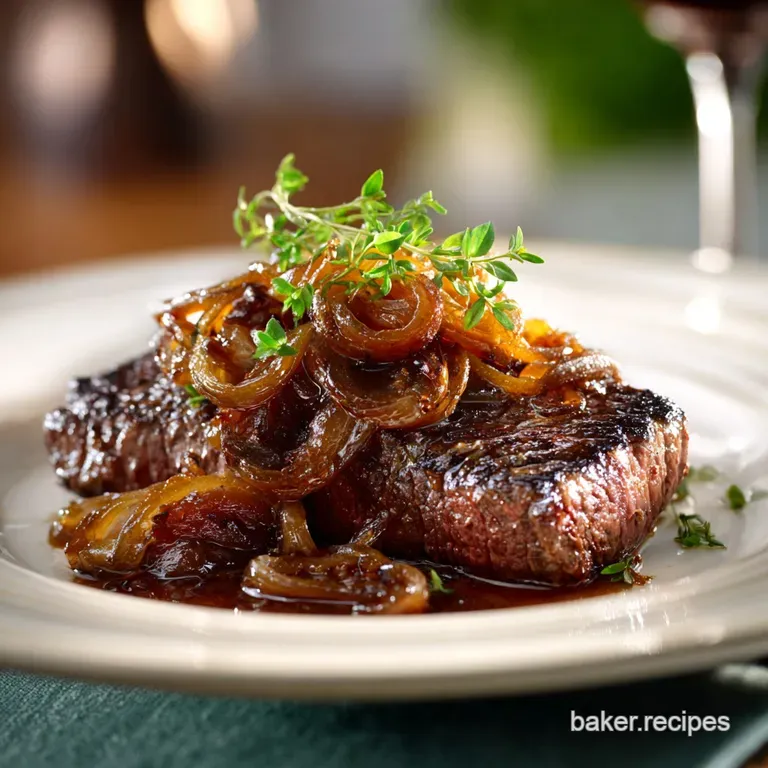
Introducing the Classic: The Perfect Pub-Style Steak Dinner
Hear that sizzle? That’s the sound of a truly beautiful crust forming, and honestly, there is no better sound in a kitchen. The aroma of searing fat and thyme, followed by the deep, winey sweetness of onions that have been lovingly caramelised it’s pure magic.
This isn't just dinner; it's a sensory hug in a heavy bottomed pan, promising comfort with every single bite.
I get it; weeknights are crazy, and sometimes cooking a great piece of steak feels like too much fuss. But this "Steak and Onions" recipe is your secret weapon. It’s shockingly fast once the onions are done, requiring only a few simple, affordable ingredients.
We’re aiming for maximum flavour with minimum complexity here, making it perfect for impressing a date or just treating yourself after a rough Tuesday.
So, ditch the fancy sauces and complicated preparations. We are going back to basics today, focusing on technique and quality ingredients to transform humble sirloin and standard onions into an absolute pub-style bobby dazzler. Trust me, if you master this method, you'll never look at a frying pan the same way again.
The Science of Flavour: Why Steak and Onions are a Perfect Pairing
What Makes This Recipe a "Bobby Dazzler"
This specific steak and onions recipe works because it respects both core ingredients equally. We avoid the common mistake of throwing raw onions in with the steak during the final sear.
Instead, we treat the onions like a patient slow cooker project, drawing out their natural sugars until they become a syrupy, savory jam. That deep sweetness balances the salty, aggressive sear of the sirloin perfectly.
The Art of Deep Caramelisation: Why Patience Pays Off
Caramelisation is purely chemistry, and you cannot rush the process without inviting bitterness. When the onions cook slowly over medium low heat for 20 to 30 minutes, their complex carbohydrates break down into simple, delicious sugars.
This low and slow approach ensures the onions melt down completely and develop the necessary depth of flavour to stand up to the richness of the steak. Never cook the onions too fast, or they will scorch and taste burnt.
A Quick Overview of the Sirloin and Thyme Baste Method
The fat used for basting, combined with fragrant herbs like fresh thyme, coats the steak repeatedly during the final cooking phase. This continuous bathing in hot, herb infused butter not only adds flavour but helps create an evenly golden brown exterior.
The butter sizzles and foams, carrying the heat gently up the sides of the steak, ensuring the crust is uniform.
Achieving the Ultimate Sear: Maximizing the Maillard Reaction
The Maillard reaction is simply the chemical process that gives seared steak its magnificent, dark crust and savoury aroma. You need three things for this: high heat, dry surface protein, and speed.
We achieve this by seasoning our steak liberally, letting it temper outside the fridge, and using an oil with a high smoke point in a screaming hot cast iron pan.
The Essential Role of the Thyme Infused Butter Baste
Once that initial crust is formed, we drop in cold butter, garlic, and thyme and turn the heat down slightly. The cold butter melts quickly without burning, and the herbs release their essential oils into the liquid fat.
This herb butter is then spooned continuously over the steak, infusing it with flavour and maintaining moisture.
Building Depth: Deglazing the Pan for the Onion Sauce
After the steak is removed to rest, we are left with a pan full of brown, sticky bits the fond which is packed with flavour. While this recipe keeps it simple, adding a tiny splash of liquid like balsamic vinegar or even a dash of water to the onion pan helps lift these flavour particles.
This makes the onions even richer and slightly saucy, perfect for coating the slices of steak.
Essential Components: Ingredients for the Ultimate Steak and Onion Dish
The ingredient list for this dish is short, which means every item needs to pull its weight. Don’t skimp on quality here; we are relying on natural flavour development.
Selecting Your Sirloin: Cut Thickness and Grading Notes
I absolutely prefer a sirloin (or rump steak, if you’re across the pond) that is at least one inch thick. Thickness is key because it gives you a temperature gradient, allowing you to get a great crust before the centre overcooks.
If you buy thinner cuts, you'll need to cook them much faster, which makes basting tricky.
| Ingredient | My Recommendation | Viable Substitution |
|---|---|---|
| Sirloin Steak | 1 inch thick, good marbling | Ribeye (fattier, more flavour), Flat Iron (cook fast) |
| Yellow Onions | Standard yellow or Spanish | Shallots (sweeter, faster cooking), Red Onions (more assertive flavour) |
| Thyme | Fresh sprigs, don't use dried! | Rosemary (stronger flavor), Dried Italian herbs (use sparingly) |
| High Smoke Point Oil | Grapeseed or Canola | Refined Avocado Oil, clarified butter (Ghee) |
Choosing the Right Onion Variety for Deep Sweetness
Yellow onions are the traditional workhorse here because they possess a high sugar content and stand up well to long cooking times. Sweet onions, like Vidalia, will caramelise faster but can sometimes lack that necessary savoury bite. Pro Tip: Slice them consistently thin so they all cook down evenly.
Salt, Pepper, and Oil: Preparing the Steak for Optimal Searing
You must season your steak heavily, almost bordering on too much. That heavy seasoning forms the primary flavour layer of the crust. Use coarse salt like sea salt or Kosher salt for texture, and remember to pat the steak bone dry before applying anything!
Substitutions and Adjustments for the Herb Butter
If you don't have fresh herbs, don't panic, but please try to get some. If forced, you can use a pinch of dried herbs, but add them to the butter right at the end so they don’t burn. If you must skip dairy, swap the butter for Ghee, which has a higher smoke point and gives a lovely, nutty flavour.
Mastering the Method: step-by-step Guide to Cooking Steak and Onions
Phase 1: Slowly Caramelising the Onions (The Foundation)
- Start Low and Slow: Melt 1 Tbsp butter and 1 Tbsp oil in a medium skillet over medium low heat. Add your thinly sliced onions and 1/2 tsp salt.
- Sweat and Soften: Cook the onions, stirring occasionally, for about 15 minutes until they are entirely translucent and have released all their moisture. The volume will drop dramatically.
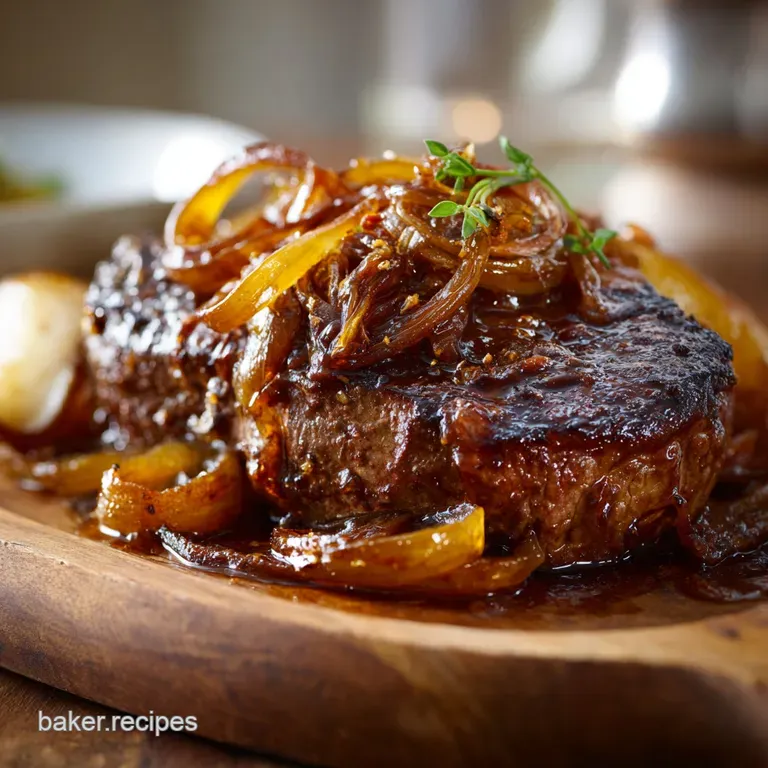
- Achieve the Colour: Increase the heat slightly to medium low. Continue cooking, stirring more frequently, until they reach a deep golden brown, about 10 more minutes. They should look jammy and reduced; this is the caramelisation you want.
- Finish Strong: Stir in the optional balsamic vinegar and cook for one minute to deglaze and add incredible depth. Transfer the onions to a bowl and keep them warm.
Phase 2: over High heat Searing and Butter Basting the Sirloin
- Prep the Steak: Remove the steaks from the fridge at least 20 minutes beforehand. Pat them dry and season them generously with salt and pepper.
- Searing Heat: Place your cast iron skillet over high heat. Add 1 Tbsp of high smoke point oil. Wait until the oil is shimmering and just barely smoking before you add the steaks.
- The Initial Sear: Place the steaks gently into the hot pan. Sear undisturbed for 3 minutes for a thick steak don’t poke them!
- Flip and Baste: Flip the steaks and immediately reduce the heat to medium. Add the cold cubed butter, smashed garlic, and thyme sprigs.
- The Butter Shower: Tilt the pan and use a large spoon to scoop the foaming herb butter over the steaks constantly for 2– 3 minutes. The goal is to continuously coat the top surface to build an even crust.
Phase 3: Rest, Slice, and Assemble the Final Dish
- Check Temperature: Remove the steaks when they hit about 130°F (54°C) for medium rare. They will continue cooking as they rest.
- The Rest: Transfer the steaks to a cutting board and tent them loosely with foil. This 8 10 minute rest is non-negotiable! This step is truly what determines the juiciness of the final steak.
- Assemble: Slice the rested steak against the grain, arrange the slices on plates, and spoon the warm, deeply flavourful caramelised onions right over the top.
Achieving Desired Doneness (Internal Temperature Chart)
| Desired Doneness | Remove Steak From Pan At | Final Temperature After Resting |
|---|---|---|
| Rare | 125°F (52°C) | 130°F (54°C) |
| Medium Rare | 130° –135°F ( 54° –57°C) | 135° –140°F ( 57° –60°C) |
| Medium | 138° –142°F ( 59° –61°C) | 145° –150°F ( 63° –66°C) |
Expert Tips and Troubleshooting for Your Steak Dinner
The Critical Importance of Letting the Steak Rest
I made this mistake for years, pulling the steak out and slicing it immediately only to watch all those precious juices bleed onto the board. When steak rests, the internal temperature stabilizes, and the muscle fibres relax, allowing the juices to redistribute throughout the meat.
If you skip this step, your steak will be dry, even if you cooked it perfectly. You rest the steak for nearly as long as you cook it; commit to it.
Mistake Alert: Not Using High Enough Heat for the Initial Sear
If your pan isn't hot enough, the steak will start to steam instead of searing. That moisture prevents the Maillard reaction from happening, leaving you with a grey, sad exterior instead of a beautiful crust. You need that high heat burst initially to lock in the crust, then you reduce the heat for the basting phase.
Adjusting Seasoning for the Onions vs. the Steak
Remember that the steak should be seasoned aggressively because the high heat will concentrate and pull the seasoning into the crust. The onions, however, need a more measured hand with salt. Since they reduce so much, the salt becomes very concentrated.
Taste the onions at the end and adjust with a tiny pinch of salt or a splash of vinegar, if necessary.
Preparation, Storage, and Reheating Best Practices
Meal Prepping the Caramelised Onions Ahead of Time
The beauty of this recipe is that the hardest, slowest part can be done days in advance. Caramelised onions will keep beautifully in an airtight container in the fridge for up to five days. You just need to heat them gently while the steak rests. This dramatically cuts down the active weeknight cook time.
Safe Storage Guidelines for Cooked Steak
Cooked steak and onions should be cooled quickly and stored separately in airtight containers in the refrigerator. They are generally good for 3 to 4 days. But does it freeze well? You bet.
Chef's Note: If you want to freeze them, separate the onions and the steak. The onions freeze wonderfully for up to three months. Slice the cooked steak and flash freeze the slices on a baking sheet before transferring them to a freezer bag to prevent them from sticking together.
Reheating Steak Without Losing Juiciness
Never reheat beautiful seared steak in the microwave it turns sad and rubbery. The best way is to slice the cold steak thin and warm it very gently in a pan with a tiny bit of leftover butter or oil.
Alternatively, you can place the slices on an oven safe plate, cover them loosely with foil, and warm them in a low oven (around 250°F / 120°C) for about 5 to 7 minutes. This method prevents the protein from seizing up again.
Perfect Pairings: What to Serve Alongside Pub-Style Steak
This is a rich dish, so you have two options for sides: lean into the comfort food vibe or cut the fat with something acidic and fresh.
For the ultimate comforting contrast, serve this Steak and Onions Recipe with a generous pile of creamy, mashed potatoes or proper, chunky, fried chips. If you are feeling extra cheesy, starting your meal with a scoopable appetizer is always a great move, like a rich, molten cheese dip. Something like the Dips and Appetizers: Spanish Chorizo Fundido Easy Baked Cheese Dip would be an incredibly decadent opening.
If you prefer a lighter, balancing side, a simple green salad dressed with a vinaigrette is perfect. The acid cuts through the richness beautifully. Alternatively, my Black Bean and Corn Salad: The Ultimate Zesty Honey Lime Recipe offers a zesty, fresh counterpart that keeps the palate awake.
Recipe FAQs
How do I guarantee a superb, crispy crust (sear) on my sirloin?
The key to a great crust is a completely dry surface and extreme heat. Pat the steak thoroughly dry with paper towels immediately before seasoning, and use an oil with a high smoke point, like grapeseed or avocado oil, in a screaming hot cast iron pan.
My onions are browning too fast; why are they not caramelising properly?
Caramelisation is a process requiring low, slow heat over an extended period usually 35 to 45 minutes for a deep flavour. If your onions are browning rapidly, your heat is too high, causing them to burn rather than develop the necessary sweetness.
Add a small splash of water to the pan to lift the fond and reduce the heat significantly.
How can I accurately tell when my steak has reached medium rare doneness?
The most accurate method is using an instant read thermometer inserted into the thickest part of the steak. For medium rare, aim for an internal temperature of 130 135°F (54 57°C) while it is still in the pan.
Remember that the temperature will increase by 5 10 degrees as the steak rests, known as carry over cooking.
When exactly should I add the butter, thyme, and garlic for the baste?
Add the butter and aromatics about halfway through the total searing time, typically after the first 3-4 minutes when a good crust has begun to form. Waiting ensures the initial sear develops fully before introducing the fat, which can slightly lower the pan temperature.
Can I use a leaner cut of beef, like flank or skirt steak, instead of sirloin?
Yes, you can substitute, but be aware that thinner cuts require significantly less cooking time. Flank and skirt steaks should be seared hot and fast for only 3-4 minutes total to prevent them from becoming tough or chewy. Always slice these cuts against the grain when serving.
How should I store and reheat leftover steak and onions without drying the beef out?
Store leftovers separately in airtight containers for up to 3 days in the refrigerator. To reheat the steak, place it on a baking sheet and warm it gently in a 250°F (120°C) oven until just warmed through. Reheat the onions in a small pan on the stovetop to maintain their texture.
What are the best side dishes to serve with this deeply flavoured pub-style steak?
Classic pairings include buttery mashed potatoes, which soak up the pan juices and melted butter beautifully. Alternatively, serve with thick cut chips (fries) or a simple side of blanched green beans or asparagus to cut through the richness of the beef and caramelised onions.
Pub Style Steak And Onions
Ingredients:
Instructions:
Nutrition Facts:
| Calories | 655 calories |
|---|---|
| Fat | 45 g |
| Fiber | 3 g |
