Savory Sausage Stuffing with Sage and Apple: the Ultimate Holiday Side Dish
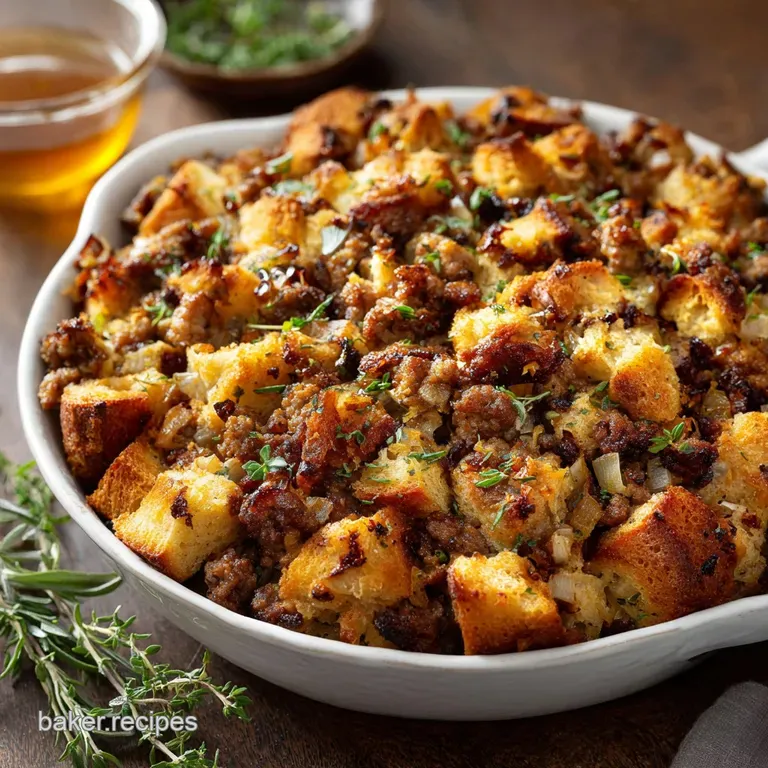
- The Ultimate Savory Sausage Stuffing: A Holiday Essential
- Culinary Deep Dive: Why This Stuffing Recipe Triumphs
- Preparing Your Mise en Place: Ingredients for the Best Savory Sausage Stuffing
- The Method: How to Make Luxurious Sausage and Apple Stuffing
- Troubleshooting and Pro Tips for Flawless Stuffing
- Prep Ahead, Storage, and Reheating Guide
- Perfect Pairings for Savory Sausage Stuffing
- Recipe FAQs
- 📝 Recipe Card
The Ultimate Savory Sausage Stuffing: A Holiday Essential
Stop everything you are doing and just think about this for a second. Imagine that deep, earthy perfume hitting you as you pull the dish from the oven: the sharp freshness of sage, the caramelized sweetness of the apples, and the rich, browned pork sausage.
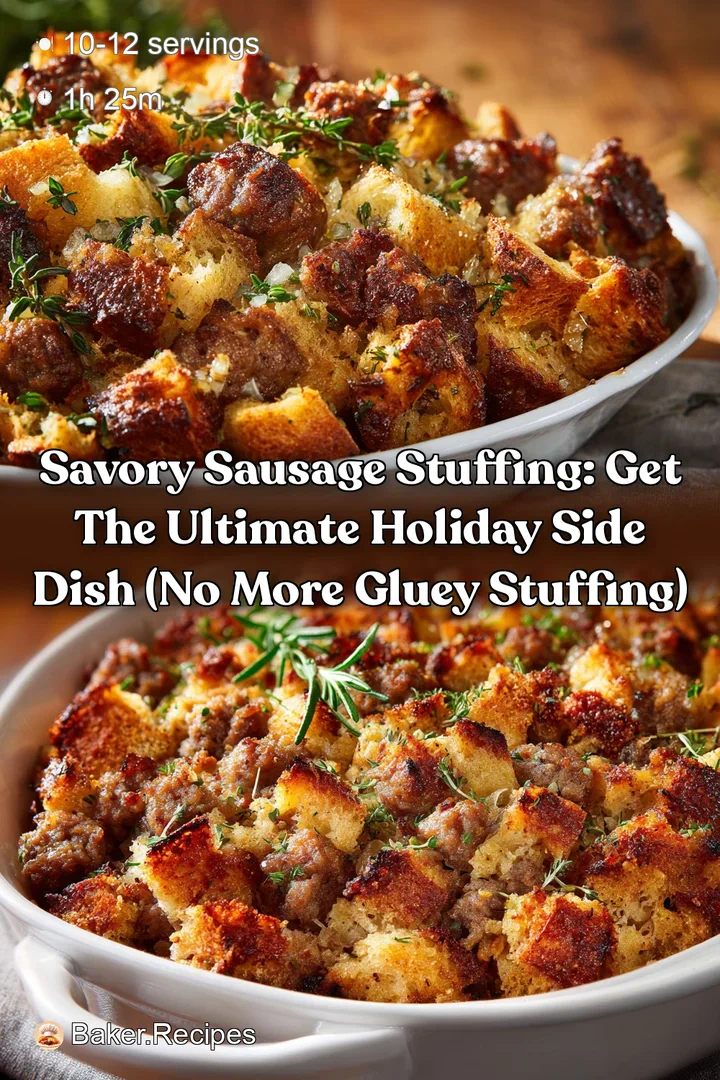
This isn't just a side dish; it’s the cornerstone of any celebratory meal, offering that perfect textural contrast we all crave. You get those crunchy, buttery bits on top and a heavenly, moist interior.
I spent years messing this up, ending up with dense, gluey blocks that tasted vaguely of disappointment and old bread. But I figured out the secrets, and honestly, this savory sausage stuffing recipe is now my superpower.
It’s incredibly fast to put together the vast majority of the work is just chopping and uses simple, affordable ingredients that truly sing together.
So let’s ditch the boxes and the bland versions of yesteryear. We are going to make the best savory sausage stuffing you have ever tasted, focusing on flavor depth and texture. Trust me when I say this is the one recipe you need to nail this holiday season. Let’s crack on!
Culinary Deep Dive: Why This Stuffing Recipe Triumphs
Achieving the Perfect Crisp-to-Moist Ratio
The biggest sin in stuffing is making it soggy. Absolutely the worst. The key to avoiding that disaster is recognizing that dry bread is not a suggestion; it is a non-negotiable step. We want the bread to absorb the liquid binder (stock and eggs) like a sponge, not dissolve into porridge.
This is why we dry the bread first. We then bake it covered initially to fully heat and moisten the interior, and then uncover it for the last 15 minutes to create that glorious, crunchy crust.
Why Apple and Sage are the Secret Flavor Ingredients
If you look at most store-bought sausages, especially good English or Italian styles, they often already include sage, but we’re going to amp that up. Fresh sage is vital here; it provides an intoxicating, woodsy, savory aroma that defines the season.
The diced apple (I use Granny Smith) performs a dual function: it cuts through the richness of the sausage fat with necessary acidity, and it provides a surprising textural element that cooks down into tender little bursts of flavor.
Stuffing vs. Dressing: Understanding the Difference
This might seem pedantic, but it matters! Traditionally, stuffing is cooked inside the bird, and dressing is cooked outside in a separate dish. Because cooking stuffing inside a turkey can be tricky and potentially unsafe (you must ensure it reaches 165°F), I always recommend baking it separately.
This recipe is technically a savory sausage dressing , giving you maximum crispiness and perfect food safety.
The Importance of Rendering the Sausage Properly
We aren't just browning the pork sausage; we are rendering the fat. That fat is pure flavor gold. We use it instead of just plain butter to sauté the onions and celery, building an incredibly rich and savory foundation right from the start. Don't skip this step.
You want those brown bits (fond) stuck to the bottom of the pan because that means massive flavor.
The Sourdough Advantage: Structure and Tang
While French bread works well, I am a total fan of using sourdough for stuffing. Sourdough holds its shape beautifully even after soaking, preventing mushiness. Plus, the slight tanginess provides a wonderful counterpoint to the sweetness of the apple and the richness of the sausage.
It just gives this savory sage sausage stuffing that restaurant quality depth.
Balancing Acidity and Richness for Depth of Flavor
The inclusion of dried cranberries and that tart apple is essential. Without the acid, the stuffing can taste overwhelmingly heavy and one-note (just sausage and butter). The tart elements lift the entire dish, ensuring every bite is complex and interesting.
It keeps the stuffing tasting light and bright, despite the luxurious amount of fat we are using.
Preparing Your Mise en Place: Ingredients for the Best Savory Sausage Stuffing
This list is straightforward, but substitutions matter. If you follow the ingredient measurements exactly (see the recipe card below), you are golden.
Selecting the Right Pork Sausage (And What to Avoid)
Use a high-quality bulk pork sausage, ideally mild Italian or an English style sage sausage. If you can only find links, take the casings off. Avoid pre-seasoned breakfast sausage that might contain maple syrup or overly sweet notes; we are focusing on savory here. If you need inspiration for other ways to use great sausage, you should check out my recipe for Finger Foods: Gourmet Sausage Rolls with Caramelised Onion Thyme .
| Ingredient | Substitute Tip |
|---|---|
| Pork Sausage | Use high-quality ground pork + 2 tsp fennel seeds + extra fresh sage. |
| Sourdough Bread | Cubed, dried French baguette or Challah (less tangy, but good structure). |
| Chicken Stock | Vegetable stock, or make your own turkey stock if you're feeling ambitious. |
| Fresh Sage | Double the amount of dried sage, but the flavor won't be as vibrant. |
The Critical Step: Thoroughly Drying Your Bread Cubes
Seriously, if you ignore one step, please don't let it be this one! I learned the hard way once when I thought "stale" meant "left out for an hour." Nope. If you cut the bread and let it air dry overnight, fantastic.
If you forget (which I often do), spread the cubes on a sheet tray and bake at 300°F (150°C) until they are crunchy, practically croutons. They must be hard to prevent the stuffing from turning into sludge.
Fresh Herbs vs. Dried: Maximizing Aromatic Impact
For the sage and thyme in this best savory sausage stuffing , you really, really need fresh herbs. Dried herbs, while convenient, have a flat, dusty flavor compared to the bright, potent fragrance of fresh sage. A little goes a long way, but don't skimp.
Apple Varieties That Hold Up Under Heat
We are using a cooking apple, like Granny Smith or Braeburn. They provide that essential tartness and hold their shape slightly better than softer apples like Gala or Fuji, which can disappear completely during baking. Make sure the apple is diced small so it disperses evenly through the mix.
The Method: How to Make Luxurious Sausage and Apple Stuffing
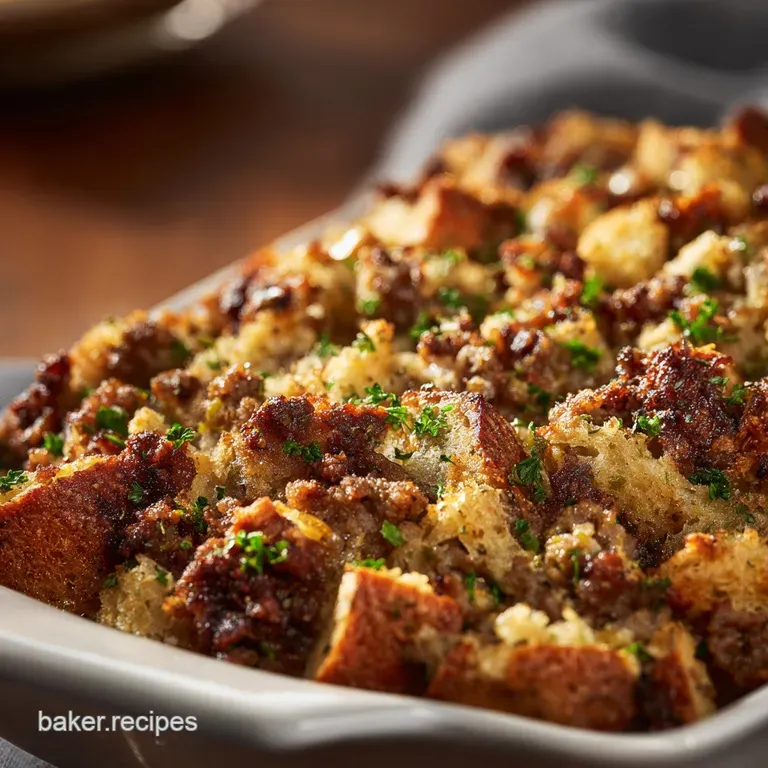
This recipe makes a huge batch, perfect for a big gathering. Get your biggest mixing bowl ready.
Step 1: Browning the Sausage and Building the Flavor Base
Start by heating your skillet with a little olive oil and a tablespoon of butter. Add the crumbled sausage (casings removed) and brown it completely, breaking it up as you go. We want that beautiful caramelization. Once cooked, use a slotted spoon to transfer the sausage into your huge mixing bowl with the dry bread.
If your sausage was super fatty, drain all but about 2 tablespoons of that rendered fat.
Step 2: Incorporating the Bread and Aromatic Mixture
Reduce the heat to medium. Add the rest of the butter, then toss in the diced onion and celery. Cook these gently for 8 to 10 minutes until they are perfectly translucent and soft this mellow flavor base is crucial.
Now, toss in the minced garlic and diced apple, cooking for just two more minutes until you smell that nutty garlic aroma. Season this mixture aggressively with salt and pepper right here, right now! Scrape the entire buttery vegetable mixture over the dry bread and sausage. Toss it all gently to coat.
Step 3: Achieving Perfect Saturation (The Liquid Balance)
In a separate bowl, whisk the eggs with the warm chicken stock. Use warm stock, please; it helps the bread absorb better. Start by pouring in just 2 cups of the stock/egg mixture. Toss gently with a wooden spoon.
Crucial Chef’s Note: The only reliable test for proper moisture is the 'squeeze test.' Grab a handful of the mixed stuffing. It should feel damp and hold its shape when you squeeze it, but absolutely no liquid should drip out.
If it feels too dry, add the remaining stock, a quarter cup at a time. Stop mixing as soon as everything is moistened.
Step 4: Baking for Crisp Edges and a Moist Center
Transfer the mixture into a buttered 9x13-inch baking dish. Gently smooth the top, but do not compact it tightly. Cover the dish tightly with foil and bake at 375°F (190°C) for 25 minutes. This steaming period ensures the interior is perfectly moist. Remove the foil and bake for another 15 to 20 minutes until the top is deeply golden brown and crispy. Let it rest 10 minutes before serving; it makes slicing easier and holds the warmth beautifully. For an equally delicious sausage bake, you might also like my Thanksgiving Stuffing Recipe: The Ultimate Crispy Sage Sausage Bake .
Troubleshooting and Pro Tips for Flawless Stuffing
Preventing the Stuffing from Becoming Gluey or Dense
Soggy stuffing is almost always caused by using soft, fresh bread. If the bread isn't dried out, it turns into sticky paste when it hits the stock. Pro Tip: If you realize your bread isn’t dry enough halfway through, stop everything and toast it immediately.
Also, avoid over packing the casserole dish; a loose mix allows steam to escape, which keeps the texture light.
Handling Temperature: Baking Outside vs. Inside the Turkey
Since we are making this outside the turkey (a dressing!), we bake at a standard oven temperature (375°F/190°C). Never serve stuffing that hasn't reached an internal temperature of 165°F (74° C).
If you were attempting to cook this inside a bird, the exterior would be done long before the center reached a safe temperature, which is why we avoid it!
The Final Test: Seasoning the Mix Before Baking
Taste everything before adding the stock and eggs. I know, I know, you can't eat raw sausage mixture. But once the sausage, vegetables, and herbs are mixed together, take a small taste. If it tastes bland now, it will taste bland later. Adjust the salt, pepper, and perhaps add a pinch of dried nutmeg for warmth.
Remember that the bread will absorb salt, so be generous.
Prep Ahead, Storage, and Reheating Guide
make-ahead Magic: Preparing the Stuffing 24 Hours in Advance
This is a phenomenal make-ahead side dish. Complete Steps 1 through 7, mixing the sausage, aromatics, herbs, and bread, but do not add the wet binder (stock and eggs). Store the dry mixture covered in the fridge.
Up to one hour before baking, whisk the stock and eggs, pour it over the dry mix, toss, and proceed with baking (Steps 8 through 13).
How to Safely Freeze and Thaw Baked Stuffing
Yes, this savory sausage stuffing freezes brilliantly! Once baked and cooled completely, wrap the entire baking dish (if freezer safe) tightly in plastic wrap, then foil. It keeps well for up to three months. To thaw, move it to the fridge overnight.
Reheating Leftovers Without Drying Them Out
Leftovers are arguably the best part of the holidays. To reheat, scoop the leftover stuffing into an oven safe dish. Add 1 2 tablespoons of stock or gravy over the top, cover tightly with foil, and bake at 350°F (175°C) until piping hot (about 20 minutes).
The foil and extra liquid prevent it from becoming dry dust.
Perfect Pairings for Savory Sausage Stuffing
This rich, fragrant side needs contrasting flavors to make the meal pop. I love serving it with something sharp and tangy to cut through the richness.
- Cranberry Sauce: Essential. The tart, sweet berries are the perfect foil for the salty sausage.
- Roast Gravy: Obviously. Drench it.
- Bright Greens: A simple, lemon dressed green bean almondine or some crisp roasted Brussels sprouts are non-negotiable. They add color and lightness to the plate.
Recipe FAQs
Can I prepare this sausage stuffing a day in advance?
Yes, preparing the stuffing ahead is highly recommended for easing holiday stress. Combine all the ingredients including the soaked bread cover the mixture tightly, and refrigerate for up to 24 hours.
When ready to bake, allow the dish to sit at room temperature for about 30 minutes before placing it in the oven to ensure even cooking.
Why is my stuffing dry or crumbly instead of moist?
Stuffing becomes dry primarily when the bread cubes are too hard or not enough liquid was absorbed. Ensure you measure your broth carefully and mix until the bread is fully saturated but not soggy, allowing it to soak up the flavourful fat from the sausage and vegetables.
Baking the stuffing covered for most of the duration also helps trap essential moisture.
What is the safe internal temperature for sausage stuffing?
For safety, especially since this recipe contains raw pork sausage, the stuffing must reach an internal temperature of 160°F (71°C) when baked alone. If you choose to cook the stuffing inside a turkey, it absolutely must reach 165°F (74°C) to kill any bacteria, but separate cooking is always the safer and preferred method.
I don't eat pork. Can I substitute the sausage?
Absolutely, ground chicken or turkey sausage works wonderfully as a leaner alternative, though you might need to add a touch more oil to the pan when browning. If using plain ground poultry, remember to season it aggressively with extra fennel, sage, and thyme to mimic the robust flavor profile that pork sausage typically provides.
What is the best type of bread to use and must I dry it out?
Sourdough, brioche, or French bread are the best choices because they hold their shape well when wet. You must dry the bread out thoroughly, either by leaving the cubes overnight or lightly toasting them in the oven, as this prevents the final product from becoming dense and gluey once the broth is added.
Can I freeze leftover cooked stuffing?
Yes, cooked stuffing freezes quite well and maintains its integrity better than many casseroles. Allow the leftovers to cool completely, transfer them to a freezer safe container, and they can be stored for up to three months.
Thaw overnight in the refrigerator and reheat covered in the oven until piping hot throughout to retain moisture.
How do I prevent the top edges from burning while the middle stays raw?
If the edges are browning too quickly, place a piece of aluminum foil loosely over the baking dish for the majority of the cooking time. Remove the foil only for the last 10 to 15 minutes to allow the top to crisp up. Also, ensure the baking dish is not overloaded, which can impede central heat circulation.
Savory Sausage Stuffing With Sage And Apple
Ingredients:
Instructions:
Nutrition Facts:
| Calories | 818 kcal |
|---|---|
| Protein | 36.9 g |
| Fat | 56.0 g |
| Carbs | 41.8 g |
