Smoky Hoppin John Recipe: Perfectly Distinct Grains
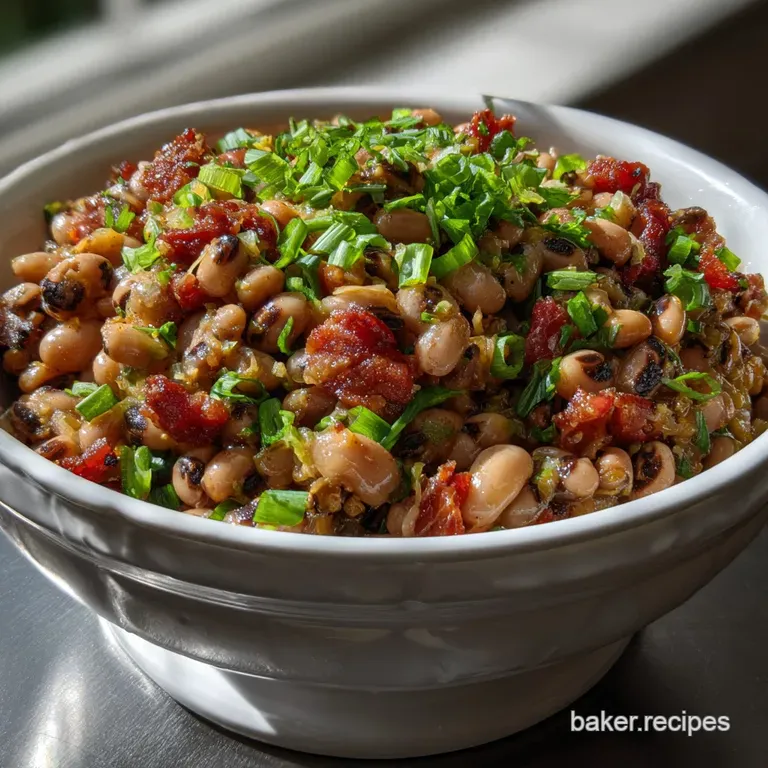
- Effort/Time: Moderate; 1 hour 30 mins total.
- Flavor Hook: Smoky, savory, and back-of-the-throat heat.
- Perfect for: New Year's Day traditions or meal-prepped weekday lunches.
- Master the Ultimate Southern Style Hoppin John Recipe
- Thermodynamic Specs and Yield Metrics
- The Alchemy of Umami: Selecting Your Elements
- Precision Heat Distribution Tools
- Atomic Steps for Layered Flavor Development
- Why Your Grains Turn Mushy: Pro Fixes
- Compositional Variations for This Southern Classic
- ⚗️ The Scaling Lab: The Physics of Quantity
- Common Myths Debunked
- Preservation Dynamics and Thermal Recovery
- Finishing Touches for Textural Contrast
- Recipe FAQs
- 📝 Recipe Card
The aroma of rendering bacon fat is a siren song, but there is no nightmare quite like spending 90 minutes on a hoppin john recipe only to end up with a bowl of grey, pulverized mush.
I’ve been there starving, staring at a pot where the rice fused into a paste while the peas remained stubbornly bullet hard. It’s a texture failure that wastes both high-quality ingredients and your afternoon, leaving you with a side dish that feels more like a punishment than a celebration.
I’ll be honest: I once ruined a massive batch for a New Year's party because I tried to rush the simmer by cranking the heat to a rolling boil. I learned the hard way that legumes and long grain rice obey the laws of physics, not the demands of a tight schedule.
By over agitating the pot, I broke the starch granules prematurely, creating a "rice pudding" effect in a dish that should have been clean and separated.
The secret to a Masterclass level hoppin john recipe isn't some "magic" spice; it’s the science of controlled starch hydration. By soaking your peas overnight to achieve even moisture penetration and then simmering them just until they reach the "al dente" phase before adding rice, you ensure the grain and the legume finish their thermal journey at the exact same second.
The result is a velvety pea texture contrasted against firm, mahogany stained rice.
Master the Ultimate Southern Style Hoppin John Recipe
This hoppin john recipe succeeds because it treats every ingredient as a building block for a complex, multi layered flavor profile. We start by building a foundation of rendered animal fats, then introduce the "Holy Trinity" of aromatics to provide a sweet and savory aromatic base.
- Maillard Reaction Synergy: Searing the 8 oz smoked andouille sausage rounds creates a crust of concentrated amino acids and sugars that eventually dissolves into the 6 cups chicken stock, creating a built-in sauce.
- Collagen Hydrolysis: The 1 smoked ham hock acts as a gelatin factory; as it simmers, the tough connective tissues break down into gelatin, giving the final broth a rich, lip-smacking mouthfeel.
- Controlled Starch Gelatinization: Using long grain white rice ensures a higher amylose-to-amylopectin ratio, which is the scientific reason the grains stay separate and fluffy instead of sticky.
- Osmotic Equilibrium: Soaking the 1 lb dried black eyed peas overnight allows water to move into the starch cells slowly, preventing the skins from bursting during the over high heat cooking phase.
Thermodynamic Specs and Yield Metrics
Precision is the difference between a side dish and a centerpiece. This hoppin john recipe is calibrated for a specific volume-to-surface area ratio using a standard heavy bottomed pot.
- Yield: 6 servings
- Preparation Phase: 15 minutes (plus overnight soak)
- Thermal Processing Phase: 1 hour 15 mins
- Total Elapsed Time: 1 hour 30 mins
| Metric | Value |
|---|---|
| Caloric Density | 688 kcal per serving |
| Protein Content | 33 g |
| Fiber Profile | 8.5 g |
| Fat Content | 19.5 g |
The Alchemy of Umami: Selecting Your Elements
For a truly authentic hoppin john recipe, the quality of your pork and legumes dictates the ceiling of the dish. I recommend using Benton’s Smoky Mountain Smoked Bacon if you can find it; the intense hickory smoke provides a depth that liquid smoke simply cannot replicate.
| Ingredient | Chemical/Physical Role (Science) | The Pro Secret (Why This Matters) |
|---|---|---|
| Black Eyed Peas | Plant based protein and starch structure | Overnight soaking reduces phytic acid and ensures even cooking. |
| Smoked Ham Hock | Collagen-to-gelatin conversion | Provides a silky viscosity to the cooking liquid without adding flour. |
| Andouille Sausage | Fat-soluble spice delivery | The fat rendered from the sausage carries the cayenne and paprika flavors. |
| Chicken Stock | Mineral and amino acid solvent | Using stock instead of water doubles the glutamic acid content for deeper flavor. |
- 4 slices thick cut bacon, diced (115g): Why this? Provides the primary rendering fat for sautéing aromatics.
- 8 oz smoked andouille sausage, sliced into rounds (225g): Why this? Adds textural variety and a spicy kick.
- 1 lb dried black eyed peas, soaked overnight (450g): Why this? High fiber base that absorbs the smoky liquid.
- 1.5 cups long grain white rice (280g): Why this? Stays separate and distinct during the final absorption phase.
- 1 smoked ham hock (340g): Why this? Essential for bone deep smokiness and gelatinous body.
- 6 cups chicken stock (1.4L): Use a high-quality brand like Swanson Natural Goodness.
- Aromatics: 1 large yellow onion (200g), 1 green bell pepper (150g), 2 stalks celery (100g).
- Seasoning: 1 tsp smoked paprika, 0.5 tsp cayenne pepper, 1 tsp dried thyme, 2 bay leaves, 1 tsp Diamond Crystal Kosher Salt, 0.5 tsp pepper.
Precision Heat Distribution Tools
To prevent the rice from scorching at the bottom, you need a vessel with significant thermal mass.
- Lodge 6 Quart Enameled Cast Iron Dutch Oven: The thick walls distribute heat evenly, preventing "hot spots" that cause the legumes to burn.
- Cuisinart Stainless Steel Chef’s Knife: Necessary for the fine dice on the "Holy Trinity" aromatics to ensure even softening.
- Wooden Spoon: Ideal for scraping the "fond" (browned bits) off the bottom of the pot without scratching the enamel.
Atomic Steps for Layered Flavor Development
Follow these steps exactly to ensure your hoppin john recipe maintains its structural integrity. If you've spent the morning baking a Victoria Sponge recipe, this savory process will be a relaxing change of pace.
- Render the 4 slices of diced bacon in a cold Lodge Dutch Oven over medium heat for 8 minutes until fat is translucent and bits are crisp.
- Brown the 8 oz of andouille sausage rounds in the bacon fat for 5 minutes until a dark mahogany crust forms on both sides.
- Sauté the chopped onion, green pepper, and celery in the rendered fat for 6 minutes until the onions turn translucent and the "raw" smell vanishes.
- Incorporate the 4 cloves of minced garlic, 1 tsp smoked paprika, 0.5 tsp cayenne, and 1 tsp thyme, stirring for 60 seconds until the spices bloom and become highly fragrant.
- Deglaze the pot by pouring in 6 cups of chicken stock, using the spoon to scrape up all the browned bits from the bottom.
- Submerge the 1 lb soaked peas, 2 bay leaves, and the 1 smoked ham hock into the liquid.
- Simmer the mixture partially covered for 45 minutes until the peas are tender but still hold their shape (not mushy).
- Stir in the 1.5 cups of long grain rice, 1 tsp salt, and 0.5 tsp black pepper.
- Absorb the liquid by covering the pot tightly and reducing heat to low for 18 minutes until all stock is gone and rice is tender.
- Rest the pot off the heat, covered, for 10 minutes until the steam redistributes and the grains "fluff" easily with a fork.
Chef’s Note: Do not lift the lid during the final 18 minutes. Every time you peek, you lose the steam pressure required to gelatinize the rice starch, leading to unevenly cooked grains.
Why Your Grains Turn Mushy: Pro Fixes
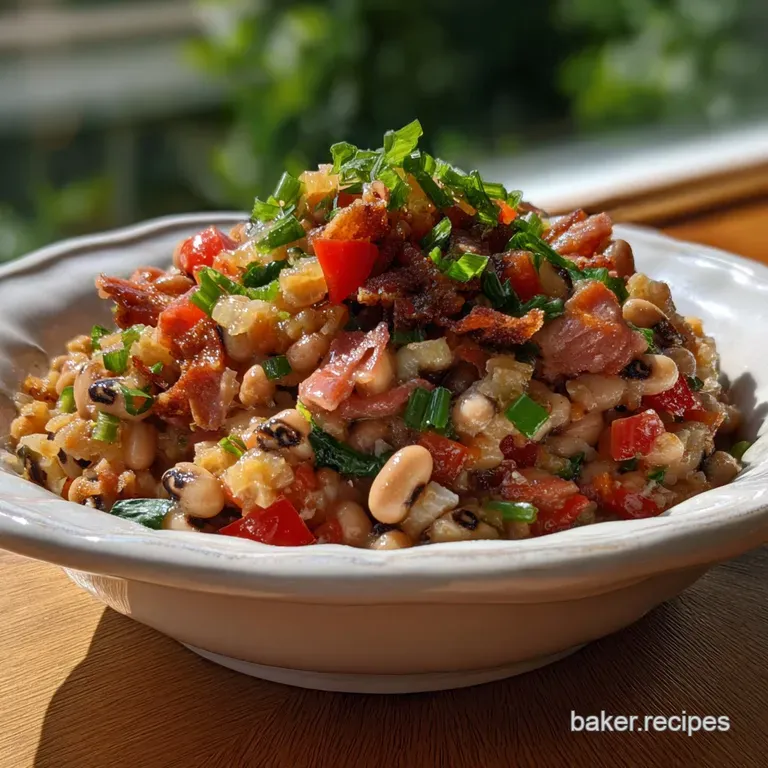
Understanding the physics of this hoppin john recipe helps you avoid common pitfalls. Like the delicate balance required for Peanut Butter Cookies, moisture control is everything.
Why Your Hoppin' John is Watery
If the starch in the rice doesn't fully absorb the liquid, you're left with a soup rather than a pilaf. This usually happens because of an incorrect liquid-to-solid ratio or a lid that isn't tight enough.
| Problem | Root Cause | The Fix | Pro Protocol |
|---|---|---|---|
| Grains are Gluey | Excessive agitation/stirring | Stop stirring after the rice is added. | Let the pot rest 10 mins before fluffing. |
| Peas are Hard | Acidic environment or old beans | Add salt only after the initial pea simmer. | Use a pinch of baking soda for very old beans. |
| Burned Bottom | Heat too high during absorption | Use a heat diffuser or the lowest possible flame. | Ensure the pot lid has a heavy seal. |
Compositional Variations for This Southern Classic
While the traditional hoppin john recipe southern style is hard to beat, you can adapt the flavor profile to suit different dietary needs or kitchen setups.
Hoppin John Recipe Slow Cooker Version
To adapt this for a slow cooker, reduce the chicken stock by 1.5 cups (evaporation is minimal in a closed system). Brown the meats and aromatics in a skillet first to ensure the Maillard reaction occurs slow cookers don't get hot enough to brown protein.
Cook on low for 6 7 hours, adding the rice only in the last 45 minutes.
Hoppin John Recipe Vegan Swap
For a plant based version, replace the bacon fat with 3 tbsp of avocado oil and use a high-quality vegetable stock. To mimic the smoky depth of the ham hock, add 2 tsp of liquid smoke and 1 tbsp of tomato paste. This creates a rich "hoppin john recipe vegan" alternative that still satisfies.
Spicy Southern Twist
If you want a hoppin john recipe with ground sausage instead of rounds, brown the loose sausage first and leave the fat in the pan. Increase the cayenne to 1 full teaspoon for a more aggressive heat profile typical of South Carolina low-country cooking.
⚗️ The Scaling Lab: The Physics of Quantity
Doubling a hoppin john recipe isn't as simple as multiplying by two. Thermodynamics and evaporation rates change as the volume increases.
- The Evaporation Paradox: When you double the ingredients in the same Dutch Oven, the surface area remains the same. Reduce the total stock by 10% (about 0.5 cup less than a full double) to avoid a soggy result.
- Flavor Saturation: Spices like cayenne and thyme should be scaled at 1.5x, not 2x. Capsaicin (the heat in cayenne) can become overwhelming when scaled linearly.
- Thermal Mass: A double batch has a much higher heat capacity. It will take 20% longer to come to a simmer, but it will also hold heat longer. Pull the pot off the stove 2 minutes earlier than the single batch time to account for carry over cooking.
- Pan Crowding: If you try to brown 16 oz of sausage and 8 slices of bacon at once, the temperature will drop, causing the meat to steam in its own juices. Mandatory instruction: Sear the meats in two separate batches.
Common Myths Debunked
- Myth: You must soak peas for 24 hours. Truth: A 6 8 hour soak is sufficient. Over soaking can lead to the skins slipping off during the simmer, ruining the texture.
- Myth: Hoppin' John must be served with collard greens to be "lucky." Truth: While the "peas for pennies, greens for dollars" tradition is fun, this hoppin john recipe is a complete nutritional meal on its own.
- Myth: You can't use canned peas. Truth: You can, but you'll lose the incredible flavor that comes from the peas absorbing the ham hock broth. If using canned, add them at the same time as the rice and reduce the stock.
Preservation Dynamics and Thermal Recovery
This hoppin john recipe actually improves the next day as the spices permeate the starch. It's as satisfying as a warm Cinnamon Rolls recipe on a cold morning.
- Fridge: Store in an airtight container for up to 4 days. The rice will tighten up, so add a splash of water before reheating.
- Freeze: This dish freezes exceptionally well for up to 3 months. Thaw in the fridge overnight before reheating.
- Reheating: Use a microwave with a damp paper towel over the bowl to create steam, or reheat on the stovetop with 2 tbsp of stock.
💡 ZERO WASTE PHILOSOPHY
Don't discard the ham hock bone. Transform: Simmer it in water for 2 hours to create a secondary "small stock" for soups. Science: The bone still contains residual marrow and collagen that can provide a light, smoky base for a lentil soup.
Bacon fat?Transform: Save any excess in a jar in the fridge. Science: With a high smoke point and intense flavor, it's the perfect medium for frying eggs or roasting potatoes later in the week.
Finishing Touches for Textural Contrast
When serving this hoppin john recipe, think about brightness. The dish is heavy, smoky, and fatty, so it craves acidity and crunch.
- The "Good Luck" Garnish: Freshly sliced scallions provide a sharp, sulfuric bite that cuts through the pork fat.
- The Traditional Pairing: Serve with a slice of buttery cornbread and a dash of Tabasco Original Red Sauce. The vinegar in the hot sauce reacts with the fats to "reset" your palate between bites.
- The Southern Style: A side of vinegar based coleslaw provides a cold, crunchy contrast to the warm, soft rice and peas.
Whether you're making this hoppin john recipe for a holiday or a simple Tuesday night, remember that patience during the simmer is your best tool. Keep the lid on, the heat low, and let the science of starch do the work. Let's crack on!

Recipe FAQs
how to make hoppin john?
Soak peas overnight, brown pork, sauté aromatics, simmer peas in stock, then add rice and absorb heat fully. Always ensure a tight lid during the final 18-minute rice absorption phase to maintain steam integrity.
how to make hoppin john with black eyed peas?
Soak dried black eyed peas overnight prior to cooking. Soaking ensures even moisture penetration, preventing the skins from bursting prematurely when introduced to the high heat of the simmer.
how to make hoppin john soup?
Increase stock ratio by 50% and stir rice into the final liquid. This converts the pilaf structure into a broth forward consistency, similar to a light stew, perfect for warming up like our Chicken Stew Recipe: Classic Hearty Comfort Food for Sunday Supper.
how to make hoppin john with field peas?
Substitute field peas for black eyed peas, reducing the simmer time by 15 minutes. Field peas generally have thinner skins, requiring less time to soften fully before rice addition.
how to make hoppin john in a crock pot?
Brown meats/aromatics separately, then transfer contents to the slow cooker and reduce stock by 1.5 cups. For a slow cooker version, check out our Slow cooker recipe: Pub Classic Beef Ale Stew (Easy Tender), following the reduced liquid guidelines.
Should I use dried or canned black eyed peas?
Use dried peas for optimal flavor absorption. Canned peas offer convenience but lack the starch structure necessary to absorb the smoky pork essence during the long simmer.
Why is my Hoppin' John grainy instead of creamy?
Excessive stirring after adding the rice causes starch release. Rapid agitation shears the starch granules, leading to premature gelatinization, which results in a sticky matrix instead of distinct grains.
- Stir only to combine rice initially
- Maintain a low simmer, not a boil
- Rest covered off-heat for 10 minutes post cooking
Smoky Hoppin John Recipe
Ingredients:
Instructions:
Nutrition Facts:
| Calories | 688 kcal |
|---|---|
| Protein | 33 g |
| Fat | 19.5 g |
| Carbs | 92 g |
| Fiber | 8.5 g |
| Sugar | 4.2 g |
| Sodium | 1480 mg |
