Cornbread Dressing Quintessential Southern Recipe for Crispy Texture

Mastering the Classic Southern Cornbread Dressing
If there is one hill I am prepared to die on, it is this: Dressing is the most important part of any holiday meal. Period. Forget the turkey, ignore the ham. The stuffing (wait, dressing ) is the soul of the plate.
I spent years messing this up, ending up with either a sad, crumbly mess or, worse, a heavy, flavorless brick. But I figured it out, and now I’m handing the keys to the kingdom over to you. We are aiming for golden, crisp edges and an interior that is so tender and deeply savory it practically melts.
Dressing vs. Stuffing: Understanding the Critical Difference
Okay, we need to settle this family feud right now. What’s the difference? Geography and location. When folks down South talk about "dressing," they mean a glorious, savory casserole baked separately in a pan. "Stuffing" is what you physically shove inside the bird. Why does this matter?
Because baking it separately means the surface can crisp up beautifully, while the interior steams itself into perfect tenderness. Trust me, we want the crisp and tender experience that only a dressing can provide.
The Secret to Deep Flavor: A Proper Dried Cornbread Foundation
This is where 90% of people go wrong, myself included back in the day. You cannot, under any circumstances, use fresh, moist cornbread straight from the oven. You just can’t. It turns into glue when you add the stock.
I made this mistake once for Thanksgiving and the entire dish turned into a spongy, dense mass that my uncle politely described as "moist cement."
CRUCIAL STEP: Your cornbread needs to be dry. Day and old is great, but if you’re short on time, crumble that bread up, spread it on a sheet pan, and give it 15 minutes in a 250°F (120°C) oven. It should feel like large, dry croutons.
This structure is what absorbs the stock without collapsing.
Achieving the Ideal Texture: Crispy Edges and Tender Crumble
Right, let’s talk texture. It’s everything. To get that perfect balance crisp outside, custardy inside we have to manage the liquid. This dressing relies on the eggs and the broth to bind the dry crumbs, creating a light, almost savory custard that sets up as it bakes.
If you add the stock and it looks like soup, you’ve gone too far. If it looks like dry dirt, you need more liquid. We want a mixture that is thoroughly moistened but still chunky. Don’t rush the absorption process, either.
Giving the mixture 10 minutes to sit before baking allows those dry crumbs to fully hydrate, preventing a dry center.
The Savory Symphony: Components That Define This Dish
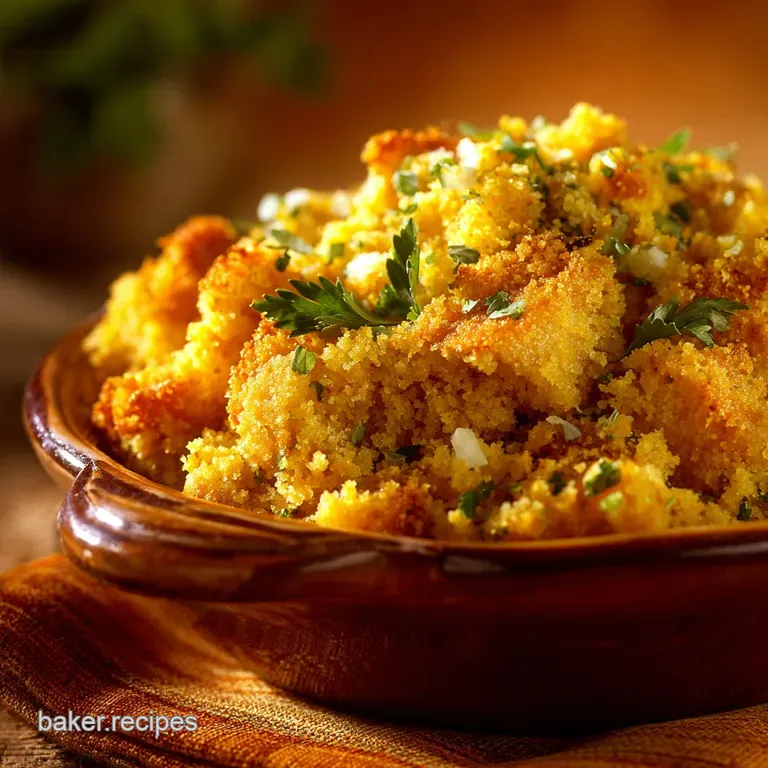
This is where the magic happens. We’re moving beyond just cornbread and getting into serious flavor construction.
Why Non and Sweet Cornbread is Non and Negotiable
Seriously, I will not stand for sweet cornbread in dressing. If you like it sweet, go eat dessert. This is a savory dish. We need the slightly coarse, nutty texture of pure cornmeal, combined with buttermilk for a tangy base. That sweetness just clashes with the rich sage, celery, and chicken stock.
It confuses the palate. If you usually buy a boxed mix, make sure it’s labeled "savory" or "traditional Southern style." Or just use the recipe included in the brief, it's a guaranteed winner.
Selecting Your Fats: Butter, Oil, and Broth Quality Checks
Fat equals flavor. We’re using butter for sautéing the aromatics because nothing beats that brown butter note it gives to the celery and onion. Don't skimp. And let's talk about stock. If you use watery, low and flavor broth, your dressing will taste watery.
Use high and quality, low and sodium chicken or turkey stock, or better yet, your own homemade stock. Warm it slightly before you add it to the mix; it helps with absorption.
| Component | Role in Dressing | Quality Note |
|---|---|---|
| Unsalted Butter | Sautéing; Flavor enrichment | Crucial for depth |
| Chicken Stock | Moisture; Binding | Must be warmed; Use low and sodium high and quality |
| Eggs | Binding agent; Structure | Room temperature helps it blend smoothly |
The Aromatics Lineup: Perfecting the Mirepoix Base
Mirepoix that classic French blend of onion, celery, and carrot is essential, but for classic Southern dressing, we usually ditch the carrot and focus hard on the onion and celery. Cook these until they are completely soft, almost translucent. We call this "sweating" them down. We aren't browning them!
Browning adds a sharp, aggressive flavor; we want a soft, sweet base for the herbs. Fresh sage and thyme are non and negotiable here. Use fresh. Dried herbs are fine in a pinch, but the fresh stuff gives you that quintessential holiday aroma that makes people swoon.
Required Equipment: Baking Pans and Prep Tools Checklist
You don't need anything fancy for this cornbread dressing recipe, but having the right size pan makes a huge difference in achieving the crispy edge ratio.
- A good 9x13 inch casserole or baking dish (glass or ceramic works best).
- A sturdy frying pan for sweating down those vegetables.
- Two large mixing bowls (one for the cornbread crumbles, one for the liquid).
- A whisk (for the eggs and stock).
Related Recipes Worth Trying
- Sweet Cornbread Recipe Tender Buttermilk Bake Crisp Cast Iron Crust — This definitive Sweet Cornbread recipe guarantees a tender crumb and a sizzling crispy crust Our skillet cornbread recipe uses buttermilk for maximum...
- Strawberry Spinach Salad with Poppy Seed Dressing The Zesty Easy Summer Recipe — Our best Strawberry Spinach Salad with Poppy Seed Dressing recipe features vibrant strawberries crunchy pecans and a creamy homemade lemon poppy seed...
- Asparagus and White Bean Salad Easy Spring Recipe with LemonFeta Dressing — This Asparagus and White Bean Salad is the vibrant spring side dish you need Creamy cannellini beans crisp asparagus and salty feta in a robust lemonherb...
From Crumble to Comfort: The Step and by-Step Baking Process
Let's crack on with the assembly. This is the fun part, but requires a delicate touch.
Sautéing the Foundation: Browning the Aromatics and Herbs
Melt that generous amount of butter and get the celery and onion going over medium heat. Don't rush this. Give it a good eight to ten minutes. Once they are soft and fragrant, toss in your chopped fresh sage and thyme.
Cook just for a minute until you can really smell them that's called "waking up the herbs." Then, take the pan off the heat and let it cool slightly before tossing it with the crumbs. You don’t want those hot veggies cooking the raw eggs prematurely!
Binding the Mixture: The Gentle Art of Broth Incorporation
This step is the most critical. You’ve got your dry cornbread crumbs, you’ve tossed in the sautéed aromatics and fresh parsley. Now, gently whisk together your warmed stock and beaten eggs. Pour about 75% of the liquid over the crumbs.
Use a large spoon or your hands (it’s more tactile) to gently toss and fold the mixture.
Don’t mix this like you’re making a cake batter. Folding is key. You want pockets of air and texture remaining, otherwise you'll develop too much starch and end up with a heavy product.
Finalizing the Perfect Cornbread Dressing Batter
Once the stock is mostly incorporated, stop and wait. Let the mixture sit for 10 minutes. The dry crumbs will continue to soak up the moisture, and you’ll know exactly how much more stock (if any) you need. If it still looks very dry, add the remaining stock a little at a time.
The mixture should be moist enough that it sticks together when you squeeze a handful, but still slightly sloppy. Transfer the mixture to your prepared baking dish.
Achieving the Golden Crust: Baking Temperatures and Time Management
We bake this in two stages. First, cover the dish tightly with foil. This ensures that the heat is trapped, allowing the centre to steam and cook the eggs fully without drying out the edges prematurely. Bake covered for 30 minutes at 375°F (190°C).
Then, remove the foil and increase the oven temperature slightly to 400°F (200°C) if you want a quicker browning. Bake uncovered for another 20– 25 minutes until the top is deeply golden and crispy. When it's done, the internal temperature should hit 165°F (74°C).
Troubleshooting and Enhancements: Elevating Your Side Dish
Even pros run into issues. Here’s how we handle them like seasoned chefs.
Make and Ahead Strategy: Prepping This Cornbread Dressing 48 Hours Ahead
This is a fantastic make and ahead dish, which is essential when you're hosting a feast. You can fully assemble the dressing mixing the crumbs, aromatics, eggs, and stock and put it into the casserole dish.
Cover it tightly with plastic wrap and foil and refrigerate for up to 48 hours. When you’re ready to bake, pull it out while the oven preheats (about 30 minutes) to take the chill off.
Then bake as directed (you might need an extra 5– 10 minutes on the covered bake time).
Dealing with Dryness: Tips for Restoring Moisture Post and Bake
Uh oh. You pulled it out and the middle is a bit too dry, maybe even crumbly. Don’t panic. Warm up some extra chicken stock (I mean warm , not cold). Take a fork and gently pierce the dressing deeply in several places.
Then, slowly drizzle about ¼ to ½ cup of the warm stock over the top. Cover it with foil and let it sit for 10 minutes. The residual heat will absorb the liquid and soften those dry spots right up. Crisis averted.
Flavor Swaps: Incorporating Sausage, Oysters, or Pecans
If you want to play around, cornbread dressing is incredibly forgiving. Here are a few ways to switch things up:
- Sausage Zing: Brown a half and pound of hot breakfast sausage and drain the grease before adding it to the crumb mix. The fennel and spice are brilliant with the sage.
- Nutty Crunch: Toast about half a cup of chopped pecans and mix them in for a lovely textural contrast.
- Coastal Twist: For a classic low and country version, fold in one cup of drained, shucked oysters right before you transfer the mix to the baking dish. (Don't knock it 'til you try it.)
Serving Suggestions: Pairing Your Dressing with Holiday Roasts
This dressing is rich and savory, so it needs partners that provide either fat, acid, or sweetness. It’s naturally perfect with a roasted turkey or chicken, soaking up all those glorious pan juices.
But to truly maximize the experience: Drench it in a thick, velvety gravy (especially a giblet gravy) and serve a sharp, tangy cranberry relish or sauce on the side. That tartness cuts through the richness beautifully, making every bite feel fresh.
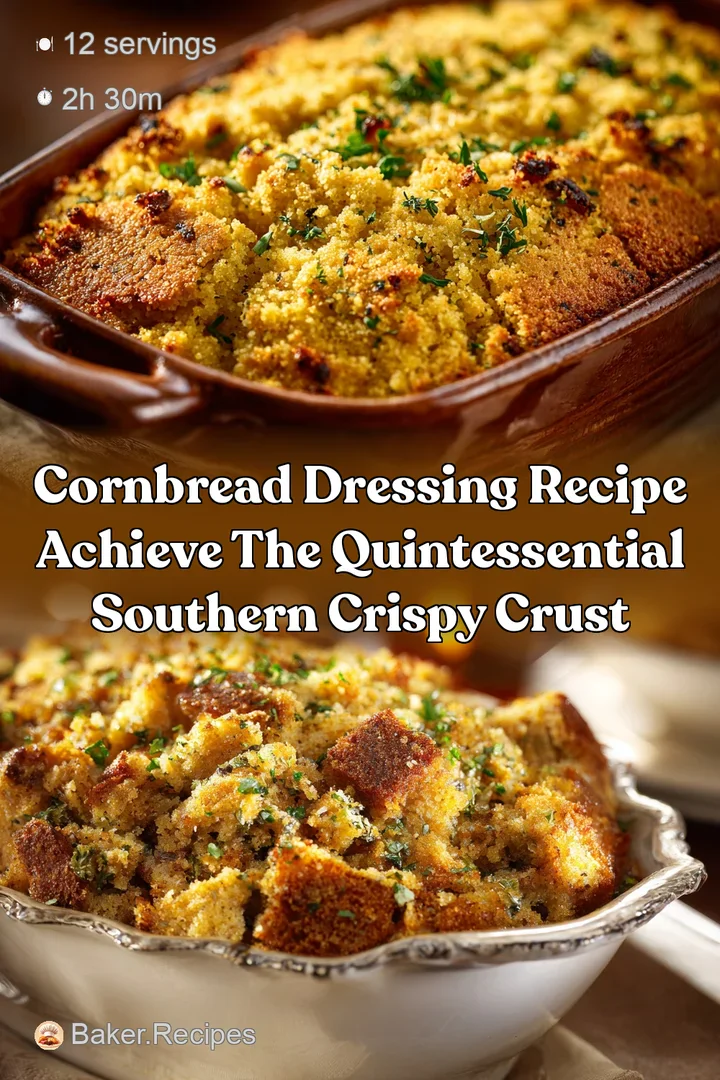
Recipe FAQs
Help! My Cornbread Dressing is turning out mushy. What did I do wrong?
Mushiness is typically the result of using overly wet cornbread or adding too much stock. The most critical step is drying those cornbread crumbs thoroughly they should be stale, not soft and ensure the mixture looks like thick, moistened porridge, not a soup, before baking.
Is there really a difference between Corbread Dressing and Stuffing?
The distinction is entirely down to geography and safety protocols: dressing is cooked separately in a casserole dish, while stuffing is cooked inside the turkey or bird cavity. Since our recipe is baked separately, we call it Cornbread Dressing, which guarantees that desirable crispy, golden top crust, which is simply jolly good.
Can I prep this whole dressing dish the day before the big feast?
Absolutely! You can assemble the entire mixture (up to the point of putting it in the pan) and store it tightly covered in the fridge for up to 24 hours. Just let it sit on the counter for 30 minutes to take the chill off before baking, and add 5 10 minutes to your covered baking time.
I prefer a meatier dressing. Can I add sausage to this recipe?
Certainly! Browning ½ lb (225g) of mild breakfast sausage and draining the grease well before adding it to the sautéed vegetables is a traditional variation. You might also toss in ½ cup of toasted pecans for a bit of extra Southern crunch and depth of flavour.
How long will leftovers last, and can I freeze the extra batch?
Leftovers stored correctly in an airtight container will keep happily in the fridge for 3 to 4 days. Yes, you can freeze cooled, baked portions for up to 2 months, though be warned that the lovely crispy crust might soften slightly upon reheating.
Southern Cornbread Dressing Staple
Ingredients:
Instructions:
Nutrition Facts:
| Calories | 275 kcal |
|---|---|
| Fat | 13.5 g |
| Fiber | 3 g |
