The Sunday Roast Stuffed Acorn Squash with Savoury Sausage Pecan

- Transforming the Humble Winter Squash into a Feasting Centrepiece
- Gathering Your Seasonal Harvest: Essential Components and Preparation Tips
- Phase One: Preparing the Winter Squash for a Tender Finish
- Phase Two: The Assembly and Final Culinary Flourish
- Creative Swaps and Dietary Adaptations for All Guests
- Storing Leftovers and Maximizing Flavour the Next Day
- Recipe FAQs
- 📝 Recipe Card
Transforming the Humble Winter Squash into a Feasting Centrepiece
While many home cooks primarily associate winter squash with simple purées or, perhaps, a creamy winter squash soup , this deep orange category of produce offers far greater culinary versatility.
Unlike its delicate counterpart, the high moisture winter squash vs summer squash debate always lands on winter varieties for structure and substance. By embracing the sturdy nature of varieties like Acorn, we can elevate this vegetable from a mere side dish to a grand, deeply satisfying main course.
Our goal here is to craft one of the most memorable winter squash recipes —a richly stuffed showstopper that holds its own against any traditional protein heavy meal.
The Magic of Acorn Squash as an Edible Vessel
The Acorn squash is uniquely suited for stuffing. Its distinct ridged shape, dark green exterior, and slightly sweet, mild orange flesh provide the perfect edible container. Once roasted, the flesh becomes sweet and tender, ready to absorb the incredible depth of flavour from the filling.
Because its skin is durable and relatively thin compared to, say, a Hubbard, it holds its shape beautifully under the weight of a hearty stuffing, making serving effortless and presentation stunning.
Balancing the Savoury and Sweet in Autumnal Fare
The secret to truly sophisticated autumnal cooking lies in the dynamic interplay of contrasting tastes. This recipe intentionally juxtaposes the richly seasoned pork sausage providing essential umami and structure with the sweet acidity of diced apple and the textural crunch of toasted pecans.
Earthy, fresh sage and thyme anchor the dish, tying the components together with warm, herbaceous notes. The final result is a bite that manages to be complex, comforting, and utterly decadent without being heavy, a hallmark of excellent seasonal fare.
Why This Dish Redefines the Sunday Roast
This stuffed acorn dish offers a contemporary, lighter, yet equally satisfying alternative to heavy, hours long preparation typically associated with large weekend meals. Serving two generous halves, each one a complete, beautifully plated portion featuring starch (the squash), protein (the sausage), and vegetables (onions, herbs, apple), the Sunday Roast Stuffed Acorn Squash redefines efficiency without compromising on elegance.
It is robust, visually magnificent, and quickly becoming one of the most requested winter squash recipes in my own kitchen.
Gathering Your Seasonal Harvest: Essential Components and Preparation Tips
Before diving into the cooking process, careful selection of ingredients and preparation of your workspace ensures success. This recipe requires approximately one hour and 25 minutes from start to finish, so proper mise en place is crucial.
Selecting the Ideal Winter Squash Specimen
When browsing the winter squash varieties , look for medium Acorn squashes, roughly 750g (1.5 lbs) each. Select ones that feel heavy for their size, have a deep, uniform colour, and possess a hard, dull rind free of soft spots or bruises. A sturdy stem is also a good indicator of freshness.
Remember, choosing the right size is essential, as the squash halves must be large enough to hold a substantial amount of the savoury filling.
A Baker's Dozen: Securing the Key Filling Aromatics (Pecans, Sage, Cider)
The complexity of this stuffing depends entirely on high-quality components. Start with high-quality pork sausage meat; if using links, remove the casings cleanly. Ensure you source fresh sage and thyme, as their volatile oils degrade quickly when dried.
The texture is provided by roughly chopped pecans, which must be lightly toasted before being added to the mix. Toasting intensifies their natural oils and ensures maximum crunch, preventing them from becoming soggy in the moist filling base, which is bound together using stock and breadcrumbs.
Tools of the Trade: What You Need for a Perfect Roast
Working with any winter squash type requires safety first. The most crucial item is a large, sturdy chef’s knife, paired with a non-slip cutting board (placing a damp cloth or paper towel underneath the board is always recommended).
You will also need a rimmed baking sheet for roasting the squash halves and a large, durable skillet or frying pan to manage the volume of the filling ingredients efficiently.
Phase One: Preparing the Winter Squash for a Tender Finish
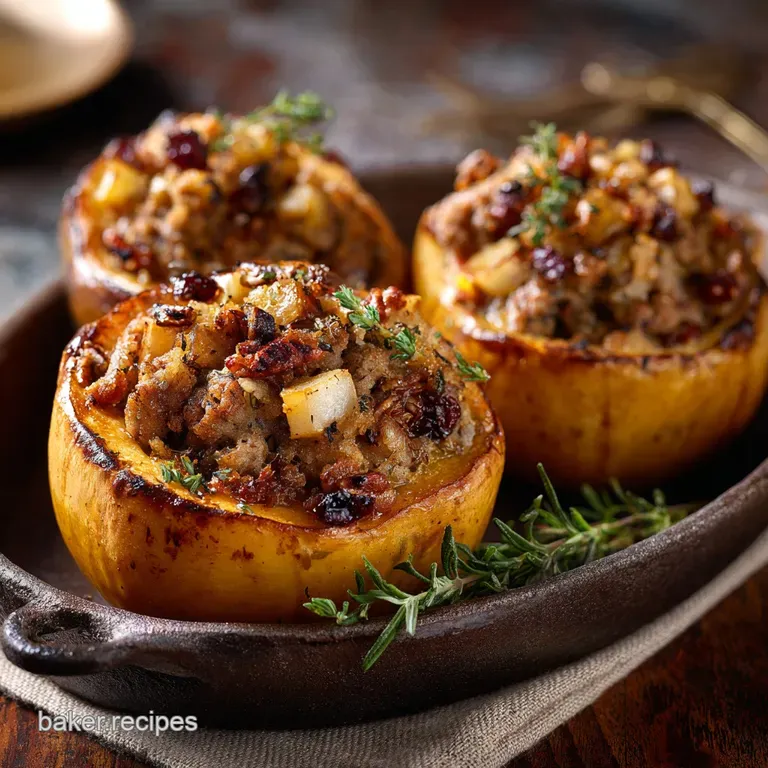
The initial roasting phase is non-negotiable for achieving the correct texture. We are aiming for flesh that is absolutely fork tender and slightly caramelized around the edges, a texture that enhances the overall mouthfeel of the dish.
Carefully preheat your oven to 200°C (400°F) and line a baking sheet. Using your prepared, sturdy knife, stabilize the acorn squash by slicing a thin layer off the base so it sits flat. Then, cut it cleanly in half vertically, from the stem to the base.
Use a metal spoon to thoroughly scoop out the seeds and any stringy fibres, creating a clean, hollow cavity.
Related Recipes Worth Trying
- SunDrenched Sausage and Feta Stuffed Pattypan Squash Recipe — Transform summer squash into an elegant main dish This easy stuffed squash recipe features savory Italian sausage and creamy feta baked inside tender...
- Easy Cheesy Spaghetti Squash Casserole with Gruyère — Ditch the heavy pasta This Healthy Spaghetti Squash Casserole uses smoked paprika and nutty Gruyère for a truly comforting Low Carb Spaghetti Squash Casserole
- Roasted Root Veg Kale Winter Salad Easy MapleDijon — Brighten up chilly days with this vibrant winter salad Roasted root veg kale and a tangy mapledijon dressing make it utterly delicious Get the easy recipe
Phase Two: The Assembly and Final Culinary Flourish
With the squash resting post roast, the focus shifts to creating the savoury, herbaceous filling that transforms this vegetable into a main event.
The Initial Halving and Pre-Roast Seasoning Ritual
Once the cavities are cleared, brush the interior flesh and cut edges generously with olive oil. This promotes caramelization and prevents the squash from drying out. Seasoning at this stage is vital: use a liberal application of kosher salt and freshly ground black pepper.
Place the seasoned squash halves cut-side down on the prepared baking sheet. Roast them for 30 to 35 minutes until the flesh yields easily to pressure. Once removed, flip the halves cut-side up and dot the tender flesh with butter for added richness.
Sautéing the Sausage and Building the Filling Base
While the squash is resting, begin the filling. In a large skillet over medium high heat, brown the pork sausage meat, breaking it up completely as it cooks. Once no pink remains, drain off most of the rendered fat, reserving about one tablespoon to build the flavour base.
Reduce the heat and add the diced yellow onion to the reserved fat, sautéing until translucent. Follow with minced garlic, chopped sage, and thyme, cooking for just one minute until the aromas are intoxicating.
Deglazing the Pan with Cider for Depth of Flavour
To introduce moisture and depth, stir in the diced apple and toasted pecans. After a few minutes of softening, return the cooked sausage to the pan. Add the maple syrup and the low-sodium stock, stirring vigorously to loosen any flavourful browned bits from the pan bottom. Finally, incorporate the breadcrumbs.
These act as a binder, soaking up the liquid to ensure the filling remains moist yet holds its shape perfectly for stuffing.
Neatly Stuffing the Acorn Cavities
Taste the filling mixture now and adjust the seasoning aggressively with salt and pepper. Remember that the finished dish will rely on the well seasoned filling to complement the mild flavour of the roasted acorn squash. Using a large spoon, pile the stuffing generously into the buttered cavity of each squash half.
Don’t be shy the impression of a heaped, overflowing portion adds significantly to the centrepiece appeal.
The Final Roasting Time Check and Temperature Guide
If the filling has cooled significantly during preparation, or if you simply prefer a crispier top, return the stuffed squash to the 200°C (400°F) oven for a short finishing bake of 5 to 10 minutes. The primary goal of this stage is merely to ensure the dish is piping hot throughout.
Since both the squash and the filling are fully cooked, this step is merely restorative and cosmetic.
Presenting the Centrepiece: Garnishes and Serving Suggestions
This dish deserves a presentation worthy of its flavour. Immediately after removing the stuffed halves from the oven, garnish with a final sprinkle of freshly chopped sage and a few extra toasted pecans.
Serve it alongside a light, crisp green salad, such as peppery rocket or endive dressed with a bright vinaigrette, which provides a lovely contrast to the richness of the sausage. A dollop of homemade cranberry sauce or apple chutney is the final flourish, enhancing the autumnal profile beautifully.
Creative Swaps and Dietary Adaptations for All Guests
One of the great joys of winter squash recipes is their adaptability. This recipe template can easily be modified to suit various dietary needs or simply to use up ingredients you have on hand, proving its worth beyond just the seasonal hunt for the perfect Acorn.
Going Meatless: A Mushroom and Grain Stuffing Alternative
To transition this hearty meal into a meatless masterpiece, substitute the pork sausage with a mixture of sautéed, finely chopped mushrooms (cremini and shiitake offer great depth) and cooked green lentils.
The lentils provide structure and protein, while the mushrooms, especially when seasoned with a splash of umami rich ingredient like Worcestershire sauce, maintain the deeply savoury profile.
Squash Swap Suggestions: Using Butternut or Kabocha Instead of Acorn
While Acorn is ideal for its bowl shape, other winter squash varieties can absolutely work. For instance, if you are more familiar with winter squash vs butternut squash , you can use small, bulb free portions of Butternut, or halve a Kabocha squash, ensuring you account for slight differences in texture and cooking time.
Butternut will take slightly longer to reach fork tenderness, and its shape is less uniformly round, but the sweetness pairs wonderfully with this filling.
Making It Ahead: Prep and Freeze Strategies
The entire filling component can be made up to three days in advance and stored in the refrigerator, ready to reheat and stuff the freshly roasted squash halves. For longer storage, the cooled filling can be frozen in an airtight container for up to three months.
To maintain quality, always roast the squash on the day of serving, as pre-roasting and freezing the squash itself leads to a compromised, mushy texture upon reheating.
Storing Leftovers and Maximizing Flavour the Next Day
If you find yourself with leftovers which, given the deliciousness of this dish, is rare store the stuffed squash halves in an airtight container in the refrigerator for up to three days.
Reheat gently in a 180°C (350°F) oven until warmed through, or use the microwave in short bursts, though oven reheating retains the best texture for both the sausage and the squash.
Navigating Nutrition: Calories, Fiber, and Key Micronutrients
Beyond the satisfying flavour, this dish delivers solid nutritional value. Winter squash is naturally rich in dietary fiber, which aids digestion and promotes satiety, making this a truly filling meal. It is also an excellent source of Vitamin A, thanks to the deep orange hue of the Acorn flesh.
While the filling is rich and comforting, the combination of lean protein and complex carbohydrates makes this a balanced dish, averaging 480 530 calories per generous serving.

Recipe FAQs
I’m terrified of cutting hard squash! How do I slice the acorn squash safely?
Safety first, mate! The key to handling hard squash is stability. First, carefully slice a thin piece off the very bottom of the acorn squash so it can sit flat on your chopping board without wobbling about.
Use a large, sturdy chef’s knife and apply slow, steady pressure while keeping your non-cutting hand safely clear of the blade's path. If the skin is truly stubborn, you can lightly pierce it with a fork and microwave the whole squash for 3-4 minutes to soften the rind slightly before cutting.
What other types of Winter Squash can I use if I can’t find acorn?
Absolutely, feel free to switch things up! Delicata squash works brilliantly as it cooks faster and its skin is also edible, meaning less scraping needed after roasting. You could also opt for small halves of Butternut squash, though be warned they are slightly harder to slice and may take an extra 10 15 minutes to reach fork tender perfection.
Ensure whichever Winter Squash variety you choose, it's deep enough to hold the generous sausage filling.
Can I prep the stuffed squash ahead of time for a proper Sunday dinner?
Yes, prepping ahead is a great shout for a fuss free Sunday roast! You can cook the sausage filling entirely up to 2 days in advance and store it chilled in an airtight container. Alternatively, roast the squash halves until they are nearly tender (about 25 minutes), then cool and refrigerate them.
When ready to serve, reheat the squash, fill with the cold stuffing, and bake for 15 20 minutes to ensure everything is piping hot throughout.
My sausage stuffing tasted a bit bland and dry. What went wrong?
Ah, a common sticking point! Blandness is usually fixed by being aggressive with your seasoning; acorn squash is very mild, so the filling needs robust salt and pepper, plus plenty of sage.
If the mixture felt dry, you might have needed more binding moisture; ensure you use the full measure of stock and breadcrumbs, cooking only until the liquid is absorbed, not evaporated, to keep it beautifully succulent.
This looks delicious, but do you have a good vegetarian swap for the sausage meat?
No worries, the vegetarian variation is a real triumph! Substitute the pork sausage with a mixture of sautéed chopped mushrooms (cremini and shiitake) combined with cooked green lentils.
To retain that deep, savoury umami flavour lost from the meat, be sure to stir in a spoonful of high-quality vegetable stock paste or a generous splash of Worcestershire sauce (check for vegetarian suitability).
Stuffed Acorn Winter Squash Sunday Roast
Ingredients:
Instructions:
Nutrition Facts:
| Calories | 1572 kcal |
|---|---|
| Protein | 22.2 g |
| Fat | 73.0 g |
| Carbs | 98.5 g |
| Fiber | 33.1 g |
| Sodium | 700 mg |
