Sunshine in a Jar Tangy Cantaloupe and Ginger Chutney
- Beyond the Cheese Board: Why This Tangy Conserve is Essential
- Sourcing Your Summer Staples: Essential Elements for the Perfect Chutney
- From Raw Fruit to Rich Preserve: The Stages of Melon Chutney Cooking
- Extending the Season: Storage, Serving, and Customising Your Next Batch
- Recipe FAQs
- 📝 Recipe Card
Beyond the Cheese Board: Why This Tangy Conserve is Essential
The world of preserving is rich with tradition, yet some of the most exciting condiments are those that defy expectations. Enter the melon chutney. While many home cooks reserve their jam efforts for stone fruits and berries, transforming the tropical sweetness of a firm melon into a tangy, spiced preserve is a true mark of culinary ingenuity.
This melon chutney recipe elevates the humble fruit into a sophisticated, highly versatile condiment that should earn a permanent spot on your pantry shelf. It's not just a relish; it’s a brilliant way to capture the fleeting abundance of summer produce, ensuring those vibrant flavours last well into the colder months.
The Unexpected Magic of Melon Chutney
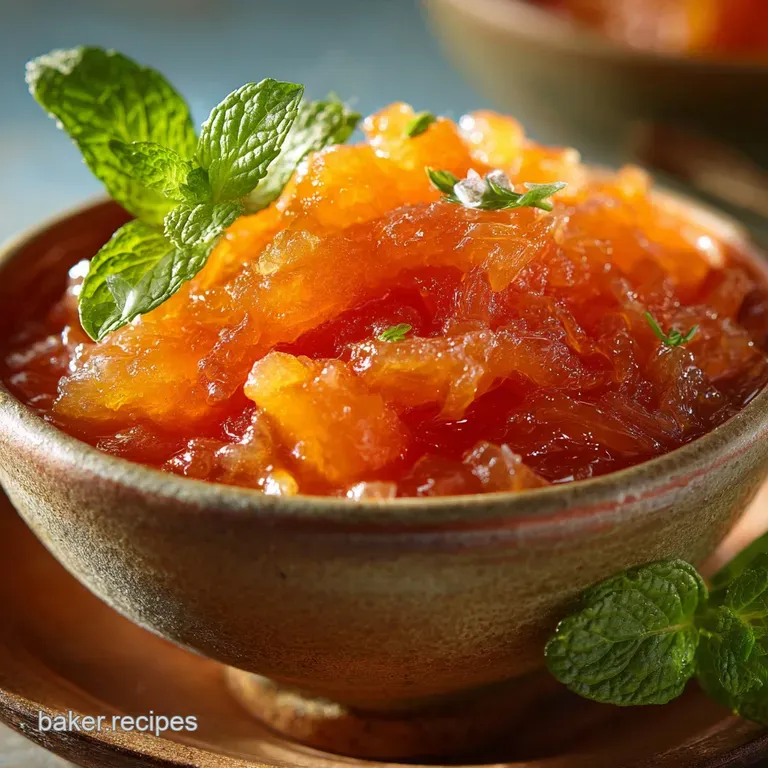
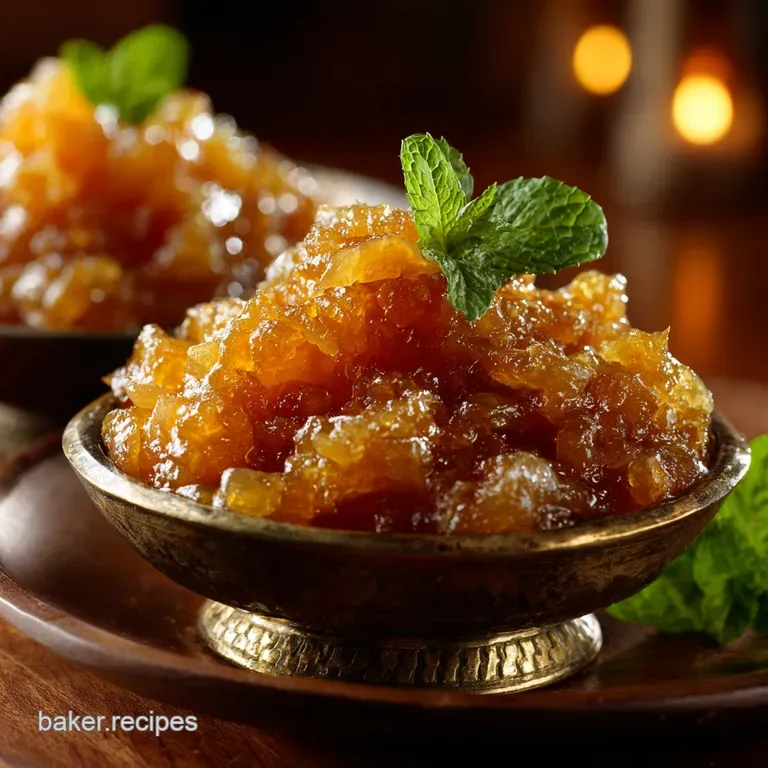
This preparation transforms a mildly sweet fruit, like cantaloupe, into a dazzling counterpoint of sweet and sour, rounded out by warming spices. Far from being overly saccharine, the resulting preserve is jammy, chunky, and brilliantly aromatic.
The magic lies in its perfect duality: it’s robust enough to cut through the richness of a roasted pork loin or a savoury pie, yet delicate enough to complement the complex flavours of artisanal cheeses.
If you've been looking for a melon chutney that stands out from the standard fruit preserves, this vibrant, slightly spiced technique delivers.
Mastering the Balance: Sweet, Sharp, and Spiced
Achieving the perfect texture and longevity in a conserve requires precision, especially regarding the balance of acidity and sweetness. In this recipe, the structure is created by the 2 1/4 cups (450g) of granulated sugar, which not only sweetens the preserve but acts as a critical preserving agent.
Counterbalancing this sweetness is the essential sharp tang provided by 1 1/2 cups (360 ml) of apple cider vinegar, which must possess a minimum of 5% acidity to ensure both flavour balance and safe long term preservation.
This acid content is the key to preventing spoilage and ensuring the final melon chutney recipe has that desired zing. The warming element, supplied by fresh ginger, mustard seeds, and allspice, provides the necessary depth, transitioning the fruit from dessert ingredient into a truly complex savoury relish.
Sourcing Your Summer Staples: Essential Elements for the Perfect Chutney
The quality of the final product hinges entirely on the quality and preparation of the starting ingredients. Unlike jams, which often rely on ripe, tender fruit, chutney benefits greatly from firmness.
Choosing the Right Melon: Cantaloupe vs. Honeydew Breakdown
For the best texture retention, always opt for a firm, even slightly under ripe melon. We recommend 1 kg of diced cantaloupe for its robust flavour profile and attractive orange hue, which results in a strikingly vibrant melon chutney .
If you choose to make honeydew melon chutney , the flavour will be milder and the colour paler, but the technique remains identical. The firmness is crucial because the melon pieces must hold their shape during the lengthy 50-60 minute simmer; a too-ripe fruit will disintegrate into mush.
This technique is also traditionally adapted for harder varieties, confirming its success whether you are making a winter melon chutney , a pie melon chutney , or jam melon chutney ; the key is starting with a slightly unripe melon chutney base.
The Spice Blend: Unlocking Depth with Ginger and Heat
The subtle heat and warming aromatics are what transform this fruit preserve into a true chutney. Our recipe incorporates a dynamic blend: 225g of finely diced red onion provides a savoury depth, while the fresh, 60g of finely grated ginger delivers a noticeable, bright warmth.
We also use 1 tablespoon of yellow mustard seeds, which add a beautiful texture and sharpness, complemented by a teaspoon of turmeric for colour and earthy flavour, and a half teaspoon of allspice for a rich, warming background note.
The inclusion of one medium minced red chili (deseeded) provides just enough heat to prevent the finished chutney from tasting flat without overwhelming the delicate melon flavour.
Preserving Essentials: Tools of the Trade for Successful Jamming
Preserving requires the right equipment, primarily to manage the high temperatures and prevent scorching. You must use a large, heavy bottomed pot or Dutch oven, which is essential for even heat distribution during the sustained cooking time required to reduce the liquids.
Since this recipe yields approximately 1.2 litres, you will need four standard 300 ml (10 oz) jars. Finally, a non-reactive stirring implement like a wooden spoon or silicone spatula is necessary for scraping the bottom occasionally during the reduction process without introducing off-flavours.
Related Recipes Worth Trying
- The Best Warming Spiced Quince Chutney Recipe for Autumn — Forget the shopbought jars This Homemade Quince Chutney recipe blends sweet quince and apple with warming spices Perfect for your next cheeseboard
- Rich Tangy Ginger Persimmon Chutney Recipe — Forget the shopbought jars This easy persimmon chutney recipe balances sweet fruit with sharp ginger and vinegar The best homemade addition to your cheeseboard
- Foolproof Blueberry Chutney Recipe with Ginger Spice — Whip up this vibrant Blueberry Ginger Chutneyits the perfect sweet and tangy topping for pork or cheese boards Easy to make
From Raw Fruit to Rich Preserve: The Stages of Melon Chutney Cooking
Chutney making is a methodical process that demands patience and attention to detail, resulting in a significantly superior product.
Preparation Protocol: Chopping, Macerating, and Mixing
The initial stage focuses on building the aromatic base. Start by gently sautéing the diced red onion in a splash of neutral oil until it’s translucent, typically 5– 7 minutes.
Next, add the grated ginger, minced garlic (3 large cloves), chili, and mustard seeds, cooking for two minutes until the mustard seeds begin to pop and the aromatics are highly fragrant. This essential step, called 'blooming' the spices, intensifies their flavour.
Only then should you introduce the cider vinegar and sugar, stirring constantly over medium heat until all 450g of sugar are completely dissolved before bringing the mixture to a rapid boil and tipping in the 1 kg of diced melon.
The Simmering Science: Achieving the Perfect Consistency
Once the melon is incorporated and the mixture reaches a hard boil, reduce the heat immediately to maintain only a very gentle simmer. The cooking duration is the heart of the melon chutney recipe , requiring 50– 60 minutes of low, slow heat.
This period is dedicated solely to evaporation. As the water evaporates, the sugar concentration increases, and the pectin in the melon sets, leading to that characteristic thick, jammy texture.
Resist the urge to stir constantly, as this can break down the melon pieces, but ensure you scrape the bottom every few minutes, especially towards the end, to prevent scorching, which would ruin the entire batch.
Testing for Set: The Wrinkle Test Explained
Knowing exactly when your chutney has reached the optimal set is crucial for long term storage and desirable texture. Visually, the chutney is finished when most of the free liquid has evaporated, and the mixture mounds high on a spoon.
A simpler test involves dragging a wooden spoon across the bottom of the pot; if the trail it leaves remains visible for several seconds before the liquid flows back in, it is ready.
For absolute confidence, utilize the cold plate method: remove the pot from the heat and spoon a small amount onto a plate that has been chilled in the freezer. After 30 seconds, push the chutney with your finger. If the surface wrinkles slightly, the preserve is perfectly set and ready for the next stage.
Extending the Season: Storage, Serving, and Customising Your Next Batch
Once the cooking is complete, proper handling ensures both safety and the full development of the flavour profile.
Long Term Storage Security: Sterilizing Jars for Safety
Meticulous jar sterilisation is non-negotiable if you intend to store your melon chutney outside of the refrigerator. Use either the boiling water method or a low oven temperature to sterilize your jars and lids completely.
After removing the pot from the heat, allow the chutney to cool slightly for about 30 minutes; this cooling period helps the setting process. Ladle the warm preserve into the sterilised jars, leaving approximately 1 cm (1/2 inch) of headspace, wipe the rims clean, and seal tightly.
While technically ready immediately, the flavours of this melon chutney recipe integrate and mature dramatically. Allow at least two weeks of resting time before opening the first jar.
Pairings for Preserves: How to Serve Melon Chutney
The versatility of this specific melon chutney is one of its greatest assets. Its sweet, acidic, and spiced characteristics make it a phenomenal accompaniment to rich, savoury foods.
It is, of course, a required element for any elevated ploughman's platter, excelling when paired with sharp, aged cheeses like mature Cheddar, Gouda, or a pungent Stilton. Beyond the cheeseboard, serve it alongside cold cuts, particularly slices of roast ham or turkey.
On top of that,, the cooling tropical base offers a brilliant, sweet and-sour counterpoint to hot, robustly spiced Indian, Southeast Asian, or Caribbean curries. For a quick gourmet touch, warm the preserve slightly and use it as a glaze for roast chicken or pork loin during the final minutes of cooking.
Creative Customisations: Vegan Swaps and Heat Variations
The fundamental technique of this melon chutney recipe is highly adaptable to personal tastes and dietary needs. If you are seeking a deeper, more savoury flavour that pairs exceptionally well with game meats, try replacing 1/4 of the granulated sugar with dark brown sugar or molasses.
To enhance the fruitiness and texture, 1/2 cup of golden raisins or dried cranberries can be incorporated alongside the melon pieces at the beginning of the simmer. While we use cantaloupe, substituting with firm honeydew melon chutney results in a preserve that is milder and less aggressively sweet.
For those who prefer a spicier relish, increase the fresh chili or substitute with 1/2 teaspoon of cayenne pepper.

Recipe FAQs
How long will this Melon chutney keep once I’ve jarred it up?
If you've followed the sterilisation instructions to the letter no faffing about here the chutney will happily sit in a cool, dark cupboard for up to 18 months. However, like a good bottle of claret, chutney really benefits from aging; it tastes best if left for at least two weeks so the flavours can properly marry up.
Once opened, keep it refrigerated and try to finish the jar within a month.
My chutney is still quite runny after the cooking time what did I do wrong, and how can I fix it?
Don't panic! This is usually down to rushing the simmering process; patience is a virtue when making chutney. Simply return the pot to a very low heat and keep cooking, stirring gently but constantly, until the liquid has substantially reduced.
Use the "cold plate test": pop a spoonful on a chilled saucer and push it if it wrinkles, you’ve hit the sweet spot and it’s ready to set.
Can I use different types of melon, like Honeydew, or cut down on the sugar?
Absolutely, you can swap out the cantaloupe for honeydew, though it will result in a milder flavour and paler colour, but the texture remains brilliant. When it comes to sugar, be wary of cutting too much out, as it is crucial for preservation and achieving that lovely, thick, jammy texture.
Try replacing a quarter of the white sugar with brown sugar or a mild sweetener like apple juice concentrate if you want a subtle reduction, but avoid drastic changes.
What are the best dishes to serve this spicy, tangy conserve alongside?
This chutney is a proper game changer for your cheese board; its sweetness and spice make it magnificent with a strong, mature Cheddar or a creamy goats’ cheese. It also acts as a fantastic cooling and tangy counterpoint to rich dishes think hearty pork pies, cold ham cuts, or even slathered alongside a robust Indian or Caribbean curry.
You can also warm it up slightly and use it as a sticky glaze for roast chicken or gammon.
I’m not keen on heat can I omit the chilli and still get a great flavour profile?
Of course you can! The chilli is there for a subtle warming hum, not aggressive heat. If you omit it entirely, the chutney will still be wonderfully flavourful, thanks to the mustard seeds and ginger.
For those who still want warmth without the bite, try replacing the fresh chilli with a 1/2 teaspoon of smoked paprika, which will give you a lovely, deep, warming background flavour without any actual sting.
Tangy Cantaloupe Melon Chutney
Ingredients:
Instructions:
Nutrition Facts:
| Calories | 2091 kcal |
|---|---|
| Protein | 14.3 g |
| Fat | 51.2 g |
| Carbs | 82.8 g |
| Fiber | 22.9 g |
| Sodium | 541 mg |
