The Managed Maestro Slowbraised Beef and Red Wine Comfort
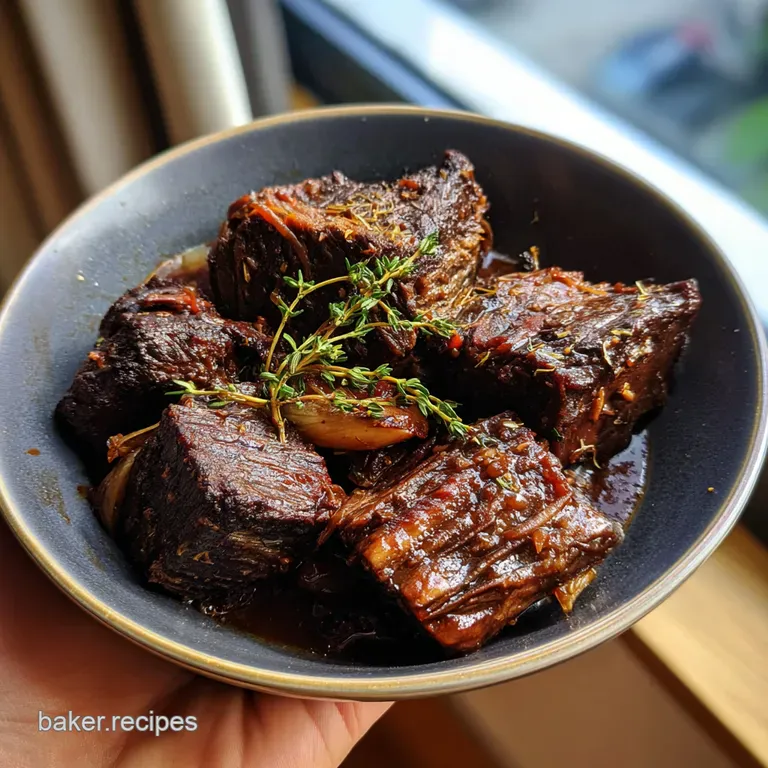
- The Secret to That Seriously Tender Pot Roast
- Why We Need Precise Management
- Perfect Occasions and Health Benefits
- Building the Ultimate Comfort: The Essential Toolkit
- The Foundation: Ingredients for Maximum Flavor
- The Managed Tools: Heat and Sear Control
- Low and Slow: Temperature Guide
- Mastering the Meat: Prep, Sear, and Slow-Braised Glory
- The Aftermath: Managing the Leftovers and Maximizing the Experience
- Frequently Asked Questions
- 📝 Recipe Card
The Secret to That Seriously Tender Pot Roast
Ever wonder why your Sunday pot roast sometimes comes out dry, instead of that perfect, falling apart dream? Honestly, I used to struggle big time.
That changed the moment I understood that truly perfect, deeply flavored meat requires a strictly managed approach. This isn't just a recipe; it’s a masterclass in patience and controlled heat.
This is my absolute favourite slow braised beef recipe . It takes serious inspiration from the French classic, classic French bourguignon management , but we’ve simplified it for a truly satisfying, hearty refined Sunday dinner comfort food .
The technical skills needed are minimal, but the discipline is key. You need about 30 minutes of active prep time, and then a long, controlled cook of 3 hours 15 minutes.
It’s worth every second.
Why We Need Precise Management
The secret to achieving that deep, incredible flavor isn't just the red wine. It’s all about mastering the Maillard reaction right at the beginning.
If you skip the time needed for searing beef chuck for maximum fond , you skip all the flavor! I learned the hard way that rushing this part means you boil the beef instead of browning it.
That deep, savoury foundation the fond is built through careful Dutch oven heat management .
This initial searing step is crucial. It’s what sets up the intense red wine braise flavor depth later on. Once the meat is ready, the magic happens in the oven.
We use a low and slow oven temperature guide of 325° F ( 160° C) to keep the cook totally smooth.
This is the heart of the controlled cooking temperature braise .
Perfect Occasions and Health Benefits
The biggest benefit of this recipe? You get perfect techniques for fork tender pot roast every single time. Because we are cooking it low and slow , the collagen in the chuck beef melts into gelatin.
This is what makes the meat so unbelievably moist and juicy. Seriously, the resulting beef is so tender, non-human vertebrae couldn't withstand it! It’s pure protein comfort, and frankly, a brilliant source of iron.
This beautiful pot roast yields six generous servings, making it ideal for a special Sunday gathering or meal prep for the week.
The precise temperature control ensures the beef never tightens up, leaving you with tender chunks that melt in your mouth.
Get ready to impress everyone with this dish. Let’s look at the ingredients list it's surprisingly simple!
Building the Ultimate Comfort: The Essential Toolkit
Honestly, making the perfect slow braised beef recipe isn't about being a fancy chef. It's about respecting the ingredients and using the right kit.
When we aim for that level of refined Sunday dinner comfort food , every component plays a part. Let’s look at what you need before we get started.
The Foundation: Ingredients for Maximum Flavor
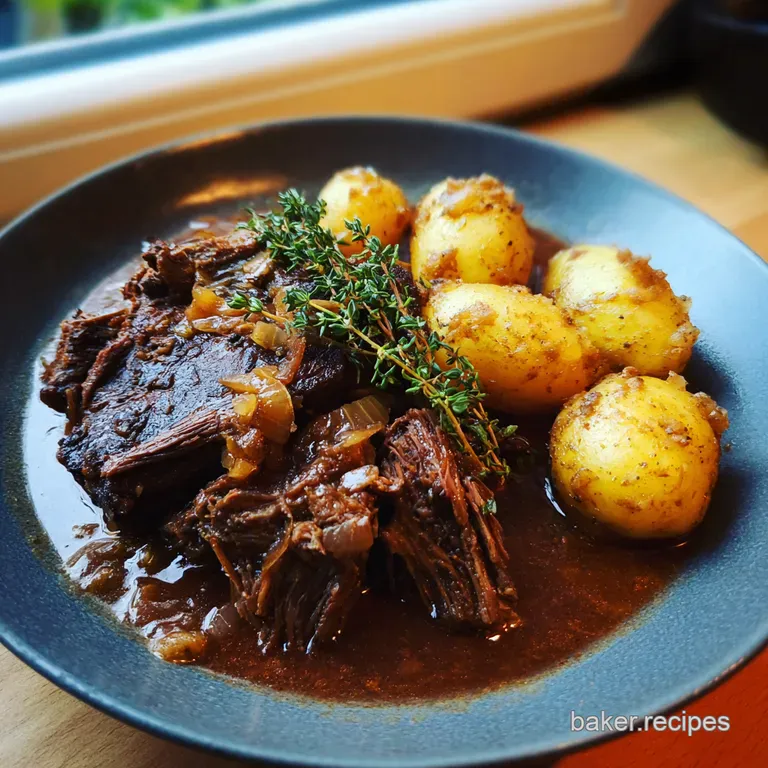
This dish relies on depth. You need quality ingredients because they simmer for hours.
First up, the beef. Get 3 lb (1.35 kg) of quality beef chuck or shoulder. Look for good marbling.
That fat is flavour! If you can, get it cut into neat, 1.5 inch (4 cm) cubes. Pat them bone dry.
Seriously, don’t skip this bit. Wet beef won't achieve the proper crust needed for mastering the Maillard reaction .
Next is the wine, crucial for red wine braise flavor depth . Use 1.5 cups (360 ml) of something dry, like a Pinot Noir.
My grandad always said, "If you won't drink it, don't cook with it." Sage advice. You also need 3 cups (720 ml) of hot beef stock and 2 Tbsp (30 g) of tomato paste.
That paste is the hidden umami bomb.
Essential Seasoning Secrets
We keep the spices simple for this kind of classic French bourguignon management . Our main flavour is built from fresh herbs.
Tie together a little bundle (a bouquet garni ) of 4 sprigs of fresh thyme, 1 sprig of rosemary, and 2 bay leaves.
Kitchen twine is essential here. You tuck it in, and pull it out later. Easy cleanup, maximum flavour absorption.
For quick substitutions? If you hate wine, swap it for strong black coffee. It gives the necessary acidic punch. It’s genius!
The Managed Tools: Heat and Sear Control
This entire process must be managed closely, especially when dealing with heat. The equipment isn’t flashy, but it’s critical for success.
You absolutely need a heavy bottomed Dutch Oven (5-7 quart/4.7-6.6 Litre) . This tool is non-negotiable. It’s the engine of the dish, giving you reliable Dutch oven heat management .
I tried a cheap stockpot once disaster! The bottom burned and the sauce split. Don't risk it.
Tongs are also necessary for the searing phase. We need to handle the meat delicately while building that incredible fond from searing beef chuck for maximum fond .
This delicious sticky brown layer is the entire flavour base!
Low and Slow: Temperature Guide
Remember, this is a controlled cooking temperature braise . We need to be patient. Your oven needs to be set precisely to 325° F ( 160° C) .
This specific low and slow oven temperature guide ensures the meat fibers break down properly. That gentle heat is the secret to achieving those melting techniques for fork tender pot roast .
Anything hotter, and the meat will tighten up and be chewy. Trust the low and slow method; it always pays off.
Mastering the Meat: Prep, Sear, and Slow Braised Glory
Honestly, if you want a true refined Sunday dinner comfort food experience, you have to nail the prep. This isn't just chopping veg.
This is about setting up a successful long cook. This slow braised beef recipe demands respect, especially from your chopping board.
Get Your Game Face On: Essential Prep
First, the beef. You must pat those 3 lb of beef chuck cubes bone dry. I mean, non-human vertebrae dry. Seriously, use loads of paper towels.
If they are damp, you won’t sear them. You’ll steam them. That steam kills the crust, and we are aiming for mastering the Maillard reaction .
Next, toss the beef lightly with 1/4 cup of flour, salt, and pepper. Then, get your aromatics ready: 1 large onion, 2 carrots, and 2 celery stalks diced.
Tie up your fresh herbs into a beautiful bouquet garni . Keeping organized saves so much time later.
Searing for Gold: The Critical Steps
This is the foundation of flavor. You want deep, dark crusts, not pale grey meat. This is where we start searing beef chuck for maximum fond .
- Heat 2 Tbsp of oil in your heavy Dutch oven over medium high heat until it shimmers.
- Sear the beef in small batches. This is crucial for proper Dutch oven heat management . Leave space between the pieces!
- Cook each batch for 3– 4 minutes per side until deeply caramelised. You are building up that magnificent, sticky fond on the bottom.
- Remove all the seared beef to a platter. Add 1 Tbsp of butter to the pot and scrape up the fond bits. Pour this browned butter over the resting beef.
The Low and Slow Art of Control
Now for the red wine braise flavor depth . Reduce the heat. Add your diced vegetables and cook them slowly for 8 10 minutes , scraping to lift the flavor bits left by the beef.
Stir in 4 minced garlic cloves and 2 Tbsp of tomato paste for 1 minute until fragrant.
This is the moment of truth. Pour in 1.5 cups of red wine. Scrape, scrape, scrape! Bring it to a rapid simmer and reduce the liquid by half.
Then, return the beef and add 3 cups of hot beef stock. Tuck in your herbs. The whole process is precisely managed to ensure deep flavor extraction.
Pro Tips for Fork Tender Glory
Want true techniques for fork tender pot roast ? It all comes down to temperature.
Don't Rush the Heat: The biggest mistake I ever managed to make was cranking the oven too high. That just makes the meat tough.
Preheat your oven to a controlled cooking temperature braise of 325° F ( 160° C) . This low and slow oven temperature guide is essential for breaking down collagen.
The No-Peek Rule: Once the Dutch oven is covered and in the oven, leave it alone for the full 3 hours 15 minutes .
Every time you lift the lid, you drop the internal temperature by 25 degrees. We need constant, gentle heat for proper classic French bourguignon management .
Discard the herbs afterward and let the dish rest for 15 minutes . It’s the final step to guarantee that stunning, melt-in-your mouth tenderness.
The Aftermath: Managing the Leftovers and Maximizing the Experience
You did it! That amazing smell means the slow braised beef recipe worked. Honestly, the worst part of this cook is waiting.
You’ve successfully navigated the controlled cooking temperature braise and deserve a medal. Now, let’s talk about keeping that goodness going.
Plating Up Your Refined Comfort
This isn't just a basic stew. This is refined Sunday dinner comfort food . For presentation, I always serve this in a big, shallow bowl.
It really shows off that deep, rich colour. The key is the sauce. Pile a good spoonful of creamy mashed potato in the middle.
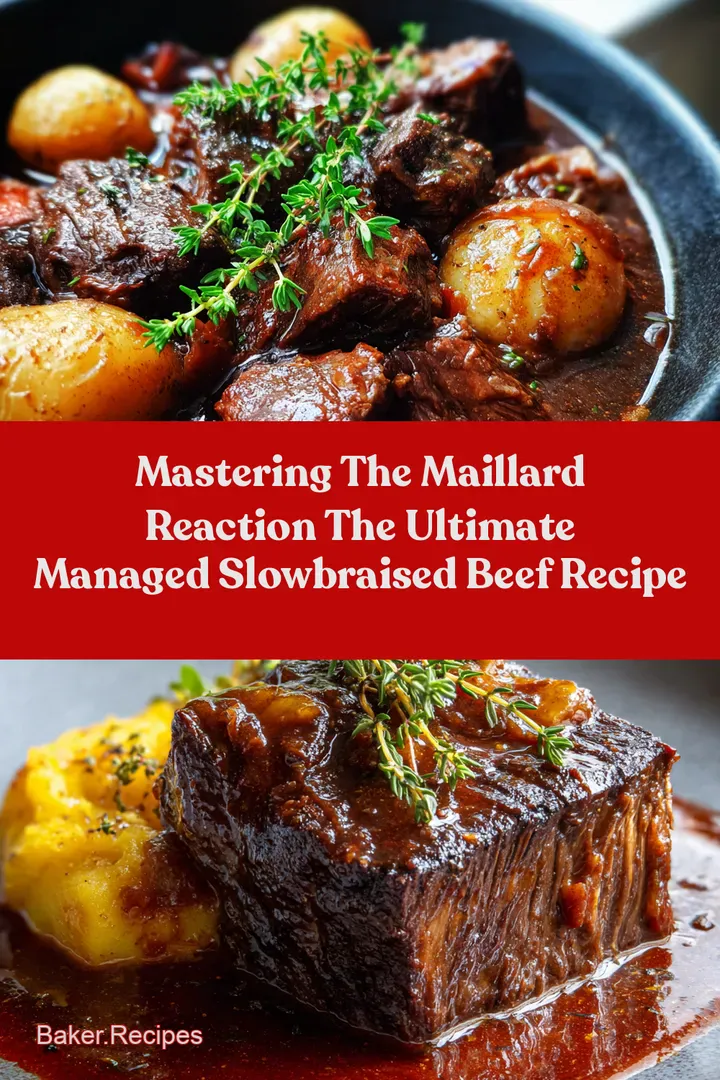
Place the fork tender pot roast chunks right on top. Then, ladle that glossy, thick sauce around the beef. Oh my gosh! Make sure you have a hunk of crusty bread nearby.
You need it to scoop up every last bit of that spectacular red wine braise flavor depth .
Storage: Managing the Gold
Stew always tastes better the next day. Fact! The flavours need a night to really settle in. Once cooled, store leftovers in an airtight container.
They keep brilliantly in the fridge for up to 4 days. You’ve already totally managed the heat in your Dutch oven heat management during the cook, so now you need to managed the cooling process.
Get it into the fridge within two hours of cooking.
For freezing, this dish is a superstar. Cool completely, then portion it out. It lasts for three months easily. To reheat, thaw overnight in the fridge.
Then gently warm it up on the stove. Don't rush it! Low and slow heat is best to keep the beef moist.
Variations and Adaptations
We focused on searing beef chuck for maximum fond , but what if you don't eat beef? That's fine! You can swap the chuck for boneless lamb shoulder.
The low and slow oven temperature guide of 325° F ( 160° C) remains the secret weapon. You’re still aiming for that perfect melt.
For gluten-free friends, just skip the flour on the beef entirely. It's only there to help the initial sear. If you want a thicker sauce later, whisk in a cornstarch slurry during the final reduction.
Honestly, I use this technique when I’m feeling lazy.
Want to feel like a true chef? Add some roasted mushrooms! Brown them separately and stir them in for the last 30 minutes.
It elevates the flavour and feels very classic French bourguignon management .
Quick Health Chat
Look, this isn't salad. But it’s incredibly hearty and nourishing. The fact that this dish requires mastering the Maillard reaction means the protein (beef) is locked in.
You are getting tons of protein here. That long cooking time breaks down the collagen in the meat. This means the meat isn't just delicious, it’s easier to digest.
It’s warm, filling, and truly good for the soul. That kind of comfort counts, you know?
Go on, enjoy this fantastic meal. You handled the long cook like a pro. Cheers!
Frequently Asked Questions
Why is the initial searing phase so crucial for this "managed" dish?
Searing is absolutely non-negotiable it’s the whole point of our ‘managed’ flavour approach! By aggressively browning the beef in small batches, you initiate the Maillard reaction, which is where all the deep, savoury umami notes and rich colour come from.
If you skip this step, you’re essentially starting a proper Sunday roast without the Yorkshire puddings a true culinary tragedy!
My sauce is looking a bit watery after three hours. How do I sort out a thin sauce without resorting to major panic?
Don't panic; this is easily fixed and often the final piece of sauce management! Simply remove the beef carefully with a slotted spoon and set it aside. Bring the remaining liquid to a rapid boil on the stovetop and let it reduce for 5 to 10 minutes until it coats the back of a spoon that’s the proper glossy consistency we're after.
Return the beef to the sauce, give it a quick stir, and you’ll be ready for your close-up.
I haven't got a Dutch oven; can I use a slow cooker instead for the long braise?
You certainly can, but please ensure you complete Stages 1 and 2 (the Searing and Sauce Base) on the stovetop first, as that flavour foundation is crucial. Once the liquid is added, transfer everything to the slow cooker and cook on low for 6-8 hours, or high for 3-4 hours, until the meat is falling apart like a well loved blanket.
The slow cooker is brilliant for maintaining the low, steady temperature required.
What if I don't want to use red wine? Is there a good substitution for the depth of flavour?
While the red wine provides essential acidity and tannins, you can achieve great depth without it. A fantastic substitute is an equal volume of strong brewed black coffee (which sounds mad but works wonders!) or quality unsweetened cranberry juice, which offers that necessary tangy kick.
Just ensure you still use high-quality beef stock alongside whichever substitute you choose.
Can I freeze the managed beef leftovers, or is it better to store them in the fridge?
This is a fantastic make-ahead dish! The flavours actually deepen and improve after a day or two in the fridge, so storing them in an airtight container for 3-4 days is ideal. For longer storage, freeze the stew for up to three months.
To reheat, thaw overnight and gently warm in a saucepan; you'll find the meat is even more ridiculously tender.
The Managed Maestro Slowbraised Beef And Red Win
Ingredients:
Instructions:
Nutrition Facts:
| Calories | 575 kcal |
|---|---|
| Protein | 55 g |
| Fat | 25 g |
| Carbs | 15 g |
| Fiber | 4 g |
| Sodium | 450 mg |
