The Ultimate Umami Boost Quick Nourishing Chinese Vegetable and Shiitake Broth
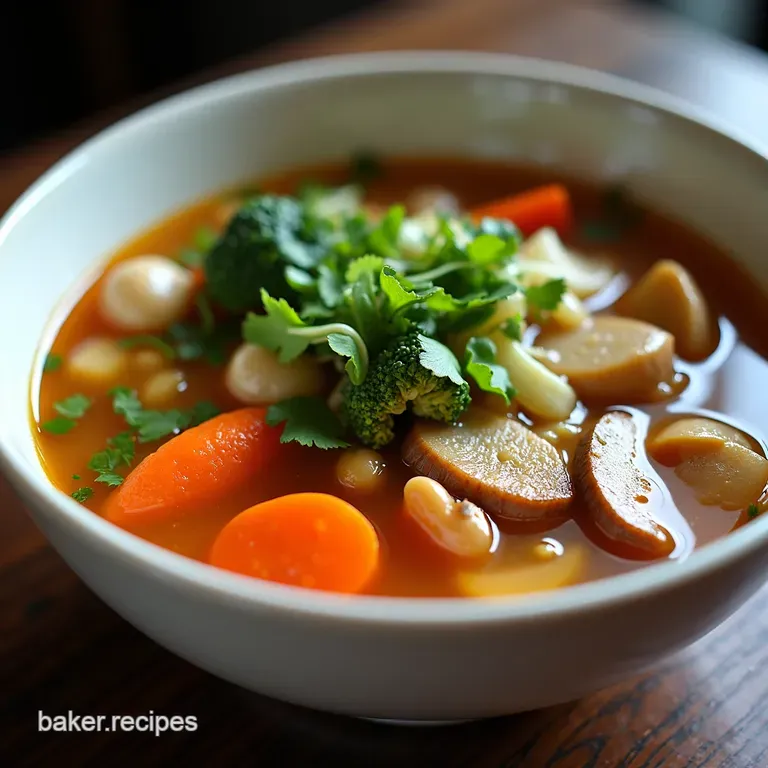
- Why This Chinese Vegetable Soup Recipe Is Your New Weeknight Hero
- Gathering the Building Blocks for Brilliant Broth
- Curating Your Vegetable Arsenal
- The Method: From Prep to Plating Perfection
- Achieving Silky Smoothness in Your Final Product
- Maximizing Your Leftovers and Customizing Your Chinese Vegetable Soup
- Troubleshooting Common Broth Issues
- The Bedrock of Flavour: Nailing Your Chinese Vegetable Soup Ingredients
- The Heart of the Matter: Building the Perfect Broth Base
- Mastering the Clock: Speed Secrets for a Top-Notch Chinese Vegetable Soup
- The Great Seasoning Debate: Soy Sauce Versus Good Old Salt
- Frequently Asked Questions
- 📝 Recipe Card
Why This Chinese Vegetable Soup Recipe Is Your New Weeknight Hero
Right then, settle down, folks. Fancy a bowl of something seriously comforting tonight? Something that tastes like it took all day to make but actually takes less time than queuing at the chippy? That’s what we've got here.
This Chinese Vegetable Soup recipe is my go-to when I need a restorative hug in liquid form. It’s light enough that you won’t feel stuffed, but flavourful enough to satisfy any craving. Honestly, my first time making a proper homemade broth, I realised what I’d been missing.
It’s transformative.
A Comforting Bowl That Clears the Fridge
Let’s be frank: we all have those bits of lonely veg rattling around in the bottom drawer. This recipe is your secret weapon against food waste. I call this my "Clearing the Fridge" soup for a reason. Got some leftover carrots? Chuck ‘em in. A lonely handful of spinach? Perfect.
While we are using specific Chinese Vegetable Soup ingredients here for a classic base, the spirit of this dish is flexibility. It handles anything well, from sturdy roots to delicate leaves. It’s about balance, not rigidity.
Beyond Bland: Unlocking Deep Broth Flavour
The biggest complaint I hear about homemade Asian style soups is that they taste a bit thin a bit like slightly seasoned hot water. Not this one, mate. We are going deep on flavour here. The trick is harnessing that gorgeous, earthy umami. That's why those dried shiitake mushrooms are non-negotiable.
When you soak them, that dark, mysterious liquid? That's liquid gold for your Chinese Vegetable Soup broth . Don't ever pour it away! My top lesson learned was to always, always strain that liquid carefully; it holds incredible flavour but also a bit of grit.
Is This Recipe Truly Authentic Chinese Vegetable Soup?
Ah, the authenticity question! Look, while there are hundreds of regional variations we’ve got everything from spicy Szechuan versions to delicate Napa Cabbage and Tofu Soup this version leans into the classic Chinese Vegetable Soup .
It uses fundamental aromatics like ginger and garlic, and it relies on clean seasoning. If you want to make it a bit more substantial, adding firm tofu cubes during the last five minutes (think Chinese Vegetable Soup with tofu ) makes it a proper meal.
If you want something even simpler, skipping the cornflour slurry makes it an incredibly healthy Chinese Vegetable Soup perfect for sipping. This is about bringing that bright, clean, deeply savoury flavour profile into your own kitchen, pronto.
Related Recipes Worth Trying
- Classic Irish Vegetable Soup Hearty Easy Comfort Food — Whip up this classic Irish Vegetable Soup recipeits wholesome easy and the perfect warming antidote to a chilly evening Ready in just over an hour
- The Coziest Kettle Rustic Cabbage and Potato Soup — Forget watery slop This Hearty Cabbage and Potato Soup recipe elevates comfort food with a smoky paprika swirl Ready in just over an hourits proper grub
- Velvety Cream of Spinach Soup in 45 Minutes Easy Recipe — Make a truly Velvety Cream of Spinach Soup that tastes infinitely better than tinned versions This foolproof recipe uses fresh spinach and a classic roux...
Right then, let's get this Chinese Vegetable Soup sorted. We’re not messing about with bland, wishy washy stuff here. This is about building proper flavour, the kind that makes you shut your eyes for a second when you take the first spoonful.
It’s the perfect base for your own culinary explorations whether you’re feeling like Chinese Vegetable Soup with tofu or fancy chucking in some noodles for a full-on supper ( Chinese Vegetable Soup with noodles ).
Gathering the Building Blocks for Brilliant Broth
The broth, my friends, is everything. If you get the base right, the rest is just adding lovely bits of green. We need deep, savoury notes here that famous umami hit. This is where we skip the boring stuff and go straight for the good bits.
The Magic Trio: Stock, Soy, and Dried Mushrooms
You need serious flavour infrastructure. Start with your stock I use 6 cups (1.4 Litres) of low-sodium vegetable or chicken stock. Low sodium is key because we’re adding saltiness later. Next up, the powerhouse: dried shiitake mushrooms. Soak about 1/2 cup (50g) of them in 2 cups (475 ml) of boiling water.
Crucially, save that soaking liquid! After slicing the plump mushrooms (toss the hard stems), strain that liquor right into your stockpot. It’s liquid gold, honestly.
We finish the base trio with soy sauce (2 Tbsp light soy) and a tiny splash of dark soy (1 tsp) just for a proper dark, comforting colour.
Essential Seasonings to Elevate the Flavour Profile
Don’t forget your aromatics for that classic zing . I use a generous 1 inch piece of fresh ginger, just smashed a bit, and 3 large garlic cloves, lightly crushed. These go in with the stock to simmer away. When you fish them out later, you’ll notice the whole kitchen smells spot on.
Finally, for that subtle lift, we need 1/4 tsp of white pepper. It’s less aggressive than black pepper and perfect for this delicate classic Chinese Vegetable Soup .
Curating Your Vegetable Arsenal
This is where the recipe earns its stripes as an easy Chinese Vegetable Soup . Think of this section as flexible use what you have! I aim for colour, texture, and maximum crunch. Remember, uniform chopping helps everything cook evenly.
Sourcing Premium Produce for Maximum Crunch
We want substance here. Grab one medium carrot (about 120g), sliced thin, and about 4 cups packed of Napa cabbage (250g). For my Chinese Vegetable Soup bok choy is non-negotiable; two heads, chopped, work wonders.
Always add the tough stems of the cabbage first, then the leaves later, or the leaves will turn to sludge while the stems remain crunchy. I throw in 1/2 cup (75g) of shelled edamame right near the end too.
If you can't find bok choy, Savoy cabbage is a decent shout, though it doesn't have quite the same delicate sweetness.
Equipment Check: You’ll need a big stockpot, obviously, and make sure you have a small bowl ready for that mushroom soak. That’s it! No need for fancy gizmos.
Right then, let's get stuck into making this Chinese Vegetable Soup . Honestly, this is the kind of dish you make when you’ve had a long day and need something genuinely restorative.
It’s the ultimate healthy Chinese Vegetable Soup, yet it tastes like you’ve spent hours fussing over it. We’re aiming for that deep, savoury base that umami hit that makes you close your eyes and just go, "Ahhh." This classic Chinese Vegetable Soup recipe is deceptively simple, so pay attention to the steps, especially those flavour builders.
The Method: From Prep to Plating Perfection
Don't let the list scare you; this is honestly an easy Chinese Vegetable Soup to master. The secret isn't in complicated techniques; it’s in layering the flavour. We’ll get that gorgeous, rich Chinese Vegetable Soup broth by using the magic of dried mushrooms.
Remember what I always say: good stock is the backbone of any great soup!
Rehydrating Shiitakes and Prepping Aromatics
First things first, sort out those dried shiitakes. These little fellas hold all the deep flavour we need.
- Pop your dried shiitakes into a bowl and cover them with boiling water. Let them chill out for about 15 minutes until they’re nice and plump.
- Once soft, fish them out, slice them thinly, and bin the tough little stems. Here’s the crucial bit: carefully pour that soaking water through a fine sieve into your big stockpot. That liquor is pure gold. Any grit at the bottom? Chuck it. We only want the flavour, not the muck.
- Next up, grab your ginger and garlic. I like to give the garlic a good smash with the side of my big knife it releases the oils quicker. Get your carrots and cabbage chopped uniformly; honestly, if your veg are cut unevenly, they cook unevenly, and nobody wants a half raw carrot chunk in their lovely Chinese Vegetable Soup!
Simmering Protocol: Building the Broth Base
This is where the magic truly happens. We're creating the foundation for what will become your perfect Chinese Vegetable Soup broth.
- In your stockpot (which already has that mushroom liquor), add your 6 cups of stock, the sliced ginger, and the smashed garlic. Bring this gently up to a simmer over medium heat.
- Let it bubble away nicely for about 10 minutes. This infusion time is non-negotiable if you want real depth. While it simmers, this is a brilliant time to mix up your cornflour slurry (2 Tbsp cornflour mixed thoroughly with 4 Tbsp of cold water no lumps, mind you!).
- After 10 minutes, give the broth a quick taste. Add your light soy sauce and that tiny splash of dark soy if you want that classic, rich colour. If you’re feeling fancy, you can fish out the ginger and garlic now, but I usually leave them in if I know I’m thickening it later, as they add body.
Incorporating Vegetables for Ideal Crispness
The trick with any vegetable soup, especially one that should feel fresh, is timing. We don't want a bowl of mush.
- Once the broth is seasoned, slide in the carrots and those rehydrated shiitake mushrooms. Let them bubble for a solid 5 minutes. They need the head start.
- Next, throw in the tougher parts of your cabbage and bok choy stems. Give them another 3 minutes.
- Finally, toss in the softer green leaves and the frozen edamame (no need to thaw them first!). They only need about 2 minutes, just until they wilt down nicely. If you’re adding tofu or pre-cooked chicken for a heartier Chinese Vegetable Soup with tofu or noodles, now’s the time for that too.
Achieving Silky Smoothness in Your Final Product
We’re nearly there, mate. Just two small steps to take this from a nice vegetable broth to an absolutely banging Chinese Vegetable Soup experience.
The Final Thickening Technique (Optional Starch Slurry)
I often skip this, but if you want that slightly glossy, coating texture the kind you get in a brilliant takeaway you need the slurry.
- Ensure your soup is at a gentle, steady simmer not a rolling boil. Slowly drizzle in your cornflour slurry while stirring constantly with a whisk. Do this bit slowly; you can always add more, but taking it out is a pain.
- As soon as the liquid thickens enough to coat the back of a spoon slightly, switch the heat off immediately. If you keep boiling it after adding the starch, it can become gluey, and nobody wants soup that sticks to the roof of their mouth, do they?
- Turn the heat off completely and stir in that final teaspoon of toasted sesame oil. That aroma hitting you right now? That’s what we’re after. Garnish heavily with spring onions. This healthy Chinese Vegetable Soup is best eaten immediately, though leftovers last brilliantly in the fridge for three days just reheat gently and maybe add a splash more water if it thickens up too much overnight. Perfect!
Right then, let's talk about what happens after you've wolfed down the first bowl of this glorious Chinese Vegetable Soup . Because let's face it, making a batch this good means you'll likely have some leftovers, or you'll want to jazz it up for the next day.
This isn't just soup; it's a flexible foundation for a proper meal.
Maximizing Your Leftovers and Customizing Your Chinese Vegetable Soup
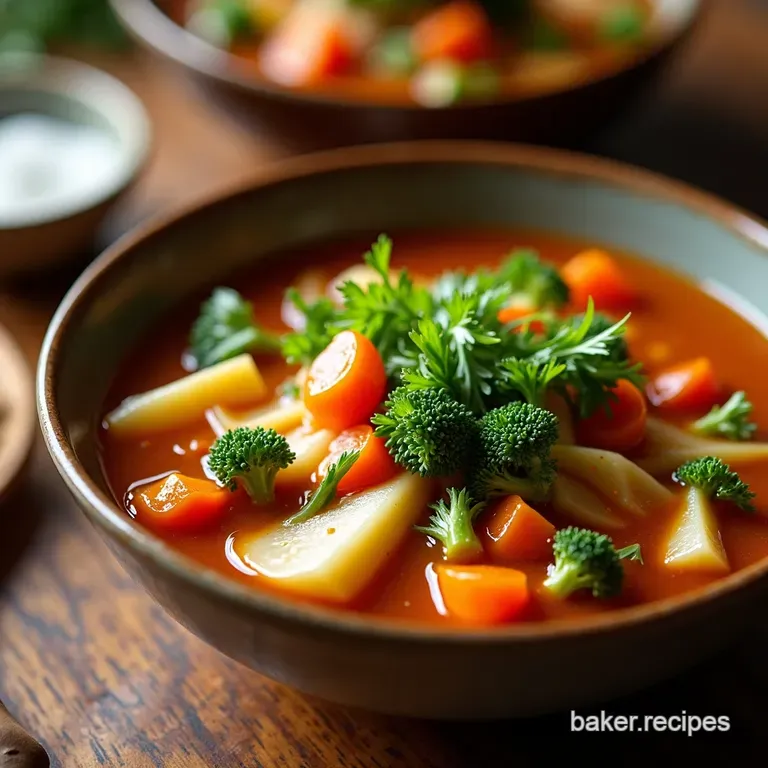
Honestly, this broth is even better the next day. The flavours have really had a chance to marry up properly. It’s like leaving your stew overnight you know the drill! But sometimes you want to switch things up entirely, don’t you?
Storage Secrets: Keeping Broth Fresh for Days
Getting your storage right is key, especially if you’ve gone all out on those dried shiitake mushrooms. That liquid gold needs respect! Once the soup is completely cooled down and I mean cooled , don't put a steaming hot pot straight into the fridge, that’s how you make your fridge grumpy portion it out.
I always use small, airtight containers. If you think you’ll eat it all within three days, the fridge is fine. If you’re planning on saving it for longer, get it into the freezer immediately. It keeps beautifully for up to three months. When reheating, bring it back to a slow simmer on the hob.
Microwaving is fine in a pinch, but the hob lets the aromatics bloom back to life much nicer. Never let it boil furiously when reheating, just a gentle bubble we don't want to shock the delicate flavour structure we built.
Variations: Adding Protein or Spice
This Chinese Vegetable Soup recipe is crying out for additions if you’re having it as a main course. If you’ve got some leftover roast pork, shredding a bit of that in will be brilliant. My personal favourite, though, is using firm tofu.
If you want to make a Chinese Vegetable Soup with tofu , cut the tofu into nice, neat cubes about half an inch square. Pan-fry them lightly first until they get a tiny bit of colour, or just gently poach them in the soup for the last five minutes of cooking.
They absorb all that lovely seasoned broth.
For spice lovers, don't be shy! If you found the original seasoning a bit too gentle, you can certainly ramp things up. Adding a swirl of good quality chili oil right before serving offers a lovely heat and a beautiful red sheen on top. Alternatively, if you're like my mate Gary, you might want to add some noodles.
Making this a Chinese Vegetable Soup with noodles turns it from a starter into a proper supper. Add pre-cooked egg noodles or rice vermicelli right at the end just to heat through, or let them cook directly in the broth if you want it super thick and starchy just remember to compensate with a bit more stock if you do that.
Nutritional Snapshot: Light but Filling
People often think healthy means boring. Not with this healthy Chinese Vegetable Soup ! It’s stacked with vitamins, particularly from the cabbage and carrots. Because we rely on vegetables and shiitake liquor for the base, it’s naturally low in fat, provided you use low-sodium stock.
It’s high in fibre, which is why even though it feels light, you don't feel like you've missed out. It satisfies that craving for something warm without weighing you down before bedtime. It’s the perfect remedy after a big Sunday roast, I always say.
This recipe, even with the addition of tofu or a small amount of noodles, keeps things sensible. It's restorative, which is exactly what we want from a good broth.
Troubleshooting Common Broth Issues
Even the best home cooks run into bother sometimes. Maybe your broth ended up a bit murky, or perhaps it just tastes a bit… flat. Don't panic; we can usually fix it.
If your broth looks cloudy, it’s usually down to two things: either you boiled it too hard when simmering, or you added the cornflour slurry in too quickly. If it's cloudy from over boiling, just turn the heat right down and let it settle.
You can try straining it through a coffee filter or a piece of muslin cloth, but honestly, for a rustic classic Chinese Vegetable Soup , a little cloudiness is fine; it just shows you cooked it with love.
If you taste it and it’s bland, that’s the seasoning balance being off. This is crucial for getting that savoury depth.
First check: Did you use the mushroom soaking liquid? If you skipped that, you’re missing the backbone of the flavour.
If the flavour is just flat, add your finishing touches slowly. A splash more light soy sauce will boost the saltiness. If it still lacks punch, try a tiny dash of toasted sesame oil it adds dimension you can’t get elsewhere. If it tastes sharp or overly salty, add a tiny pinch of sugar yes, sugar!
It doesn't make the soup sweet, but it rounds out the saltiness beautifully. My Auntie Mei taught me that trick years ago; balance is everything.
If you've used all the seasoning suggestions soy, sesame, white pepper and it still tastes thin, sometimes you just need more time . Let that Chinese Vegetable Soup ingredients mixture simmer gently for another 10 minutes.
That slow infusion is unbeatable. The beauty of making an easy Chinese Vegetable Soup is that you have total control. Unlike a tin, you can tweak it until it’s perfect for your palate. Enjoy every slurp!
The Bedrock of Flavour: Nailing Your Chinese Vegetable Soup Ingredients
Right then, let’s talk about the real stars of the show. We’re making a Chinese Vegetable Soup here, a recipe that’s meant to be vibrant, clean, and packed with goodness.
It’s the sort of grub that warms you up right through, proper comfort food, like finding a tenner in an old coat pocket!
But here’s the rub: a great Chinese Vegetable Soup hinges entirely on the freshness and quality of what you chuck in. If your veg is looking a bit sad, your soup will taste sad. Simple as that. We want crunch, colour, and flavour that pops.
Hunting Down the Greens: Texture Town
When I first started trying to replicate my mum’s fantastic broth, I rushed the shopping. Big mistake. You need texture contrast in a good classic Chinese Vegetable Soup . If everything turns to mush, you’ve basically made baby food, haven't you?
We’re focusing on layers here. Think sturdy roots first, soft leaves later.
For the sturdy section, carrots are your mate. They need a little time to soften but still hold their shape. If they look dull or spongy when you poke them, leave 'em well alone. You want firm, bright orange sticks.
Similarly, if you use fresh shiitake or cremini mushrooms which I highly recommend alongside the dried ones for that extra earthiness they should feel solid. Don't buy mushrooms that look slimy around the gills, that’s a dead giveaway they’ve seen better days.
My personal lesson learned? Always sniff your celery if you use it! Sometimes it smells fine, but when you cook it down, it tastes bitter. A fresh stalk has a clean, sharp scent.
The Leafy Stars: Bok Choy and Beyond
When it comes to the leafy greens, the undisputed champion for a proper chinese vegetable soup bok choy . It cooks quickly, and those little white stems offer a wonderful, gentle crunch that stands up beautifully against the silky broth.
How do you spot a good head of bok choy? Look for tight bases and vibrant green leaves. If the leaves are yellowing or look tired and wilted before you even buy them, they’ve been sitting about for ages. You want that satisfying snap when you chop the base off.
That sound tells you it’s going to behave in the pot.
If you can't find bok choy, Savoy cabbage is a brilliant substitute. It holds its shape well, too. Always chop the thick stems separately from the leaves and add them a minute or two earlier than the leaves.
That way, you avoid having raw-tasting stems floating next to overcooked floppy bits in your easy Chinese Vegetable Soup .
Broth Building Blocks: Beyond the Water
Now, we must talk about the heart of this dish: the liquid. Even if you are aiming for a healthy Chinese Vegetable Soup , flavour is non-negotiable.
For this particular Chinese Vegetable Soup recipe , we are relying heavily on dried shiitake mushrooms. This is crucial. These little brown hats, when soaked, release an enormous amount of umami that savoury depth that makes you go "Oh, lovely."
When you soak them, don’t just dump the water! That dark, earthy liquid is practically liquid flavour gold. It’s what helps turn a standard stock into a truly restorative Chinese Vegetable Soup broth . Just be careful!
You have to strain it through a fine cloth or coffee filter to get rid of any grit that settled at the bottom of the soaking bowl. Trust me on this one; nobody wants a gritty spoonful.
We’re using good quality stock (veg or chicken, your call) as the main volume. Low sodium is key because we control the saltiness later with soy sauce. If your stock is already salty, you end up playing catch-up, and often over seasoning the whole lot.
If you fancy making this even heartier perhaps turning it into a Chinese Vegetable Soup with noodles —make sure your broth is slightly more robust in flavour, as the noodles will absorb some of that seasoning.
If you're adding Chinese Vegetable Soup with tofu , choose firm or extra firm blocks, patted dry before adding, so they don't just disintegrate into the mix. Getting these Chinese Vegetable Soup ingredients right sets you up for success before you even turn the hob on.
It’s the freshness factor that elevates this simple bowl from a mere soup to something truly special.
The Heart of the Matter: Building the Perfect Broth Base
Right then, we’re getting down to brass tacks now. We're making a Chinese Vegetable Soup , but we're not messing about with any watery nonsense. This soup lives or dies by its broth.
If the base is weak, the whole thing tastes like sad boiled veg water, and frankly, that’s just criminal. We want depth. We want that rich, slightly earthy, deeply savoury flavour that only comes from doing things properly from the get-go.
Think of this section as laying the foundations for a magnificent little culinary skyscraper.
The Magic of Dried Mushrooms: Liquid Gold
Forget skimming stock cubes; our real secret weapon for this classic Chinese Vegetable Soup comes from the pantry. Dried shiitake mushrooms. Seriously, they are non-negotiable for that proper umami hit. We start by giving them a good soak. Use boiling water this wakes them up fast.
Let them sit for about 15 minutes until they’re plump as anything. Now, here’s the vital bit: when you take those beauties out to slice them, don't you dare throw away that soaking liquid! That water is liquid gold, absolutely rammed with flavour. But, it can be gritty.
So, pour that liquid carefully through a fine sieve into your stockpot. That strained mushroom liquor, mixed with 6 cups of decent low-sodium stock, is the backbone of our Chinese Vegetable Soup broth .
Aromatic Awakening: Ginger, Garlic, and a Gentle Simmer
Once our mushroom liquor is safely in the pot, we need to introduce the aromatics. We’re keeping it simple here, focusing on clean, bright flavours that complement the vegetables, not drown them out.
Grab a thumb sized piece of fresh ginger no need to finely chop, just give it a good whack with the side of your knife to bruise it and release the oils, then toss it in, along with three lightly smashed garlic cloves.
Get this mixture up to a gentle simmer over medium heat. We’re not boiling it aggressively; we want a happy little bubble, like a slow, steady chat among old friends. Let this infuse for about 10 minutes.
This period is crucial for pulling all that deep, earthy flavour from the ginger, garlic, and the mushroom liquor into the stock. If you’re making this easy Chinese Vegetable Soup for folks who don't like bits in their soup, you can scoop out the ginger and garlic now. Personally?
I leave them in until the very end; I like that bold flavour punch in my Chinese Vegetable Soup ingredients .
Seasoning the Soul of the Soup
After that 10-minute infusion, it’s time to start building the final seasoning profile. We want savoury, but we also want that slight saltiness and a hint of colour. This is where soy sauce steps in.
I use two tablespoons of light (low-sodium) soy sauce for the main salt and flavour, and then just a tiny teaspoon of dark soy sauce. That dark soy doesn't add much flavour, but it gives the whole pot a gorgeous, burnished colour, making our Chinese Vegetable Soup look instantly more appealing than a pale wash.
Add a pinch of white pepper it gives a slightly different, cleaner heat than black pepper. Taste it now. Does it sing? If it tastes a bit flat, maybe it needs another splash of light soy. Remember, we are perfecting the base before the vegetables even hit the water.
This careful seasoning early on is what separates a decent Chinese Vegetable Soup recipe from a truly knock out one. We’re aiming high here, aren't we?
Mastering the Clock: Speed Secrets for a Top-Notch Chinese Vegetable Soup
Right then, we’ve got our glorious Chinese Vegetable Soup ingredients assembled. This dish is supposed to be quick comfort, not a weekend project. If you want that lovely, light texture and deep savoury flavour without waiting ages, you need to know a couple of tricks.
Believe me, I’ve been there, boiling away, wondering why my broth tastes a bit thin. It’s all about managing that cooking time.
The Art of the Quick Infusion
When we talk about building flavour for this classic Chinese Vegetable Soup , we aren't slow roasting bones for days. We’re using smart cuts and powerful aromatics. That smashed ginger and those few cloves of garlic? They need a head start.
Get your stock simmering and toss those in early, maybe even with the dried mushroom soaking liquid that’s pure gold, that is. I always say, if you’re going to skim the aromatics out later (which I often do to keep the final soup pristine), give them at least 10 minutes to properly perfume the liquid before you add anything else.
It stops the broth tasting ‘flat’ before we even get to the seasoning. That’s the secret to a genuinely satisfying Chinese Vegetable Soup broth .
Layering Your Veg for Perfect Bite
The biggest rookie error with any good soup, especially one featuring delicate greens, is chucking everything in at once. You end up with some bits rock hard and others totally wilted. A disaster! Think about texture. We want everything tender crisp, not boiled to oblivion.
For this easy Chinese Vegetable Soup , you need a timeline. Carrots and thick stems go in first. They need the longest. Five minutes in the simmering liquid is usually spot on for them to soften slightly.
Next up are the tougher leafy bits, like the base of the chinese vegetable soup bok choy or cabbage. They just need a quick dip. Finally, the softest bits the leafy tops, any frozen edamame, or perhaps if you’re adding Chinese Vegetable Soup with tofu cubes go in right near the end.
You want them heated through, maybe two minutes max. My personal lesson learned? I once nuked the cabbage for too long, and it tasted like something from a tin. Never again! Keep those greens vibrant.
Thickening Smartly (Don't Scramble It!)
If you decide to use that cornflour slurry to give your Chinese Vegetable Soup recipe a bit more body which I highly recommend for that restaurant feel timing is everything. You must only add the slurry when the soup is gently simmering, not boiling furiously.
If it’s too hot, the cornflour clumps instantly, and you’ve got yourself a sad, lumpy mess, which frankly, is a pain to fix.
Pour it in slowly, stirring gently, and watch it happen. It thickens almost instantly. As soon as the broth coats the back of a spoon slightly, pull it off the heat immediately. The residual heat will finish the job.
This quick cooking focus ensures our healthy Chinese Vegetable Soup remains light and easy to digest, perfect for a quick mid-week supper. It’s all about respecting the ingredients and getting them cooked through quickly to maintain their colour and bite.
Serving this beauty up hot, garnished with those spring onions, makes for a magnificent simple meal.
The Great Seasoning Debate: Soy Sauce Versus Good Old Salt
Right then, we’ve got our gorgeous, clear Chinese Vegetable Soup broth simmering away. The aroma of ginger and shiitake is starting to fill the kitchen lovely stuff. Now comes the bit where we actually season the thing. This is where people often stumble.
Do we reach for the trusty salt cellar, or do we lean into the dark magic of soy sauce? For this classic Chinese Vegetable Soup recipe , it’s not really a contest, but understanding why is key.
Salt: The Basics, Done Right
Salt is salt, isn’t it? Well, yes and no. When making something light like this Chinese Vegetable Soup , you want salt that dissolves cleanly and enhances the existing flavours without shouting over them. Table salt is fine, but if you have sea salt flakes, use those sparingly.
They dissolve fast and give a crisp saltiness. The thing about salt in soup, though, is that it tends to just make things salty. It doesn't add that mysterious depth.
I learned this the hard way years ago when trying to make an easy Chinese Vegetable Soup . I kept adding table salt, and it tasted… flat. Like washing up water that’s had a bit of a salty incident. It lacked soul, bless it.
Soy Sauce: The Umami Secret Weapon
For any authentic tasting Asian broth, soy sauce is your new best mate. Why? Because it brings saltiness, yes, but crucially, it brings umami. Umami is that satisfying, savoury fifth taste. It’s what makes your tongue go, “Ah, that’s proper food.”
We use light soy sauce here, which does the heavy lifting. It seasons everything beautifully and complements the flavour from our dried mushrooms. If you want that deep, dark, restaurant look for your Chinese Vegetable Soup with tofu later on, a tiny splash of dark soy is purely for colour it doesn’t affect the taste much.
See? Layers!
How Much Umami is Too Much Umami?
This is the tricky bit when you’re building your Chinese Vegetable Soup ingredients . My rule of thumb is this: start with half the amount of soy sauce you think you need, then taste it before you add any actual salt. Often, the soy is enough.
I used two tablespoons earlier on, but if you taste it now, you might find it’s perfect.
If you’re making a big batch for leftovers, remember that the flavour can mellow overnight. But for today’s serving, you want that savoury punch. Remember we are aiming for a deeply flavoured Chinese Vegetable Soup broth that feels healthy Chinese Vegetable Soup without tasting like it!
If you’re adding noodles or extra veg later, hold back a little seasoning now, as those additions will absorb some of the saltiness. It’s all about tasting as you go. Trust your palate; it’s more refined than you think!
If you're craving more ideas, explore Scalloped Potatoes with Mushroom Soup The Cheaters Comfort Bake , Proper Comfort Rich Chicken egg noodle soup for Sunday Supper and Vintage tomato soup cake My Secret for a Perfectly Moist MidCentury Bake .
Frequently Asked Questions
What can I use instead of dried shiitake mushrooms for the broth base?
If you're short on time or can't find dried shiitakes, you can use a high-quality, low-sodium vegetable or chicken stock and boost the umami by adding a teaspoon of Marmite or a spoonful of white miso paste near the end of simmering.
While it won't replicate the exact flavour profile, it will still provide a lovely savoury depth to your Chinese Vegetable Soup.
My Chinese Vegetable Soup tastes a bit bland what’s the secret to getting that deep, restaurant flavour?
The real trick is layering flavour, my friend! Make sure you don't skip straining and using the soaking liquid from the dried mushrooms that's where the magic happens. Also, ensure you simmer the ginger and garlic properly to infuse the broth, and finish with a drizzle of toasted sesame oil right at the end, off the heat, for that characteristic nutty aroma.
Can I make this soup ahead of time, and how should I store leftovers?
Absolutely, like many good soups, this tastes even better the next day! Cool the soup completely and store it in an airtight container in the fridge for up to four days. When reheating, remember to add any fresh garnishes like spring onions only after it's piping hot, as they can wilt unattractively on reheating.
I don't eat soy sauce; what's a good gluten-free or low-sodium alternative for seasoning?
If you need to dodge soy sauce, swap it out for Tamari for a gluten-free option, or consider Coconut Aminos, which is lower in sodium and has a slightly milder flavour. You might need to add a pinch more salt initially, as these substitutes can sometimes be less potent than traditional soy sauce.
How can I bulk up this Chinese Vegetable Soup to make it a full meal rather than just a side dish?
To turn this into a proper supper, you want protein and carbs! Adding cooked chicken breast, thinly sliced firm tofu, or even shredded pork shoulder during the last five minutes of cooking works a treat.
Alternatively, stir in pre-cooked rice vermicelli or glass noodles right before serving; they soak up the broth beautifully.
The Ultimate Umami Boost Quick Nourishing Chines
Ingredients:
Instructions:
Nutrition Facts:
| Calories | 2765 kcal |
|---|---|
| Protein | 23.8 g |
| Fat | 76.7 g |
| Carbs | 95.3 g |
| Fiber | 21.8 g |
| Sodium | 1205 mg |
