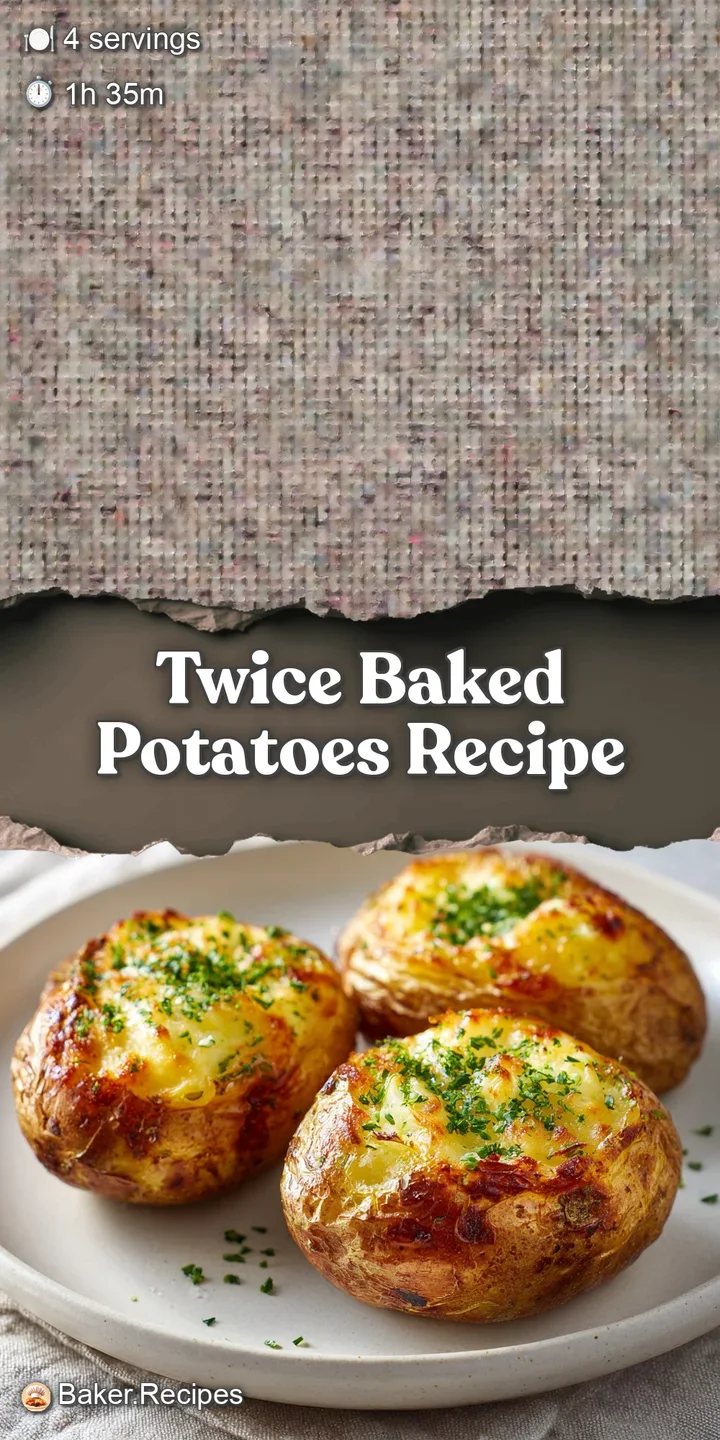
Twice Baked Potatoes Recipe: Crispy and Velvety
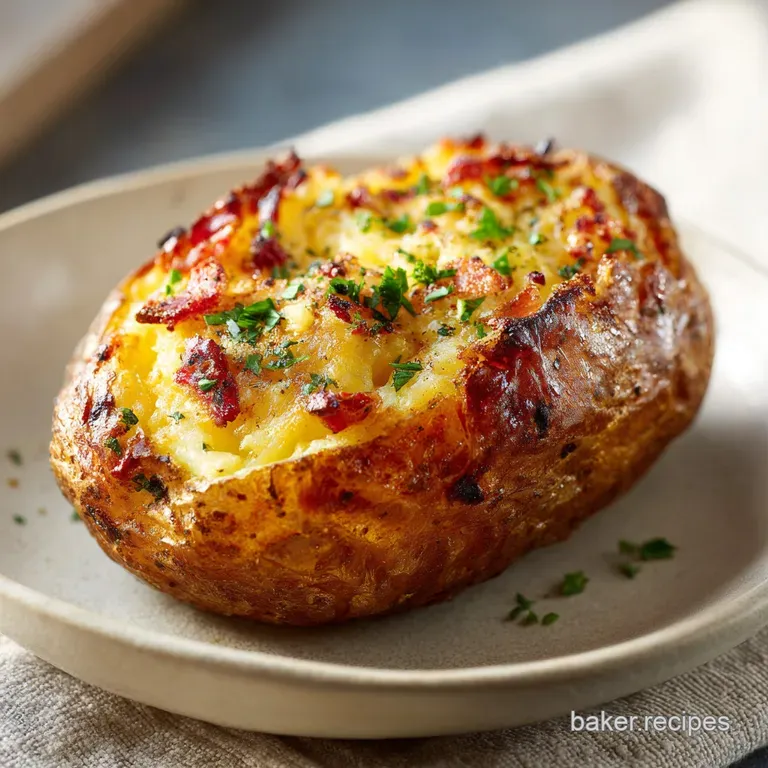
- Time: Active 20 minutes, Passive 1 hours 15 mins, Total 1 hours 35 mins
- Flavor/Texture Hook: A salty, crackling skin paired with a rich, buttery interior.
- Perfect for: An indulgent weekend side or a hearty meal prep option.
- Perfecting the Structural Foundation for Your Twice Baked Potatoes Recipe
- Essential Specs for a Perfectly Balanced Potato Filling
- Selecting Quality Elements for a Truly Luxurious Texture
- The Most Efficient Tools for Superior Potato Prep
- Executing the Technique for a Shatter Crisp Golden Skin
- Mastering Common Texture Issues for Seamless Potato Results
- Bold Flavor Profiles to Personalize Your Stuffed Spuds
- Managing Leftovers and Planning Make Ahead Meals Effectively
- Indulgent Side Dishes to Round Out Your Main Meal
- Traditional Myths About Potatoes
- High in Sodium
- Recipe FAQs
- 📝 Recipe Card
Perfecting the Structural Foundation for Your Twice Baked Potatoes Recipe
I still remember the first time I tried making these for a holiday dinner. I thought I was being clever by boiling the potatoes first to "save time." What I ended up with was a watery, sad mess that tasted more like soggy cardboard than the decadent treat I promised my guests.
The kitchen didn't have that nutty, roasted aroma, and the skins were so flimsy they practically dissolved when I tried to scoop them out. It was a total disaster, and we ended up eating plain mashed potatoes out of a bowl.
That failure sent me on a mission to figure out how the pros get that sturdy, crisp shell and the ultra creamy center. I learned that it is all about moisture management and choosing the right potato.
You want a Russet that feels heavy for its size, which means it is packed with the starch we need to create that fluffy interior. When you get it right, the sizzle of the bacon against the melted cheese is the most rewarding sound in the world.
This isn't just a side dish, it is a lesson in textures. We are aiming for a contrast that makes every bite interesting. You get the crunch of the chives, the saltiness of the bacon, and the tang of the sour cream all wrapped in a shell that holds its shape.
Let's get into the details of how to make this work every single time without the soggy heartbreak I experienced years ago.
The Physics of the Crispy Shell
Moisture Evaporation: over High heat roasting without foil allows steam to escape the potato skin, creating a rigid, dehydrated structure. This structural "tanning" ensures the skin doesn't tear when you are whipping the filling.
Chef's Tip: Use a metal cooling rack set inside your baking sheet. This allows air to circulate entirely around the potato, preventing the "flat spot" on the bottom where moisture usually pools and makes the skin leathery instead of crispy.
| Method | Time | Texture | Best For |
|---|---|---|---|
| Standard Oven | 1 hours 15 mins | Maximum crunch, even browning | Traditional results |
| Air Fryer | 45 minutes | Very crispy skin, smaller batches | Quick weeknight meals |
| Microwave (Start) | 25 minutes | Soft skin, needs oven finish | Saving time |
There is something inherently satisfying about the process of transform a humble tuber into something so luxurious. If you find yourself craving even more starch heavy comfort, you might enjoy the logic behind our Irresistibly How to recipe which uses a similar dehydration technique for crunch.
Essential Specs for a Perfectly Balanced Potato Filling
Getting the ratios right is the difference between a filling that is "just okay" and one that people talk about for weeks. We use 4 oz Full Fat Cream Cheese specifically because it provides a structural "lift" that sour cream alone cannot achieve.
It keeps the filling from becoming runny when it hits the oven for the second time.
| Component | Science Role | Pro Secret |
|---|---|---|
| Russet Potato | High amylose starch | Scrub and dry completely before oiling |
| Cream Cheese | Emulsification & Stability | Ensure it is room temp to avoid lumps |
| Salted Butter | Fat for mouthfeel | Melt it first to coat the starch granules |
| Whole Milk | Hydration control | Warm it to prevent the starch from seizing |
Wait until you see how the 1 cup Sharp Aged Cheddar interacts with the warmed milk. It creates a suspension that feels like silk on the tongue but stays firm enough to pile high into the potato skins. If you are looking for a meal that feels even more decadent, you could compare this to our How to Make recipe which takes the "loaded" concept to a whole new level of intensity.
Selecting Quality Elements for a Truly Luxurious Texture
- 2 Large Russet Potatoes (approx. 14oz each): These are the workhorses. Their thick skins are essential for the "bowl" we are creating. Why this? High starch content ensures the interior fluffs up beautifully when mashed.
- 1 tbsp Extra Virgin Olive Oil: Use a good quality oil to coat the skins. Why this? Oil conducts heat better than air, leading to a faster, more even "fry" on the skin.
- 4 oz Full Fat Cream Cheese, softened: This is the secret to a healthy twice baked potato recipe feel without losing the richness. Why this? It adds a velvety thickness that sour cream lacks.
- 1/4 cup Sour Cream: For that essential lactic tang. Substitute: Plain Greek Yogurt for a slightly sharper bite.
- 4 tbsp Salted Butter, melted: Fat equals flavor transport. Substitute: Avocado oil for a lighter, nuttier profile.
- 1/4 cup Whole Milk, warmed: To adjust consistency. Substitute: Heavy cream for an even more indulgent result.
- 1/2 tsp Garlic Powder: For a savory baseline. Substitute: Roasted garlic cloves for a sweeter, deeper aroma.
- 1 cup Sharp Aged Cheddar, shredded: Always shred your own from a block. Why this? Pre shredded cheese is coated in potato starch which prevents a smooth melt.
- 4 slices Thick Cut Bacon, cooked and crumbled: Adds the necessary smoky crunch. Substitute: Smoked paprika and toasted walnuts for a vegetarian swap.
- 2 tbsp Fresh Chives, finely snipped: For a pop of color and oniony brightness.
The Most Efficient Tools for Superior Potato Prep
You don't need a kitchen full of gadgets, but a few specific items make this twice baked potatoes recipe much easier to manage. A sturdy baking sheet is non negotiable, and I highly recommend using a hand mixer rather than a masher if you want that "whipped" texture that mimics a cloud.
A small spoon with a relatively sharp edge is also helpful for the precision extraction of the potato guts. I once tried using a large dinner spoon and ended up poking holes through the bottom of every single skin. It was frustrating and entirely avoidable.
Now, I use a grapefruit spoon or a simple teaspoon to maintain a 1/4 inch border around the edge for structural integrity.
Chef's Tip: Freeze your block of cheddar for 10 minutes before grating. It makes the cheese firmer and prevents it from clumping together or melting into a blob against the grater's surface.
Executing the Technique for a Shatter Crisp Golden Skin
1. The over High heat Foundation
Preheat your oven to 400°F (200°C). Scrub the 2 Large Russet Potatoes thoroughly and pat them bone dry with a paper towel. Poke several holes in each with a fork. Rub the skins with 1 tbsp Extra Virgin Olive Oil and sprinkle with 1 tsp Flaky Sea Salt.
Place them directly on the oven rack (or a rack over a tray) and bake for 1 hours until the skins feel like parchment and a knife slides in effortlessly. Note: This high heat is what builds the "wall" of the potato skin.
2. The Precision Extraction
Let the potatoes cool for 10 minutes so you can handle them. Slice them in half lengthwise. Use a small spoon to scoop out the flesh into a large bowl, leaving a 1/4 inch thick shell. Note: If you scoop too close to the skin, the potato will collapse when you try to refill it.
3. Creating the Emulsion
To the warm potato flesh, add 4 tbsp Salted Butter (melted) and 4 oz Full Fat Cream Cheese. Using a hand mixer, beat on low speed until the large chunks disappear and the mixture looks shaggy. Note: Adding fat before liquid coats the starch and prevents a gluey texture.
4. Aerating the Filling
Pour in 1/4 cup Whole Milk (warmed) and 1/4 cup Sour Cream. Add 1/2 tsp Garlic Powder and 1/4 tsp Fresh Cracked Black Pepper. Beat on medium high for 1 minute until the filling looks like whipped frosting.
5. Adding the Flavor Pillars
Fold in half of the 1 cup Sharp Aged Cheddar and half of the crumbled bacon using a spatula. Note: Hand folding keeps the bacon crispy and prevents the cheese from breaking down completely.
6. The Refilling Process
Spoon the mixture back into the shells, piling it high. Don't press down too hard; you want to keep the air inside the filling.
7. The Final Gratination
Top with the remaining cheese and bacon. Place the potatoes back on the baking sheet. Bake at 400°F (200°C) for another 15 minutes until the cheese is bubbling and the edges are turning golden brown.
8. The Finishing Touches
Remove from the oven and let them rest for 5 minutes. Sprinkle with 2 tbsp Fresh Chives just before serving. The aroma should be intensely savory and the skin should yield with a distinct "snap" when cut.
Mastering Common Texture Issues for Seamless Potato Results
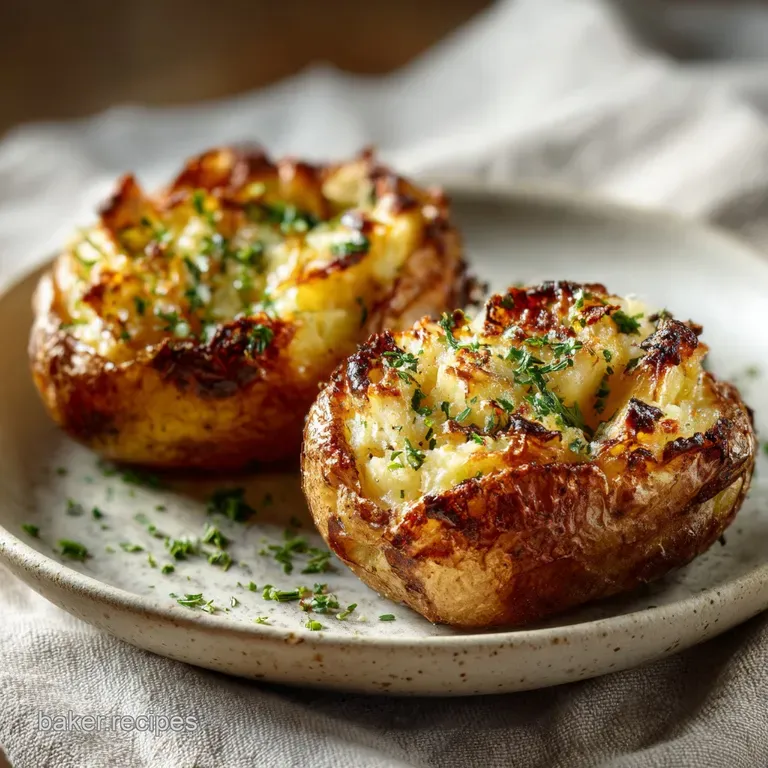
The biggest hurdle with any twice baked potatoes recipe is usually the "gluey" factor. This happens when the starch is overworked, usually by over mashing or using a food processor. Once those starch granules burst, they release amylose which turns your fluffy filling into a sticky paste.
To Fix a Gluey Filling
If you find your filling becoming tacky, stop mixing immediately. You can't un burst the starch, but you can "save" the texture by folding in a little extra melted butter or a handful of crispy bacon. The added fat and texture will mask the stickiness.
Next time, ensure your potatoes are still quite hot when you start mixing, as cold starch is more prone to becoming gummy.
How to Prevent the Shattered Skin Disaster
If your potato skin rips while you are scooping, don't panic. You can "glue" it back together using a bit of the potato filling on the inside. Once the cheese melts during the second bake, it will act like a delicious cement. To avoid this, always leave at least a quarter inch of flesh attached to the skin.
It acts as a shock absorber.
| Problem | Root Cause | Solution |
|---|---|---|
| Filling is runny | Too much milk or cold sour cream | Add an extra tablespoon of cream cheese to thicken |
| Skin is tough/chewy | Wrapped in foil during first bake | Always bake naked on a rack for airflow |
| Top isn't browning | Oven temp too low | Switch to "Broil" for the last 2 minutes |
Common Mistakes Checklist
- ✓ Never wrap potatoes in foil; it steams the skin instead of crisping it.
- ✓ Warm your milk and butter before adding to the potatoes to keep the temperature consistent.
- ✓ Use a hand mixer for the filling if you want a "whipped" restaurant style texture.
- ✓ Don't skip the second bake; it is essential for setting the proteins in the cheese and cream cheese.
- ✓ Always use Russet potatoes; waxy potatoes like Yukon Gold won't fluff up properly.
Bold Flavor Profiles to Personalize Your Stuffed Spuds
If you want to move beyond the classic bacon and cheddar, there are plenty of ways to shake things up. One of my favorites is the "Cowboy" twist, where you swap the cheddar for pepper jack and add a spoonful of pickled jalapeños. It gives it a gutsy kick that pairs perfectly with grilled steak.
For a Healthy Twice Baked Potato Recipe
To keep things a bit lighter without losing that "simple twice baked potato recipe" charm, you can use Greek yogurt instead of sour cream and swap half the butter for extra milk. You still get the creamy mouthfeel, but with a punch of extra protein and fewer calories.
The "Cowboy" Twist
- Cheese: Use 1 cup Pepper Jack instead of Cheddar.
- Heat: Add 1 tbsp minced pickled jalapeños to the filling.
- Spice: Mix in 1/2 tsp of smoked paprika for a deep, campfire aroma.
Managing Leftovers and Planning make-ahead Meals Effectively
These are the ultimate "make-ahead twice baked potatoes." You can do all the work up until the final bake, cover them tightly with plastic wrap, and keep them in the fridge for up to 24 hours. When you're ready to eat, just pop them in the oven.
You might need to add 5-10 minutes to the cook time if they are coming straight from the cold fridge.
- Storage: Keep in an airtight container in the fridge for up to 4 days.
- Freezing: Wrap individual potatoes in plastic wrap, then foil. They stay good for up to 3 months. Thaw in the fridge overnight before reheating.
- Zero Waste: Don't throw away those potato scraps! If you have extra filling that won't fit in the skins, fry it up like a pancake the next morning for the best hash browns of your life. Even the tiny bits of potato skin can be tossed in oil and salt and baked until they are "chips."
Reheating for Best Results
Avoid the microwave if you can. It turns the once crispy skin into a rubbery mess. Instead, use a toaster oven or a regular oven at 350°F (180°C) for about 15 minutes. This restores the crunch of the skin while gently melting the cheese back into the filling.
Indulgent Side Dishes to Round Out Your Main Meal
When you serve these, you want something that can stand up to the richness. A simple green salad with a sharp vinaigrette is great for cutting through the fat. Or, if you are going for a full "steakhouse" experience at home, serve these alongside a perfectly seared ribeye.
- Steakhouse Vibes: Pair with a wedge salad and a heavy Cabernet Sauvignon.
- Family Style: Serve with roasted broccoli and grilled chicken thighs.
- The Sweet Finish: After a savory meal like this, I always crave something comforting. My Classic Warm Banana recipe is the perfect follow up to a potato heavy dinner.
Why Pay $18 at a Steakhouse?
Most high end restaurants use this exact twice baked potatoes recipe logic: high starch potatoes, double fat filling (butter AND cream cheese), and a over high heat finish. By mastering the "scoop and whip" technique at home, you are saving a fortune while getting a result that is frankly better because it hasn't been sitting under a heat lamp for twenty minutes.
Traditional Myths About Potatoes
One of the biggest myths in the kitchen is that you need to soak potatoes in water to make them "better." While soaking can help remove excess starch for fries, it is the enemy of this recipe. We want that starch! It is what provides the structure and the fluff.
Another myth is that the "eyes" of the potato are poisonous. While you should sprout proof your spuds and cut off anything green, a few tiny eyes won't hurt you; just flick them off with your thumb.
Finally, people often think you can't over mix a potato. You absolutely can. Treating the filling with the same respect you give a cake batter mixing just until combined is the secret to that "clouds on a plate" experience. Keep it simple, keep it hot, and don't overthink the mash.
Your taste buds will thank you for the restraint.
High in Sodium
1045 mg 1045mg of sodium per serving (45% 45% of daily value)
The American Heart Association recommends limiting sodium intake to about 2,300mg per day.
Tips to Reduce Sodium in Your Loaded Baked Potato
-
Swap to Low-Sodium Bacon-25%
Opt for low-sodium bacon. This simple swap can significantly reduce the overall sodium content, as bacon is a major contributor.
-
Reduce or Substitute Cheese-15%
Use less aged cheddar and consider a lower sodium cheese alternative, like part skim mozzarella, or reduce the total quantity. Experiment with nutritional yeast for a cheesy flavor without the sodium.
-
Control the Salt-10%
Omit the flaky sea salt entirely and let the other flavors shine. If you must add salt, do so sparingly, using a pinch of regular salt instead, and taste as you go.
-
Unsalted Butter is Better-10%
Replace the salted butter with unsalted butter. This eliminates a significant source of sodium in the mashed potato mixture.
-
Low-Sodium Dairy Options-5%
Consider using low-sodium or sodium free sour cream to reduce sodium content. You can also look for cream cheese with lower sodium.
-
Flavor with Herbs & Spices
Enhance the flavor profile with fresh herbs like dill, parsley, or a sprinkle of smoked paprika. Experimenting with different herbs and spices can boost the taste without adding sodium.
Recipe FAQs
How to make twice baked potatoes Gordon Ramsay?
Bake whole first, scoop flesh, then mix with cream cheese and butter. Ramsay emphasizes cooking the potatoes whole at a high heat (around 400°F/200°C) without foil to achieve a crisp skin before mixing the flesh into a rich, stable filling for the second bake.
What temperature do you cook twice baked potatoes in the oven?
Start at 400°F (200°C) for the initial bake, then return at the same temperature for the final 15 minutes. The initial high heat sets the skin structure; the second bake melts the toppings and reheats the filling without compromising the crisp exterior.
How to do twice cooked potatoes?
Bake potatoes fully, scoop out the flesh, mix with dairy and seasonings, refill the skins, and bake again until golden. This two-stage process ensures maximum fluffiness inside and a structural integrity for the skin. Mastering this control over starch and moisture is similar to techniques used when learning How to Make recipe.
How do restaurants get their baked potatoes so fluffy?
They use high starch Russet potatoes and avoid over mixing the filling. Restaurants bake the potatoes directly on the rack at high heat to maximize skin crisping, and they often incorporate cream cheese or heavy cream into the filling for an extra velvety, whipped texture.
Can I skip the first bake and just boil the potatoes?
No, skipping the initial high heat bake ruins the skin texture. Boiling introduces too much moisture, resulting in a soggy, weak skin incapable of holding the rich filling; the first bake is crucial for dehydrating the skin into a crisp shell.
How long can I prepare twice baked potatoes ahead of time?
Assemble the filled potatoes, then refrigerate them for up to 24 hours before the final bake. Ensure they are tightly covered to prevent drying out. When ready to serve, allow them to sit at room temperature for 15 minutes before baking to ensure even heating.
What is the secret to making the filling smooth instead of gluey?
Add fat (melted butter) before liquid (milk/sour cream) and use a hand mixer on low speed. Adding fat first coats the starch granules, preventing them from bonding tightly when liquid is introduced, leading to a smoother, lighter consistency.
Twice Baked Potatoes Recipe
Ingredients:
Instructions:
Nutrition Facts:
| Calories | 585 calories |
|---|---|
| Protein | 17g |
| Fat | 41g |
| Carbs | 39g |
| Fiber | 3.5g |
| Sugar | 2.8g |
| Sodium | 1045mg |
