The Chefs Dark Secret Classic German Chocolate Layer Cake
- Unpacking the Legend: Why 'German' Chocolate Cake Isn't German
- Elevating the Classic: Achieving the Ultimate Dark German Chocolate Cake
- The Baker's Pantry: Essential Components for Layer Cake Perfection
- Tool Check: Equipment Required for the Dark German Chocolate Cake Assembly
- Phase One: Constructing the Deeply Flavorful Dark Chocolate Sponge
- Phase Two: The Signature Custard—Cooking the Coconut-Pecan Frosting
- Phase Three: The Grand Assembly and Final Presentation
- Advanced Baker Tips: Troubleshooting and Elevating Your Next Batch
- Shelf Life and Storage Solutions: Keeping Your Dark German Chocolate Cake Fresh
- Beyond the Recipe: Recommended Variations and Flavor Twists
- Recipe FAQs
- 📝 Recipe Card
Unpacking the Legend: Why 'German' Chocolate Cake Isn't German
The title of this beloved layer cake is perhaps the most confusing misnomer in the baking world. When mastering the Dark German Chocolate Cake , the first step is understanding its true heritage: it’s entirely American.
The "German" refers not to a geographical origin, but to Samuel German, an American baker who developed a specific type of dark baking chocolate for Baker’s Chocolate Company in 1852. This recipe gained widespread popularity when it was printed in a Dallas newspaper in 1957.
If you ever wondered about the difference between chocolate cake and german chocolate , the answer lies not in the sponge itself, but exclusively in the frosting.
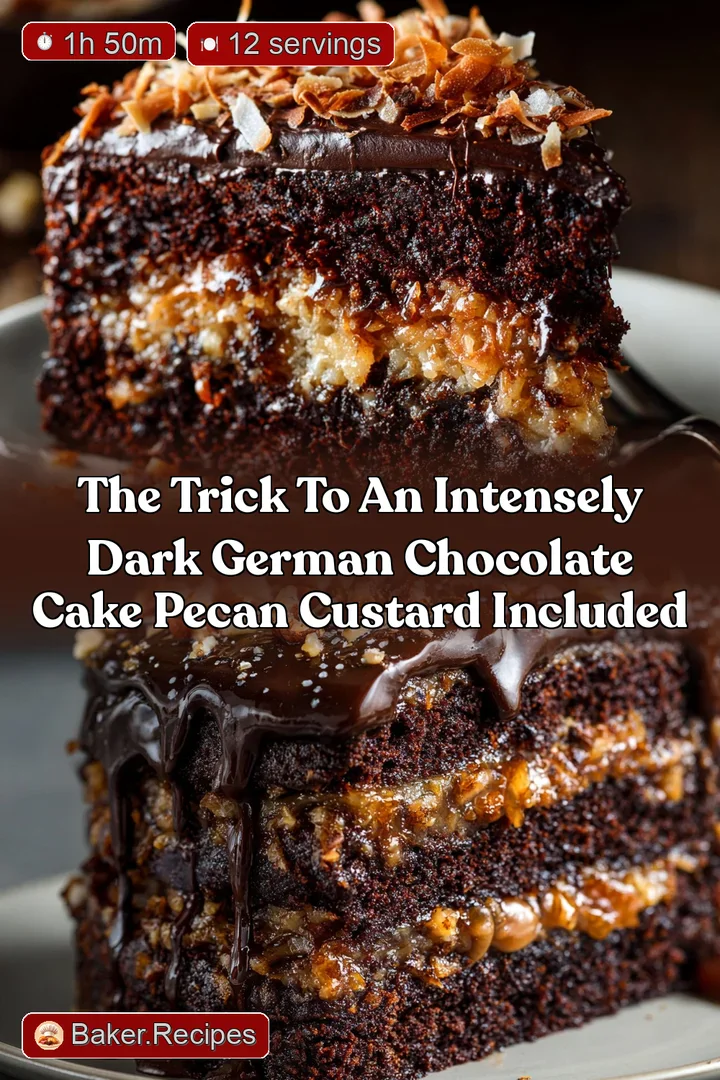
While a standard chocolate cake can be paired with any icing (ganache, buttercream, etc.), a true German Chocolate Cake must feature that iconic, cooked custard frosting studded with pecans and coconut.
It is this unique custard preparation that sets the cake apart and defines the dark german chocolate cake recipe we follow today.
Elevating the Classic: Achieving the Ultimate Dark German Chocolate Cake
Our mission is to move beyond the pale, often dry versions found in bakeries and create a deeply satisfying, intensely flavored dessert. This is the black german chocolate cake experience a rich contrast between the intensely dark, moist sponge and the golden, thick, custardy filling.
Achieving this ultimate result relies on specific techniques designed to maximize moisture and flavor concentration. We aim for a celebration cake that requires moderate effort (a 'Medium' difficulty rating) but delivers phenomenal results worthy of its nearly 12 generous slices.
The Deep Dive: Mastering the Extra Moist Crumb
The secret weapon in achieving an extra moist and deeply colored sponge is the inclusion of hot liquid. By using one cup of hot, strong black coffee or boiling water if preferred to bloom the three quarters cup of Dutch processed cocoa powder, we intensify the cocoa flavor and create a wonderfully fluid, silky batter.
This technique is non-negotiable, ensuring the sponge remains incredibly tender, counterbalanced by the rich one cup of buttermilk and the half cup of neutral vegetable oil used in the batter.
Showstopper Aesthetics: Layering for Maximum Impact
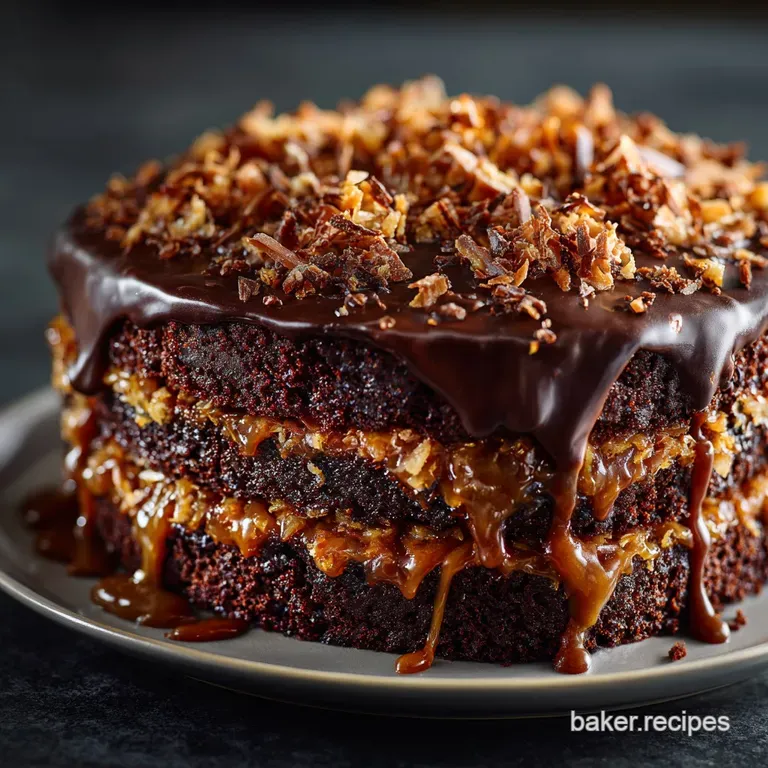
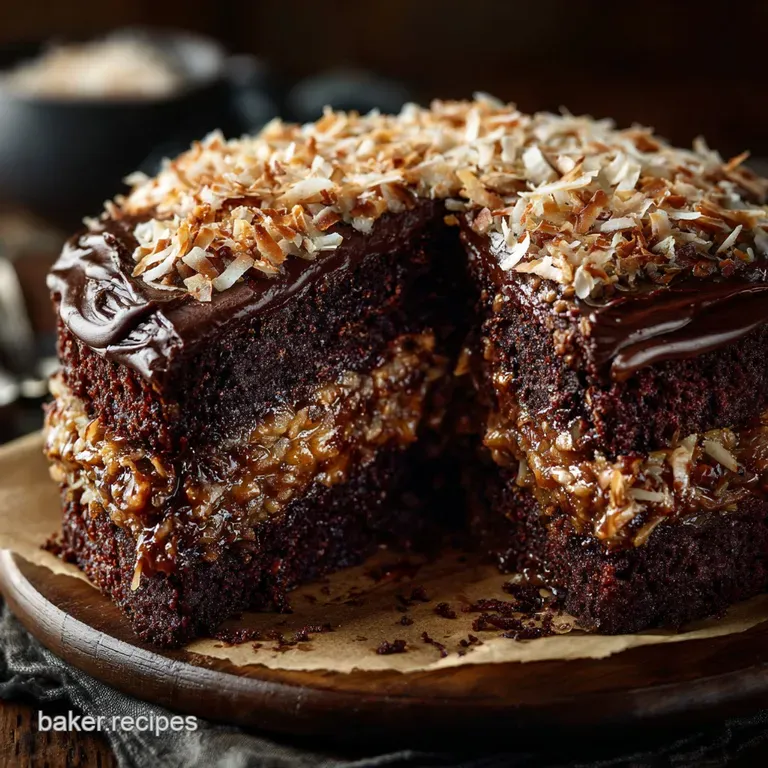
Unlike a cake that receives a full coat of buttercream, the traditional German Chocolate Cake focuses its signature frosting almost entirely between and on top of the layers. This strategic placement allows the rich, dark edges of the sponge to remain exposed, creating a striking contrast against the thick, golden brown coconut pecan custard.
This is how we present a visually impactful dessert where the darkness of the cake explicitly highlights the texture of the filling.
The Mindset of a Master Baker: Confidence in the Kitchen
While the creaming method for the cake itself is straightforward, the custard frosting requires focused attention. The master baker understands the need for patience and consistent temperature control.
Dealing with the four large egg yolks and one cup of evaporated milk requires a gentle hand, typically utilizing a bain marie to prevent scrambling. This technique ensures a smooth, glossy custard base before folding in the final 150 grams each of toasted pecans and shredded coconut.
Embracing this custard making challenge elevates this bake from a simple cake to a true pastry achievement.
The Baker's Pantry: Essential Components for Layer Cake Perfection
Building an exceptional layer cake starts with selecting the best ingredients. For this specific recipe, high-quality, unsalted dairy products are paramount, as they directly influence the richness and texture of both the sponge and the frosting.
Beyond standard flour (2 ¼ cups, or 280 grams) and sugar (2 cups), we rely on precise leavening 1 ½ teaspoons of baking soda and 1 teaspoon of salt to ensure a beautiful, even rise.
The success of this dark german chocolate cake recipe hinges on the balance between the two main stages: the acidic, moist cake batter (using buttermilk) and the sweet, rich, cooked dairy custard frosting.
Tool Check: Equipment Required for the Dark German Chocolate Cake Assembly
Proper equipment ensures a stress free baking process, moving you from prep to assembly efficiently. While a stand mixer can handle the cake batter, the frosting demands specific temperature control tools.
Sourcing Cocoa: Selecting the Best Dark Chocolate and Powder
To ensure this cake lives up to its name and provides that deep, satisfying color associated with a black german chocolate cake , we must use Dutch processed cocoa powder.
This cocoa, which has been treated to neutralize its acidity, results in a richer, darker hue and a smoother, more intense chocolate flavor compared to natural cocoa. This answers the question: is german chocolate cake dark chocolate?
Yes, in its best form, the sponge should be intensely dark, thanks to high-quality Dutch processing.
Temperature Matters: Preparing Wet Ingredients for Optimal Emulsification
For the cake, the two large eggs and one cup of buttermilk must be brought to room temperature before mixing. Ingredients that are too cold prevent proper emulsification with the half cup of oil, potentially resulting in a denser cake.
Conversely, the one cup of coffee must be hot ideally boiling when introduced to the batter, as this maximizes the flavor release from the cocoa and accelerates the chemical reaction of the baking soda.
The Pecan Prep: Toasting Nuts for Maximum Flavor Depth
The custard frosting requires 1 ½ cups (150 grams) of pecans, and these must be toasted lightly in a dry pan until fragrant. This simple step vastly improves the final flavor profile, lending a crucial nutty depth that helps balance the considerable sweetness of the sugar (1 cup) and sweetened shredded coconut (1 ½ cups) in the frosting.
Never skip toasting your nuts.
Your Essential Equipment List: From Pans to Spatulas
You will need two 9 inch (23 cm) round cake tins, lined with parchment paper circles for easy release. Crucially, preparing the cooked custard requires a saucepan and a dedicated heatproof bowl large enough to fit over it, creating a double boiler or bain marie setup.
This gentle heat source is vital for managing the egg yolks without scrambling them. A wire rack is necessary for complete and quick cooling of the layers.
Phase One: Constructing the Deeply Flavorful Dark Chocolate Sponge
The cake construction begins by preheating the oven to 175°C (350°F) and meticulously preparing the tins. The first major step is sifting together all dry ingredients flour, cocoa powder, baking soda, and salt before whisking in the granulated sugar.
Separately, whisk the room temperature eggs, buttermilk, oil, and vanilla extract. The wet ingredients are then slowly incorporated into the dry mixture, combining only until just moistened.
The final step is the dramatic addition of the hot coffee, which transforms the batter into a silky, liquid consistency necessary for that intensely moist crumb. The resulting batter is divided evenly and baked for 30– 35 minutes, ready to be cooled for a minimum of one hour.
Related Recipes Worth Trying
- Mu Shu Beef with Pancakes Better Than Takeout FeatherLight Wraps — Gadzooks this Homemade Mu Shu Beef is spectacular Tender shredded beef is stirfried with crisp cabbage in a smoky Hoisin sauce wrapped in delicate Mandarin...
- Homemade Toffee Crunch The Ultimate Salted Dark Chocolate Recipe — Achieve the perfect hardcrack stage with this classic English toffee recipe Buttery brittle and covered in dark chocolate this Toffee Crunch is dangerously...
- The Effortless Elegance Classic NoBake Cherry Cheesecake — This foolproof No Bake Cherry Cheesecake recipe is utterly decadent and requires zero oven time Get the creamy texture you crave with a homemade cherry topping
Phase Two: The Signature Custard Cooking the Coconut Pecan Frosting
The signature element of this classic is the cooked custard. After toasting and setting aside the pecans, the focus shifts to the stovetop. In the heatproof bowl positioned over simmering water, the four large egg yolks, evaporated milk, and granulated sugar are continuously whisked.
This process must be slow and steady, lasting approximately 15 to 20 minutes, until the mixture visibly thickens and coats the back of a spoon. The target temperature is around 82°C (180°F).
Once removed from the heat, the half cup (1 stick) of cubed unsalted butter is stirred in until fully melted and smooth, followed by the vanilla extract. The base is then cooled, first at room temperature for 30 minutes, then briefly in the refrigerator, allowing it to firm slightly but remain spreadable before folding in the coconut and pecans.
Phase Three: The Grand Assembly and Final Presentation
With both components perfectly chilled and prepared, assembly is rapid. If necessary, a serrated knife should be used to carefully level any domed tops of the cool cake layers. The first dark sponge layer is placed on the serving dish, topped with half of the luxurious custard.
The second layer is stacked, and the remaining custard is spread across the top, ensuring that, in keeping with tradition, the sides of the dark german chocolate cake are left unfrosted to showcase the rich, deep color of the sponge.
Mixing the Batter: Preventing Overdevelopment of Gluten
When combining the wet and dry ingredients, and particularly when integrating the final cup of hot coffee, avoid the temptation to mix vigorously. Excessive mixing develops the gluten in the flour, resulting in a tough, rubbery crumb.
Mix only on low speed and stop the moment the streaks of flour disappear, guaranteeing the desired light and tender texture.
Baking Watch: Identifying the Perfect Doneness Cue
Because of the high concentration of dark cocoa, the layers can appear deceivingly underdone. Do not rely solely on visual inspection. Check the cake at 30 minutes; the perfect cue is when a skewer inserted into the center emerges clean, perhaps with a few moist crumbs attached.
Overbaking, even by a minute or two, is the primary culprit behind a dry chocolate cake.
Achieving the Thick Set: Troubleshooting Your Cooked Frosting
The custard relies on careful, slow heating to achieve its structure. If your frosting seems too runny after cooking, it likely hasn't reached the necessary temperature to activate the thickening properties of the egg yolks.
If it’s too thick, you can gently whisk in a teaspoon of evaporated milk at a time until the desired spreadable consistency is reached before folding in the coconut and pecans.
Stabilizing the Layers: A Quick Chill Before Crumbing and Frosting
It is absolutely crucial that the cake layers cool completely for a minimum of one hour before you attempt to frost them. Applying the frosting to warm cake layers will immediately melt the butter component in the custard, causing the filling to run off the sides and ruining the structure.
A fully cool, stable sponge ensures the custard adheres perfectly.
Advanced Baker Tips: Troubleshooting and Elevating Your Next Batch
The difference between a good cake and a truly outstanding one often lies in fine tuning small details. Always utilize the hot coffee; it is the essential catalyst that transforms the cocoa into an intense, dark flavor bomb.
When preparing the custard, dedicate your full attention to the bain marie; slow and constant stirring with a whisk is the only way to temper the egg yolks without causing a catastrophic scramble, which would result in a grainy filling.
For the deepest flavor, ensure the buttermilk and eggs are at room temperature to encourage perfect emulsion, leading to a lighter rise and smoother batter structure. Finally, remember to always toast those 150 grams of pecans it amplifies the natural nuttiness needed to cut through the cake’s sweetness.
Shelf Life and Storage Solutions: Keeping Your Dark German Chocolate Cake Fresh
Due to the cooked custard containing egg yolks and dairy, the Dark German Chocolate Cake stores best at cool room temperature for up to two days, covered loosely. For longer storage, refrigerate the cake.
Stored in an airtight container in the refrigerator, it will remain fresh for up to five days. Note that chilling the cake will slightly stiffen the custard and firm the sponge, so allow slices to come close to room temperature for about 20– 30 minutes before serving to restore optimal texture.
Beyond the Recipe: Recommended Variations and Flavor Twists
While the traditional dark german chocolate cake recipe is perfection itself, there are elegant ways to adapt it. For instance, a subtle salted caramel drizzle placed between the layers before adding the coconut pecan filling provides an extra layer of decadence that plays beautifully against the dark chocolate.
Preventing Tunneling: Expert Advice for High Altitude Baking
For bakers working at high altitudes, the extra leavening and low atmospheric pressure can cause excessive rise followed by collapse, often resulting in tunnels. To counteract this, slightly reduce the amount of baking soda (by about 1/4 teaspoon), slightly increase the liquid (perhaps one to two tablespoons of buttermilk), and slightly increase the flour (by one tablespoon) to provide more structure.
Serving Suggestions: Pairing Your Cake with Coffee or Wine
Because of the richness of the toasted pecan and butter based custard, the cake pairs wonderfully with beverages that offer a sharp contrast. Serve alongside a freshly brewed, strong espresso to cut through the sweetness, or perhaps a small, chilled glass of Crème de Cacao for a decadent after dinner treat.
For a fresher palate cleanser, a side of slightly sweetened raspberry coulis provides a delightful, acidic brightness.
Freezing the Sponge: Planning Ahead for Quick Dessert Needs
One major advantage of this cake is that the dark chocolate sponge layers freeze beautifully. Once fully cooled, wrap each layer tightly in plastic wrap, then wrap again in aluminum foil. Stored this way, the cake layers can be frozen for up to three months.
Thaw them overnight in the refrigerator, then bring them to room temperature before assembling with freshly prepared coconut pecan frosting.
A Lighter Option: Substituting Ingredients Without Sacrificing Texture
If you require a nut-free version, the 1 ½ cups of toasted pecans can be substituted with toasted, rough chopped sunflower seeds or even shredded oat flakes to maintain that essential textural element in the filling.
For liquid adjustments, if you are out of buttermilk, you can easily create a substitute by combining one cup of regular milk with one tablespoon of white vinegar or lemon juice, allowing it to stand for five minutes until slightly curdled before proceeding with the dark german chocolate cake recipe .
For those searching for a variation on the European classic, please note that this American German Chocolate Cake is distinct from the black forest german chocolate cake —the latter features cherries, kirsch, and whipped cream, elements not typically found in this deep, dark American custard favorite.
Recipe FAQs
Is this a proper German cake, or is the name a bit misleading?
It’s a truly iconic American bake! The cake is famously named after Samuel German, the baker who invented the specific sweet baking chocolate used in the original recipe a bit of a historical red herring, really.
While it delivers deep chocolate notes, it’s not a dessert traditionally served in Germany, where they tend to prefer lighter cakes like the Black Forest Gateau.
Help! I'm worried about scrambling the eggs in the coconut pecan frosting. Any tips for getting that signature cooked custard right?
The secret here is gentle heat a bain marie (or double boiler) is your best mate for preventing a tragic scramble. Stir constantly, treating it like a low-intensity arm workout, until the mixture coats the back of a spoon, reaching about 82°C (180°F).
If you notice any lumps starting to form, remove the bowl immediately from the heat and whisk furiously off the water to save the texture before continuing.
Why does the recipe for this Dark German Chocolate Cake call for hot coffee? Will it make the sponge taste like a latte?
Not at all! The hot coffee is a non-negotiable secret weapon for achieving a truly rich, dark colour and incredibly moist texture. It doesn't add a coffee flavour but rather reacts with the Dutch processed cocoa powder, intensifying the chocolate notes and adding depth of colour it simply boosts the overall 'oomph factor' of the sponge.
Can I make a nut-free version of this showstopper, and how should I store it once finished?
Absolutely; if nuts are an issue, simply substitute the pecans with toasted sunflower seeds or even crushed toasted oat flakes for that crucial crunch. Because the frosting contains egg yolks and evaporated milk, this cake must be refrigerated if stored longer than 24 hours.
Cover it tightly, but remember to let it sit at room temperature for an hour before slicing and serving for the optimal, creamy texture.
I’m planning a party can I make the cake layers ahead of time to save a bit of stress on the day?
You can certainly be a clever planner! Bake the layers up to two days in advance, wrapping them tightly in cling film once they are completely cool, and storing them at room temperature.
However, the signature custard frosting is best prepared and applied the day of assembly, as the custard is easiest to work with when it is slightly thickened but still pliable.
Ultimate Dark German Chocolate Cake
Ingredients:
Instructions:
Nutrition Facts:
| Calories | 768 kcal |
|---|---|
| Protein | 6.5 g |
| Fat | 30.3 g |
| Carbs | 40.0 g |
| Fiber | 4.0 g |
| Sodium | 5672 mg |
