Master the Best Black Eyed Peas Recipe | Umami Rich
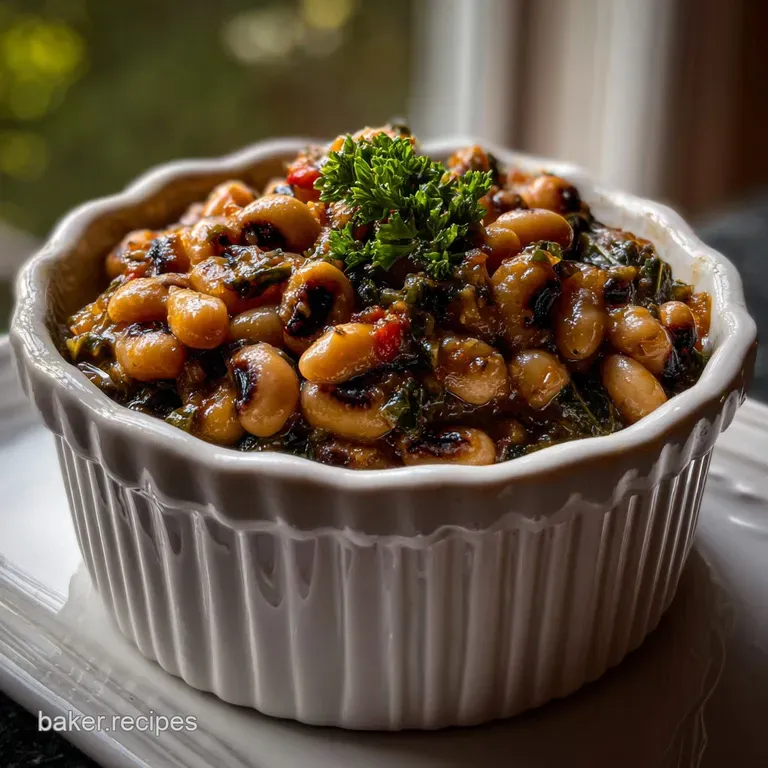
- Effort/Time: Moderate effort; 1 hour 45 mins total time.
- Flavor Hook: Smoked-paprika-tinged broth with fall-apart tender ham.
- Perfect for: New Year’s traditions or high-protein make-ahead meal prep.
- Master the Ultimate Southern Black Eyed Peas Recipe
- Harnessing Collagen and Osmosis for Deep Flavor Development
- Optimizing Your Culinary Workflow: Yield and Timing Logistics
- The Alchemy of Umami: Selecting High-Impact Structural Elements
- Precision Tools for Superior Heat Distribution and Extraction
- Step-By-Step Execution for Maximum Flavor Saturation
- Navigating Texture Failures and Flavor Imbalances
- Flavor Architecture and Dietary Adaptations for Every Table
- Preserving Structural Integrity During Cooling and Thermal Recovery
- Synthesizing Side Dishes for a Complete Southern Experience
- Recipe FAQs
- 📝 Recipe Card
Master the Ultimate Southern Black Eyed Peas Recipe
There is nothing more frustrating than investing hours into a pot of beans only to serve a bowl of "bean gravel" shriveled, hard pellets floating in a thin, watery liquid. I’ve seen home cooks waste beautiful smoked ham hocks and expensive organic broth because they didn't respect the physics of the bean.
When the texture fails, the entire meal feels like a technical and financial loss, leaving your guests reaching for the salt shaker and your dignity in the trash.
I’ll admit, early in my journey, I tried to "shortcut" the soaking process by cranking the heat to a rolling boil for two hours. I destroyed three batches of this black eyed peas recipe before realizing that legumes are not just food; they are complex biological structures.
By rushing the hydration, the skins exploded while the centers remained chalky and underdone, a classic rookie mistake that I vowed never to repeat after a particularly embarrassing New Year’s Day dinner.
The scientific breakthrough came when I understood the relationship between osmotic pressure and pectin breakdown. By utilizing a controlled soak with Diamond Crystal Kosher Salt and a low and slow braise, we allow the salt to penetrate the skin and weaken the pectin molecules.
This results in a velvety mouthfeel and a broth thickened naturally by starch gelatinization rather than flour. This black eyed peas recipe delivers a sensory payoff of smoky fragrance and a texture so creamy it rivals a fine risotto.
Harnessing Collagen and Osmosis for Deep Flavor Development
- Pectin Weakening: Sodium ions in the soaking water replace magnesium and calcium in the bean skins, allowing them to soften effectively during the simmer.
- Collagen Hydrolysis: The long, slow braise converts the tough connective tissue in the smoked ham hock into gelatin, creating a rich, lip-smacking viscosity in the broth.
- Aromatic Integration: Sautéing the "Holy Trinity" (onion, celery, bell pepper) triggers the Maillard reaction, developing complex sulfur compounds that form the savory backbone of the dish.
- Acid Balancing: Adding apple cider vinegar at the very end cleaves through the heavy fats, brightening the flavor profile without requiring excess sodium.
Optimizing Your Culinary Workflow: Yield and Timing Logistics
To achieve professional results, you must adhere to the thermal constraints of the ingredients. This black eyed peas recipe is designed for high density nutrition and flavor saturation.
- Prep Time: 15 minutes (excluding soaking time)
- Cook Time: 1 hour 30 mins
- Total Time: 1 hour 45 mins
- Recipe Yield: 8 servings
- Caloric Load: 304 kcal per serving
The Alchemy of Umami: Selecting High Impact Structural Elements
Selecting the right components is the difference between a side dish and a masterpiece. Every element in this black eyed peas recipe serves a specific chemical or structural purpose.
- 1 lb dried black eyed peas: Why this? Dried beans offer superior starch release compared to canned versions.
- 6 cups high-quality chicken broth: Why this? Provides the base proteins for a complex, savory liquid.
- 1 lb smoked ham hock: Why this? Acts as the primary source of smoky phenols and natural gelatin.
- 2 tbsp vegetable oil or bacon drippings: Why this? Fat-soluble spices like paprika and cayenne require lipids to bloom.
- 1 large yellow onion (200g): Finely diced for maximum surface area contact during sautéing.
- 1 green bell pepper (150g): Adds a necessary vegetal bitterness to balance the smoke.
- 2 stalks celery (100g): High in natural nitrates, celery enhances the cured flavor of the pork.
- 4 cloves garlic: Minced to release allicin, providing a pungent aromatic punch.
- 1 tbsp apple cider vinegar: Why this? Acetic acid balances the pH of the heavy, starchy broth.
- 1 tsp dried thyme and 1/2 tsp smoked paprika: Essential for the earthy, wood smoke profile.
Ingredient Chemistry Breakdown
| Ingredient | Chemical/Physical Role (Science) | The Pro Secret (Why This Matters) |
|---|---|---|
| Dried Black Eyed Peas | Starch gelatinization and protein density | Pre-soaking ensures even heat penetration to the core. |
| Smoked Ham Hock | Collagen-to-gelatin conversion (hydrolysis) | Bone-in cuts provide calcium and marrow for a deeper flavor. |
| Apple Cider Vinegar | pH adjustment and lipid emulsification | Prevents the dish from feeling "muddy" or overly heavy. |
Precision Tools for Superior Heat Distribution and Extraction
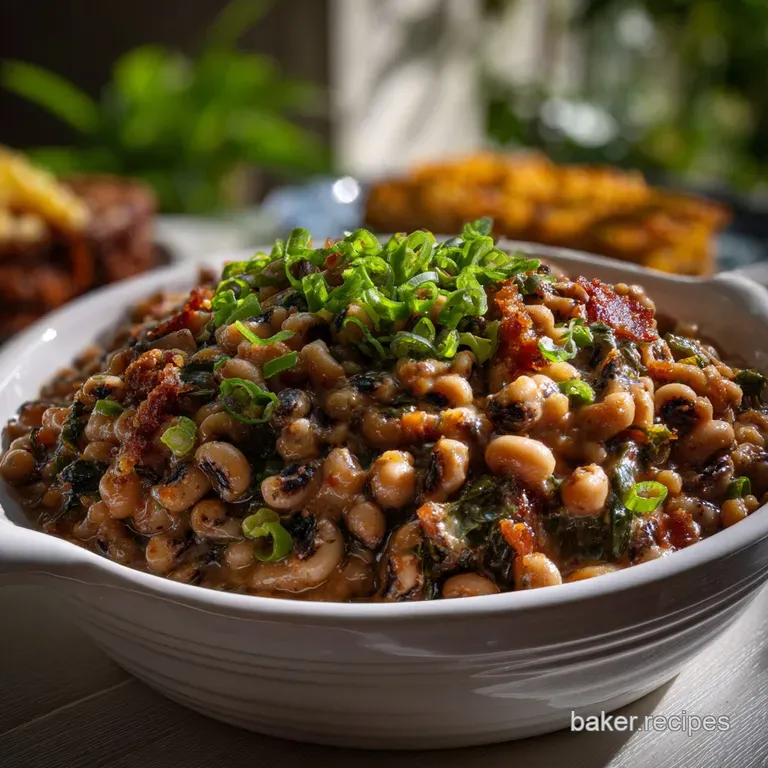
- Lodge 6 Quart Cast Iron Dutch Oven: The heavy thermal mass ensures a consistent simmer, preventing the temperature fluctuations that cause beans to rupture.
- Wooden Spatula: Necessary for scraping the fond (browned bits) from the bottom of the pot after sautéing the aromatics.
- Digital Kitchen Scale: Essential for measuring the onion (200g) and peppers (150g) to maintain the correct ratio of aromatics to legumes.
- Fine Mesh Strainer: For rinsing the eyed peas recipe components and removing debris.
step-by-step Execution for Maximum Flavor Saturation
- Rinse 1 lb dried black eyed peas under cold water to remove field dust and debris. Note: Clean beans ensure a grit free broth.
- Soak peas in 6 cups water with 1 tbsp kosher salt for 6 hours until they have doubled in size and the skins look smooth.
- Heat 2 tbsp vegetable oil in a Lodge Dutch Oven over medium heat until the oil shimmers and a faint wisp of smoke appears.
- Sauté the diced onion, bell pepper, and celery for 8 minutes until the onion edges turn translucent and the fragrance shifts from pungent to sweet.
- Stir in 4 cloves minced garlic for 1 minute until a nutty, toasted aroma fills the kitchen.
- Add 1/2 tsp smoked paprika, 1/4 tsp cayenne, and 1 tsp thyme, stirring for 30 seconds until the spices bloom and the oil turns a deep mahogany.
- Deglaze the pot with 6 cups chicken broth, using a wooden spoon to scrape up all the browned bits. Note: This fond contains the concentrated Maillard products.
- Submerge the 1 lb smoked ham hock and the soaked peas into the liquid.
- Simmer on low for 1 hour 30 mins until the peas are buttery soft and the ham hock meat begins to pull away from the bone.
- Finish by stirring in 1 tbsp apple cider vinegar and seasoning with black pepper until the flavors pop and the broth tastes bright yet savory.
Navigating Texture Failures and Flavor Imbalances
If you find that your black eyed peas recipe isn't hitting the mark, it's usually a matter of chemistry. Bean cookery is highly sensitive to mineral content and temperature.
Why are my beans still hard?
This is often caused by "hard water" minerals (calcium/magnesium) or an acidic environment created too early. If you add vinegar or tomatoes at the start, the acid reinforces the bean's cell walls, preventing them from softening. Always wait until the very end to add acids.
| Problem | Root Cause | The Fix | Pro Protocol |
|---|---|---|---|
| Hard Beans | High mineral content in water | Add 1/4 tsp baking soda | Soda increases pH, accelerating pectin breakdown. |
| Thin Broth | Insufficient starch release | Mash 1/2 cup of beans | Stirring back in mashed beans creates an instant emulsion. |
| Excess Salt | Over reduction of broth | Add a peeled potato | The potato absorbs excess sodium through osmosis. |
Flavor Architecture and Dietary Adaptations for Every Table
While the traditional southern black eyed peas recipe relies on pork, the structural integrity of the dish can be maintained through clever substitutions.
| Original Ingredient | Substitute | Why It Works |
|---|---|---|
| Smoked Ham Hock | Smoked Turkey Wing | High collagen content with a leaner profile. |
| Vegetable Oil | Bacon Drippings | Adds intense smoky fat and animal based flavor. |
| Chicken Broth | Vegetable Broth + 1 tsp Miso | Miso provides the fermented umami lost without the meat. |
If you are following a black eyed peas recipe vegetarian path, replace the ham hock with 2 teaspoons of liquid smoke and 1 tablespoon of soy sauce to replicate the depth of the smoked pork.
For those who need speed, the black eyed peas recipe instant pot version requires only 20 minutes on high pressure, though you sacrifice some of the collagen breakdown found in the slow simmered black eyed peas recipe crock pot method.
Preserving Structural Integrity During Cooling and Thermal Recovery
Storing this eyed peas recipe correctly is vital because the flavors actually improve over 24 hours as the starches and proteins continue to meld.
- Fridge: Store in an airtight container for up to 5 days. The liquid will turn to a gel (thanks to the ham hock's gelatin); this is a sign of a perfect braise.
- Freeze: These freeze beautifully for 3 months. Leave 1 inch of headspace in your container to allow for liquid expansion.
- Reheating: Use a low heat on the stovetop. If the broth is too thick, add 1/4 cup of water to restore the velvety consistency.
⚗️ The Scaling Lab
When doubling this black eyed peas recipe, physics dictates that you cannot simply double everything.
- The Evaporation Paradox: In a larger pot, the surface area to volume ratio changes. If you double the recipe, reduce the added chicken broth by 15% (use approx 10 cups instead of 12) to avoid a watery finish.
- Flavor Saturation: Spices like cayenne and smoked paprika scale non-linearly. Only use 1.5x the spices for a double batch to prevent the heat from becoming overwhelming.
- Thermal Mass: A double batch of beans takes significantly longer to reach a simmer. Do not rush this with high heat; you will scorch the bottom. Expect an additional 20 30 minutes of total cook time.
Synthesizing Side Dishes for a Complete Southern Experience
This black eyed peas recipe is the soul of the plate, but it needs texture and sweetness for balance. A thick slice of honey buttered cornbread is the classic choice for mopping up that collagen rich pot liquor. If you're hosting a large gathering, this savory dish pairs surprisingly well with a sweet, nostalgic finish like an Old Fashioned Pink recipe for the kids, or perhaps some Peanut Butter Cookies recipe to round out the meal.
Common Myths
- Myth: You must soak beans overnight.
- Truth: A "Quick Soak" (boil for 2 mins, sit for 1 hour) works just as well by jump starting the hydration of the starch granules.
- Myth: Salt makes beans tough.
- Truth: Salting the soaking water actually softens the skins via ion exchange, leading to a much creamier result.
💡 ZERO WASTE PHILOSOPHY
Don't discard that ham hock bone! Transform: Once the meat is shredded, put the bone back in a pot with water and vegetable scraps for a 4 hour simmer. Science: The residual marrow and cartilage contain deep umami and minerals that create a superior base for future soups.
Even the celery leaves should be finely chopped and used as a garnish they contain a concentrated "celery" flavor that balances the heavy fats of the black eyed peas recipe.
This dish is a testament to the fact that when you respect the science of the ingredients, the results are nothing short of transformative. Whether it's for a lucky New Year’s Cinnamon Rolls recipe brunch or a quiet Monday night black eyed peas recipe dinner, this method ensures a bowl of perfection every time. Let's crack on and get that pot simmering!

Recipe FAQs
how to make black eyed peas?
Rinse, soak for 6 hours, then simmer slowly with smoked meat and aromatics until creamy. Proper soaking ensures even hydration and starch release, leading to the desired velvety texture instead of a chalky interior.
how to make black eyed peas taste good?
Use smoked pork, sauté the trinity, and finish with acid. The Maillard reaction during the aromatic sauté builds foundational savory notes, while a final splash of vinegar brightens the heavy legume flavor profile.
how to make black eyed peas in a crock pot?
Sauté aromatics first, then transfer all ingredients to the slow cooker for 6-8 hours on low. For a hands off result similar to the traditional braise, investigate our Slow cooker recipe: Pub Classic Beef Ale Stew (Easy Tender); the low-and-slow collagen breakdown technique is analogous.
how to make black eyed peas in instant pot?
Pressure cook soaked peas for 20 minutes on high, followed by a natural pressure release (NPR). Rushing the depressurization causes skin rupture; mastering gradual temperature changes is key to texture control, a principle used in Chicken Stew Recipe: Classic Hearty Comfort Food for Sunday Supper to preserve meat tenderness.
how to make black eyed peas and rice?
Cook peas until fully tender, then stir in 1 cup pre-cooked long grain white rice during the last 10 minutes. Cooking the rice separately prevents it from absorbing too much broth and becoming mushy when mixed with the slow cooked beans.
Can I skip soaking black eyed peas?
Myth: You can skip soaking if you cook them longer. While technically possible, the result is inconsistent texture, often leading to tough centers and burst skins due to uncontrolled internal water absorption.
What liquid is best for black eyed peas?
Chicken or vegetable broth yields richer flavor than plain water. Broth introduces foundational proteins and minerals that contribute to the final viscosity and depth, unlike water which only dilutes the other aromatics.
Velvety Black Eyed Peas Masterclass
Ingredients:
Instructions:
Nutrition Facts:
| Calories | 304 kcal |
|---|---|
| Protein | 20 g |
| Fat | 7 g |
| Carbs | 37 g |
| Fiber | 6 g |
| Sugar | 3 g |
| Sodium | 942 mg |
