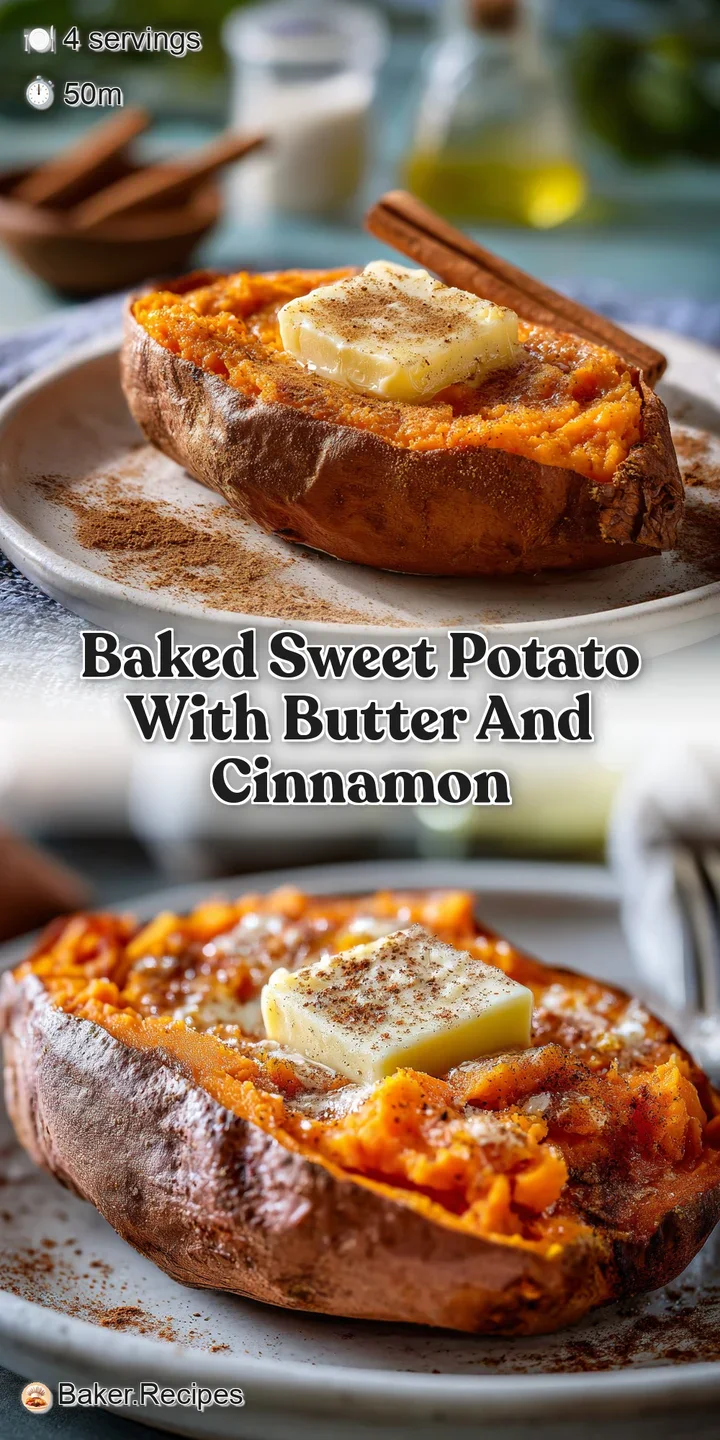
Baked Sweet Potato with Butter and Cinnamon
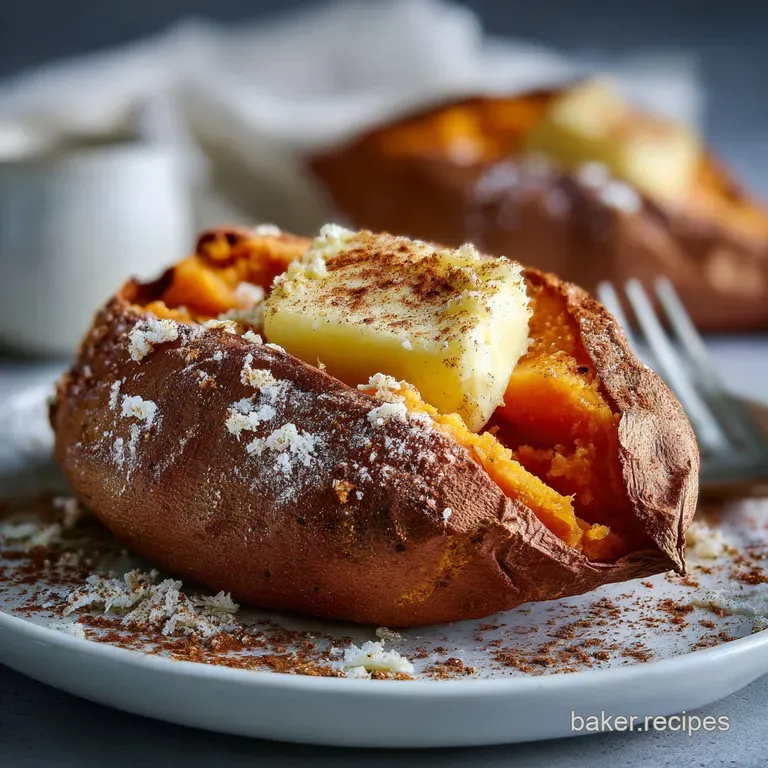
- Time: Active 5 minutes, Passive 45 minutes, Total 50 minutes
- Flavor/Texture Hook: Velvety interior with a warm, spiced finish
- Perfect for: Budget-friendly weeknight sides or cozy autumn dinners
- Perfect Your Baked Sweet Potato with Butter and Cinnamon
- The Science Behind Perfect Results
- Essential Specs for Kitchen Success
- The Best Ingredients for Flavor
- Minimal Gear for Better Results
- Simple Steps for Great Potatoes
- Fixing Common Kitchen Cooking Mistakes
- Easy Ways to Swap Ingredients
- Myths About Baked Sweet Potatoes
- Tips for Storage and Waste
- Recipe FAQs
- 📝 Recipe Card
Perfect Your Baked Sweet Potato with Butter and Cinnamon
There is something hypnotic about the sizzle of a sweet potato when it first hits the cooling rack. I remember the first time I actually nailed this. I used to just toss them in the oven and hope for the best, usually ending up with something lukewarm and depressing.
But when you get that specific aroma of toasted nutmeg and smoldering sugar wafting through the kitchen, you know you've moved past basic cooking into something special.
This baked sweet potato recipe with butter and cinnamon will become your new favorite side dish because it treats a cheap ingredient like a total star. We aren't just heating things up here. We are leaning into the chemistry of the potato to make it naturally sweeter without needing a pound of extra sugar.
It's about that contrast between the salty, crisp skin and the molten, orange center.
Right then, let's get into why this method actually works. I've spent plenty of nights pulling "meh" potatoes out of the oven, and I finally figured out that the secret isn't just the temperature, but how you prep the skin.
If you've ever struggled with a potato that was hard in the middle or soggy on the outside, we are going to fix that today. Trust me, once you try this spiced butter blend, you'll never go back to the plain version.
The Science Behind Perfect Results
How Heat Transforms Simple Starches
Enzymatic Conversion: When the potato hits a specific temperature range (between 57°C and 75°C), amylase enzymes break down complex starches into maltose. This naturally increases the sweetness of the flesh before the oven even gets to the caramelization stage.
Maillard Reaction: The combination of olive oil and high heat on the skin creates that savory, browned flavor profile. This creates a flavor bridge between the salty exterior and the sugary interior.
Vapor Pressure Management: Pricking the skin allows steam to escape at a controlled rate. Without this, the internal pressure builds up, leading to a gummy texture rather than a light, fluffy one.
| Method | Time | Texture | Best For |
|---|---|---|---|
| Oven Roast | 45 minutes | Shatter crisp skin, fluffy | Ultimate flavor and texture |
| Stovetop (Pan Sear) | 25 minutes | Crispy edges, firmer | Quick chunks or rounds |
| Microwave | 8 minutes | Soft skin, steaming | Emergency hunger / zero time |
Essential Specs for Kitchen Success
When we talk about the technical side of this potato recipe with butter and cinnamon, consistency is everything. You want potatoes that are roughly the same size about 300g each so they finish at the exact same time.
If you have one giant potato and one tiny one, you're going to end up with one burnt rock and one raw brick.
The temperature is also a non negotiable factor. We are aiming for 200°C because it's the "sweet spot" where the skin crisps up before the inside dries out. I've tried doing these at lower temps for longer, but the skin never gets that satisfying crunch. You need that initial blast of heat to set the texture. It’s a bit like the technique I use in my How to Make recipe for baked brie, where the temperature makes or breaks the gooey center.
| Ingredient | Science Role | Pro Secret |
|---|---|---|
| Sweet Potato | Main Carbohydrate | Choose "Garnet" or "Jewel" for high moisture and sugar |
| Extra Virgin Olive Oil | Heat Conductor | Rub it in until the skin looks like polished mahogany |
| Ceylon Cinnamon | Aromatic Layer | More complex and less "spicy" than standard Cassia |
| Unsalted Butter | Fat Emulsifier | Use room temp butter to ensure it melts instantly into the flesh |
The Best Ingredients for Flavor
For the base of this dish, we are keeping it incredibly simple but high-quality. You'll need 4 medium large sweet potatoes, each weighing roughly 300g. Look for skins that are smooth and free of soft spots or "eyes" starting to sprout.
We’ll also use 1 tbsp extra virgin olive oil and 0.5 tsp coarse sea salt just for the roasting phase.
The signature topping is where the magic happens. You’ll want 4 tbsp of unsalted butter, softened to room temperature so it mixes easily. For the sweetness, 1 tbsp light brown sugar is perfect it has that touch of molasses that white sugar lacks.
Then we hit it with 1 tsp ground Ceylon cinnamon and 0.25 tsp ground nutmeg. Finally, a pinch of flaky sea salt on top right before serving makes the flavors pop.
| Original Ingredient | Substitute | Why It Works |
|---|---|---|
| Unsalted Butter | Coconut Oil | Solid at room temp; adds a tropical, nutty undertone |
| Light Brown Sugar | Maple Syrup | Liquid sweetener that adds a woody, autumnal depth |
| Ceylon Cinnamon | Ground Allspice | Note: Much stronger flavor; use only half the amount |
Minimal Gear for Better Results
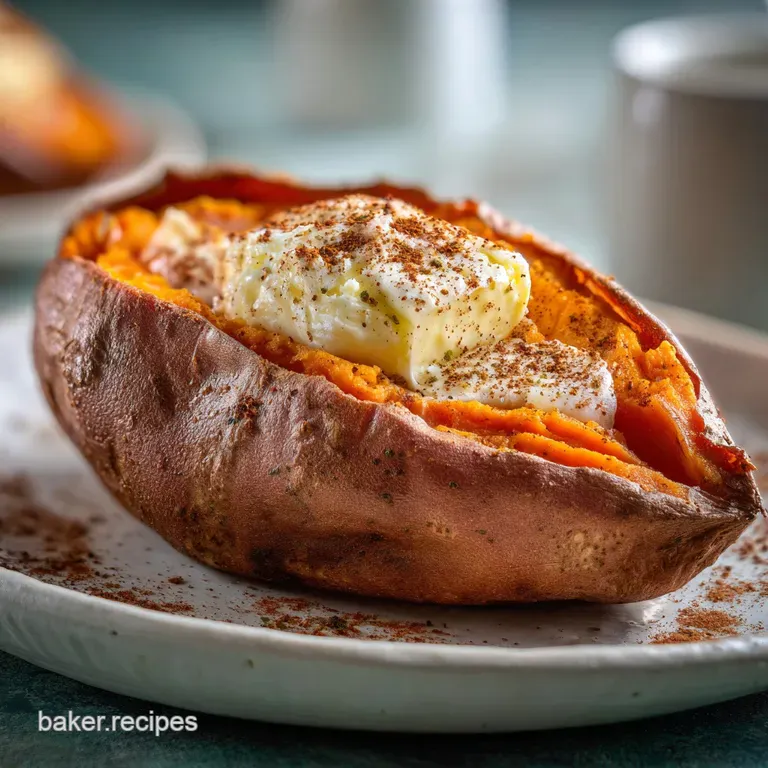
You don't need a pantry full of gadgets for this. A standard baking sheet is your best friend here. I prefer a rimmed one just in case any natural sugars leak out and caramelize it saves your oven floor from a smoky mess.
You’ll also want some parchment paper or a silicone mat for easy cleanup, though roasting directly on the tray can lead to slightly crispier bottoms if you're brave.
A sturdy fork is essential for pricking the potatoes, and a small mixing bowl is all you need for the butter and cinnamon blend. If you have a wire cooling rack, that’s a "pro move" gear item.
Placing the potatoes on the rack on top of the baking sheet allows hot air to circulate under the potato, meaning you don't even have to flip them halfway through.
Simple Steps for Great Potatoes
- Preheat the oven. Set your rack to the middle position and crank the heat to 200°C. Note: A hot oven from the start is the only way to get that skin to shatter.
- Scrub the potatoes. Wash your 4 sweet potatoes under cold water to remove any grit. Dry them completely with a towel. Any leftover moisture will steam the skin instead of crisping it.
- Vent the steam. Take a fork and prick each potato about 6-8 times, going about a centimeter deep. Note: This prevents the potato from "exploding" or becoming gummy inside.
- Oil and salt. Rub 1 tbsp extra virgin olive oil all over the skins, then sprinkle with 0.5 tsp coarse sea salt.
- Roast the potatoes. Place them on your tray and bake for 45 minutes until the skin is slightly puffed and the center feels soft when squeezed.
- Mix the topping. While the potatoes roast, combine 4 tbsp softened butter, 1 tbsp light brown sugar, 1 tsp Ceylon cinnamon, and 0.25 tsp nutmeg in a small bowl. Use a fork to cream them together until smooth.
- The "Fluff" technique. Once the potatoes are done, remove them from the oven. Let them sit for 2 minutes, then slit them down the center. Use a fork to gently mash the orange flesh inside the skin.
- Add the infusion. Divide the cinnamon butter among the 4 potatoes, letting it melt into the nooks and crannies.
- Finish and serve. Top with a tiny pinch of flaky sea salt. Serve immediately while the butter is still bubbling.
Fixing Common Kitchen Cooking Mistakes
Why Your Potato Still Hard in the Center
If you pull your potato out and it’s still firm, the culprit is usually the starting temperature of the potato itself. If you keep your potatoes in a very cold cellar or fridge (which you shouldn't!), they take much longer to reach the core temperature. Another reason is simply size.
A very round, bulbous potato takes longer to cook than a long, slender one.
Why the Skin is Soggy Instead of Crispy
Soggy skin usually happens because of two things: overcrowding or wrapping. Never wrap your potatoes in foil if you want a potato recipe with butter and cinnamon that actually has texture. Foil traps steam and boils the potato in its own juices.
Also, if you're cooking ten potatoes on one small tray, the moisture escaping from them creates a humid environment that kills the crunch.
| Problem | Root Cause | Solution |
|---|---|---|
| Gummy Interior | Under venting steam | Prick the potato deeper and more frequently |
| Burnt Bottoms | Direct contact with hot metal | Use a wire rack or flip the potato halfway through |
| Bitter Topping | Using old or cheap cinnamon | Switch to Ceylon cinnamon for a sweeter profile |
Common Mistakes Checklist
- ✓ Never wrap the potatoes in aluminum foil (it steams the skin).
- ✓ Ensure the potatoes are bone dry after washing before applying oil.
- ✓ Don't skip the salt on the skin; it helps draw out moisture for extra crunch.
- ✓ Wait 2 minutes after roasting before slicing to let the internal steam stabilize.
- ✓ Use room temperature butter so it doesn't instantly chill the hot potato.
Easy Ways to Swap Ingredients
Scaling this recipe is straightforward because sweet potatoes are very forgiving. If you're cooking for a crowd, you can easily double the recipe to 8 potatoes. Just make sure you use two separate baking sheets so the air can still circulate.
For the butter and cinnamon blend, you don't actually need to double the spices linearly start with 1.5x the spices and taste it. Sometimes full doubling makes the nutmeg a bit overwhelming.
If you are scaling down for a solo lunch, you can actually use a toaster oven. It’s more efficient than heating a large oven for one potato. Just keep an eye on it, as the heating elements are closer to the food and might brown the skin faster than a conventional oven. This reminds me of how I adjust the portioning when I'm using the The Fluffy Homemade recipe for cinnamon buns sometimes a smaller batch just feels more manageable.
| Premium | Budget | Flavor Impact | Savings |
|---|---|---|---|
| Manuka Honey | Light Brown Sugar | Sugar is more "caramel," honey is more floral | Save ~$15 |
| Grass fed Butter | Store Brand Butter | Grass fed is richer/yellow; store brand is neutral | Save ~$3 |
| Fresh Grated Nutmeg | Pre ground Nutmeg | Fresh is much more vibrant and woody | Save ~$4 |
Myths About Baked Sweet Potatoes
One of the biggest myths is that you need to soak sweet potatoes in water to get them soft. That’s actually for fries! For a whole baked potato, soaking just adds unnecessary moisture that will prevent the skin from crisping. You want the exterior as dry as possible before it goes into the heat.
Another common misconception is that "yams" and sweet potatoes are the same thing. In most North American grocery stores, what's labeled as a "yam" is actually just a soft variety sweet potato with orange flesh. Real yams are starchy, bark like tubers from Africa or Asia.
For this recipe with butter and cinnamon, you specifically want the orange fleshed sweet potato often labeled as Jewel or Garnet.
Tips for Storage and Waste
Storage: You can keep these in the fridge for up to 4 days. I recommend storing the roasted potato and the cinnamon butter separately if possible. To reheat, avoid the microwave if you can.
Putting the potato back in a 190°C oven for 10 minutes will help revive that skin texture. If you must use a microwave, just know the skin will stay soft.
Zero Waste: Don't you dare throw away those skins! If you find yourself with leftover potato flesh for another recipe, you can take the empty skins, brush them with a little more butter and cinnamon, and pop them under the broiler for 2 minutes.
They become "sweet potato skin chips" which are honestly a top tier snack. You can also dice up leftover roasted potatoes and toss them into a morning hash with some salty bacon to balance the sweet cinnamon notes.
This dish is the ultimate proof that you don't need a massive budget to eat like royalty. If you're looking for something sweet to follow this up, you might enjoy my How to Bake recipe for peach bundt cake, which uses a similar brown butter logic. But for now, just enjoy that first, steaming bite of your perfectly baked sweet potato. It’s simple, it’s modern, and it works every single time.
Recipe FAQs
Is cinnamon good on sweet potatoes?
Yes, cinnamon is excellent on sweet potatoes. Its warm, aromatic flavor perfectly complements the natural sweetness of the caramelized starches.
Why do you have to soak sweet potatoes before baking?
No, you should never soak sweet potatoes before baking whole. Soaking adds unnecessary surface moisture, which will steam the skin instead of crisping it in the oven.
What enhances the flavor of sweet potatoes?
high-quality salt, butter, and high heat roasting enhance the flavor profile. The salt on the skin balances the interior sweetness, while the heat activates the natural sugars through enzymatic conversion.
How much brown sugar and cinnamon for sweet potatoes?
Use 1 tablespoon of light brown sugar and 1 teaspoon of Ceylon cinnamon per four medium potatoes. This ratio provides warmth without overpowering the potato's natural flavor.
Is it true you must use aluminum foil when baking sweet potatoes?
No, wrapping potatoes in foil is strongly discouraged for this recipe. Foil traps steam, leading to a soft, steamed skin rather than the desired crispy exterior.
What is the best way to ensure a fluffy inside texture?
Prick the skin thoroughly and let the potatoes rest for two minutes post bake before slicing. Pricking releases internal steam; resting stabilizes the internal structure, ensuring the flesh is light and not gummy. If you mastered the texture control here, you'll see similar principles applied when working with dough in our Mm Christmas Cookie recipe.
How do I prevent the butter topping from making the flesh cool down too fast?
Ensure your butter is fully softened to room temperature before mixing it with the sugar and spice. Cold butter will instantly chill the hot potato flesh when inserted, halting the enjoyable textural contrast.
Baked Sweet Potato Butter Cinnamon
Ingredients:
Instructions:
Nutrition Facts:
| Calories | 400 kcal |
|---|---|
| Protein | 4.9 g |
| Fat | 15.1 g |
| Carbs | 62.9 g |
| Fiber | 9.1 g |
| Sugar | 15.5 g |
| Sodium | 290 mg |
