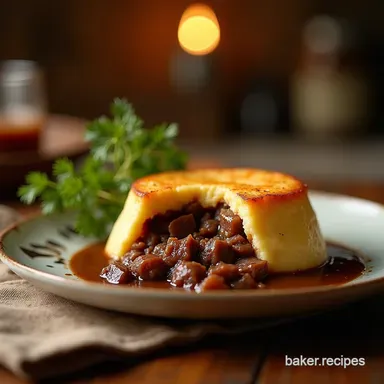
Hearty Beef Suet Pudding: Slow-Steamed

- Servings6
- Total5 Hrs 31 Mins
- Calories744 kcal
- Time: 1 h active + 3 h 31 min cooking + 1 h resting
- Flavor & Texture: Rich, savory beef with a soft, steamed pastry
- Perfect for: Cold rainy nights or a comforting Sunday dinner
Beef Suet Pudding
Nothing ruins a slow-steamed dinner like a gummy, translucent crust that feels like wet cardboard. It usually happens when the filling is too hot when it hits the pastry, melting the fat before the steam can do its work.
This version fixes that by emphasizing a complete cool down period for the beef. You get a clean, soft rise in the crust and a thick, glossy gravy that stays put.
It's a proper British comfort classic. You'll find it's less about fancy techniques and more about patience, especially during that long steam in the pot.
Recipe Specs
| Detail | Value |
|---|---|
| Servings | 6 |
| Prep Time | 60 minutes |
| Cook Time | 210 minutes |
| Total Time | 5 hours 30 mins |
Gathering Your Essentials
| Ingredient | What It Does | Best Swap |
|---|---|---|
| Beef Chuck | Provides deep flavor and stays tender | Stewing beef (similar result) |
| Beef Suet | Creates the soft, steamed lift | Vegetarian suet (1:1 swap) |
| Balsamic Vinegar | Adds acidity and darkens the gravy | Red wine vinegar (start with 1 tsp) |
| Cornstarch | Thickens the sauce into a glaze | Arrowroot powder (slightly less thick) |
For the Beef Filling
- 1½ lbs beef chuck, cut into ½-inch cubes Why this? High collagen makes the meat tender after simmering
- 2 tbsp olive oil
- 1 large onion, finely diced
- 2 medium carrots, diced
- 2 cloves garlic, minced
- 2 cups low-sodium beef broth
- 1 tbsp balsamic vinegar Why this? Adds a tang that cuts through the fat
- 1 tsp salt
- ½ tsp black pepper
- 1 tbsp cornstarch
- 1 tbsp water
For the Suet Crust
- 2 cups all-purpose flour
- 6 oz shredded beef suet (Halal certified) Why this? Essential for the traditional steamed texture
- ½ tsp salt
- ¾ cup ice cold water
Tools You Need
A specialized steamer isn't necessary. A large, heavy-bottomed pot with a tight lid works perfectly. You'll also need a 1.5-quart pudding basin, which is a heat-resistant ceramic or glass bowl. If you don't own one, a durable, heat-proof glass bowl will work just as well.
Cooking step by step
Searing the Beef
Warm 2 tbsp olive oil in a frying pan over medium-high heat. Brown the 1½ lbs cubed beef chuck in batches until a deep brown crust develops, then remove and set aside. Avoid overcrowding the pan to ensure the meat sears rather than boiling in its own juices.

Simmering the Filling
In the same pan, sauté the diced onion and 2 diced carrots until tender. Stir in 2 minced garlic cloves for 1 minute. Return the browned beef to the pan and add 2 cups low-sodium beef broth and 1 tbsp balsamic vinegar. Lower the heat, cover, and simmer for 90 minutes.
The beef is ready when it is tender and reaches a core temperature of 160°F (71°C).
Mix 1 tbsp cornstarch and 1 tbsp water until smooth. Whisk this mixture into the beef and simmer for 2 more minutes until the gravy is thick and glossy. Transfer the filling to a container and let it cool completely; this is essential to prevent a soggy base.

Preparing the Suet Crust
In a large bowl, combine 2 cups all-purpose flour, 6 oz shredded beef suet, and ½ tsp salt. Slowly stir in ¾ cup ice-cold water with a knife or fork. Mix only until a soft, tacky dough forms. Do not overwork the dough, or the crust will become tough.

Assembling the Pudding
Butter a 1.5-quart pudding basin thoroughly. Roll out two-thirds of the dough and line the bottom and sides, leaving a one-inch overhang. Pour in the cooled beef filling. Roll the remaining dough for the lid, place it on top, and pinch the edges together to seal it tightly.

Steaming to Perfection
Set the basin in a large pot. Pour in boiling water until it reaches halfway up the side of the basin. Cover with a tight-fitting lid and steam on low heat for 2 hours. Carefully lift the basin out and flip it onto a warm platter.
When It Does Not Turn Out
The most common issue is a "wet" or gummy crust. This usually means the seal wasn't tight enough, letting water leak in, or the filling was too hot during assembly. If the gravy is too thin, it usually means the slurry didn't simmer long enough to activate.
Fixing a Gummy Crust
If the crust feels tacky or undercooked, you can pop the pudding under a broiler for 3-5 minutes to crisp the top, though this changes the traditional steamed texture.
Managing Thin Gravy
If the filling is runny after steaming, you can't easily fix it inside the crust. Next time, ensure the gravy is thick enough to coat a spoon before it goes into the pastry.
| Problem | Root Cause | Solution |
|---|---|---|
| Gummy base | Filling was hot when added | Cool filling to room temp first |
| Watery crust | Seal was not tight | Pinch edges firmly; check lid fit |
| Tough pastry | Over-mixed the dough | Mix until just combined |
| Beef is chewy | Simmered for too short | Increase simmer time by 20 mins |
Swapping Ingredients
If you want to change the flavor profile, you can add a handful of diced mushrooms to the sauté step. For a deeper, more savory base, I like adding a teaspoon of the umami bomb marinade when searing the beef.
For those avoiding beef suet, vegetarian suet is a direct 1:1 replacement. It provides the same lift and texture without the animal fat.
| Original Ingredient | Substitute | Why It Works |
|---|---|---|
| Beef Chuck | Venison or Lamb | Similar lean to fat ratio; adds gamey notes |
| All-Purpose Flour | gluten-free Blend | Works if the blend contains xanthan gum |
| Beef Broth | Mushroom Stock | Provides deep color and savory flavor |
Storing Your Pudding
Keep sliced pudding in an airtight container in the fridge for a maximum of 3 days. This dish is very freezer-friendly. Wrap the steamed and cooled pudding in foil and store it in the freezer for 3 months.
To reheat, steam the pudding until the center of the filling reaches 165°F (74°C) on a thermometer. Alternatively, cover it with foil and warm it in an oven set to 325°F (160°C) until the center of the filling reaches 165°F (74°C) on a thermometer.
Serving Suggestions

Because this is such a rich dish, it benefits from some brightness to balance the flavors. It pairs wonderfully with steamed cabbage, buttered peas, or mashed potatoes. To cut through the density of the suet, consider adding horseradish cream or a fresh garden salad with a citrusy dressing.
Why the Steps Matter
The Slow Steam: Utilizing moist heat prevents the suet from frying the flour, ensuring a soft, pudding-style crumb instead of a flaky pie texture.
The Cooling Phase: Cooling the filling stops the pastry fats from melting too soon, which allows steam to create the air pockets needed for a proper lift.
Searing in Batches: Browning the beef in small quantities maintains a high pan temperature, producing a rich sear that adds complexity to the gravy.
Questions Readers Ask
What is beef suet pudding?
A traditional steamed savory dish. It consists of a tender beef stew filling encased in a suet-based pastry crust and steamed for several hours until tender.
How to make beef suet pudding?
Brown the beef chuck and simmer it with vegetables and broth before encasing the cooled mixture in a suet dough. Once sealed in a basin, steam it in boiling water for 2 hours.
Does beef suet pudding taste rich?
Yes, it has a deeply savory profile. The combination of slow-cooked beef, beef broth, and suet creates a hearty, melt-in-the-mouth texture.
Can this be made in a slow cooker?
Yes, though the texture varies. A slow cooker version simplifies the simmering and steaming steps but may result in a different pastry consistency compared to traditional steaming.
Why use suet instead of butter?
Suet provides a unique, fluffy structure. This hard beef fat helps keep the pastry from collapsing or becoming greasy during the long steaming process.
How do I store leftovers?
Keep sliced pieces in a sealed box in the refrigerator. They remain fresh for up to 3 days, or you can wrap them in foil and freeze for up to 3 months.
Suet Pudding
Ingredients:
Instructions:
Keep Cooking

Savory Beef Empanada Recipe: An Argentine Classic!
Fancy a taste of Argentina? This savoury beef empanada recipe delivers flaky, flavourful pockets of…

Best All-Purpose Umami Bomb Marinade Sauce Recipe
Forget bland dinners. This easy foundational Marinade Sauce recipe uses Worcestershire and fish…

The BEST Thai Satay Sauce: My Peanut Butter Paradise
Craving authentic thai satay sauce? This Peanut Butter Paradise recipe is EASY and ready in minutes.
