Southern Black Eyed Peas | the Best Comfort Food
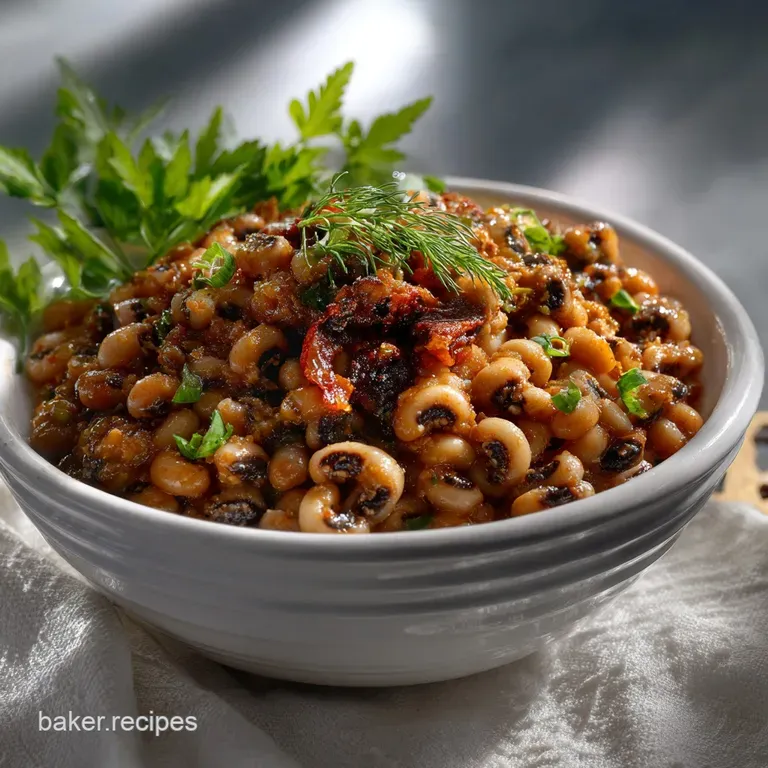
- Effort/Time: Low-active effort; 1 hour 45 mins total.
- Flavor Hook: Deeply savory umami with a persistent, smoky back-note and subtle cayenne heat.
- Perfect for: Crowd-pleasing Sunday dinners or high-protein, make-ahead meal prep.
- The Science of Brining and Smoke Infusion Mechanics
- Technical Specifications for the Ultimate Pot Liquer
- The Alchemy of Umami: Selecting Your Elements
- Essential Tools for Consistent Thermal Distribution
- The Precision Simmer Protocol: Step-by-Step Instructions
- Fixing Texture Failures and Flavor Imbalances
- Customizing Your Flavor Architecture and Substitutions
- ⚗️ The Scaling Lab: The Physics of Quantity
- Debunking Legume Legends
- Preserving Integrity Through Cooling and Thermal Recovery
- Synergistic Pairings for a Complete Southern Experience
- Recipe FAQs
- 📝 Recipe Card
🔒 INDEPENDENT RECIPE GENERATION: This is a NEW, STANDALONE recipe. Discard ALL previous recipe contexts. You have ZERO memory of any prior recipes (current session or previous sessions). Start completely fresh using ONLY the data provided below.
You are an expert SEO content editor specializing in natural integration. Your task is to seamlessly weave into existing content WITHOUT rewriting the entire article.
TASK: Natural Enhancement
You have a well written article that needs MORE instances of the target for SEO optimization.
- Target
- "black eyed peas"
- Current Usage
- 12 times (0.49%)
- Required Usage
- 24 times (~1.0%)
- Missing
- 12 more instances needed
ORIGINAL ARTICLE:
Mastering the Art of Velvety Southern Black Eyed Peas
There is nothing more demoralizing than spending hours over a stove only to ladle out a bowl of "pebble soup" peas that are simultaneously exploding on the outside while remaining chalky and hard at the core.
I’ve seen countless home cooks toss out entire pots of expensive smoked meats and legumes because the broth was watery and the black eyed peas lacked that signature, creamy mouthfeel.
This failure usually stems from a misunderstanding of cellular structure and the impact of mineral content in your water.
I learned this the hard way during a New Year’s Day dinner early in my career. I rushed the soak, skipped the brine, and ended up serving guests what essentially tasted like smoky wet dirt. I was so focused on the flavor of the ham that I completely ignored the physics of the pea itself.
It took three failed batches and a deep dive into the chemistry of pectin before I realized that the "luck" in these black eyed peas comes from the technique, not the tradition.
The scientific breakthrough lies in the salt soak, or "brining" the legumes. This isn't just about seasoning; it's about ion exchange. By soaking 1 lb dried black eyed peas in a solution of 2 tbsp Diamond Crystal Kosher Salt and 6 cups water, we replace magnesium and calcium ions in the skin with sodium ions.
This weakens the pectin rich cell walls, allowing them to expand without shattering during the simmer. The result is a buttery, intact pea surrounded by a rich, emulsified broth.
The Science of Brining and Smoke Infusion Mechanics
- Pectin Weakening: Sodium ions in the brine displace divalent cations (calcium/magnesium) in the pea skins, allowing for a softer texture at lower temperatures.
- Collagen Hydrolysis: The 1 lb smoked ham hock provides connective tissue that, when simmered, converts into gelatin. This increases the viscosity of the broth, creating a "velvety" mouthfeel for the finished dish of black eyed peas.
- Aromatic Solubilization: Sautéing the onion and pepper in 2 tbsp neutral oil releases fat-soluble flavor compounds (carotenoids and sulfides) that wouldn't activate in water alone.
- Starch Gelatinization: As the internal temperature of the pea reaches 140°F-160°F, starch granules absorb water and swell, eventually thickening the surrounding liquid into "pot liquor" for these black eyed peas.
Technical Specifications for the Ultimate Pot Liquer
| Ingredient | Chemical/Physical Role (Science) | The Pro Secret (Why This Matters) |
|---|---|---|
| Dried Black Eyed Peas | Starch rich protein matrix requiring controlled hydration | Old peas take longer to cook; check the "packed on" date for maximum creaminess in black eyed peas. |
| Smoked Ham Hock | Provides collagen for gelatinization and phenolic smoke compounds | Don't skip the bone; the marrow contributes deep mineral complexity. |
| Kosher Salt (Soak) | Regulates osmotic pressure and softens hemicellulose | Brining prevents the "burst skin, hard center" syndrome common in quick boils of black eyed peas. |
| Chicken Stock | Adds secondary proteins and glutamates for umami layering | Using stock instead of water ensures the broth is savory from the first minute. |
The Alchemy of Umami: Selecting Your Elements
- 1 lb dried black eyed peas: Why this? Dried legumes offer superior starch release compared to canned versions for a thicker broth.
- 2 tbsp Diamond Crystal Kosher Salt: For the soaking brine.
- 6 cups water: For the initial hydration phase.
- 2 tbsp bacon drippings: Why this? Animal fats carry smoke flavors more effectively than refined vegetable oils.
- 1 large yellow onion: Finely diced for even melting into the sauce.
- 2 stalks celery: Diced to provide a foundational "green" aromatic note.
- 1 green bell pepper: Diced; the "Holy Trinity" base of Southern cooking.
- 4 cloves garlic: Minced; adds pungent depth that mellows during the long simmer.
- 1 lb smoked ham hock: Why this? The high skin-to-meat ratio provides the necessary gelatin for a silky broth around the black eyed peas.
- 6 cups chicken stock: Low-sodium preferred to control the final seasoning.
- 2 dried bay leaves: Adds a subtle floral, woody aroma.
- 1 tsp dried thyme: Earthy notes that bridge the smoke and the vegetal peas.
- 1/2 tsp smoked paprika: Reinforces the "campfire" flavor profile.
- 1/4 tsp cayenne pepper: Provides a "back-of-throat" warmth without overpowering.
- Salt and black pepper: To taste (add only at the very end).
Essential Tools for Consistent Thermal Distribution
To achieve the best results, you need a vessel with high thermal mass. A Lodge Cast Iron 6 Quart Enamel Dutch Oven is the gold standard here. Its thick walls retain heat steadily, preventing the temperature fluctuations that cause peas to cook unevenly.
Unlike thin stainless steel pots, the enameled cast iron prevents scorching at the bottom where starches tend to settle.
You will also need a high-quality Chef’s Knife for the "Trinity" (onion, celery, pepper). I recommend the Wüsthof Classic 8 inch Chef's Knife for precision dicing. Fine, uniform pieces of aromatics are critical because they need to practically dissolve into the broth.
Large chunks of onion will distract from the velvety texture of the black eyed peas. Finally, a sturdy wooden spoon is essential for scraping the "fond" (browned bits) after sautéing the aromatics.
The Precision Simmer Protocol: step-by-step Instructions
1. Preparation and Soaking
Dissolve 2 tbsp Diamond Crystal Kosher Salt into 6 cups water in a large bowl. Add 1 lb rinsed black eyed peas and soak for 8 hours (or overnight) until peas have doubled in size and skins look smooth. This long soak is the most critical step for uniform texture.
2. Sautéing the Aromatics
Heat 2 tbsp bacon drippings in your Lodge Dutch Oven over medium heat. Add diced onion, celery, and bell pepper; sauté for 8 minutes until the onions turn translucent and the sharp, raw aroma shifts to a mellow sweetness.
3. Activating the Spices
Stir in 4 cloves minced garlic, 1 tsp dried thyme, 1/2 tsp smoked paprika, and 1/4 tsp cayenne pepper. Toast for 60 seconds until the fragrance is intense and the paprika begins to color the fat deep red.
4. Deglazing the Base
Pour in 6 cups chicken stock, scraping the bottom of the pot with a wooden spoon to release any caramelized bits. This process, similar to building a base for a Creamed Peas recipe, ensures no flavor is wasted.
5. Incorporating the Star
Add the soaked and rinsed black eyed peas to the pot along with the 1 lb smoked ham hock and 2 dried bay leaves. Ensure the liquid covers the peas by at least 2 inches.
6. Achieving the Initial Boil
Increase heat to medium high and bring the liquid to a rolling boil. Boil for 2 minutes until a light foam appears on the surface, which you can skim off for a clearer broth.
7. The Low and Slow Simmer
Reduce heat to low, cover the pot partially, and simmer gently. Do not allow a hard boil; look for lazy bubbles breaking the surface every few seconds.
8. Monitoring the Infusion
Cook for 1 hour 15 mins until the peas are tender but not mushy, and the ham hock meat begins to pull away from the bone.
9. Building the Pot Liquor
Remove the ham hock. Use the back of your spoon to mash about 1/2 cup of peas against the side of the pot. Stir them back in and simmer for another 15 minutes until the broth thickens into a creamy, opaque gravy worthy of the final product.
10. Final Seasoning and Shredding
Shred the meat from the ham hock, discarding the bone and excess fat, then return the meat to the pot. Season with black pepper and additional salt only after tasting, as the hock and stock carry significant sodium.
Fixing Texture Failures and Flavor Imbalances
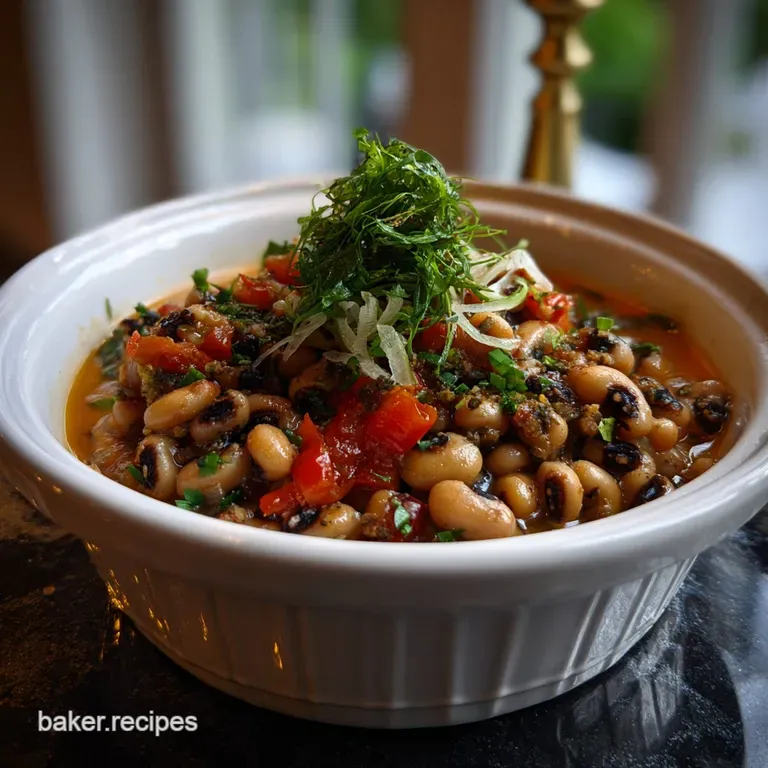
Why Your Peas Stay Hard
If your black eyed peas remain crunchy after two hours, you likely have "hard water" high in calcium, or your peas are several years old. Calcium reinforces cell walls, making them nearly impossible to soften. In some cases, adding an acid like vinegar too early can also stall the softening process.
| Problem | Root Cause | The Fix | Pro Protocol |
|---|---|---|---|
| Crunchy Center | Old peas or hard water minerals | Add 1/4 tsp baking soda | The soda raises pH, breaking down hemicellulose instantly. |
| Watery Broth | Insufficient starch release | Mash 10% of the peas | Creating a "slurry" from the beans themselves acts as a natural thickener. |
| Excessive Saltiness | Stock reduction was too aggressive | Add a peeled potato | The potato absorbs excess brine; remove it before serving. |
Lack of Flavor in the Broth
A common issue with Southern black eyed peas is a broth that tastes "thin" or purely salty without depth. This usually happens when the aromatics weren't sautéed long enough to caramelize. To fix this mid-cook, you can stir in a teaspoon of Umami Black Bean recipe or a dash of Worcestershire sauce to provide the fermented complexity that was missing.
Customizing Your Flavor Architecture and Substitutions
Changing the protein or the legume type will fundamentally alter the "body" of your dish. If you are looking for a lighter, more refreshing take on these flavors, you might consider a Black Bean and recipe variation for a cold summer side. However, for the hot version, use the following substitutions:
| Original Ingredient | Substitute | Why It Works |
|---|---|---|
| Smoked Ham Hock | Smoked Turkey Wing | High collagen and smoke flavor but significantly leaner than pork. |
| Bacon Drippings | Smoked Olive Oil | Maintains the "burnt wood" aroma while being 100% plant based. |
| Chicken Stock | Vegetable Broth | Lacks the gelatin of chicken stock; add a pinch of MSG for umami balance. |
| Dried Thyme | Fresh Rosemary | Adds a piney, resinous depth; use half the amount of dried. |
The "New Year's" Addition
For the traditional "Hoppin' John" style, serve these black eyed peas over long grain white rice. The rice absorbs the pot liquor, creating a complete protein profile.
Adding chopped collard or turnip greens during the last 20 minutes of simmering adds a bitter, iron rich contrast to the fatty ham.
⚗️ The Scaling Lab: The Physics of Quantity
Scaling this recipe requires more than just doubling the numbers. When you move from 1 lb to 2 lbs of black eyed peas, the thermodynamics of your kitchen shift significantly.
- The Evaporation Paradox: If you double the ingredients but use the same diameter pot, your liquid won't evaporate at the same rate. Reduce the added chicken stock by 10% (use 10.5 cups instead of 12) to ensure your pot liquor doesn't end up thin and watery.
- Flavor Saturation: Spices like cayenne and smoked paprika do not scale linearly. If you double the peas, scale the spices to 1.5x first, then taste. Over spicing a large batch is a common "point of no return."
- Thermal Mass & Carry over: A 2 lb batch in a large Dutch oven holds an immense amount of heat. Because of the Square Cube Law, the center of the pot will stay at boiling temperatures much longer after the heat is turned off. Turn off the flame when the peas are just tender; they will finish softening during the 15 minute resting period.
- Pan Crowding: If you try to sauté 2 large onions in the same 2 tbsp of oil, you will steam them rather than browning them. Sauté aromatics in two batches to ensure the Maillard reaction occurs, creating those essential sweet base notes for any batch of black eyed peas.
Debunking Legume Legends
Myth: Adding salt to the soaking water makes peas tough. Truth: This is the opposite of reality. A 1% to 2% salt brine actually softens the skins by replacing hard minerals with sodium, leading to a much creamier texture for these black eyed peas.
Myth: You must discard the soaking water to prevent gas. Truth: While discarding the water removes some complex sugars (oligosaccharides), it also flushes away water soluble vitamins and flavor.
If you've soaked the black eyed peas for a full 8 hours, the internal enzymatic breakdown has already done most of the work.
Preserving Integrity Through Cooling and Thermal Recovery
Storage Protocols
- Fridge
- Store in an airtight glass container for up to 5 days. The broth will likely turn into a thick jelly this is a sign of high gelatin content and a successful cook.
- Freezing
- These freeze beautifully. Place in freezer bags with as much air removed as possible. They stay high-quality for 3 months.
- Reheating
- Use a small saucepan over medium low heat. Add a splash of water or stock to loosen the "gelled" broth. Stir gently to avoid smashing the softened peas.
💡 Zero Waste Philosophy
Don't discard the ham bone!Transform: After shredding the meat, simmer the bone alone in 4 cups of water for another 2 hours. Science: This extracts the remaining marrow and deep collagen, creating a "secondary stock" (remouillage) that you can freeze and use for your next batch of greens or bean soup.
Synergistic Pairings for a Complete Southern Experience
The best way to enjoy these black eyed peas is with a side of skillet cornbread. The gritty, sweet crust of the cornbread is the perfect tool for "sopping" up every last drop of the pot liquor.
For a balanced plate, pair with a vinegar based slaw or pickled red onions; the acidity cuts through the heavy fats of the ham hock and provides a necessary "bright" counterpoint to the deep, earthy legumes.
When serving, don't forget a bottle of aged hot sauce (like Tabasco or Crystal). The fermentation in the hot sauce mimics the funk of the ham, while the vinegar sharpens the overall flavor profile of the black eyed peas.
Truthfully, a bowl of these with a simple piece of crusty bread is a masterclass in how simple, cheap ingredients can be transformed into a technical marvel through the right application of heat and chemistry when preparing black eyed peas.

Recipe FAQs
How to make black eyed peas?
Brine them overnight, simmer slowly with smoked meat, and mash 10% of the peas at the end. This controlled hydration and starch release creates the necessary velvety pot liquor instead of watery broth.
How to make black eyed peas taste good?
Use smoked ham hock and sauté aromatics until deeply softened. The smoke provides foundational flavor, and proper sautéing releases fat-soluble compounds necessary for depth.
How to make black eyed peas in a crock pot?
Sauté aromatics first, then add peas, meat, and liquid, cooking on LOW for 6-8 hours. Sautéing aromatics first ensures flavor activation; this technique scales well if you master the initial flavor base, similar to building flavor in our Seriously Addictive Roasted Chickpeas Recipe Crispy.
How to make black eyed peas in instant pot?
Use the Sauté function for aromatics, then pressure cook soaked peas for 12 minutes (High). Natural pressure release for 15 minutes is crucial to prevent shattering the cell walls during depressurization.
How to make black eyed peas and rice?
Serve the finished, thick pot liquor over steamed long grain white rice. The rice absorbs the emulsified broth perfectly; consider pairing it with a bright side like our Speedy Black Bean Tacos Chipotle Crema Magic for contrast.
Can I use canned black eyed peas?
No. Canned peas lack the necessary starch for a true pot liquor. They are fully cooked and will turn mushy if simmered extensively with meat.
Why are my black eyed peas skins splitting but the center is hard?
Rapid boiling denatures exterior pectin before the interior reaches full hydration. The heat transfer is too aggressive, causing the cell walls to rupture prematurely while starch remains uncooked.
- Soak peas for a minimum of 8 hours
- Add salt only during the soak, not the boil
- Maintain a gentle simmer, not a hard rolling boil
Easy Southern Black Eyed Peas
Ingredients:
Instructions:
Nutrition Facts:
| Calories | 299 kcal |
|---|---|
| Protein | 20g |
| Fat | 8g |
| Carbs | 39g |
| Fiber | 6g |
| Sugar | 4g |
| Sodium | 980mg |
