Velvety Champagne Ganache: New Years Desserts

- Effort/Time: 4 hours 35 mins (mostly passive chilling).
- Flavor Hook: Effervescent Brut notes balanced by rich, buttery lipids.
- Perfect for: Midnight toasts, countdown parties, and elegant gifting.
- Mastering the Velvety Texture of Sophisticated New Years Desserts
- The Molecular Harmony of Ethanol and Lipid Emulsions
- Precision Timing and Thermal Variables for Festive Success
- Sourcing High-Fat Solids for a Luxurious Mouthfeel
- Essential Tools for Tempering and Emulsion Stability
- The Physics of Ganache Construction and Surface Finishing
- Diagnosing Structural Failure and Fat Separation Issues
- Adapting Flavor Profiles for Inclusive Celebration Options
- Maintaining Crystal Stability and Preventing Bloom During Storage
- Visual Architecture and Flavor Pairings for Midnight Toasts
- The Scaling Lab: The Physics of Quantity
- Common Myths about White Chocolate
- Recipe FAQs
- 📝 Recipe Card
Mastering the Velvety Texture of Sophisticated New Years Desserts
There is nothing more gut-wrenching than watching $40 of premium white chocolate turn into a grainy, oily puddle because a splash of room temperature champagne broke the emulsion. I have stood over a kitchen island at 11:00 PM on December 31st, frantically whisking a seized ganache that looked more like curdled milk than a luxury treat, realizing that my "quick" shortcut had just cost me my entire dessert course.
When you are making new years desserts, the margin for error is razor thin because the ingredients high fat cocoa butter and volatile alcohols are naturally antagonistic.
I spent three years destroying batches of truffles by following "easy" recipes that ignored the physics of liquid-to-fat ratios. I used to pour cold champagne straight into warm chocolate, causing immediate crystallization and a gritty mouthfeel that no amount of powdered sugar could fix.
It took a dozen failed New Year's Eve attempts to realize that the secret to the ultimate new years desserts isn't just the quality of the chocolate; it is the thermodynamic management of the ingredients.
The scientific breakthrough came when I started treating the champagne as a flavor concentrate rather than a liquid addition. By reducing the wine, we remove excess water that threatens the stability of the ganache while intensifying the acidic, fruity notes that cut through the heavy lipids of the white chocolate.
This creates a shattering outer shell that yields to a velvety, melt-on-the-tongue center, providing that essential sensory contrast we crave in high end new years desserts.
The Molecular Harmony of Ethanol and Lipid Emulsions
The success of these truffles relies on Alcohol Reduction Chemistry, where simmering the champagne evaporates water and ethanol to prevent the ganache from becoming too soft to scoop. This concentration ensures the final texture remains firm at room temperature while delivering a potent flavor profile.
On top of that,, Lipid Integration via room temperature butter acts as a secondary emulsifier, bridging the gap between the heavy cream and the cocoa butter. This creates a tighter molecular bond, resulting in a glossy finish and a professional "snap" when you bite into the finished product.
Precision Timing and Thermal Variables for Festive Success
When preparing new years desserts, timing is everything to ensure the chocolate sets correctly without developing "fat bloom" or sugar spots.
- Prep Time:4 hours 30 mins (includes mandatory 4 hour stabilization)
- Cook Time:5 minutes
- Total Time:4 hours 35 mins
- Yield: 24 servings
Sourcing High Fat Solids for a Luxurious Mouthfeel
The quality of your new years desserts depends entirely on the fat content of your chocolate and cream.
- 9 oz Ghirardelli White Chocolate (high-quality):Why this? Minimum 20% cocoa butter ensures a smooth melt rather than a waxy texture.
- 1/3 cup Heavy Cream (36% fat):Why this? Lower fat creams contain more water, which can cause the ganache to weep.
- 1/4 cup Brut Champagne (Reduced from 1/2 cup): Use a dry wine like Veuve Clicquot to avoid cloying sweetness.
- 1 tbsp Kerrygold Unsalted Butter (Room Temperature): Adds a silky finish and aids in emulsification.
- 1/2 tsp Nielsen Massey Vanilla Bean Paste: Provides visual flecks and deep aromatic complexity.
- 8 oz White Chocolate Melting Wafers: Specifically formulated with extra fats for a thin, even coating.
- 2 tbsp Edible Gold Leaf or Gold Lustre Dust: For the signature New Year's aesthetic.
- 1/4 cup Powdered Sugar: Prevents sticking during the initial hand rolling phase.
Ingredient Chemistry Breakdown
| Ingredient | Chemical/Physical Role (Science) | The Pro Secret (Why This Matters) |
|---|---|---|
| White Chocolate | Provides the structural lipid matrix | Finely chopping increases surface area for even heat distribution. |
| Heavy Cream | Acts as the primary emulsifying agent | Heat just to the scald point (180°F) to avoid scorching proteins. |
| Champagne | Lowers pH and adds acidity | Reducing by 50% prevents the "water-in-oil" emulsion from breaking. |
| Butter | Stabilizes the emulsion at room temp | Must be room temp to incorporate without causing thermal shock. |
Essential Tools for Tempering and Emulsion Stability
To achieve masterclass results with your new years desserts, you need tools that offer precise heat control. I highly recommend using a Lodge 1 quart Saucepan for the champagne reduction to ensure even evaporation.
For the ganache, a Pyrex Glass Mixing Bowl is superior to metal because it retains residual heat, allowing the chocolate to melt fully without returning it to the stove.
A Microplane is excellent if you decide to add citrus zest, and a KitchenAid Silicone Spatula is vital for folding the cream into the chocolate without incorporating excess air bubbles, which can lead to premature oxidation.
The Physics of Ganache Construction and Surface Finishing
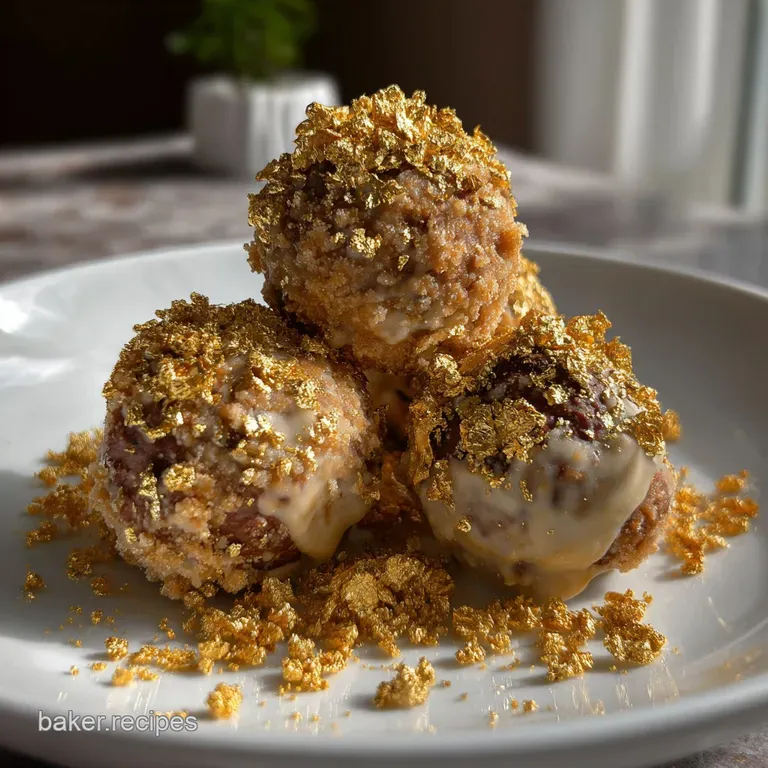
- Reduce the champagne. Simmer 1/2 cup Brut in a small saucepan over medium heat for 5 minutes until liquid measures exactly 1/4 cup and smells intensely of toasted grapes.
- Prep the chocolate. Finely chop 9 oz Ghirardelli white chocolate and place in a glass bowl until it resembles coarse sand.
- Scald the cream. Heat 1/3 cup heavy cream in a saucepan until small bubbles form around the edges and it begins to steam.
- Initiate the melt. Pour hot cream over the chocolate; let sit for 2 minutes until the chocolate softens and begins to lose its sharp edges.
- Emulsify the mixture. Gently stir from the center outward until the mixture is smooth, glossy, and pale ivory.
- Add flavor fats. Stir in 1 tbsp room temperature butter, 1/2 tsp vanilla paste, and the reduced champagne until the liquid is fully incorporated and no oily streaks remain.
- Stabilize the ganache. Cover with plastic wrap touching the surface and refrigerate for 4 hours until firm enough to hold a thumbprint without sticking.
- Shape the centers. Scoop 1 tablespoon portions and roll between palms dusted with powdered sugar until spheres are smooth and matte.
- Prepare the coating. Melt 8 oz white chocolate wafers in 30 second bursts until fluid and trailing ribbons when lifted.
- Final Enrobing. Dip each ball into the melted wafers, tap off excess, and place on parchment until the shell hardens to a crisp shatter.
Chef's Tip: Freeze your butter for 10 minutes before adding it to the ganache if your kitchen is over 72°F. This helps the emulsion "snap" together faster during the stirring phase.
Diagnosing Structural Failure and Fat Separation Issues
Why Your Ganache is Too Soft
The most common issue with new years desserts involving alcohol is a "broken" or soft set. This usually happens because the champagne wasn't reduced enough, leaving too much water in the mixture. Water interferes with the cocoa butter's ability to form a solid crystal lattice.
| Problem | Root Cause | The Fix | Pro Protocol |
|---|---|---|---|
| Ganache won't set | Excess moisture/Insufficient chill | Add 1 oz melted chocolate | Chill for an extra 2 hours before rolling. |
| Seized Chocolate | Water droplet contamination | Whisk in 1 tsp warm cream | Always use bone dry tools for melting chocolate. |
| Grainy Texture | Rapid temperature change | Melt down and re-emulsify | Slowly add warm cream to chocolate, never cold. |
Adapting Flavor Profiles for Inclusive Celebration Options
When planning new years desserts to make for a crowd, you might need to pivot for dietary needs. For a Vegan New Year's Desserts twist, replace the heavy cream with full fat coconut cream (chilled, use only the solids) and swap the white chocolate for a high-quality cocoa butter-based vegan alternative.
If you are looking for New Year's Desserts for Kids, simply replace the reduced champagne with a reduction of sparkling white grape juice. This provides the same festive aesthetic without the alcohol content. For those who enjoy Traditional New Year's Desserts with a twist, consider rolling the finished truffles in crushed toasted hazelnuts to mimic the "good luck" nut traditions found in many European cultures. If you're looking for something even more substantial, you might enjoy the textures found in a Christmas holiday desserts recipe which uses similar chocolate setting principles.
Maintaining Crystal Stability and Preventing Bloom During Storage
- Fridge: Store in an airtight container for up to 2 weeks. The high sugar and fat content act as preservatives, but the champagne flavor will peak around day 3.
- Freezing: These freeze beautifully for up to 2 months. Thaw in the fridge for 24 hours to prevent "sweating" (condensation) on the chocolate shells.
- Reheating: Never reheat the truffles. If the ganache gets too hard in the fridge, let them sit at room temperature for 15 minutes before serving to restore the velvety texture.
Zero Waste Tip: Don't discard the leftover melted coating chocolate. Transform: Drizzle it over pretzels or dried fruit. Science: The high fat content in the wafers makes it an excellent moisture barrier for crunchy snacks.
Visual Architecture and Flavor Pairings for Midnight Toasts
Presentation is paramount for new years desserts. Arrange the gold dusted truffles on a tiered slate stand to create height. The dark background of the slate makes the edible gold leaf pop, providing a "shattering" visual effect that mimics the bubbles in a glass of bubbly.
Pair these truffles with a very dry (Extra Brut) champagne to balance the sweetness of the white chocolate. If you are hosting a larger gathering and want to offer a variety of textures, these truffles look stunning next to a Christmas desserts recipe served in individual stemless glasses.
The Scaling Lab: The Physics of Quantity
When doubling this recipe for a large party, remember The Evaporation Paradox. If you double the champagne to 1 cup but use the same small saucepan, the surface area remains the same, meaning it will take much longer than 5 minutes to reduce to 1/2 cup.
You must either use a wider pan or increase the reduction time significantly to avoid a watery ganache.
Also, be mindful of Thermal Mass. A double batch of ganache (18 oz of chocolate) will hold heat much longer than a single batch. You must wait longer before adding the butter and champagne to ensure you don't "cook" the volatile aromatics in the wine, which can turn the flavor bitter.
Check your ganache for a set about 20% earlier than the 4 hour mark, as larger volumes can sometimes stabilize faster in the center if the bowl is wide and shallow.
Common Myths about White Chocolate
- Myth: White chocolate is just "fake" chocolate.
- Truth: While it lacks cocoa solids, high-quality white chocolate contains cocoa butter, which provides the essential "melt away" property unique to the cacao bean.
- Myth: You can use any sparkling wine for truffles.
- Truth: Cheap sparkling wines have high sugar content which, when reduced, becomes syrupy and can prevent the ganache from ever setting firmly. Always use a Brut.
Whether you're making these as your primary new years desserts or as a midnight treat, remember that patience during the chilling phase is your best friend. The science of the emulsion demands it, and your guests' taste buds will thank you for that perfectly velvety, champagne infused bite. Happy New Year!
Recipe FAQs
What is a good new years dessert?
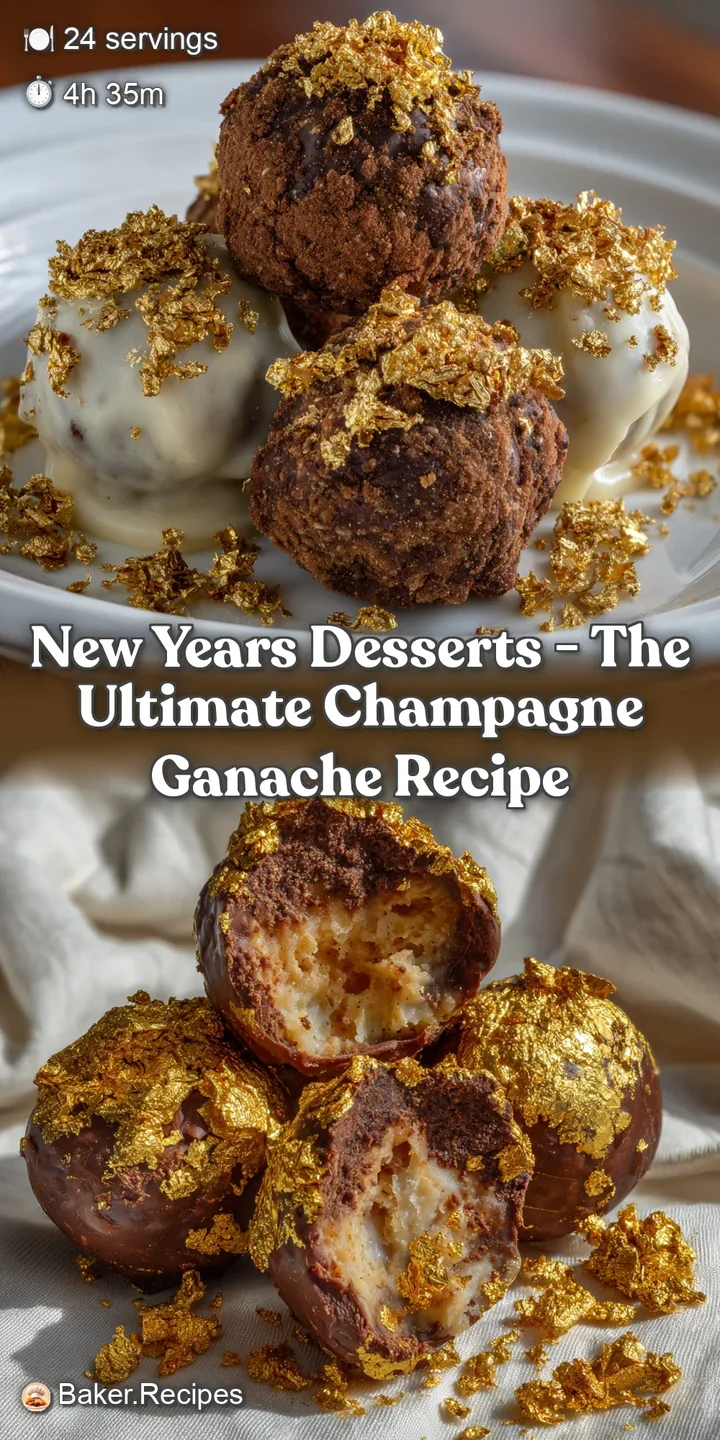
Champagne infused white chocolate truffles. These offer an elegant, celebratory flavor profile that balances the richness of cocoa butter with effervescent wine notes, perfect for midnight toasts.
What are chinese new year desserts?
Nian Gao (sweet rice cake). This sticky dessert symbolizes increasing prosperity each year due to its glutinous texture. It is pan-fried until golden brown.
Why did my white chocolate ganache seize and become grainy?
A single drop of water shattered the fat-in-water emulsion. Rapid introduction of liquid especially if not fully incorporated causes cocoa butter crystals to clump, preventing a smooth texture.
- Ensure the reduced champagne is cool
- Add all liquids slowly in the center
- Use finely chopped, room temperature chocolate
Should I use champagne or prosecco for the reduction?
Champagne for complexity and dryness. Prosecco often carries more residual sugar, which, when reduced, results in a sticky, overly sweet ganache base. Dry champagne concentrates its acidity beautifully.
Is it necessary to coat the truffles in tempered chocolate?
No, but it dramatically improves shelf life and snap. The exterior shell provides a barrier against humidity and provides textural contrast against the soft center, improving the final mouthfeel significantly.
Myth: You can substitute milk chocolate for white chocolate in this recipe.
Myth: You can use milk chocolate for this recipe. Reality: Milk chocolate contains high levels of cocoa solids, which react poorly to acidic champagne, guaranteeing a broken and grainy emulsion.
Can I make the champagne reduction a day ahead of time?
Yes, an ahead reduction is best practice. Reducing the wine a day prior ensures it is completely cooled to room temperature, preventing thermal shock when added to the delicate chocolate mixture later.
Effervescent Champagne Desserts
Ingredients:
Instructions:
Nutrition Facts:
| Calories | 132 calories |
|---|---|
| Protein | 1.3g |
| Fat | 8.1g |
| Carbs | 13.2g |
| Fiber | 0g |
| Sugar | 12.8g |
| Sodium | 16mg |
