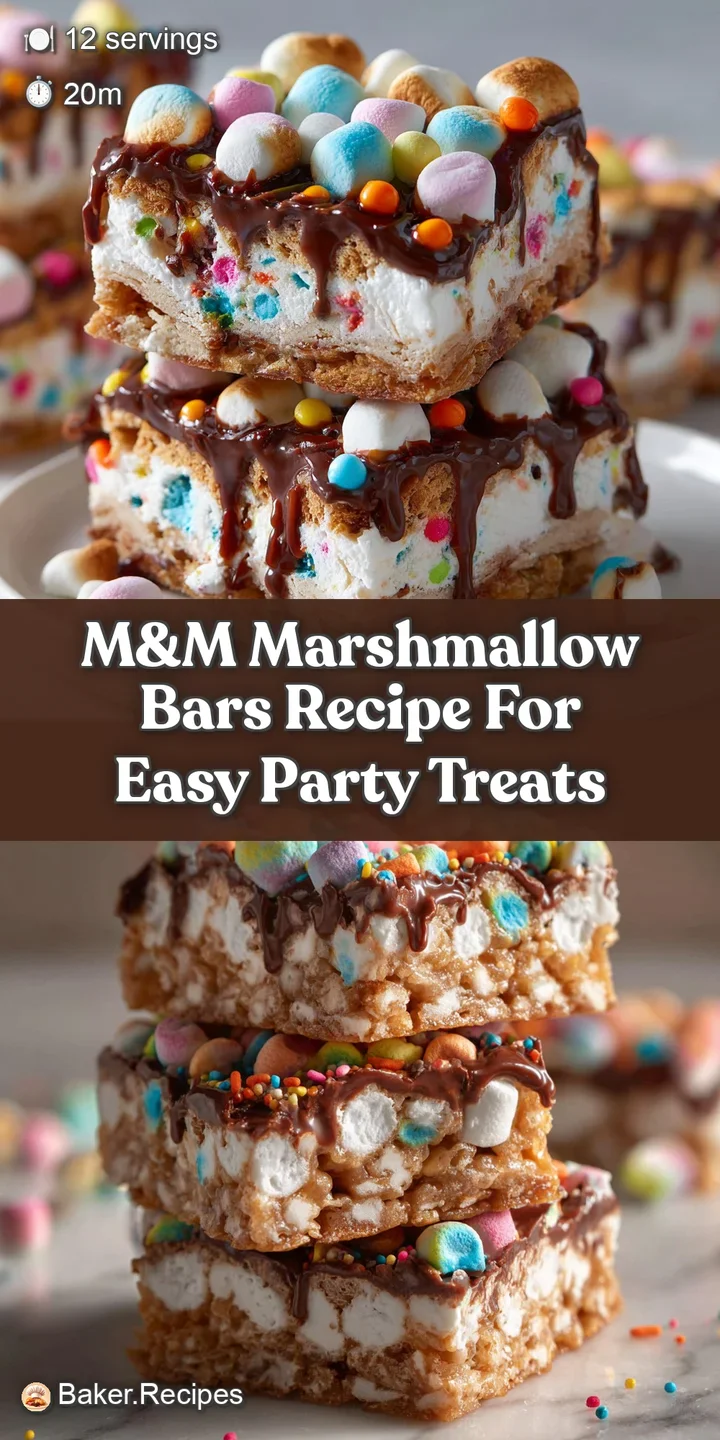
M&M Marshmallow Bars: Soft and Gooey
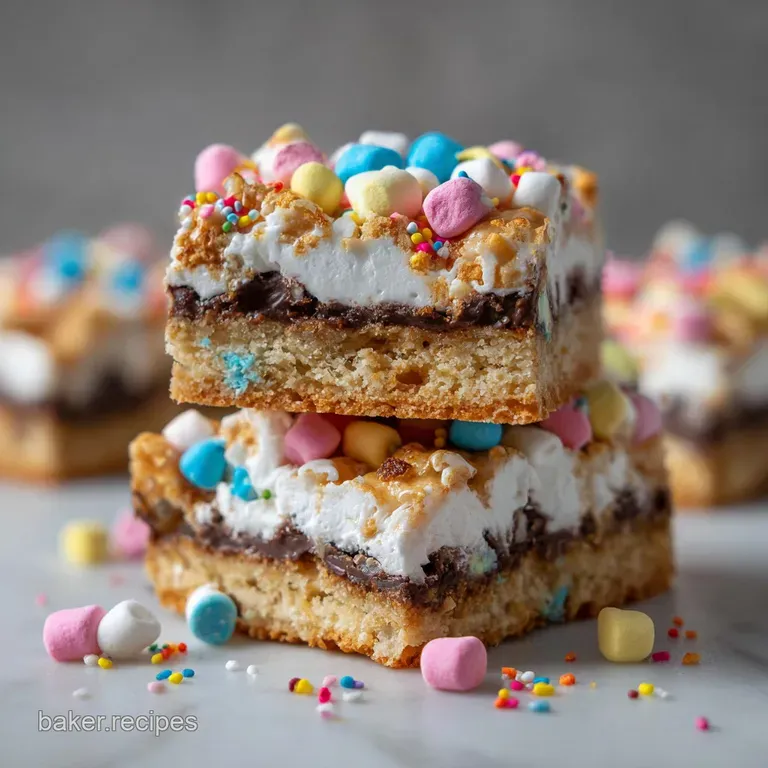
- Time: Active 15 minutes, Passive 5 minutes, Total 20 minutes
- Flavor/Texture Hook: Buttery, vanilla scented crunch with gooey marshmallow webs
- Perfect for: School bake sales, lazy Sunday snacks, or beginner friendly gifting
- Creating the Best Soft and Chewy M&M Marshmallow Bars
- The Physics of the Marshmallow Web
- Why This M&M Marshmallow Bars Recipe Actually Works
- Choosing the Right Elements for Vibrant M&M Marshmallow Bars
- The Simple Tools Required for No Bake Bar Success
- Mastering the Fold for Perfect M&M Marshmallow Bars
- Solving Common Sticky Problems in M&M Marshmallow Bars
- Smart Swaps to Customize Your M&M Marshmallow Bars
- Scaling the Recipe for Any Crowd
- Debunking Popular Marshmallow Treat Myths
- Keeping Your Homemade Marshmallow Bars Fresh and Soft
- Creative Ways to Plate and Enjoy Marshmallow Treats
- Recipe FAQs
- 📝 Recipe Card
Creating the Best Soft and Chewy M&M Marshmallow Bars
The first time I tried to make a batch of these, I ended up with something closer to a construction brick than a dessert. I had cranked the heat, thinking faster was better, and ended up scorching the sugar until it turned into a jaw shattering cement.
The kitchen smelled like burnt vanilla, and I was left staring at a pot of ruined cereal. It was a classic "rookie" move, but that disaster taught me the most important lesson in the world of no bake treats: heat is the enemy of the "goo."
When you get these right, the sizzle of the butter meeting the marshmallows is like music. You start to smell that nutty, toasted aroma, and as you fold in the rice cereal, you see those long, silky threads of marshmallow stretching between the grains.
It’s a sensory experience that brings me right back to being seven years old, standing on a stool to reach the counter. But these aren't your basic lunchbox treats; these are improved with salt, vanilla bean paste, and colorful chocolate hits.
We’ve all had those dry, flavorless bars that crumble into dust the moment you take a bite. We are moving past that today. I’m going to show you how to use a specific melting technique and a "buffer" method for your M&M's so they stay vibrant and whole instead of melting into brown streaks.
Trust me, once you see how the sea salt cuts through the sugar, you’ll never go back to the store-bought stuff again.
The Physics of the Marshmallow Web
The Soft Set Mechanism: By dividing the marshmallows and adding the final portion after the heat is off, we create "active" goo pockets that prevent the cereal from being fully encased in a hardened sugar shell.
This dual phase approach ensures the internal structure remains flexible and soft for days rather than turning brittle.
| Cook Method | Active Time | Texture Outcome | Best For |
|---|---|---|---|
| over High heat Fast | 5 mins | Hard, glass like crunch | Not recommended |
| over Low heat Classic | 10 mins | Soft, stretchy, velvety | Maximum shelf life |
| Microwave Quick | 3 mins | Dense, slightly chewy | Immediate snacking |
The comparison above shows why we always stick to the over low heat stovetop method. When you rush the sugar in the marshmallows, it undergoes a chemical change that makes it set much harder once it cools.
By keeping things low and slow, we preserve the moisture content within the corn syrup and gelatin, resulting in that legendary "pull" that every great bar needs.
Why This M&M Marshmallow Bars Recipe Actually Works
- Phase Separation: Using 10 oz for the base and 5 oz for the fold in creates a tiered texture of melted "glue" and whole "pillows."
- Fat to Starch Ratio: The 6 tbsp of European butter provides a higher fat content than standard butter, coating the cereal to prevent it from getting soggy.
- Aromatic Retention: Adding vanilla bean paste after the heat is turned off ensures the delicate floral notes don't evaporate into the air.
- Salt Contrast: Fine sea salt breaks the "sugar high" by stimulating different taste receptors, making the chocolate flavor in the M&M's pop.
| Component | Science Role | Pro Secret |
|---|---|---|
| Unsalted Butter | Lubricant & Emulsifier | Use European style for higher fat and less water |
| Mini Marshmallows | Structural Binder | Freshness is non negotiable; stale ones won't melt |
| Rice Cereal | Structural Foundation | Toast in the oven for 5 mins to increase "shatter" |
| Vanilla Bean Paste | Flavor Depth | Paste contains seeds for visual interest and punch |
A paragraph between tables is essential to keep the flow and prevent formatting issues. In this "Component Analysis," we look at how the ingredients interact to create the perfect bite.
The European butter is a specific trick I learned after years of using the cheap sticks; the lower water content means your treats don't get that weird "stale" feeling by the second day.
Choosing the Right Elements for Vibrant M&M Marshmallow Bars
- 6 tbsp Unsalted European Butter (85g): This offers a richer flavor profile than standard butter. Why this? Higher fat content creates a more velvety texture in the melted marshmallow mix.
- Substitute: Regular unsalted butter (use 7 tbsp to compensate for water).
- 15 oz Mini Marshmallows (425g): Divided into 10 oz and 5 oz portions. Why this? The division creates the perfect balance of "glue" and gooey whole marshmallow pockets.
- Substitute: Large marshmallows (snip them into quarters with clean scissors).
- 1.5 tsp Pure Vanilla Bean Paste (7ml): Adds those beautiful little black specks and a deep aroma. Why this? It provides a more concentrated flavor than standard liquid extract.
- Substitute: 1.5 tsp Pure Vanilla Extract.
- 0.25 tsp Fine Sea Salt (1.5g): Essential for balancing the intense sweetness of the candy. Why this? Fine salt dissolves instantly so you don't get a gritty bite.
- Substitute: 0.5 tsp Kosher salt (crush it slightly between your fingers).
- 7 cups Toasted Rice Cereal (190g): The crispy, airy base of the bars. Why this? Toasted rice provides the classic "snap" and neutral canvas for the sugar.
- Substitute: Corn cereal squares (crush them slightly for a denser bar).
- 1.5 cups M&M's (250g): The star of the show for color and chocolate crunch. Why this? The candy shell provides a structural contrast to the soft marshmallow.
- Substitute: Chocolate chips (note: these will melt more easily than M&M's).
- 0.5 cup Freeze Dried Marshmallow Bits (30g): Adds a nostalgic "crunchy marshmallow" texture. Why this? They stay crispy while the fresh marshmallows stay soft.
- Substitute: Extra rice cereal or crushed pretzels for a salty twist.
The Simple Tools Required for No Bake Bar Success
You don't need a kitchen full of gadgets, but two things make a massive difference: a heavy bottomed pot and a large silicone spatula. A thin pot will create "hot spots" that burn the sugar before the rest of the marshmallows have even started to soften.
I personally love using a large Dutch oven because the high sides give you plenty of room to toss seven cups of cereal without making a mess of your stovetop.
Chef Tip: Lightly grease your measuring cups and spatula with a tiny bit of neutral oil or butter before you start. This prevents the "sticky monster" from claiming half your ingredients during the transfer.
You will also need a 9x13 inch baking pan. If you want thicker, more "boutique style" bars, you can use a 9x9 inch square pan, but you'll need to increase the setting time by about 20 minutes to ensure the center is firm enough to slice.
Line your pan with parchment paper, leaving an overhang on the sides. This "sling" allows you to lift the entire block out for clean, professional looking squares.
Mastering the Fold for Perfect M&M Marshmallow Bars
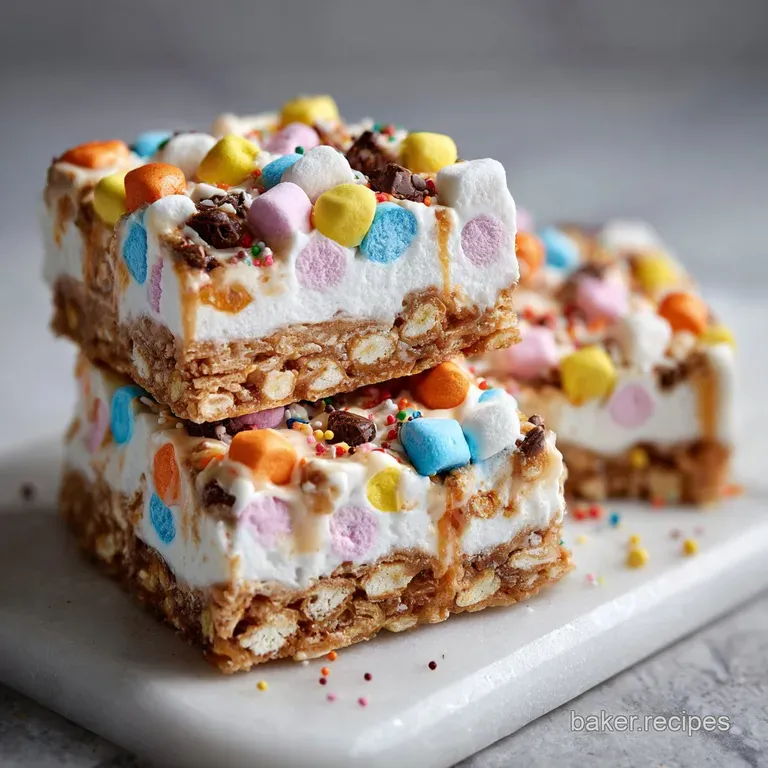
- Line your pan. Place parchment paper in a 9x13 inch pan with extra hanging over the sides. Note: This prevents sticking and makes removal effortless.
- Melt the butter. Place the 6 tbsp of butter in a large pot over low heat until it starts to sizzle and foam slightly.
- Start the base melt. Add 10 oz of the mini marshmallows to the pot. Note: Keep the heat low to avoid toughening the sugar.
- Stir constantly. Use a silicone spatula to move the marshmallows until they are 90% melted and look like a thick clouds.
- Remove from heat. Take the pot off the burner immediately once the lumps disappear.
- Add aromatics. Stir in the 1.5 tsp vanilla bean paste and 0.25 tsp sea salt until the mixture is glossy and fragrant.
- Incorporate cereal. Pour in the 7 cups of rice cereal and fold gently until every grain is coated in the silver white webbing.
- The "Goo" Addition. Fold in the remaining 5 oz of marshmallows, 1 cup of M&M's, and the marshmallow bits. Note: Adding these now prevents the chocolate from melting completely.
- Transfer to pan. Pour the mixture into your prepared pan and spread it until it reaches the corners but remains airy.
- Final garnish. Press the remaining 0.5 cup of M&M's into the top until the bars look vibrant and festive.
Solving Common Sticky Problems in M&M Marshmallow Bars
One of the biggest heartbreaks is spending time on these only to find they've turned into a "concrete" slab by the next morning. Usually, this happens because the marshmallows were overcooked. When the sugar reaches a certain temperature, it enters the "hard crack" stage. We want to stay far away from that.
If your bars are too hard, you can try placing a slice of bread in the storage container; the marshmallow will pull moisture from the bread and soften up slightly.
Why Your Marshmallow Bars Turned Rock Hard
If your bars feel like they could break a tooth, the culprit is almost always the heat. If you use medium or high heat to speed things up, you are essentially making hard candy. Another cause is "packing" the mixture too tightly into the pan.
You want to gently nudge the mixture into the corners, not compress it with the weight of your body.
| Problem | Root Cause | Solution |
|---|---|---|
| Rock hard bars | High heat or over packing | Keep heat at the lowest setting; press gently |
| Melted M&M streaks | Folded in while too hot | Let the mixture cool for 60 seconds before adding chocolate |
| Bars falling apart | Not enough marshmallow | Ensure you use the full 15 oz called for in the recipe |
A quick note on the M&M's: if you use the "Mega" sized ones, they tend to sink to the bottom. Stick to the standard size for the best distribution. If you're looking for a different vibe, the technique here is very similar to what I use in my Bake Candy Cookie recipe, where the balance of fat and sugar is key to that chewy texture.
Common Mistakes Checklist
- ✓ Using old marshmallows that have started to stick together in the bag (they won't melt smoothly).
- ✓ Forgetting to take the pot off the heat before adding the vanilla (this preserves the flavor).
- ✓ Pressing the mixture down with a heavy hand (this destroys the air pockets).
- ✓ Slicing the bars while they are still warm (the sugar hasn't "set," leading to a messy collapse).
- ✓ Adding all the M&M's at once (the ones at the bottom will melt, the ones on top should stay pretty).
Smart Swaps to Customize Your M&M Marshmallow Bars
If you want to change things up, this recipe is incredibly forgiving. If you're out of M&M's, you can use chopped up chocolate bars or even peanut butter chips. The core "marshmallow to cereal" ratio is what matters most for the structural integrity.
For those who need to avoid dairy, you can swap the butter for a high-quality vegan butter stick, though the flavor will be slightly less "toasty."
| Original Ingredient | Substitute | Why It Works |
|---|---|---|
| Unsalted Butter | Salted Butter | Adds more savory notes; omit the extra sea salt |
| Vanilla Bean Paste | Almond Extract | Provides a cherry like, nutty aroma |
| M&M's | Chopped Pretzels | Adds a massive salty crunch. Note: Reduces sweetness significantly |
If you are looking for something a bit heartier, you might enjoy the texture profile of a Homemade Granola Bars recipe, which uses honey and oats for a different kind of chew. But for pure nostalgia, sticking to the cereal and marshmallow combo is the way to go.
Scaling the Recipe for Any Crowd
When you need to feed a whole soccer team, doubling the recipe is easy, but you'll need a massive stockpot. Don't try to double it in a standard saucepan, or you'll end up with cereal all over your floor.
When scaling up, keep your heat even lower than usual because the larger mass of marshmallows will hold heat longer, which can lead to overcooking the bottom layer before the top is melted.
If you want to halve the recipe, use an 8x8 inch pan. You don't need to change the cook time much, but keep a close eye on the butter as it will melt and foam much faster in a smaller quantity. For the M&M's, a half recipe uses 3/4 cup, which is plenty for a small family treat.
| Servings | Ingredient Adjustment | Pan Size | Best For |
|---|---|---|---|
| 6 people | Half all ingredients | 8x8 inch | Small family snack |
| 12 people | Use recipe as written | 9x13 inch | Standard party size |
| 24 people | Double all ingredients | Two 9x13 pans | Bake sales / Large events |
One thing to remember when scaling is the "salt factor." If you double the recipe, you don't necessarily need to double the salt. Start with a scant 1/2 teaspoon and taste a tiny bit of the marshmallow "glue" before adding the cereal.
You can always add more, but you can't take it out once it's mixed with the toasted rice.
Debunking Popular Marshmallow Treat Myths
One common myth is that you need to add corn syrup to keep the bars soft. While some commercial recipes do this, the "dual phase" marshmallow method we use here achieves the same result without the extra liquid.
The marshmallows themselves already contain enough corn syrup to provide that stretch; adding more often just makes the bars unpleasantly sticky and harder to handle.
Another misconception is that "marshmallows are marshmallows." In reality, brand name marshmallows often have a different stabilizer to sugar ratio than generic store brands. While budget options work fine for most things, I've found that generic marshmallows sometimes have a "waxy" finish that doesn't melt quite as smoothly.
If you're finding your "webs" aren't stretching, try a fresh bag of a major brand like Jet Puffed.
Keeping Your Homemade Marshmallow Bars Fresh and Soft
The enemy of a good marshmallow bar is air. Once exposed to the atmosphere, the moisture in the marshmallow begins to evaporate, leaving behind a dry, crystalline structure. To prevent this, always store your bars in an airtight container.
I like to place a piece of parchment paper between the layers so they don't fuse together into one giant block.
- Fridge: Don't do it! The cold temperature actually accelerates the staling process of the starch in the cereal and makes the marshmallow rock hard.
- Room Temperature: These stay perfect for up to 4 days if kept in a truly airtight container.
- Freezing: You can freeze these for up to 2 months. Wrap individual squares in plastic wrap, then place them in a freezer bag. To eat, let them sit at room temperature for 30 minutes never microwave them from frozen, or the chocolate will bloom and the marshmallow will lose its structure.
Zero Waste Tip: If you have crumbs at the bottom of the pan or broken bits that didn't make a clean cut, don't throw them away! These make an incredible topping for vanilla ice cream.
You can also pulse them briefly in a blender and use the "dust" as a crust for a cheesecake or a topping for chocolate pudding.
Creative Ways to Plate and Enjoy Marshmallow Treats
While these are excellent straight out of the pan, you can turn them into a real dessert with a few simple tricks. Try dipping half of each bar into melted dark chocolate and sprinkling with a little extra sea salt.
The bitterness of the dark chocolate balances the sugary marshmallow and the milk chocolate in the M&M's beautifully.
For a kid's birthday party, you can insert popsicle sticks into the bottom of each bar before they fully set. This makes them easier for little hands to hold and prevents sticky fingers from getting all over your furniture.
You can even drizzle them with a bit of white chocolate colored with food dye to match a specific party theme.
If you really want to go "gourmet," serve a warm bar with a scoop of salted caramel ice cream on top. The contrast between the cold ice cream and the slightly softened, gooey bar is a total crowd pleaser.
Just remember, these are best served at a slight room temperature to ensure that "shatter to chew" ratio is at its peak. Enjoy every sticky, crunchy bite!
Recipe FAQs
Were the M&M chocolate bars discontinued?
No, the standard M&M's candy itself has not been discontinued. If you are referring to premade commercial bars, availability varies by retailer, but the candy coating holds up very well in this recipe.
Can you freeze marshmallow dream bars?
Yes, freezing works well for long term storage. Wrap individual bars tightly in plastic wrap, then place them in a freezer safe bag for up to two months. Thaw at room temperature for 30 minutes before eating.
What are the ingredients in the Starbucks marshmallow dream bar?
Starbucks typically uses a simple base of butter, melted marshmallows, crispy cereal, and often vanilla. Our recipe is an elevated version, substituting some marshmallows for extra melt pockets, and adding sea salt to cut the sweetness.
How many calories are in a marshmallow dream bar?
Exact counts vary based on the butter and M&M brand used, but estimate between 200 250 calories per standard 2x3 inch square. These are calorie dense due to the high sugar and fat content required for that signature chewiness.
Is it true you must use low heat when melting marshmallows to prevent hardness?
Yes, low heat is critical for a soft texture. High heat forces the sugar into a hard crack stage, resulting in bars that shatter rather than stretch. If you master low-temperature melting here, you'll find the same principle improves the texture of many no-bake treats, like those in our and Bake Peanut recipe.
How do I stop the M&M's from completely melting into the marshmallow base?
Fold in the M&M's during the final stage after removing the pot from the heat. The residual warmth is enough to slightly soften them for adhesion, but not enough to dissolve the candy shell before the mixture is pressed into the pan.
Can I substitute European butter for standard American butter in this recipe?
No, this is a common substitution mistake that affects texture. European butter has higher fat and lower water content, yielding a richer flavor and less weepiness. If you must substitute, use slightly less standard butter, similar to adjusting fats in our Baking White Chocolate recipe.
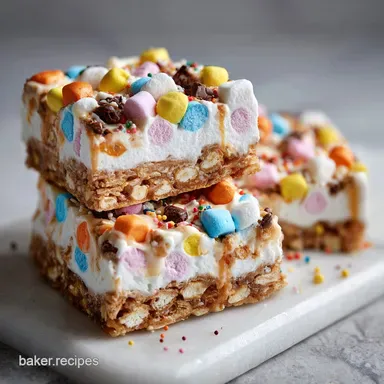
M M Marshmallow Bars Recipe
Ingredients:
Instructions:
Nutrition Facts:
| Calories | 334 kcal |
|---|---|
| Protein | 2.9 g |
| Fat | 10.1 g |
| Carbs | 59.2 g |
| Fiber | 0.6 g |
| Sugar | 35.3 g |
| Sodium | 212 mg |
