Baked Potato with Butter and Sea Salt
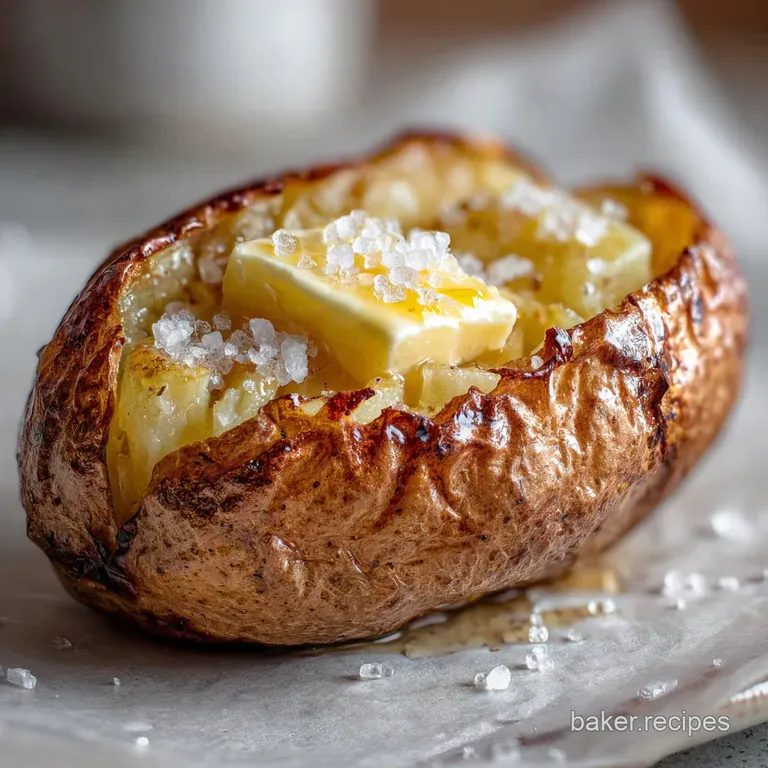
- Time: Active 5 minutes, Passive 50 minutes, Total 55 minutes
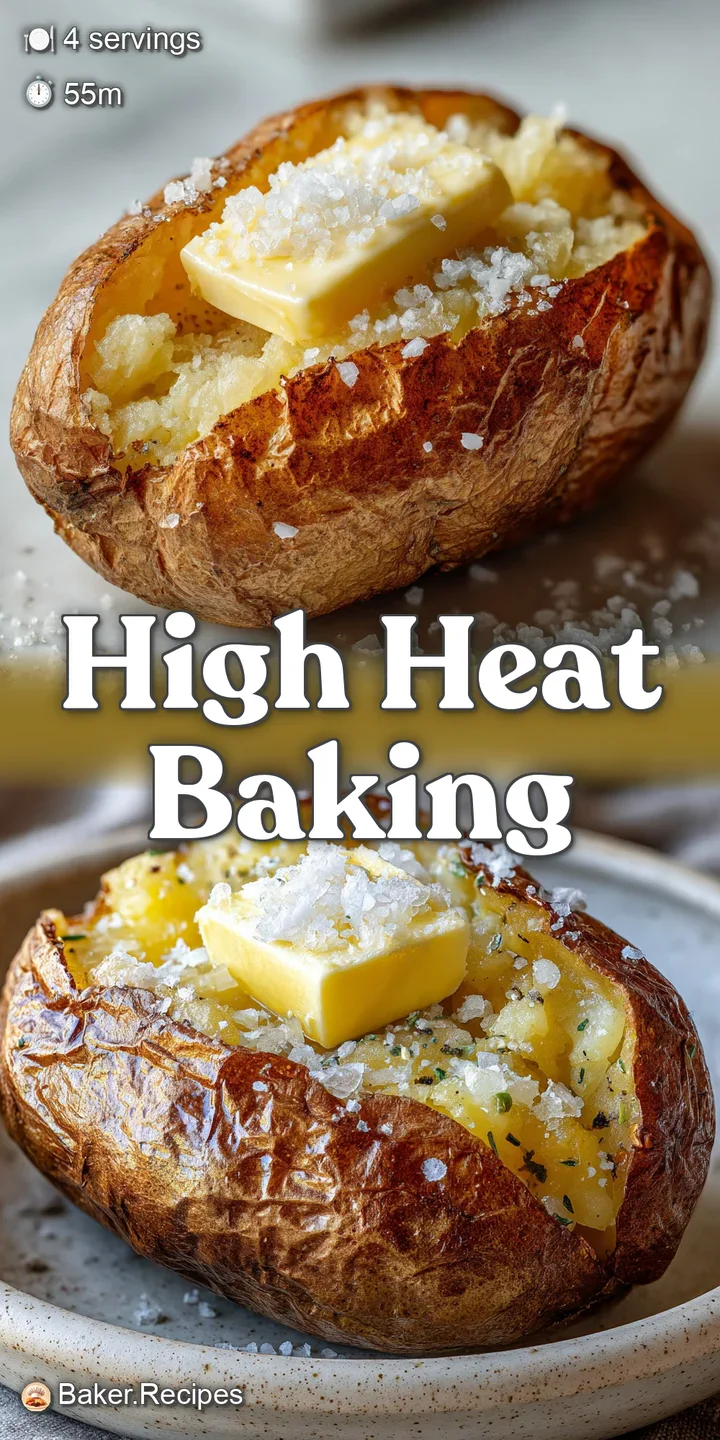
- Flavor/Texture Hook: Shatter crisp salty skin with a cloud like center
- Perfect for: Steakhouse style dinners or a reliable, budget-friendly weeknight base
- Secrets to Baked Potato with Butter and Sea Salt
- Essential Stats for Fluffy Spuds
- Selecting High Quality Raw Ingredients
- Necessary Kitchen Gear for Success
- Detailed Execution for Crispy Skin
- Solving Common Spud Errors
- Ingredient Swaps for Better Health
- Managing Storage and Leftover Potatoes
- Enhancing Your Final Plate Presentation
- Technical Tips and Proven Myths
- Scaling Ratios for Large Crowds
- Recipe FAQs
- 📝 Recipe Card
Listen, we have all been there. You go to a fancy steakhouse, and they bring out this potato that has a skin so crispy it practically shatters when the knife hits it. Then you try to do it at home, wrap it in foil like we were taught in the 90s, and you end up with a sad, wet, steamed spud. It is heartbreaking, really.
This article features a fantastic recipe: Baked Potato with Butter and Sea Salt.
I spent years thinking the foil was the "secret" to keeping it moist. I was wrong. The foil is actually the enemy of the crispy skin. Once I stopped smothering my potatoes and started treating them like something that needs to breathe, everything changed.
We are talking about a total transformation of the Russet into something worth writing home about.
We are going to dive into why dry heat is your best friend and why that final rub of oil makes all the difference. Honestly, once you nail this technique, you will never look at a microwave "baked" potato the same way again. Let us get into the grit of how to make this work every single time without fail.
Secrets to Baked Potato with Butter and Sea Salt
The Science of Why it Works: Starch gelatinization occurs when internal moisture heats up, causing starch granules to swell and burst into a fluffy texture. Simultaneously, the Maillard reaction browns the skin as proteins and sugars react under high, dry heat.
- Steam Venting: Pricking the skin with a fork allows internal pressure to escape, which prevents the potato from becoming dense and gummy.
- Surface Dehydration: Roasting the potato naked on a wire rack allows hot air to circulate 360 degrees, drying out the skin for maximum crunch.
- Late Stage Fat: Applying the oil during the last ten minutes prevents the oil from smoking or becoming acrid while still frying the skin to a crisp finish.
- Internal Target: Aiming for an internal temperature of 210°F ensures the starches have fully transitioned from waxy to airy.
If you are looking for a different way to enjoy spuds, you might also enjoy my Irresistibly How to recipe which uses a similar over high heat approach for chips.
Essential Stats for Fluffy Spuds
When we talk about the difference between a good potato and a legendary one, it usually comes down to the environment in the oven. Most people under bake their potatoes because they are afraid of burning them. Trust me, these things are sturdier than you think. You want that high heat to really drive out the moisture.
| Method | Texture Result | Efficiency |
|---|---|---|
| Oven (425°F) | Shatter crisp skin, dry/fluffy interior | Takes 50-60 minutes but yields best quality |
| Stovetop (Cast Iron) | Very crunchy bottom, can be uneven | Requires constant flipping and monitoring |
| Microwave | Soft, leathery skin and dense center | Fast (10 mins) but loses all texture contrast |
Chef's Note: I always use a Lodge Cast Iron Baking Sheet or a standard rimmed sheet with a wire rack on top. Raising the potato off the flat surface is the only way to avoid that one flat, soggy spot on the bottom.
Selecting high-quality Raw Ingredients
You cannot just grab any old potato for this. If you try this with a Red Bliss or a Yukon Gold, you will get a creamy, waxy result. It is fine, but it is not a "baked potato" in the classic sense. You need the high starch content of the Russet to get that crumbly, velvety finish we are after.
| Component | Science Role | Pro Secret |
|---|---|---|
| Russet Potatoes | High starch, low moisture | Pick ones that feel heavy for their size and have thick skin. |
| Kerrygold Butter | Fat emulsion for mouthfeel | Use grass fed for a higher beta carotene content and yellow hue. |
| Diamond Crystal Salt | Moisture draw and seasoning | Coarse grains provide a tactile crunch that fine salt misses. |
| Bertolli Olive Oil | Heat conductor for skin | Apply only at the end to prevent the oil from breaking down. |
For a more decadent meal, some people love to top these with a Cottage cheese recipe for extra protein and a tangy kick that cuts through the butter.
Necessary Kitchen Gear for Success
You do not need much, but a few specific tools make this "budget smart" approach feel like a pro operation. First, get yourself a stiff vegetable brush. Russets grow in the dirt, and that skin is what we are eating, so scrub it like you mean it.
- Wire Cooling Rack: This is non negotiable for airflow.
- Lodge Baking Sheet: Something heavy duty that won't warp at 425°F.
- ThermoPro Digital Thermometer: This is how we know the potato is actually done inside.
- A sharp fork: For the 12 point ventilation system.
Detailed Execution for Crispy Skin
- Preheat the oven. Set your oven to 425°F and place a rack in the middle position. Note: High heat is essential for the skin to crisp before the inside overcooks.
- Scrub the potatoes. Wash the 4 large Russet potatoes under cold water using a brush.
- Dry thoroughly. Use a clean kitchen towel to bone dry each potato. Dry skin equals crispy skin.
- Vent the steam. Prick each potato about 8 to 12 times with a fork. Note: This prevents the "potato explosion" and lets steam escape.
- Initial roast. Place potatoes directly on the wire rack over a baking sheet. Bake for 45 minutes.
- Apply the oil. Remove the tray and brush each potato with 2 tbsp extra virgin olive oil.
- Season the exterior. Sprinkle the 1 tbsp coarse sea salt evenly over the oiled skins.
- The final sear. Return to the oven for 10 minutes until the skin is sizzling.
- Check the temp. Insert a thermometer; it should read between 205°F and 212°F.
- The release. Cut a slit across the top and squeeze the ends to "bloom" the fluffy center. Serve with 4 tbsp unsalted grass fed butter, pepper, and chives.
Solving Common Spud Errors
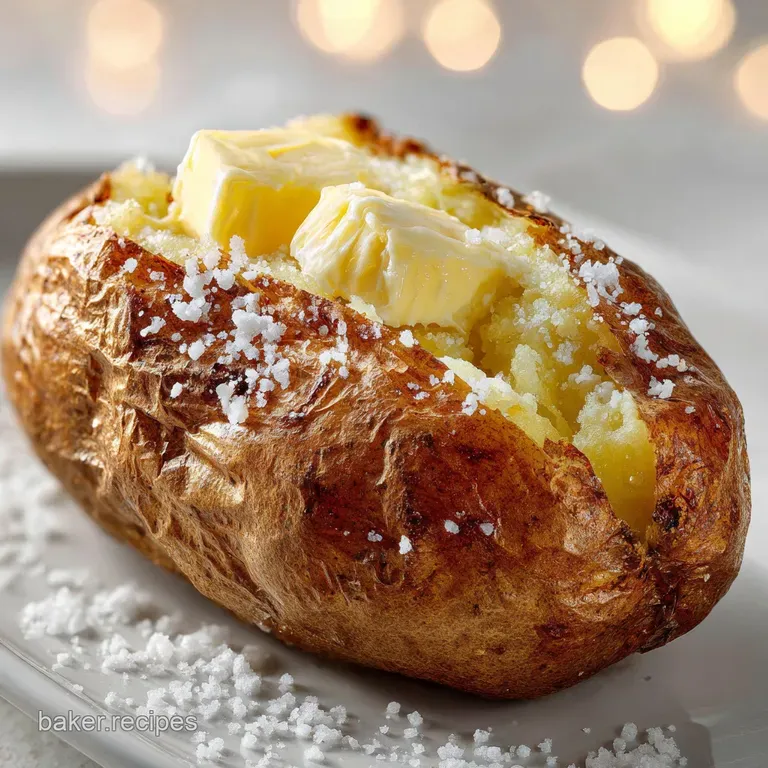
The most common heartbreak is the "leathery skin." This usually happens when the oven temp is too low. If you cook a potato at 350°F for two hours, the skin turns into a tough, chewy jacket instead of a crisp shell. Keep that heat up!
Why Your Potato Stays Hard
If the center feels like an apple even after an hour, your oven might be running cold. Or, you might have used a giant potato that needs more time. Always go by internal temperature rather than just the clock.
| Problem | Cause | Fix | Pro Tip |
|---|---|---|---|
| Soggy Skin | Foil wrapping | Remove foil completely | Roast on a wire rack for airflow |
| Grey Interior | Sitting too long | Cut open immediately | Steam must escape the second it's done |
| Burnt Bottom | Direct pan contact | Use a wire rack | Flip the potato halfway if no rack |
Ingredient Swaps for Better Health
If you are watching your budget or have dietary restrictions, this recipe is incredibly flexible. I have made this with whatever was in the pantry, and while the "perfect" version uses grass fed butter, you can get 90% of the way there with smart substitutes.
| Original Ingredient | Substitute | Why It Works |
|---|---|---|
| Unsalted Butter | Ghee | Same fat content but adds nutty/toasted notes. |
| Olive Oil | Bacon Grease | Adds smoky flavor. Note: Low smoke point, watch for burning. |
| Sea Salt | Smoked Salt | Adds depth. Note: Can be overpowering if used heavily. |
| Butter | Avocado | Creamy texture. Note: Much less salty/savory than butter. |
If you want a version that feels more like a full meal, you can look into a How to Make recipe for a calorie loaded version that adds bacon and cheese.
Managing Storage and Leftover Potatoes
Leftover baked potatoes are a goldmine. Don't you dare throw them away. In the fridge, they stay good for about 4 days. The skin will lose its crunch, but the inside stays perfect for other uses.
Freezing: You can freeze them, but the texture changes. I prefer to scoop out the flesh, mash it, and freeze that instead. If you freeze the whole potato, it can become a bit watery when thawed.
Zero Waste: Save the skins! If you have leftovers, scoop out the middle for mashed potatoes and fry the skins in a pan with a little more oil. They become the best potato skins you've ever had. You can also dice the whole leftover potato and toss it into a pan for quick home fries the next morning.
Enhancing Your Final Plate Presentation
Presentation matters, even for a budget friendly potato. The "squeeze" is the most important part. After you cut that slit, use a clean towel to grip both ends of the potato and push toward the center. This forces the fluffy white interior to pop upward, creating a "cloud" that catches the butter perfectly.
Don't just plop the butter on top. I like to use a fork to fluff the inside slightly before adding the butter and 0.25 tsp freshly cracked black pepper. This incorporates the fat into every single bite rather than just having a puddle at the bottom.
Adding the 1 tbsp fresh chives gives it that pop of green that makes it look like it came out of a professional kitchen.
Technical Tips and Proven Myths
- The Foil Myth: People think foil keeps potatoes hot longer. It does, but it also traps steam, which turns the skin into wet paper. If you need to keep them warm, put them in a low oven (200°F) on a rack, never in foil.
- The Soaking Myth: Some people soak potatoes in salt water before baking. While this can help with fries, for a baked potato, it just adds unnecessary moisture. Dry is king.
- The "Slow and Low" Myth: Cooking at a low temp doesn't make it better; it just makes the skin thicker and tougher. 425°F is the sweet spot for the Maillard reaction.
Scaling Ratios for Large Crowds
Scaling this up is easy because the oven does the work. If you are making 12 potatoes instead of 4, you don't need to triple the oil or salt.
- Space: Do not crowd the baking sheet. If the potatoes are touching, they will steam each other. Use two sheets if needed.
- Time: Adding more potatoes to the oven may increase the cook time by about 10 minutes because the total mass absorbs more heat energy.
- Seasoning: You can usually get away with 1.5x the salt even if you 3x the potatoes. Taste as you go!
Honestly, these potatoes are so simple but so rewarding. It is one of those things that reminds me why I love cooking it is not about expensive ingredients; it is about knowing how to handle the heat. Give this a shot tonight, and let me know if that crunch doesn't just change your whole outlook on side dishes!
For a sweet finish to your meal, you might even consider an Apple Pie recipe which uses similar principles of fat and heat for a perfect crust.
Recipe FAQs
Is sea salt good for potatoes?
Yes, coarse sea salt is ideal. Its larger crystals adhere better to the oily skin, creating pronounced salty pockets and a superior textural crunch.
Is a baked potato with butter and salt healthy?
No, it is an indulgence, not health food. While potatoes offer potassium, the high saturated fat content from liberal butter application shifts this into a rich side dish category.
What makes Texas Roadhouse baked potatoes so good?
They achieve extreme surface dehydration. They bake them naked on a rack at high heat, avoiding foil, which allows the skin to fully crisp before the interior becomes fluffy.
Can I bake potatoes with butter applied before they go into the oven?
No, apply the butter late in the process. Applying butter at the beginning coats the skin, trapping moisture and preventing the high heat crisping we want; oil is better for the initial sear.
Why do I need to use a wire rack instead of placing potatoes directly on the pan?
Air circulation is crucial for the skin. Placing potatoes directly on a solid baking sheet traps steam underneath, resulting in a flat, soggy bottom instead of a crunchy exterior all around.
What is the best potato type for achieving maximum fluffiness?
Russets are the correct choice. Their high starch and low moisture composition gelatinize perfectly under high heat, yielding that classic airy, cloud like interior texture.
How can I ensure my baked potato is perfectly cooked internally?
Check the internal temperature, aiming for 210°F. Relying solely on time often leads to guesswork; mastering temperature control here will help you perfectly cook other starches too, like when you are learning [mastering the high heat dehydration technique] for crispy oven fries.
Perfect Baked Potato Recipe
Ingredients:
Instructions:
Nutrition Facts:
| Calories | 398 kcal |
|---|---|
| Protein | 6.2 g |
| Fat | 18.5 g |
| Carbs | 54 g |
| Fiber | 6.8 g |
| Sugar | 1.8 g |
| Sodium | 1480 mg |
