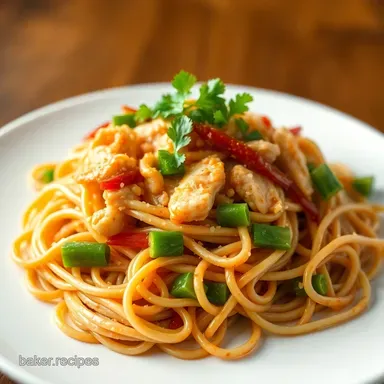
Restaurant-Style Chicken Chow Mein

- Time: 15 min active + 10 min marinate + 15 min cook
- Flavor & Texture: Salty, umami-rich, and crisp
- Perfect for: A busy weeknight dinner
You know that feeling when you order noodles and they arrive as a soggy, clumped mass? It's the biggest letdown of the takeout experience. The key to avoiding that is high heat and a very hot pan, which creates a slight char on the edges of the noodles and vegetables.
This chicken chow mein recipe focuses on speed and temperature. You'll want everything chopped and measured before the pan even touches the burner because once you start, things move fast.
The result is a dish with a glossy coating and chicken that stays tender. It's an easy way to get a lot of vegetables onto the table while keeping the savory, salty flavors that make this meal a favorite.
Chicken Chow Mein Recipe Specs
This dish serves 5 people and comes together in just 40 minutes. It's a high-protein meal that balances the richness of oyster sauce with the freshness of cabbage and carrots. Since it's a stir-fry, the active time is almost the same as the cooking time.
Gathering Your Essentials
Get your ingredients ready in small bowls. This prevents you from scrambling to open a bottle while your garlic is burning in the pan.
The Chicken and Marinade
- 1 lb chicken breast, thinly sliced into strips Why this? Lean meat that cooks quickly at high heat
- 1 tbsp reduced-sodium soy sauce
- 1 tbsp chicken stock
- 1 tsp cornstarch
- 1/4 tsp white pepper
The Stir-Fry Sauce
- 3 tbsp reduced-sodium soy sauce
- 2 tbsp oyster sauce Why this? Provides the deep, savory umami base
- 1 tbsp chicken stock
- 1 tsp toasted sesame oil
- 1 tsp granulated sugar
- 1/2 tsp cornstarch
The Stir-Fry Base
- 12 oz fresh chow mein noodles Why this? Holds the sauce better than dried varieties
- 2 tbsp neutral oil (like canola or vegetable)
- 3 cloves garlic, minced
- 1 tbsp fresh ginger, grated
- 2 cups shredded cabbage
- 1 cup julienned carrots
- 1/2 cup sliced white onion
- 3 stalks green onions, cut into 2-inch pieces
Ingredient Swaps
| Original Ingredient | Substitute | Why It Works |
|---|---|---|
| Oyster Sauce | Vegetarian Mushroom Sauce | Similar salt and umami. Note: Check label for salt levels |
| Fresh Noodles | Dried Egg Noodles | More affordable. Note: Boil 1 min less than package says |
| Chicken Breast | Chicken Thighs | More fat and flavor. Note: Harder to overcook |
What Each Ingredient Does
| Component | Purpose | Substitute Notes |
|---|---|---|
| Cornstarch | Creates a silky texture | Arrowroot powder works similarly |
| Sesame Oil | Adds a nutty aroma | Use a tiny bit more if using a mild oil |
| White Pepper | Sharp, earthy heat | Black pepper is a fine approximation |
Tools for the Job
Since its sloped sides make tossing ingredients over high heat effortless, a wok is the preferred tool. A stainless steel skillet or cast-iron pan are suitable alternatives, although you may need to work in smaller batches to avoid overcrowding the pan.
You will also need a sturdy spatula or tongs for quick stirring, and a meat thermometer to ensure the chicken is safely cooked.
Simple Cooking Steps
Preparing the Components
In a medium bowl, whisk together 1 tbsp reduced-sodium soy sauce, 1 tbsp chicken stock, 1 tsp cornstarch, and 1/4 tsp white pepper. Stir in the sliced chicken breast and let it marinate for 10 minutes. Note: This helps the meat stay tender.
In a separate small bowl, combine 3 tbsp reduced-sodium soy sauce, 2 tbsp oyster sauce, 1 tbsp chicken stock, 1 tsp toasted sesame oil, 1 tsp granulated sugar, and 1/2 tsp cornstarch. Whisk until the sugar and cornstarch are fully dissolved.

Searing the Protein
Heat 1 tbsp neutral oil in a wok over high heat until it starts to smoke. Spread the marinated chicken in a single layer. Let it sear undisturbed for 2 minutes until golden brown, then stir-fry for an additional 2 minutes until the thickest part registers 165°F (74°C).
Transfer the chicken from the wok and set it aside.

Stir-Frying the Aromatics and Vegetables
Add the remaining 1 tbsp neutral oil to the wok over high heat. Toss in the julienned carrots, sliced white onion, and shredded cabbage. Stir-fry quickly for 2-3 minutes until the vegetables are vibrant but still snap.
Mix in the grated ginger and minced garlic, cooking for 30 seconds until you can smell the fragrance.

Integrating the Noodles and Sauce
Add the fresh chow mein noodles to the wok. Toss them with the vegetables over high heat for 2 minutes.
Pour the sauce mixture over the noodles. Stir constantly for 1-2 minutes until the liquid reduces into a glossy coating that clings to the noodles.
Return the cooked chicken and 2-inch green onion pieces to the pan. Toss for one final minute until everything is steaming and combined.

Why the Method Works
- The Cornstarch Trick: Coating the chicken in cornstarch creates a barrier that protects the meat from the high heat, keeping it instead of rubbery.
- High-Heat Searing: Cooking the vegetables quickly prevents them from releasing too much water, which keeps them from steaming and becoming mushy.
- The Sauce Sequence: Adding the sauce at the end allows the cornstarch in the glaze to thicken almost instantly, ensuring a glossy finish rather than a watery pool at the bottom of the pan.
Quick Fixes

Preventing Clumped Noodles
If your noodles stick together, toss them with a teaspoon of neutral oil before adding them to the pan. If using dried noodles, boil them for 1 minute less than the package suggests so they finish softening in the sauce.
Avoiding Watery Vegetables
Don't crowd the pan. If you put too many vegetables in at once, the temperature drops and the vegetables leak water. If your pan is small, sear the carrots and cabbage in two batches.
Balancing Over-Saltiness
If the sauce tastes too salty, add a teaspoon of sugar or a squeeze of lime juice. The acidity or sweetness cuts through the sodium of the soy and oyster sauces.
Storage and Freshness
Store any extras in an airtight tub in the fridge for a maximum of 3 days.
Freezing isn't ideal for this recipe. Once thawed, the cabbage turns soft and the noodles lose their characteristic bounce.
When warming it up, try to skip the microwave. Instead, heat the noodles in a skillet over medium-high heat until the chicken reaches 165°F (74°C) in the thickest part. A little bit of chicken stock will help loosen them and restore that beautiful glaze.
Customizing Your Plate
Spicy Szechuan Style
For more heat, stir in 1 tbsp of chili bean paste (Doubanjiang) with the garlic and ginger. This gives your chicken chow mein a fermented, spicy kick.
Garden Harvest
Add sliced snap peas, bok choy, or red bell peppers. These go in at the same time as the carrots and cabbage to keep that crisp texture.
Gluten-free Alternative
Swap the soy sauce for tamari (labelled gluten-free) and the oyster sauce for a mushroom-based vegetarian stir-fry sauce. Use certified gluten-free rice noodles or corn-based noodles. Note that rice noodles cook faster, so add them at the very end.
For this gluten-free version, also use products labelled gluten-free for all soy sauces, the broth or stock.
Presentation Tips
Serve this immediately while it's hot. I suggest mounding the noodles in a bowl and garnishing with raw green onion curls for a splash of color.
Because the sauce is rich and glossy, a dash of toasted sesame seeds creates a great visual contrast and adds a bit of crunch. For a sharp, bright heat, add a few slices of fresh red chili on the side.
High in Sodium
1020 mg of sodium per serving (44% of daily value)
According to the American Heart Association, most adults should aim for a total daily sodium intake under 2,300 mg.
Tips to Reduce Sodium
-
Swap Soy Sauce
Try using coconut aminos instead of reduced-sodium soy sauce for a similar savory profile with much less salt.
-
Modify Oyster Sauce
Switch to a low-sodium oyster sauce or a mushroom-based stir-fry alternative to lower the salt concentration.
-
Use Unsalted Stock
To cut down on hidden salt in the sauce and marinade, use chicken stock that is low-sodium or has no salt added.
-
Select Low-Sodium Noodles
Opt for low-sodium chow mein noodles or give fresh noodles a good rinse before cooking to wash away excess packaging salt.
-
Enhance Aromatics
Boost the flavor without extra salt by increasing the amount of fresh ginger and garlic, or adding a pinch of crushed red pepper.
Frequently Asked Questions
How many calories does chicken chow mein have?
One serving contains 332 calories. This count is based on the specific ingredients and portion sizes listed in this recipe.
How to cook Chowmein noodles?
Toss fresh noodles into the wok over high heat for 2 minutes. Do this after the vegetables are stir-fried but before pouring in the sauce mixture.
What ingredients are in this chicken chow mein?
The dish uses chicken breast, chow mein noodles, cabbage, carrots, and onion. The savory flavor comes from a blend of soy sauce, oyster sauce, sesame oil, ginger, and garlic.
Is this chicken chow mein a healthy option?
Yes, it is a balanced meal. It combines lean protein with several fresh vegetables and uses reduced-sodium soy sauce to manage salt intake.
Can you freeze the leftovers?
No, avoid freezing this dish. The cabbage becomes mushy and the noodles lose their springy texture once they are thawed.
Restaurant-Style Chicken Chow Mein