Coffee Buttercream: Silky and Bold
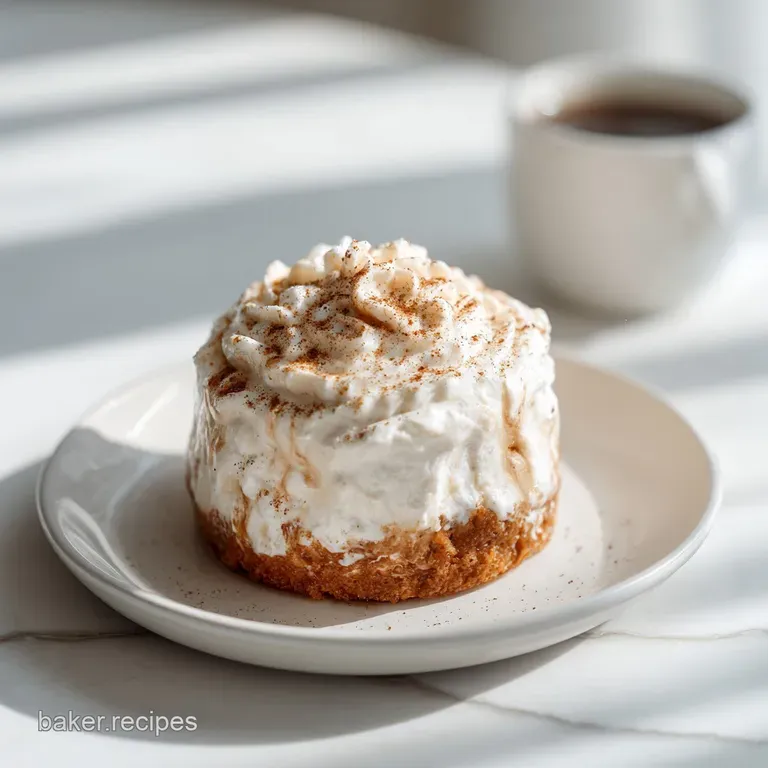
- Time:15 minutes active + 0 minutes cooking = Total 15 minutes
- Flavor/Texture Hook: Velvety, bold, and airy
- Perfect for: Transforming simple vanilla cakes or topping dark chocolate cupcakes
- Discover the Secret to Intense Coffee Frosting Texture
- Essential Prep Details for Homemade Coffee Frosting Success
- Selecting the Right Elements for Bold Coffee Frosting
- The Best Tools for Achieving Velvety Frosting Consistency
- Step-by-Step Method for Silky Coffee Frosting Results
- Solving Your Most Frequent Coffee Frosting Texture Issues
- Budget-Friendly Flavor Variations for Your Coffee Frosting
- Debunking Common Myths About Working With Coffee
- How to Properly Store and Revive Coffee Frosting
- Beautiful Ways to Use Your Finished Coffee Frosting
- Recipe FAQs
- 📝 Recipe Card
Discover the Secret to Intense Coffee Frosting Texture
Have you ever noticed how some frostings just taste like "sweet" without any real depth? It is a common frustration in home kitchens. We often think that adding more coffee will give us more flavor, but usually, it just gives us a runny, soupy mess that slides right off the cake.
The trick isn't more liquid; it is the intensity of the liquid you use. By blooming the espresso powder in a tiny amount of boiling water, we create a "coffee gold" that packs a punch without ruining the structure of the buttercream.
I remember the first time I tried to make a coffee flavored topping for a friend's birthday. I just poured a quarter cup of leftover morning brew into the bowl. It was a disaster. The butter curdled instantly, and no amount of powdered sugar could save it. It looked like wet cement and tasted like disappointment.
That is when I realized that in the world of frosting, water is the enemy of stability. You need a concentrated blast of flavor, not a diluted cup of joe.
This recipe is built for people who want that coffee shop quality at home without spending twenty dollars on specialty extracts. We use simple, Budget Friendly instant espresso powder because it actually dissolves better than high end ground beans. It is a smart swap that gives you a professional result for pennies.
Whether you're a seasoned baker or someone who just wants to make a box mix taste like it came from a boutique bakery, this is the method that actually works.
Essential Prep Details for Homemade Coffee Frosting Success
Before we start whipping and whisking, we need to understand the mechanics of why this works. Frosting is essentially a battle of emulsification. We are trying to force water based liquids (the coffee and cream) to play nice with fat (the butter).
If you rush the process or use the wrong temperatures, the fats will "break," and you'll end up with a grainy texture that feels oily on the tongue.
- Aeration Mechanics
- Beating the butter for a full 5 minutes creates a lattice of tiny air bubbles that hold the sugar in suspension.
- Solubility Boost
- Boiling water "blooms" the espresso powder, releasing oils and aromatic compounds that cold water simply can't reach.
- Fat Bonding
- The heavy cream contains natural emulsifiers that help the coffee concentrate blend seamlessly into the butter.
- Crystal Management
- Sifting the powdered sugar removes clumps that the mixer can't always break down, ensuring a velvety mouthfeel.
| Method | Total Time | Texture | Best For |
|---|---|---|---|
| Instant Espresso | 15 minutes | Silky and smooth | Daily baking and cupcakes |
| Strong Brewed Coffee | 20 minutes | Potentially runny | Light glazes only |
| Coffee Extract | 5 minutes | Uniform but artificial | Quick batches when time is short |
The choice of method depends on how much "bite" you want. I find that the instant espresso method provides the best balance of flavor and stability. It allows you to control exactly how much moisture enters the bowl, which is the most important factor when you want a frosting that can actually hold its shape during piping.
Selecting the Right Elements for Bold Coffee Frosting
When you're shopping for this, don't feel like you need the most expensive organic butter on the shelf. A standard store brand unsalted butter works perfectly here. Since we are adding salt separately, we want to control the sodium levels ourselves.
Also, make sure your heavy cream is actually "heavy" (at least 36% fat). Lower fat versions like half and half will make the frosting too thin.
| Ingredient | Science Role | Pro Secret |
|---|---|---|
| Unsalted Butter | The structural base | Must be 65°F (cool to the touch but leaves a fingerprint) |
| Instant Espresso | Flavor concentration | Sift the powder if it looks clumpy before blooming |
| Powdered Sugar | Sweetness and body | Sifting is mandatory to prevent microscopic grit |
| Fine Sea Salt | Flavor enhancer | Cuts through the sugar to let the coffee shine |
- Instant Espresso Powder (2 tbsp): This is our flavor engine.
Why this? It provides maximum flavor with minimum liquid volume for better stability.
- Substitute: 3 tbsp high-quality instant coffee granules (crush them into a powder first).
- Boiling Water (1 tbsp): To dissolve the coffee.
Why this? Heat is required to fully hydrate the espresso powder quickly.
- Substitute: 1 tbsp very hot, dark roast brewed coffee (though flavor will be milder).
- Pure Vanilla Extract (2 tsp): Adds aromatic depth.
Why this? Vanilla acts as a bridge between the bitter coffee and sweet sugar.
- Substitute: Vanilla bean paste for those beautiful little black flecks.
- Unsalted Butter (1 cup): The fat source.
Why this? Softened butter allows for maximum air incorporation during the beating phase.
- Substitute: high-quality vegan butter sticks (ensure they are high fat, not oil based spreads).
- Powdered Sugar (3.5 cups): Provides structure.
Why this? Fine particles dissolve into the butter more readily than granulated sugar.
- Substitute: Organic powdered sugar (tends to be slightly more beige in color).
- Heavy Cream (2 tbsp): Adjusts consistency.
Why this? Adds a creamy mouthfeel and helps the frosting "flow" through a piping tip.
- Substitute: Full fat coconut milk for a subtle tropical undertone.
- Fine Sea Salt (0.25 tsp): Balances sweetness.
Why this? Salt suppresses bitterness and makes the coffee taste more "chocolatey."
- Substitute: Standard table salt (use slightly less as it is denser).
The Best Tools for Achieving Velvety Frosting Consistency
You don't need a professional kitchen, but a stand mixer is a massive help here. If you are using a hand mixer, you'll need to be patient it usually takes about 30% longer to get the same level of fluffiness. I highly recommend using a paddle attachment rather than a whisk.
A whisk incorporates too many large air bubbles, which can leave your frosting looking "holy" or pitted when you try to smooth it on a cake.
A fine mesh sieve is also non negotiable. Powdered sugar is notorious for having tiny, hard lumps of cornstarch that won't dissolve no matter how long you beat the mixture. Sifting takes two minutes but saves you from the embarrassment of "crunchy" frosting. Also, grab a small silicone spatula.
You'll want to scrape the bottom of the bowl frequently to ensure no pockets of unmixed butter or sugar are hiding down there.
If you find yourself making these often, perhaps for something like my Snickerdoodle Cupcakes, investing in a few good piping bags will make your life much easier. You don't need fancy tips; even a simple plastic bag with the corner snipped off can create a beautiful swirl if the frosting consistency is right.
step-by-step Method for Silky Coffee Frosting Results
- Bloom the coffee. Whisk 2 tbsp instant espresso powder with 1 tbsp boiling water and 2 tsp vanilla extract in a small bowl until the liquid is dark and no granules remain. Note: Letting this cool to room temperature is vital so it doesn't melt your butter later.
- Prep the butter. Place 1 cup softened butter into your mixer bowl.
- Cream the base. Beat the butter on medium high speed for 5 minutes until it looks nearly white and doubled in volume. Note: This is where the "fluff" comes from; don't cut this time short.
- Sift and add sugar. Reduce the speed to low and gradually add 3.5 cups sifted powdered sugar.
- Season the mix. Add the 0.25 tsp fine sea salt while the mixer is still on low.
- Increase speed. Turn the mixer to medium and beat for 2 minutes until the sugar is fully integrated and the mix is pale.
- Introduce flavor. With the mixer running on medium, slowly stream in the cooled coffee mixture and 2 tbsp heavy cream.
- Final emulsification. Beat on medium high for another 1-2 minutes until the frosting is glossy and uniform in color.
- Clear the air. Switch to low speed for 30 seconds to knock out any large air bubbles.
- Test the peak. Lift the paddle; the frosting should hold a firm peak that curls slightly at the tip.
Solving Your Most Frequent Coffee Frosting Texture Issues
The biggest enemy of a great buttercream is temperature. If your kitchen is too hot, the butter will start to sweat, and the whole thing will turn into a greasy soup. Conversely, if your butter was too cold when you started, you'll see little yellow chunks of fat that refused to blend. If that happens, don't panic.
You can usually fix it with a hairdryer on low heat against the side of the bowl for 10 seconds while mixing.
Why Is My Frosting Grainy?
Graininess usually comes from two places: unsifted sugar or sugar that hasn't had enough "fat contact" time. If you add all the sugar at once, the butter can't coat every grain, leaving some to stay crystalline. Another culprit is the coffee.
If the espresso didn't fully dissolve in the boiling water, you'll feel those tiny sand like particles in every bite.
| Problem | Root Cause | Solution |
|---|---|---|
| Separating/Curdled | Coffee was too hot when added | Chill the bowl for 10 mins, then re beat on high |
| Too Soft/Runny | Too much cream or warm room | Add 1/4 cup sugar and refrigerate briefly |
| Air Pockets | Beating on too high a speed | Stir by hand with a spatula for 2 mins to deflate |
Why Does It Taste Bitter Instead of Bold?
Coffee is naturally acidic and bitter. If the frosting tastes harsh, it usually means there isn't enough salt or vanilla to "round out" the flavor profile. Salt is a miracle worker here it doesn't make it salty; it just suppresses the bitter receptors on your tongue.
If it still feels off, try adding another teaspoon of heavy cream to increase the fat content, which mellows out the bite.
Common Mistakes Checklist
- ✓ Never add hot coffee concentrate directly to the butter; it will melt the fat instantly.
- ✓ Always sift your powdered sugar, even if the bag says it is "pre sifted."
- ✓ Don't skip the 5 minute initial butter whip; it is the foundation of the texture.
- ✓ Use a paddle attachment for a smooth finish and a whisk for a light, airy finish.
- ✓ Ensure your butter is "room temp" but still holds its shape (about 65°F).
Budget Friendly Flavor Variations for Your Coffee Frosting
One of the best things about this recipe is how adaptable it is. If you're looking for a different vibe, you can easily pivot. For example, if you want a lighter, more refreshing finish for a citrus based cake, you might want to look at my Zesty Lemon Buttercream instead. But if you're sticking with coffee, there are plenty of ways to spice it up without spending a fortune.
To scale this recipe down for a small batch of 6 cupcakes, simply halve every ingredient. When halving the salt, just use a "pinch." To scale up for a three layer 8 inch cake, you'll want to double the recipe.
Keep in mind that when doubling, you don't always need to double the heavy cream start with 3 tablespoons and only add the 4th if the texture feels too stiff.
| Servings | Butter Amount | Powdered Sugar | Coffee Concentrate |
|---|---|---|---|
| 6 Cupcakes | 0.5 cup | 1.75 cups | 0.5 tbsp water / 1 tbsp espresso |
| 12 Cupcakes | 1 cup | 3.5 cups | 1 tbsp water / 2 tbsp espresso |
| 24 Cupcakes | 2 cups | 7 cups | 2 tbsp water / 4 tbsp espresso |
For a mocha version, sift in 1/4 cup of unsweetened cocoa powder with the sugar. This turns the frosting into a rich, tiramisu like experience. If you want a "Dirty Chai" version, add half a teaspoon of ground cinnamon and a pinch of cardamom to the butter while creaming.
These small additions use spices you likely already have in your pantry, keeping the costs low while maximizing the "wow" factor.
Debunking Common Myths About Working With Coffee
Many people believe you need to use expensive "espresso roast" beans or a fancy machine to get good flavor. That is simply not true. Instant espresso powder is actually preferred by many professional pastry chefs because the flavor is consistent and the moisture content is low.
Using brewed espresso from a machine can actually be too watery for a stable buttercream.
Another myth is that you can't use salted butter. While unsalted is preferred for control, if salted butter is all you have on sale, just use it and omit the extra sea salt from the recipe. It is a smart, budget conscious move that won't ruin the dish.
Finally,, don't believe the idea that frosting is "ruined" if it gets too soft. Buttercream is incredibly forgiving. If it melts, just cool it down; if it's too hard, warm it up.
How to Properly Store and Revive Coffee Frosting
Storage is where most people go wrong. Because this contains heavy cream and butter, it shouldn't sit out on the counter for more than a few hours if your house is warm. In the fridge, it will last for up to 7 days in an airtight container.
When you're ready to use it, don't try to spread it cold it will be as hard as a brick and will tear your cake to pieces. Let it sit at room temperature for 2 hours, then give it a quick whip with a spatula or mixer to restore the fluffiness.
For long term storage, this frosting freezes beautifully for up to 3 months. I like to freeze mine in a freezer safe bag, squeezed flat so it thaws faster. To thaw, move it to the fridge overnight and then to the counter the next morning.
Zero Waste Tip: If you have a small amount of leftover frosting, don't toss it! It makes an incredible "coffee creamer" for your morning mug. Just stir a tablespoon into hot coffee. The butter and sugar act like a rich, flavored foam.
You can also sandwich it between two plain graham crackers for a quick "mock" macaron snack.
Beautiful Ways to Use Your Finished Coffee Frosting
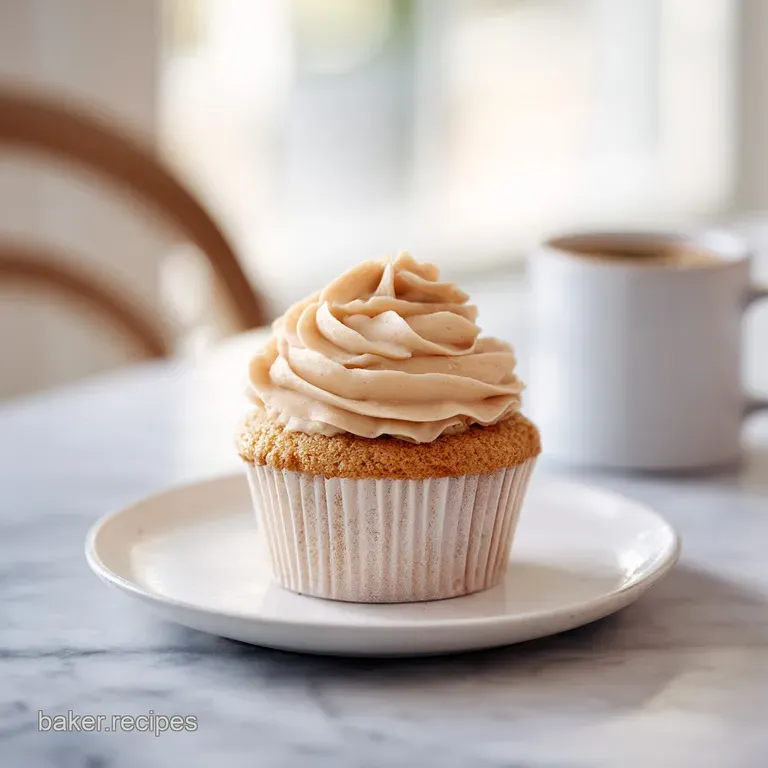
Once you have your silky frosting ready, the fun part starts. If you want that professional look, use a large round tip to pipe "blobs" and then use the back of a spoon to create a little "well" in the center. You can fill that well with a single chocolate covered espresso bean or a dusting of cocoa powder.
It looks intentional and expensive.
For a rustic look, use an offset spatula to create "swirls and waves." Start from the center and move outward in a spiral. The coffee color provides a beautiful natural ombre effect if you don't mix it 100% perfectly sometimes those little streaks of darker coffee look like marble.
If you are pairing this with a chocolate cake, try adding a few shavings of dark chocolate on top. The bitterness of the chocolate mirrors the espresso notes in the frosting perfectly. This frosting is also robust enough to be used as a filling for sandwich cookies.
Just make sure the cookies are completely cool before assembly, or you'll have a sliding coffee mess on your hands!
Recipe FAQs
How do you make coffee icing?
Whisk 2 tablespoons of instant espresso powder with 1 tablespoon of boiling water and 2 teaspoons of vanilla extract until fully dissolved. Once cooled, beat this mixture into a base of creamed butter and sifted powdered sugar until fluffy.
What is the best coffee for coffee icing?
Use instant espresso powder. It provides the most concentrated coffee flavor without adding excessive liquid, which keeps the frosting texture stable.
How to make the best coffee buttercream?
Beat your softened butter on medium high speed for 5 full minutes before adding any sugar. This creates a pale, voluminous base that emulsifies perfectly with the coffee concentrate and heavy cream.
How to make coffee color icing?
Use the natural pigment found in the instant espresso powder dissolved in your boiling water. If you enjoyed mastering the emulsification technique here, you can achieve a consistent, rich tan hue by ensuring the coffee concentrate is fully incorporated during the final whipping stage.
Is it true I can use brewed liquid coffee instead of espresso powder?
No, this is a common misconception. Brewed coffee contains too much water and will prevent your frosting from reaching the necessary light, fluffy consistency.
How to fix frosting that feels too runny?
Add more sifted powdered sugar half a cup at a time while beating on low speed. Ensure your coffee concentrate has cooled completely to room temperature before adding it, as heat will melt the butter and ruin the texture.
How to ensure the frosting is smooth and not grainy?
Always sift your powdered sugar before adding it to the butter. This simple step removes lumps and ensures the final texture is completely velvety and professional.
Silky Coffee Buttercream Frosting
Ingredients:
Instructions:
Nutrition Facts:
| Calories | 284 kcal |
|---|---|
| Protein | 0.3 g |
| Fat | 16.3 g |
| Carbs | 35.2 g |
| Fiber | 0 g |
| Sugar | 34.8 g |
| Sodium | 52 mg |
