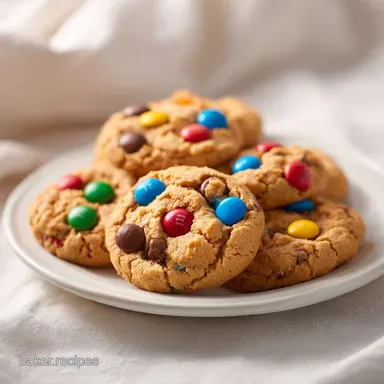
Soft Chewy Monster Cookies: Velvety Chew
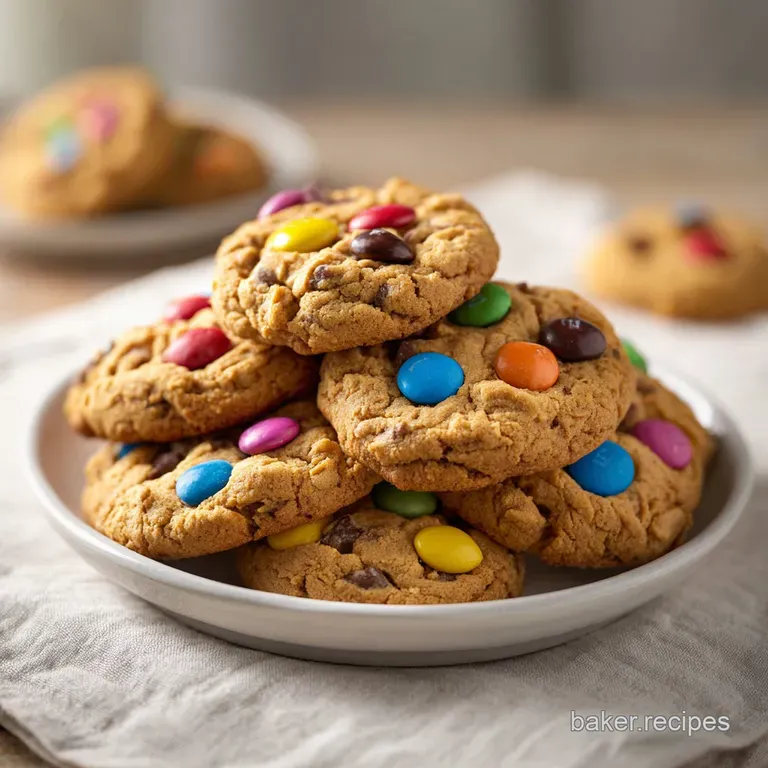
- Time:15 minutes active + 12 minutes bake = Total 27 minutes
- Flavor/Texture Hook: Nutty, salty sweet with a dense, velvety chew
- Perfect for: Quick after school snacks, bake sales, or late night cravings
- Soft Chewy Monster Cookies Made From Scratch
- The Secret To That Texture
- The Ingredient Breakdown
- Gathering Your Essentials
- Step By Step Baking Flow
- Fixing Common Baking Issues
- Troubleshooting Common Issues
- Adjusting the Batch Size
- Busting Cookie Myths
- Storage And Waste Tips
- Serving Your Monster Cookies
- Recipe FAQs
- 📝 Recipe Card
Soft Chewy Monster Cookies Made From Scratch
The smell of toasted oats and melting peanut butter hitting a hot oven is honestly the best scent in the world. I remember the first time I tried to make these for a neighborhood block party, and I thought I could just wing the measurements.
I skipped the molasses, thinking it was just for gingerbread, and ended up with cookies that were basically crisp wafers. They weren't wrong, but they weren't "monsters."
That's when I realized these aren't just random piles of mix ins. There is a specific balance of sugars and fats that creates that signature bend but-don't break texture. When you get it right, the edges have a slight snap, but the center stays soft and almost fudgy.
If you've been told that these are just "junk food" cookies, forget that. These are a study in texture. We're combining the heartiness of an oatmeal cookie with the richness of a peanut butter treat, all held together by a bit of molasses magic.
Let's get into how to make soft chewy monster cookies that actually stay soft.
The Secret To That Texture
Most people think the chew comes from the oats, but it's actually about how the sugars hold onto water. Here is what's happening under the hood:
- Hygroscopic Sugars: Brown sugar and molasses are "hygroscopic," meaning they attract and hold onto moisture. According to Serious Eats, this prevents the cookie from drying out during the bake.
- Fat Stabilization: The combination of softened butter and peanut butter creates a stable emulsion. The peanut butter adds structure, which stops the cookies from spreading too thin.
- Oat Absorption: Rolled oats soak up the fats and liquids from the dough. This creates those little pockets of chewiness instead of a uniform, cakey crumb.
- Leavening Control: Baking soda reacts with the acidic molasses to create tiny air bubbles. This gives the cookie lift without making it fluffy like a cake.
| Method | Time | Texture | Best For |
|---|---|---|---|
| Oven Baked | 27 mins | Chewy & Set | Classic experience |
| Stovetop (No Bake) | 20 mins | Fudgy & Soft | Quick cravings |
The Ingredient Breakdown
I've found that using a kitchen scale is the only way to be consistent, but I've kept the cups in here for ease. The real magic happens in the "Component Analysis" below.
| Ingredient | Science Role | Pro Secret |
|---|---|---|
| Molasses | Moisture & Color | Use unsulphured for a cleaner, caramel like taste |
| Rolled Oats | Structural Chew | Don't use instant oats or they'll turn into mush |
| Peanut Butter | Fat & Binding | Use a standard creamy brand; natural styles can separate too much |
| Brown Sugar | Tenderness | Pack it tight in the cup to ensure enough moisture |
Gathering Your Essentials
When you're making soft chewy monster cookies, the quality of your fats matters. I always use unsalted butter because it lets me control the salt level perfectly. If you use salted butter, just cut the added salt in half.
The Wet Mix
- 1/2 cup (115g) unsalted butter, softenedWhy this? Provides the creamy base and rich flavor
- 1/2 cup (125g) creamy peanut butterWhy this? Adds the signature nutty flavor and structure
- 3/4 cup (150g) packed light brown sugarWhy this? Key for the chewy texture
- 1/2 cup (100g) granulated sugarWhy this? Helps the edges crisp up slightly
- 1 large (50g) egg, room temperatureWhy this? Binds everything and adds lift
- 1 tsp (5ml) vanilla extractWhy this? Rounds out the sweetness
- 1 tbsp (15ml) molasses (unsulphured)Why this? The secret to a deep, soft chew
The Dry Mix
- 1 1/2 cups (190g) all purpose flourWhy this? Provides the basic structure
- 3 cups (270g) rolled oatsWhy this? Creates the hearty, chewy bite
- 1 tsp (5g) baking sodaWhy this? Helps the cookies rise
- 1/2 tsp (3g) saltWhy this? Balances the sugar
The "Monster" Mix ins - 1 cup (170g) semi sweet chocolate chips Why this? Adds rich, melty pockets - 1 cup (190g) M&M candies Why this? Provides color and a candy snap
| Original Ingredient | Substitute | Why It Works |
|---|---|---|
| Molasses (1 tbsp) | Dark Brown Sugar (extra 1 tbsp) | Similar flavor profile. Note: Slightly less chew than real molasses |
| Rolled Oats (3 cups) | Quick Oats (3 cups) | Same flavor. Note: Texture will be softer, less "hearty" |
| Peanut Butter (1/2 cup) | Almond Butter (1/2 cup) | Similar fat content. Note: Lighter, nuttier flavor |
| M&Ms (1 cup) | Rainbow Sprinkles (1/2 cup) | Adds color. Note: Loses the chocolate crunch |
If you're in a rush and don't have time for the oven, you might want to try classic no bake cookies which use a similar peanut butter and oat base but skip the flour and egg.
Step by step Baking Flow
Let's get these moving. The key here is not to overwork the dough once the flour goes in. If you beat it too much, you'll develop too much gluten and the cookies will be tough instead of soft.
- Cream the fats. Beat the softened butter, peanut butter, brown sugar, and white sugar on medium high. Continue until the mixture looks pale and fluffy, usually about 2-3 minutes.
- Build the emulsion. Add the egg, vanilla, and molasses. Beat on medium speed until the batter is smooth and glossy. Note: Using a room temperature egg prevents the butter from seizing.
- Mix dry ingredients. In a separate bowl, whisk the flour, baking soda, and salt together. This ensures the baking soda is evenly distributed so you don't get metallic tasting spots.
- Combine bases. Slowly add the flour mixture to the wet ingredients on low speed. Stop the mixer the second you don't see any more white streaks.
- Fold in the heart. Stir in the rolled oats by hand using a spatula. Then, fold in the chocolate chips and M&Ms. Stop when the mix ins are evenly distributed but the dough still looks a bit shaggy.
- Portion the dough. Scoop rounded tablespoons of dough onto lined baking sheets. Space them 2 inches apart because these will spread slightly.
- The Bake. Bake at 350°F (175°C) for 10-12 minutes. Remove them when the edges are set and lightly golden, but the centers still look slightly underbaked.
- The Carryover. Let the cookies sit on the hot baking sheet for 5 minutes. They will firm up as they cool, which is how you keep them soft.
Chef's Tip: If you want a really professional look, press a few extra M&Ms into the top of the dough balls right before they go into the oven. It makes them look like they came from a bakery.
Fixing Common Baking Issues
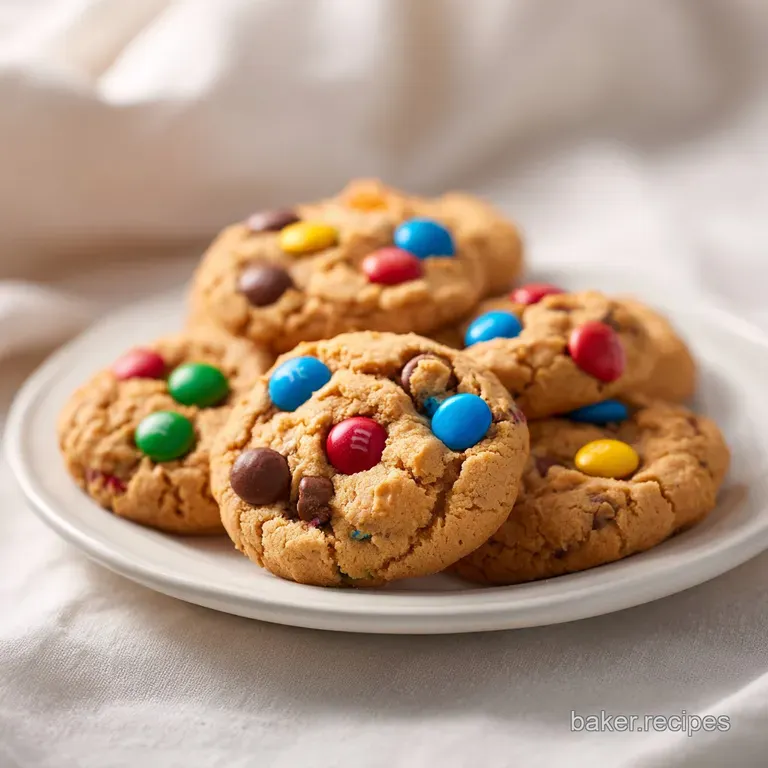
Even with a good recipe, things can go sideways. Usually, it comes down to temperature or measurement. For the flour, I highly recommend the "spoon and level" method or a scale, as suggested by King Arthur Baking, to avoid packing too much into the cup.
Troubleshooting Common Issues
| Issue | Solution |
|---|---|
| Why Your Cookies Are Too Flat | If your cookies spread into thin discs, your butter was likely too soft (almost melted) or your oven wasn't fully preheated. This causes the fat to liquefy before the flour has a chance to set. |
| Why Your Cookies Are Cakey | Cakey cookies happen when there is too much flour or when you over beat the egg and butter. This incorporates too much air and creates a bread like structure instead of a dense chew. |
| Why Your Cookies Are Hard | Overbaking is the number one enemy of soft chewy monster cookies. If you wait until the centers look "done," they'll be hard by the time they cool. Always pull them when the middle looks a bit raw. |
Common Mistakes Checklist
- ✓ Did you use rolled oats instead of instant?
- ✓ Is your egg at room temperature?
- ✓ Did you pull them out while the centers looked underbaked?
- ✓ Did you cream the butter and sugar until pale?
- ✓ Did you fold the oats by hand instead of using a mixer?
Adjusting the Batch Size
You don't always need 24 cookies. Here is how to scale this recipe without ruining the chemistry.
Scaling Down (Half Batch) To make 12 cookies, use 1/4 cup butter and 1/4 cup peanut butter. For the egg, crack one into a bowl, beat it, and use exactly 25g (about half).
Reduce the bake time by about 1-2 minutes, but keep the temperature at 350°F (175°C).
Scaling Up (Double Batch) When doubling to 48 cookies, don't double the salt or baking soda fully - go to 1.75x instead to avoid a chemical aftertaste. Work in batches; don't crowd your mixer, or you'll end up with pockets of unmixed flour at the bottom of the bowl.
Baking Large Quantities If you're baking multiple sheets at once, lower the oven temp to 325°F (160°C) and extend the time by 2-3 minutes. This helps the heat circulate more evenly so the bottom sheet doesn't burn while the top one stays raw.
Busting Cookie Myths
There are a lot of "rules" out there that actually just make cookies worse. Let's clear a few things up.
Myth: Searing the dough by chilling it is always necessary. While chilling helps with spread, for this specific recipe, the peanut butter provides enough stability that you can bake them immediately. Chilling is a tool, not a requirement here.
Myth: Adding more flour makes them chewier. Actually, more flour makes them cakey and dry. Chewiness comes from the ratio of brown sugar to flour and the presence of moisture attracting ingredients like molasses.
Myth: You must use a stand mixer for the creaming step. A hand mixer works just as well. The goal is aeration, and as long as you hit that "pale and fluffy" stage, the tool doesn't matter.
Storage And Waste Tips
These cookies stay soft for a surprisingly long time because of the molasses. Keep them in an airtight container at room temperature for up to 5 days.
If you want them to last longer, freeze the baked cookies. Put a piece of parchment paper between them so they don't stick, and they'll stay fresh for 3 months. When you're ready to eat one, just pop it in the microwave for 10 seconds. If you like to plan ahead, you can also freeze the raw dough balls, similar to how I handle chocolate crinkle cookies, and bake them straight from the freezer (just add 2 minutes to the timer).
Zero Waste Kitchen
- Oat Scraps: If you have leftover oats from the bag, toast them in a dry pan and sprinkle them over yogurt or oatmeal.
- Peanut Butter Jar: Don't throw away the jar with the residue. Put a bit of hot water and a pinch of salt in it, shake it up, and you've got a quick peanut sauce for noodles.
- Butter Wrappers: If you have small bits of butter left, freeze them in a small container to use for greasing pans later.
Serving Your Monster Cookies
Since these are quite rich, they pair best with something that cuts through the sweetness. A cold glass of whole milk is the classic choice, but a hot cup of black coffee or an espresso really brings out the toasted notes of the oats and the bitterness of the chocolate.
If you're serving these for a party, try stacking them in a pyramid on a platter. They are sturdy enough to hold their weight, and it looks a lot more impressive than a flat plate.
For a bit of a twist, you can serve them warm with a small scoop of vanilla bean ice cream on top, letting it melt slightly into the peanut butter base.
Right then, you've got everything you need to make a batch of soft chewy monster cookies that'll actually disappear in minutes. Just remember: don't overbake them, don't skimp on the molasses, and for the love of all things sweet, make sure you have a big glass of milk ready.
Trust me on this one - the combination of salty peanut butter and melty chocolate is a winner every single time. Let's crack on and get baking!
Recipe FAQs
What is the secret to soft chewy cookies?
Avoid overbaking and do not overwork the dough. Mixing too much after adding flour develops gluten, which makes the cookies tough instead of tender.
What is the secret ingredient that keeps these cookies soft?
The molasses. This ingredient acts as a humectant, retaining moisture to ensure the cookies stay chewy for days.
Why did my monster cookies come out too flat?
Your butter was likely too soft or the oven wasn't fully preheated. This causes the fats to liquefy and spread before the flour has a chance to set.
Why are my cookies cakey instead of chewy?
Too much flour or over beating the egg and butter. This incorporates excess air, creating a bread like structure rather than a dense chew.
How to store monster cookies to keep them fresh?
Store them in an airtight container at room temperature. They will remain soft for up to 5 days.
Can I substitute the peanut butter for another nut butter?
Yes, though it will change the flavor profile. If you prefer a more focused nut flavor, see how we balance fats in our peanut butter cookies.
When should I remove the cookies from the oven?
Remove them after 10 12 minutes at 350°F. The edges should be set and lightly golden, but the centers must still look slightly underbaked.
Soft Chewy Monster Cookies