Thanksgiving Stuffing: the Ultimate Sourdough, Sage, and Sausage Feast
- Elevating the Classic Thanksgiving Stuffing: Why Sourdough Reigns Supreme
- The Science of Stuffing Perfection: Balancing Moisture and Crust
- Essential Ingredients for the Ultimate Holiday Stuffing
- Mastering the Method: A Step-by-Step Guide to the Best Thanksgiving Stuffing
- Professional Tips and Troubleshooting Your Stuffing
- Planning Ahead: Storing and Reheating Your Festive Stuffing
- Perfect Pairings for Your Thanksgiving Stuffing Recipe
- Recipe FAQs
- 📝 Recipe Card
Elevating the Classic Thanksgiving Stuffing: Why Sourdough Reigns Supreme
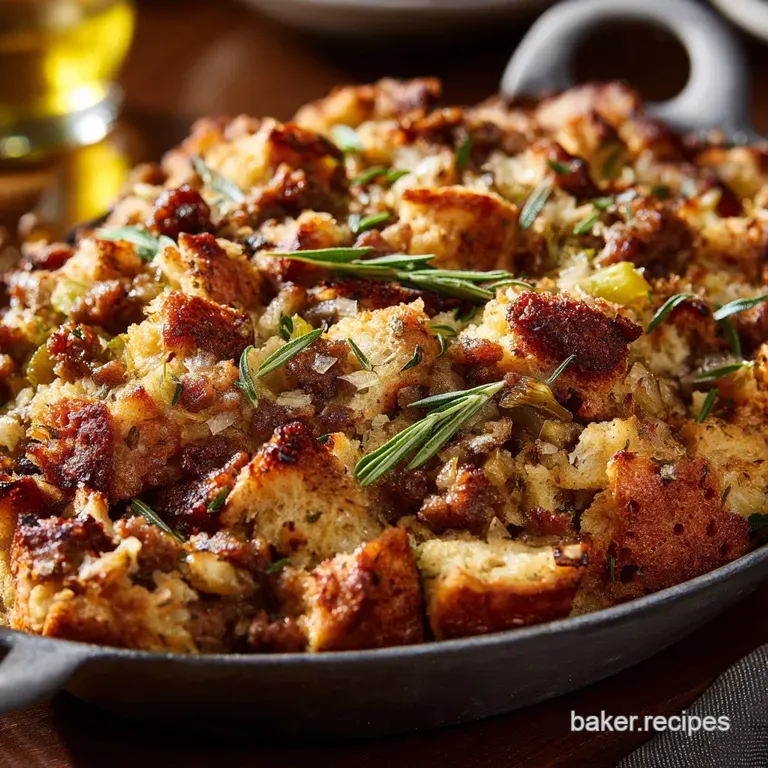
The aroma of this stuffing baking is the undisputed sound of the holidays starting. Forget the turkey; the rich, earthy scent of sage and thyme mixing with browned butter and savory sausage is what tells your soul Thanksgiving has arrived.
The exterior is gloriously crispy, offering that perfect crunch, while the interior remains deeply moist, flavourful, and utterly comforting.
People often think holiday sides are complicated and involve countless steps, but this recipe is a true lifesaver for the big day. It’s mostly prep work you can tackle a day or two ahead, which means less stress when guests are arriving and more time for you to enjoy a glass of wine.
Trust me, learning the few crucial tricks here will make you a stuffing superstar for years to come.
I’m going to walk you through the precise method I use every single year to achieve peak stuffing perfection, moving past the common pitfalls that lead to sad, soggy results. If you want the kind of stuffing that disappears first, then let's crack on and get this masterpiece assembled.
Stuffing vs. Dressing: Settling the Great Debate
Ah, the great geographical food fight! If you bake it inside the bird, it’s traditionally called stuffing because, well, you stuffed it. If you bake it in a casserole dish outside the turkey which is what we are doing and what I highly recommend it’s technically called dressing.
Here's the thing: everyone knows what you mean when you say stuffing, so feel free to call it whatever you like. The vital point is that baking it separately ensures maximum surface area for crispy edges, and let's be honest, that glorious golden crust is half the fun.
The Essential Role of Sourdough in Texture
If you use soft sandwich bread, you might as well just serve bread soup. Sourdough is our secret weapon for structural integrity in this recipe. Its dense crumb and slightly chewy texture mean it doesn't immediately dissolve into goo when liquid is added.
The slight tanginess of the sourdough also provides a fantastic counterpoint to the richness of the butter and sausage. It holds its shape perfectly, giving us that lovely balance of crispness outside and softness inside that defines great stuffing.
A Deep Dive into the Sausage and Sage Flavor Pairing
The combination of pork sausage and fresh sage is absolutely iconic for a reason; it’s earthy, savoury, and immediately transports you to a holiday feast. We use a mild Italian pork sausage here because it offers excellent fat content and seasoning without overwhelming the herbs.
The fat renders out beautifully, creating the perfect foundation for sautéing your onions and celery.
If you are already obsessed with the sausage and sage combo, you might also want to check out my recipe for Savory Sausage Stuffing: Crispy Edges, Moist Interior Perfection which dives even deeper into maximizing that flavour. This pairing is non-negotiable for a truly traditional taste.
The Science of Stuffing Perfection: Balancing Moisture and Crust
The core magic of this recipe relies on two opposing factors: dryness and moisture. You must start with extremely dry bread, which acts like a sponge ready to soak up the flavourful butter, rendered sausage fat, and stock. If the bread is still soft, it just gets compressed and becomes mush when wet.
We use hot stock, which encourages the bread to soften uniformly without becoming waterlogged. Then, baking it covered traps the steam, ensuring the interior gets beautifully tender.
The grand finale involves removing the foil so the high heat can work its Maillard magic, creating that irresistible, crunchy, golden crust we crave.
Essential Ingredients for the Ultimate Holiday Stuffing
| Ingredient to Substitute | Recommended Swap | Notes |
|---|---|---|
| Sourdough Bread | Challah or French Boule | Use a sturdy loaf, avoiding airy sandwich bread. |
| Granny Smith Apple | Dried Cranberries (½ cup / 60g) | Adds necessary tartness and balance to the richness. |
| Pork Sausage | Ground Turkey or Chicken | Brown well and add a pinch of smoked paprika for depth. |
| Chicken Stock | Good Quality Vegetable Stock | Ensures the dish remains flavourful if avoiding poultry. |
Achieving the Crispy Golden Top (The Maillard Reaction)
The secret to that beautiful golden brown top isn't just about high heat. It’s about the fat. As the stuffing bakes uncovered, the exposed top bits of bread and sausage fat hit the dry heat. This triggers the Maillard reaction the browning process that creates complex flavour compounds.
The fat rendered from the sausage, combined with the butter, coats the top bread cubes perfectly. This ensures they crisp up into golden, deeply savoury nuggets instead of simply drying out. Do not skim the fat after rendering the sausage ; it’s essential for the final texture.
The Critical Importance of Proper Bread Drying
I cannot stress this enough: This is the step most home cooks mess up, resulting in sadness and soggy bottoms. You need to toast the cubed sourdough until it feels like hard croutons. If it’s soft, it’s not ready.
Baking the cubes at a low temperature (300°F / 150°C) for about an hour is the quickest and best way to guarantee dryness. Alternatively, you can leave the cubes spread out on your kitchen counter overnight. Just make sure they are completely desiccated before you start mixing.
Sourdough Selection and Prepping Notes
When selecting your bread, look for a hearty, rustic loaf with a good crust. Avoid anything pre-sliced or very airy. Cut it into nice, large, 1 inch cubes. If the pieces are too small, they will absorb the liquid too quickly and disintegrate.
Chef's Note: Tossing the bread cubes with olive oil and salt before drying helps season the stuffing base right from the start. Plus, the slight bit of oil helps encourage that gorgeous golden colour when it finally hits the oven.
The Best Sausage Varieties for Flavor Intensity
As mentioned, mild Italian sausage is my preference because it has beautiful fennel notes and great seasoning that marries well with sage. You could certainly use a sweeter variety, or even an unseasoned pork or breakfast sausage.
If using unseasoned ground meat, you must compensate by adding extra seasoning a pinch of nutmeg, some paprika, and definitely more salt and pepper. Remember that the quality and fat content of your meat will directly impact the overall flavour of the finished dish.
Mastering the Method: A step-by-step Guide to the Best Thanksgiving Stuffing
Phase I: Toasting the Bread and Rendering the Sausage
Get the oven going at 300°F (150°C) and toast those cubed beauties until they sound hollow when you tap them. While the bread is cooling, hit the stovetop. We need to cook the sausage first, breaking it up nicely as it browns.
Once the sausage is cooked through, use a slotted spoon to pull it out and set it aside. Crucially, leave all that rendered fat in the pan. That liquid gold is where the next layer of flavour begins.
Phase II: Building the Aromatic Base (Mirepoix and Sage)
Now add your butter to the skillet, heating it until it foams slightly. Toss in the diced onion and celery the classic mirepoix and let them soften beautifully for about 8 minutes. Don't rush this step; properly softened vegetables add moisture and sweetness.
Once translucent, throw in the diced Granny Smith apple and minced garlic. That apple adds a tiny necessary burst of tartness to cut the heavy fat, trust me. Finally, remove the pan from the heat entirely and stir in the fresh sage and thyme; the residual heat awakens those magnificent herbs.
Phase III: Assembling and Achieving Optimal Saturation
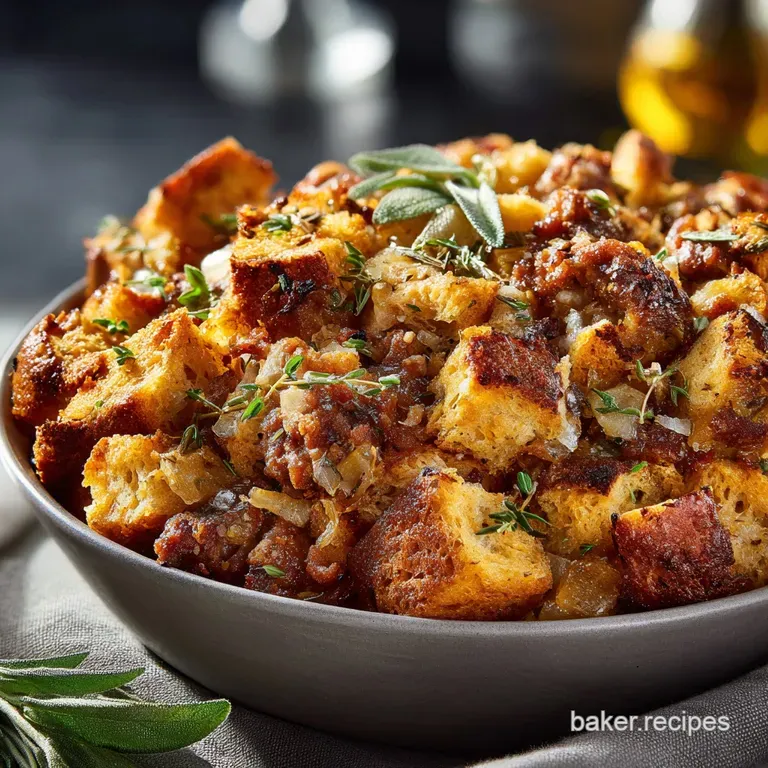
Now we bring everything together in that giant mixing bowl. Combine the toasted bread, the cooked sausage, and the entire pan of aromatic veggies and melted butter. Toss gently so everything is coated.
The binder is next: whisk the eggs into the hot stock. Pour about two-thirds of the stock mixture over the stuffing, and gently fold it in. The goal is evenly moist, not swimming wet.
Let it rest for 10 minutes; this allows the bread to fully absorb the liquid without becoming overly compressed during mixing.
Phase IV: The Baking Process for Crust and Moisture
Preheat your oven to a hotter 375°F (190°C). Transfer the mixture to your prepared casserole dish, making sure you don't compact it down you want those little air pockets. Cover the dish tightly with foil.
Baking covered for the first 30 minutes locks in moisture and heats the centre thoroughly. Then, strip off that foil and let it bake uncovered for the final 15 to 20 minutes.
This is when the top turns deeply golden and crisp, the perfect transition from soft interior to crunchy crust.
Professional Tips and Troubleshooting Your Stuffing
The Danger Zone: Why Under Stuffing is Safer (Food Safety Note)
I know our ancestors stuffed the bird, but we really shouldn't anymore! Stuffing a turkey means the centre of the dressing won’t reach the safe internal temperature (165°F / 74°C) before the turkey breast is horribly overcooked. Always bake your stuffing outside the bird.
It’s safer, and the texture is infinitely better.
The Gravy Test: When to Add More Liquid
How do you know if you added enough liquid before baking? The "Gravy Test" is simple. Take a handful of the finished mixture and squeeze it gently. If it holds its shape perfectly and only a few drops of liquid trickle out, you are golden. If it crumbles, add a little more stock (¼ cup at a time).
If it drips excessively, you've over saturated it.
Fixing a Mushy or Dry Stuffing Disaster
If your stuffing comes out mushy, it means your bread wasn't dry enough, or you added too much liquid. The fix? Scoop the stuffing back into the mixing bowl, gently fold in a cup of additional dried bread cubes, and bake it uncovered longer for maximum evaporation.
If it’s too dry, gently drizzle hot stock over the top once it’s out of the oven, cover it, and let it steam for 5 minutes before serving.
Planning Ahead: Storing and Reheating Your Festive Stuffing
Can You Prep Stuffing the Day Before? (Refrigeration Guide)
Absolutely, and you should! Assemble the entire stuffing mixture (up to the point of baking), transfer it to your baking dish, cover it tightly with foil or plastic wrap, and refrigerate for up to 24 hours.
Important safety note: If you used fresh sausage, do not leave it uncooked for longer than 24 hours.
When ready to bake, let the casserole sit out on the counter for 30 minutes to take the chill off before going into the preheated oven. You may need to add 10- 15 minutes to the covered baking time.
Best Practices for Freezing Leftovers
Stuffing freezes beautifully! Cool the leftovers completely, then transfer them into airtight, freezer safe containers. It will last perfectly well for up to 1 month.
To reheat, thaw the stuffing overnight in the fridge. Transfer it to an oven safe dish, splash a spoonful of stock over the top to refresh the moisture, cover it loosely with foil, and bake at 350°F (175°C) until piping hot (about 20– 30 minutes). You can also use leftover stuffing to make quick weeknight dinners, like my recipe for Turkey Stove Top Stuffing Meatloaf: Easy, Moist, 15 Minute Prep. .
Perfect Pairings for Your Thanksgiving Stuffing Recipe
Beyond Turkey: Complementary Holiday Sides
This rich, savoury stuffing pairs perfectly with anything that offers a sharp contrast or a creamy texture. You absolutely need some tangy cranberry sauce to cut the fat, for starters.
It’s also an absolute must alongside rich, savory sides like mashed potatoes and a good, tart relish. For something creamy and classic, you simply can't beat serving it next to a big casserole of Campbells Green Bean Casserole: The Easiest Thanksgiving Side Dish . The holiday plate demands both crunch and smoothness!
Recipe FAQs
Why is my stuffing dry or conversely, too soggy?
Dry stuffing often means you didn't use enough broth or overbaked it. Conversely, soggy stuffing results from not toasting the bread properly first, or adding too much liquid. Always allow the sourdough cubes to dry out thoroughly before mixing to absorb the liquid without collapsing.
Should I bake the stuffing inside the turkey cavity or separately?
For food safety and superior texture, it is highly recommended to bake the stuffing (or dressing) separately in a casserole dish. Stuffing cooked inside the turkey must reach 165°F (74°C) to eliminate bacteria, which often requires the turkey meat itself to be overcooked and dry.
Can I make this stuffing vegetarian or vegan?
Yes, omit the sausage and replace it with sautéed wild mushrooms, lentils, or chopped pecans for structure and richness. You must also substitute the chicken broth with a robust vegetable broth and replace the butter with a high-quality olive oil or vegan butter alternative.
Can I prepare the stuffing mixture ahead of Thanksgiving Day?
You can prepare the vegetable and sausage mixture, toast the bread, and mix them together up to 24 hours in advance and store them separately in the refrigerator. Wait to add the broth until just before baking, as the salt content in the broth can break down the bread structure if left overnight.
What is the best way to store and reheat leftover stuffing?
Store leftovers tightly covered in the refrigerator for up to four days. To reheat, place the stuffing in a baking dish, add a splash of broth to prevent dryness, and bake covered at 350°F (175°C) until hot. Uncover for the last five minutes to restore the crispy top crust.
Can I use a different type of bread instead of sourdough?
Absolutely, though we recommend using hearty, crusty, day-old artisan bread like French bread, Challah, or Panettone. Avoid soft, pre-sliced sandwich bread, as it lacks the structure needed to hold up against the liquids and will result in a mushy texture.
How can I ensure the top of the stuffing gets golden brown and crispy?
The key to a crispy top is fat and high heat exposure. Ensure you dot the surface generously with extra pats of butter before baking, and always bake the dish covered for the first half of the cook time. Uncover the stuffing completely for the final 15 20 minutes to develop that perfect golden crust.
Ultimate Thanksgiving Stuffing With Sausage
Ingredients:
Instructions:
Nutrition Facts:
| Calories | 619 kcal |
|---|---|
| Protein | 27.6 g |
| Fat | 44.8 g |
| Carbs | 26.5 g |
