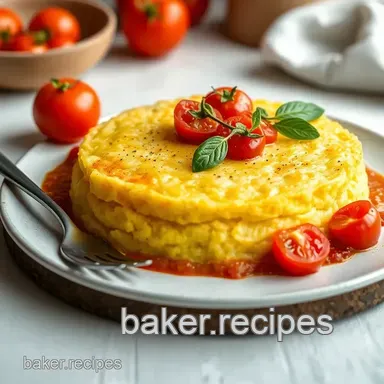
Cheesy Baked Polenta with Juicy Burst Tomatoes
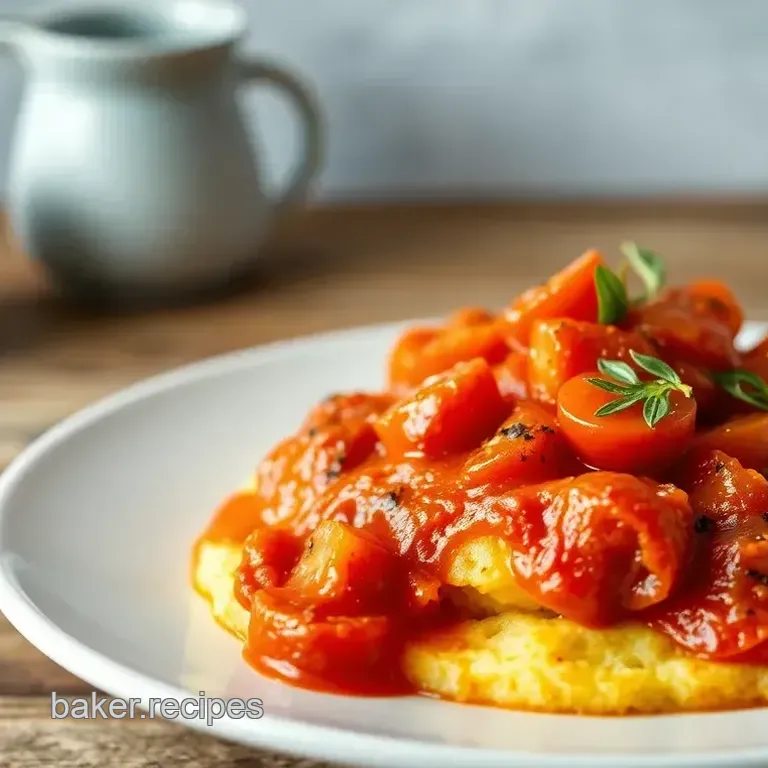
- Time: 10 min active + 50 min cooking
- Flavor/Texture Hook: Mahogany brown crispy edges and tangy, bursting tomatoes
- Perfect for: A cozy vegetarian dinner or a hearty side dish
Baked Polenta with Juicy Burst Tomatoes
Listen for that the sound of cherry tomatoes bursting under the heat. I once dismissed polenta as a mushy, cafeteria style porridge, but I was completely wrong. When baked, the edges develop salty, golden ridges that provide a wonderful contrast to the tender center.
Don't think of polenta as a bland foundation; here, the cornmeal is the main event. The scent of garlic and dried oregano hitting the pan wafts through the kitchen, resulting in a mahogany colored slice of pure comfort. It’s the perfect reason to spend your entire Sunday in your pajamas.
You don't need a fancy Italian kitchen to nail this. All you need are a saucepan and a skillet. We're chasing a specific balance: a decadent, buttery base topped with bright, acidic flavors. While straightforward, a few key techniques are what separate a gummy texture from a bistro style bake.
Why This Version Works
I've analyzed why some polenta ends up gluey while others remain light. It all depends on the way the starch reacts and how the heat is applied to the pan.
The Edge Effect: Baking in a skillet focuses the heat around the perimeter. Moisture evaporates more quickly there, which allows the cornmeal to brown and develop a crisp texture.
Tomato Steam: Cherry tomatoes have a high skin-to-juice ratio. At 400°F (200°C), the internal water converts to steam, increasing pressure until the skins pop. This results in a chunky, natural sauce that soaks into the polenta.
The Ingredient Breakdown
Not all cornmeal is created equal. I always go for coarse yellow cornmeal because it keeps a bit of texture. If you use the super fine stuff, it can feel a bit too much like mashed potatoes.
| Component | Purpose | Substitute Notes |
|---|---|---|
| Coarse Cornmeal | Structure and grain | Fine cornmeal: Works, but result is smoother and less "rustic" |
| Vegetable Broth | Depth of flavor | Water + bouillon: Same result, just check salt levels |
| Parmesan Cheese | Salt and richness | Pecorino Romano: Saltier and sharper flavor |
| Cherry Tomatoes | Acid and moisture | Grape tomatoes: Hold shape longer, pop less easily |
The butter and Parmesan are non negotiable for the base. They stop the polenta from feeling lean and give it that glossy finish. Serious Eats' testing on cornmeal hydration suggests that stirring frequently prevents the starch from settling into a clump at the bottom.
Basic Tools You'll Need
I'm a fan of the minimal tool approach. You don't need a fancy gadget collection for this. A medium saucepan for the simmer and a 9 inch oven safe skillet (cast iron is a dream here) are the heavy hitters.
A whisk is essential. Trying to stir cornmeal with a spoon is a recipe for lumps. You need the whisk to break up the grains as they hit the boiling broth. A simple rubber spatula helps smooth the top once it's in the pan, and that's about it.
Step-by-step Cooking
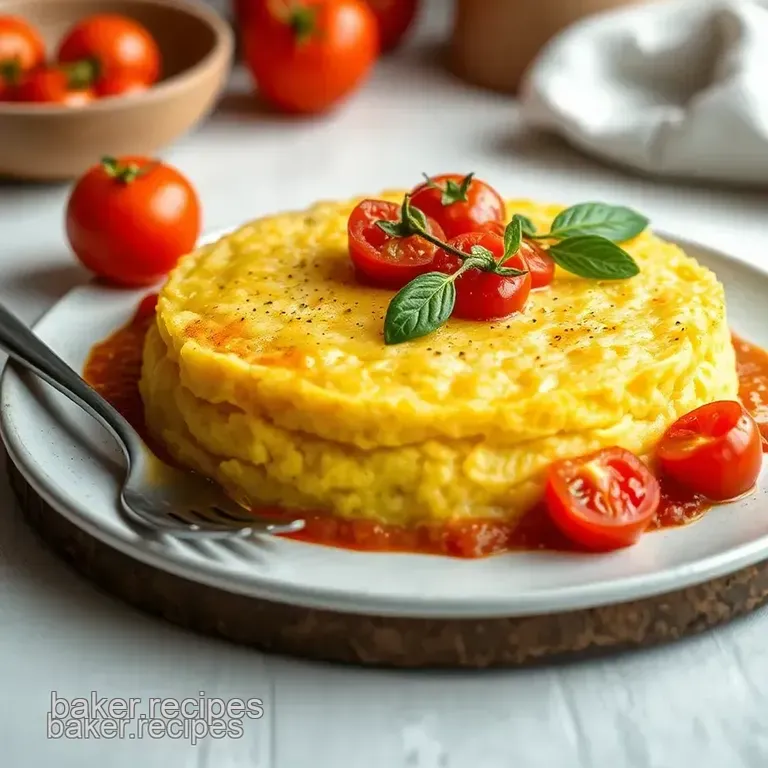
Let's dive in. Ensure your skillet is generously greased with butter so the polenta doesn't stick to the sides.
- In a medium saucepan, bring 950ml vegetable broth and 6g salt to a rolling boil.
- Gradually whisk in 160g cornmeal in a thin, constant stream. Note: Pouring too quickly can cause stubborn "flour balls" to form.
- Lower the heat and simmer for 15-20 minutes, stirring frequently with a whisk until the mixture is thick, velvety, and begins to pull away from the pan.
- Stir in 56g butter and 50g Parmesan until the polenta is glossy and the cheese has melted.
- Get your oven preheated to 400°F (200°C).
- Pour the polenta into a buttered 9 inch oven safe skillet, smoothing the surface with a spatula.
- In a bowl, combine 300g cherry tomatoes, 20g sliced garlic, 42g olive oil, and 2g dried oregano, then spread the mixture over the polenta.
- Bake for 20-25 minutes until the tomatoes burst and the edges are a rich mahogany brown.
- Remove from the heat and immediately top with 25g Parmesan and 15g torn fresh basil.
- Let the dish rest for 5 minutes. Note: This allows the starch to firm up so the polenta doesn't slide apart when scooped.
Chef's Tip: For a more intense flavor, stir a pinch of smoked paprika into the tomato mixture to mimic the taste of a wood fired oven.
Fixing Common Problems
Polenta can be temperamental if you walk away from the stove. The most common issue is texture. If it feels gritty, you likely didn't simmer it long enough for the cornmeal to fully hydrate.
When the tomatoes don't burst, it's usually because the oven temperature is too low or the pan is too crowded. You need that high heat to create the internal steam. If the polenta seems oily, you might have overdone the butter, but honestly, that's a problem most people are happy to have.
Fixing a Grainy Texture
If the polenta is still gritty after 20 minutes, keep simmering on low for another 5 minutes. Add a splash of broth if it gets too thick to stir.
Handling Runny Polenta
If it doesn't set in the oven, you may have used too much liquid. Next time, measure the broth exactly. For now, let it rest longer before serving.
Solving Non Bursting Tomatoes
If the tomatoes are soft but not popping, turn the broiler on for 2-3 minutes at the very end. Watch them closely so the garlic doesn't burn.
| Problem | Root Cause | Solution |
|---|---|---|
| Lumpy Base | Cornmeal added too fast | Whisk vigorously; use a sieve for extreme lumps |
| Burnt Garlic | Slices too thin or oven too hot | Slice garlic into thicker pieces; move rack down |
| Polenta Sticking | Not enough butter in skillet | Use a generous layer of butter or oil on the pan |
Swaps and Variations
This dish serves as a versatile base. I like substituting the cherry tomatoes with sun-dried ones for a denser, chewier texture. Adding crushed red pepper to the oil is a great way to introduce some spice.
To speed things up, use pre-cooked polenta. Simply cut the tube into rounds, arrange them in the dish, top with tomatoes, and bake. You'll lose the creamy center, but it's a convenient shortcut. For another variation, try placing sautéed kale or spinach under the tomatoes.
| Original Ingredient | Substitute | Why It Works |
|---|---|---|
| Vegetable Broth | Chicken Broth | Richer, meatier flavor. Note: Increases sodium |
| Cherry Tomatoes | Roasted Red Peppers | Sweet and smoky. Note: No "burst" effect |
| Parmesan | Goat Cheese | Tangy and creamy. Note: Add after baking |
If you prefer a lower fat version, cut the butter in half. The finish won't be as glossy, but the moisture from the tomatoes prevents it from drying out.
- For [a firmer set]
- Bake for an extra 5 minutes.
- For [more tang]
- Add 1 tsp of lemon zest to the tomato mix.
- For [extra creaminess]
- Substitute 1/2 cup of broth with heavy cream.
Storage and Leftovers
Baked Polenta with Juicy Burst Tomatoes stores beautifully. Keep it in an airtight glass container in the refrigerator for 4 days. While some of the crispy edges may soften upon reheating, the taste remains delicious.
For the best results, reheat the slices in a skillet over medium heat with a splash of olive oil until the bottoms are crunchy again. I'd suggest skipping the microwave, as it often gives the polenta a rubbery texture.
To minimize waste, save the leftover tomato oil from your pan it's essentially garlic infused gold. Use it to sauté some greens or drizzle it over a slice of toasted sourdough. Any remaining cornmeal is also a great addition for thickening a corn chowder.
Best Pairing Ideas
Since this is a rich and savory dish, you'll want something zesty to balance out the butter. A fresh arugula salad with a citrusy lemon dressing is my favorite choice, as the peppery greens offset the sweetness of the corn.
To make this a complete meal, consider adding a protein. Portabella Steaks are a fantastic pairing because the balsamic glaze enhances the flavor of the burst tomatoes.
For a more classic side, grilled asparagus or roasted zucchini work well. Stick to light and acidic accompaniments; since this dish is quite heavy, avoid other creamy sides such as mashed potatoes.
Fast vs. Classic Method
| Feature | Fast Method (Pre cooked) | Classic Method (From Scratch) |
|---|---|---|
| Total Time | 25 minutes | 65 minutes |
| Texture | Firm and uniform | Creamy center, crisp edges |
| Flavor | Mild | Rich, buttery, and deep |
And that's it! This Baked Polenta with Juicy Burst Tomatoes shows that simple ingredients can become something extraordinary with a little patience. Just remember to whisk in the cornmeal slowly for the best consistency.
High in Sodium
980 mg 980 mg of sodium per serving (43% 43% of daily value)
The American Heart Association recommends a daily sodium limit of no more than 2,300 mg, with an ideal limit of 1,500 mg for most adults.
Tips to Reduce Sodium
-
Switch the Broth-30%
Replace the standard vegetable broth with a low-sodium or no-salt added version to significantly cut down the base sodium level.
-
Reduce Added Salt-25%
Omit or reduce the 1 tsp of kosher salt; the broth and Parmesan cheese already contribute a high amount of salt.
-
Limit the Parmesan-15%
Use half the amount of Parmesan cheese or substitute a small portion with nutritional yeast for a similar savory flavor.
-
Enhance with Aromatics
Increase the amount of fresh basil and garlic or add a squeeze of lemon juice to create brightness and flavor without adding salt.
Recipe FAQs
Which mistakes should I avoid when making polenta?
Adding cornmeal too quickly. This creates clumps or "flour balls" that won't dissolve. Whisk the cornmeal in a steady stream into boiling broth for a velvety texture.
Is it true polenta can only be served as a porridge?
Actually, no. You can transfer cooked polenta to a buttered dish and bake it at 400°F (200°C) to achieve a firmer, mahogany brown crust.
How long do cherry tomatoes take to bake in the oven?
Bake for 20 25 minutes. This timing allows the tomatoes to pop and release their juices while the polenta edges brown.
What is the best polenta recipe ever made?
One that balances a creamy center with a crisp exterior. Using a 1:4 ratio of cornmeal to broth ensures a smooth base, which pairs beautifully with a tomato caprese salad on the side.
Baked Polenta With Burst Tomatoes Recipe