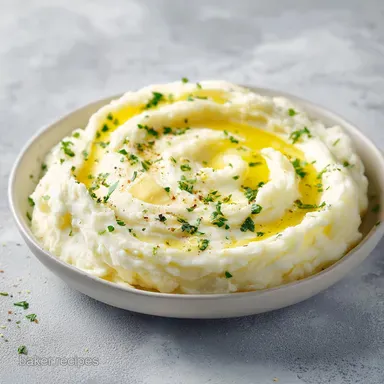
Cheesy Mashed Potatoes: Rich and Velvety
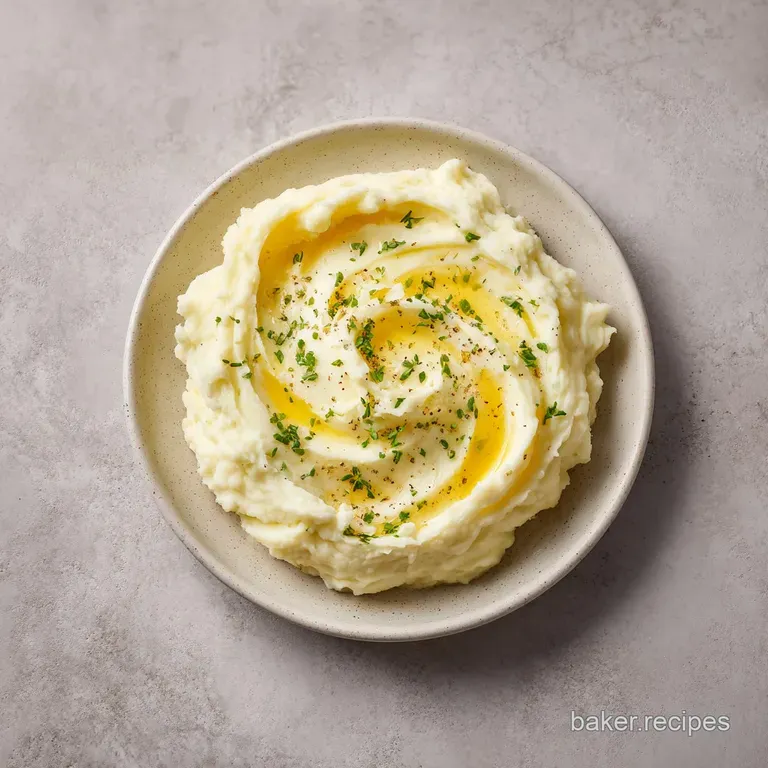
- Time:10 minutes active + 20 minutes cooking = Total 30 minutes
- Flavor/Texture Hook: Velvety, rich, and glossy with a sharp cheddar punch
- Perfect for: Holiday dinners, cozy weeknights, or feeding a hungry crowd
- The Secret to Velvety Cheesy Mashed Potatoes
- Reasons This Recipe Hits the Spot
- Breaking Down the Flavor Components
- The Minimal Tool Kit
- Step-by-Step Guide to Silky Mash
- Fixing Common Texture Blunders
- Twists and Ingredient Swaps
- Keeping Leftovers Fresh
- The Best Pairing Suggestions
- Recipe FAQs
- 📝 Recipe Card
The Secret to Velvety Cheesy Mashed Potatoes
The second that minced garlic hits melted butter, the whole kitchen transforms. It's that specific, savory sizzle that tells me dinner is actually happening. For me, these potatoes are more than just a side dish, they're the center of the plate.
I remember my grandma always insisted that the potatoes were the "glue" of the meal, the thing that made everyone stay at the table just a little bit longer to chat.
In many American households, the mashed potato is a cultural touchstone. It's the comfort we crave during winter and the tradition we lean on during Thanksgiving. But for years, I struggled with the "gluey" problem, where the potatoes turned into a weird, gummy paste.
It took a few kitchen disasters to realize that the secret isn't just about the ingredients, but about how you handle the starch.
We're going for a texture that's velvety and rich, but still has enough body to hold up a lake of gravy. By mixing two types of potatoes and using a specific drying technique, we get that restaurant style consistency without needing a professional kitchen. Let's get into it.
Reasons This Recipe Hits the Spot
The goal here is stability. If your potatoes are too wet, the cheese just slides off. If they're too dry, they feel like sawdust. We're hitting that sweet spot where the sour cream adds a slight tang to cut through the richness of the cheddar.
| Servings | Potato Total | Butter/Milk | Pan Size | Cook Time |
|---|---|---|---|---|
| 3 people | 1.5 lbs | 1/4 cup each | Medium Pot | 20 mins |
| 6 people | 2 lbs | 1/2 cup each | Large Pot | 20 mins |
| 12 people | 4 lbs | 1 cup each | Stock Pot | 25 mins |
Right then, before we start chopping, it's important to understand that we aren't just boiling vegetables. We're managing a starch emulsion. Trust me on this, the difference between "okay" mash and "unforgettable" mash is all in the details.
Breaking Down the Flavor Components
When you're building a dish this rich, every ingredient has a job. I don't believe in adding things "just because." Everything here is designed to support the potato.
| Ingredient | Science Role | Pro Secret |
|---|---|---|
| Yukon Gold | Texture Base | Provides the "buttery" natural flavor and silkiness |
| Russet | Volume/Lift | Adds the fluffiness that absorbs the sauce |
| Sharp Cheddar | Flavor Punch | High fat content creates that signature glossy pull |
| Sour Cream | Acidity | Cuts through the heavy fats to prevent "palate fatigue" |
The combination of Parmesan and Cheddar is a bit of a cheat code. The Parmesan provides a salty, umami depth that makes the Cheddar taste even sharper without needing to add more salt.
The Minimal Tool Kit
You don't need a fancy kitchen to make these. In fact, too many tools can actually ruin the texture. I've seen people use food processors, and let me tell you, it's a nightmare. It breaks the starch cells and turns your dinner into wallpaper paste.
First, you'll need a heavy bottomed pot. A thin pot creates hot spots that can overcook the bottom layer of potatoes before the top is done. I usually go for a stainless steel pot, but a Dutch oven works beautifully too.
For the mashing, a ricer is my top recommendation. It pushes the potato through tiny holes, ensuring there are zero lumps. If you don't have one, a standard handheld masher is fine, just be careful not to overwork the mix. Finally, a fine mesh grater for the cheese is mandatory.
Pre shredded cheese is coated in potato starch to prevent clumping in the bag, which stops it from melting smoothly into the mash.
Step-by-step Guide to Silky Mash
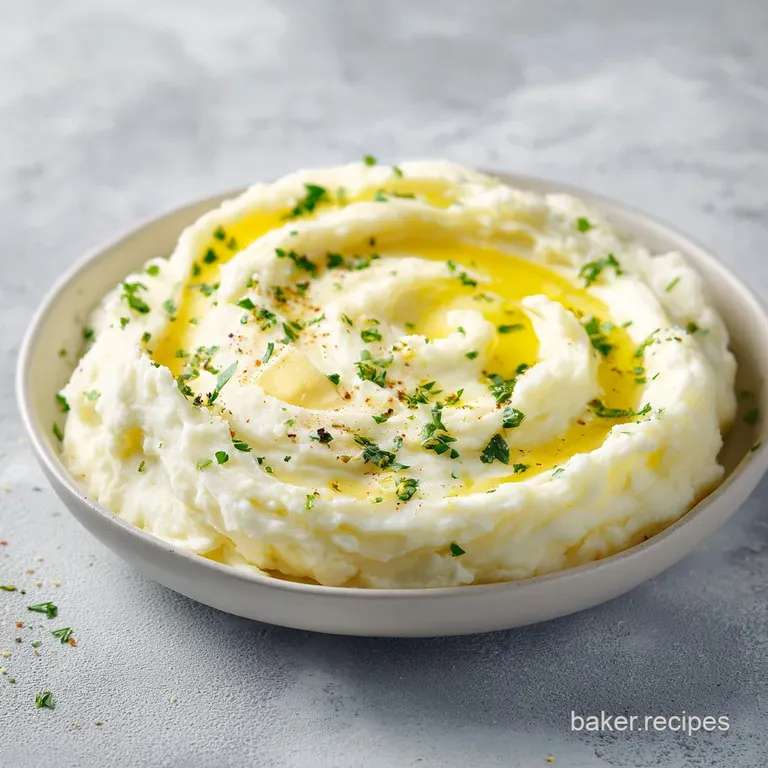
Let's crack on. Make sure your potatoes are peeled and cut into uniform cubes. If some are huge and some are tiny, the small ones will turn to mush while the big ones are still raw.
- Place cubed potatoes in a pot and cover with cold water. Add 1 tsp salt. Note: Salting the water seasons the potato from the inside out.
- Bring to a boil, then reduce to a simmer and cook until fork tender, typically 15-20 minutes.
- Drain the potatoes thoroughly in a colander.
- Return them to the hot pot for 60 seconds over low heat, shaking gently until the excess moisture evaporates and they look "steamy".
- Pass the potatoes through a ricer or mash vigorously until smooth.
- Stir in the melted butter and minced garlic until the mixture is fragrant and glossy.
- Stir in the warm milk and sour cream. Note: Warming the milk prevents the mash from cooling down too quickly.
- Gently fold in the grated cheddar and parmesan until the cheese is fully incorporated and the mash is a uniform consistency.
- Season with 1/2 tsp salt and 1/4 tsp black pepper.
Chef's Tip: For a deeper flavor, sauté the minced garlic in the butter for 2 minutes before adding it to the potatoes. This removes the raw "bite" and adds a nutty aroma.
Fixing Common Texture Blunders
Even the best of us hit a snag. Usually, when mashed potatoes go wrong, it's a result of over processing or temperature clashes.
The Gluey Texture
This happens when the starch granules burst and release too much amylopectin. This is almost always caused by over mixing or using a blender. If this happens, you can't "un glue" it, but adding a splash more warm milk can help loosen the consistency.
The Broken or Greasy Mash
If you see little pools of yellow oil on top, your cheese likely broke. This happens if the potatoes were too hot when the cheese went in, or if you stirred too aggressively. A quick whisk with a tablespoon of warm milk can sometimes bring it back together.
| Problem | Root Cause | Solution |
|---|---|---|
| Lumpy Mash | Under boiled potatoes | Pass through a ricer or mash longer |
| Too Thin | Too much milk/sour cream | Fold in an extra 1/4 cup of grated cheese |
| Bland Taste | Not enough salt in water | Add a pinch of salt and a squeeze of lemon |
To make sure you don't end up in the troubleshooting table, keep this list handy while you cook:
- ✓ Drain potatoes completely water is the enemy of creaminess.
- ✓ Warm your milk and butter before stirring them in.
- ✓ Grate your own cheese from a block for a smoother melt.
- ✓ Stop mashing the moment the lumps are gone.
- ✓ Use a mix of Russet and Yukon Gold for the best structural balance.
Twists and Ingredient Swaps
Depending on what's in your fridge, you can pivot this recipe easily. If you want a more traditional version without the cheese, check out my silky fluffy mashed potatoes for a cleaner profile.
For those who want to experiment, try swapping the sharp cheddar for Gruyère or Fontina for a more "French" vibe. If you're looking for a kick, fold in some chopped pickled jalapeños or a dash of smoked paprika.
| Original Ingredient | Substitute | Why It Works |
|---|---|---|
| Sharp Cheddar | Gruyère | Similar melt, but adds a nuttier, more sophisticated flavor |
| Whole Milk | Heavy Cream | Higher fat content makes it even more velvety. Note: Much richer |
| Sour Cream | Greek Yogurt | Same tang and thickness. Note: Slightly more acidic |
| Unsalted Butter | Ghee | Higher smoke point and concentrated butter flavor |
If you're scaling this for a massive party, be careful with the salt. When doubling the recipe, I only increase the salt to 1.5x. Potatoes absorb salt differently in larger batches, and it's much easier to add more at the end than to fix a salt bomb.
Keeping Leftovers Fresh
Mashed potatoes are great, but they can get a bit "stiff" in the fridge. Store them in an airtight container for up to 4 days.
When reheating, don't just microwave them on high. That creates hot spots and can make the cheese oily. Instead, put them in a small pot over low heat and add a splash of milk or butter to bring back that velvety texture. If you're in a rush, microwave them in 30 second bursts, stirring in between.
As for freezing, you can freeze these for up to 2 months. However, be warned: the texture will change slightly. To fix this, whip them vigorously with a fork after reheating to re incorporate the fats.
For zero waste, don't toss the potato peels. Toss them in a bit of oil and salt and bake them at 400°F for 10 minutes for a quick, crispy snack.
The Best Pairing Suggestions
Because these are so rich, you need something to cut through the fat. A bright, acidic vegetable is the way to go. I love serving these with roasted Brussels sprouts with a balsamic glaze or a crisp green salad with a lemon vinaigrette.
If you're doing a full on comfort feast, these are a heavy hitter, so balance them with something like my oven baked french fries if you're doing a potato themed party. Of course, a juicy steak or a roasted chicken with pan gravy is the classic pairing for a reason.
The Hybrid Potato Theory
Some people swear by only using one type of potato. I've tried it. Russets alone are too airy; they feel like foam. Yukon Golds alone are too dense; they feel like paste. The 50/50 split is the magic ratio for a home cook who wants that "perfect" middle ground.
The Temperature Secret
The biggest mistake I ever made was adding cold milk from the fridge. It dropped the temperature of the potatoes instantly, which meant the cheese didn't melt it just clumped. Always warm your liquids. It takes two minutes on the stove, but it saves the entire dish.
Recipe FAQs
Can I use only Russets or only Yukon Gold potatoes?
Yes, either variety works. Combining both provides a balance between the fluffiness of Russets and the buttery creaminess of Yukon Golds.
How to avoid lumps in cheesy mashed potatoes?
Pass the potatoes through a ricer. This creates a perfectly smooth base before adding the cheese. If you enjoyed mastering this texture, see how the same principle works in our creamy dreamy mash.
Is it true that a food processor is the best way to get them smooth?
No, this is a common misconception. High speed blades shear the starch granules, which turns the potatoes into a gluey, elastic paste.
Can I use pre-shredded cheese from a bag?
No, stick with freshly grated. Pre-shredded cheeses are coated in anti clumping agents that prevent them from melting smoothly into the mash.
How to prevent the potatoes from becoming watery?
Dry the drained potatoes in the hot pot for 60 seconds. This evaporates surface moisture, allowing the butter and milk to emulsify better.
How to ensure the garlic flavor is well blended?
Stir minced garlic into the melted butter. Warming the garlic in fat before folding it into the mash removes the harsh, raw bite.
Can I reheat these in the microwave?
Yes, but do it gently. Heat in short intervals and stir frequently to prevent the cheese from separating or the edges from drying out.
Cheesy Mashed Potatoes