Sourdough Stuffing: the Definitive Recipe for Crispy Edges Deep Flavor
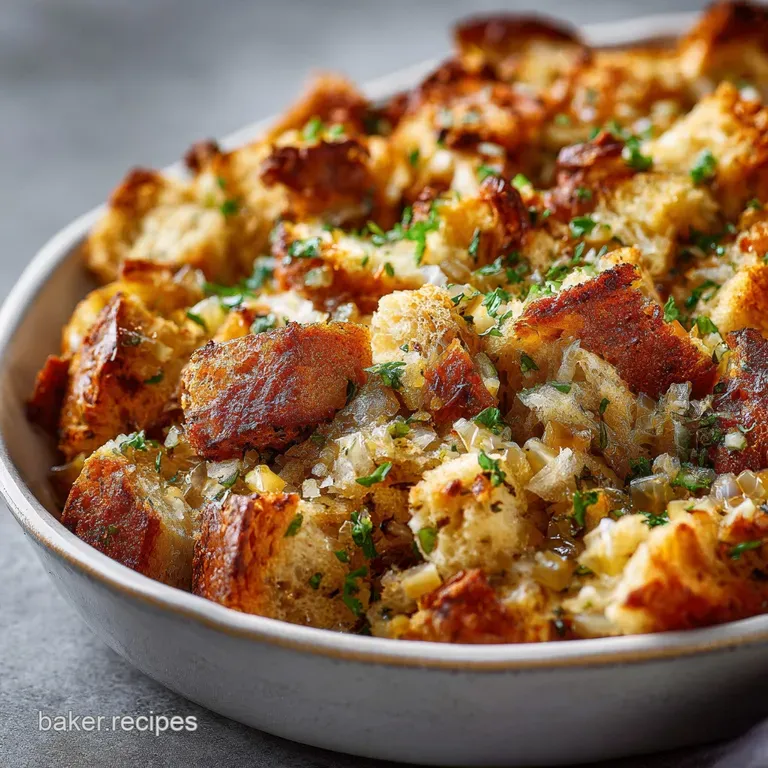
- The Ultimate Holiday Side: Mastering Sourdough Stuffing
- The Science of Superior Stuffing: Why Sourdough Excels
- Essential Components for Your Sourdough Stuffing
- Crafting the Perfect Batch: Step-by-Step Method
- Troubleshooting and Expert Secrets for Fluffy Stuffing
- make-ahead Strategies and Preservation Guide
- Perfect Pairings: What to Serve Alongside Classic Stuffing
- Recipe FAQs
- 📝 Recipe Card
The Ultimate Holiday Side: Mastering Sourdough Stuffing
There are few things in the kitchen that smell as instantly comforting as sage, thyme, and butter sizzling together. Honestly, the aromatic base for this sourdough stuffing recipe is enough to make me weak in the knees.
It promises that incredible contrast: a crunchy, golden brown crust protecting a soft, tender, and deeply savory interior.
This isn't just for Thanksgiving, either. It’s a lifesaver when you need a hearty, delicious side dish that scales easily and doesn't require constant attention. Sourdough stuffing is surprisingly affordable and simple, making it the MVP of any Sunday roast or dinner party. Skip the boxed stuff forever.
I promise you, once you understand how the tangy backbone of the sourdough works with the liquid binders, you will never struggle with soggy stuffing again. Let’s crack on and talk about why this exact formula works so well before we start chopping.
The Science of Superior Stuffing: Why Sourdough Excels
The Tangy Backbone: What Sourdough Brings to the Table
Using sourdough bread is an absolute game changer in the world of stuffings. It provides the necessary structure and chewiness that wimpy white bread just can't handle. The sturdy crust and dense crumb prevent the cubes from dissolving into a sad, starchy mush when they soak up the stock.
You want definition in your cubes; sourdough delivers exactly that.
Stuffing vs. Dressing: Settling the Baking Debate
Okay, we have to talk semantics for a second, just so we’re on the same page. If you bake it inside the bird, it’s stuffing; if you bake it in a separate dish, it’s technically dressing.
I call this recipe Sourdough Stuffing because I use it to accompany the bird, but we are baking it separately. Baking separately is mandatory for food safety and the best crust development, trust me.
Preparing Your Kitchen for Stuffing Success (Mise en Place)
Prep work is everything here, especially when dealing with high volume recipes like this. Get all your sourdough cubed, your onions diced, and your herbs chopped before you even turn on the stove. This ensures a smooth workflow, which is essential if you're multitasking a big holiday meal.
Achieving the Ideal Crisp-to-Chewy Ratio
The crisp edges come primarily from two things: ensuring your sourdough is absolutely bone dry, and liberally dotting the top of the mixture with butter before baking. That extra surface fat melts, deep fries the exposed bread cubes, and gives you that perfect, unforgettable golden crust.
Moisture Management: Preventing a Soggy Center
This is where most people fail. You must use the "just enough" stock rule. We start with three cups and only add more if the cubes feel dry after a 15 minute rest. The goal is moistness, not saturation, because the butter and eggs will add enough richness without needing to swim in liquid.
The Role of Acidity in Flavor Depth
The natural tang of the sourdough bread cuts through the richness of the butter and stock perfectly. This acidity provides a balanced counterpoint, preventing the final dish from tasting too heavy or one-note. It’s a subtle depth that makes people wonder what your secret ingredient is.
Essential Components for Your Sourdough Stuffing
Selecting and Prepping the Best Sourdough Loaf
Always choose a rustic, hearty sourdough loaf with a great crust. Avoid the overly soft, commercial stuff; you need density. Cut the bread into 1 inch cubes any smaller, and they risk mushing; any larger, and they won't absorb enough flavor.
Beyond Salt and Pepper: Mastering the Herb Blend (Sage and Thyme)
Fresh herbs are non-negotiable for this classic sourdough stuffing recipe. Sage is the star, bringing that warm, comforting, traditional holiday flavor. Thyme offers an earthy note, and a tiny bit of finely chopped rosemary adds complexity. Use fresh herbs only , if you can manage it.
Binding Agents: Broth, Butter, and Egg Ratio Adjustments
We use both eggs and stock to bind the stuffing. The eggs lightly coagulate, holding the whole thing together into sliceable portions without being heavy. Stock is your primary flavor carrier; use good quality, low-sodium chicken or turkey stock so you can control the seasoning.
Ingredient Notes and Simple Substitutions
| Ingredient | Amount (Outline) | Viable Substitute |
|---|---|---|
| Sourdough Bread | 1 large loaf (2.5 lbs) | Rustic Ciabatta or Country Loaf |
| Unsalted Butter | 1 cup (2 sticks) | high-quality olive oil or vegan butter |
| Chicken Stock | 3 4 cups | Vegetable stock or good quality bone broth |
| Fresh Sage | 1/4 cup chopped | 1 Tbsp dried sage (use less!) |
| Eggs | 3 large | 3 flax eggs (3 tbsp flax + 9 tbsp water), if necessary |
Crafting the Perfect Batch: step-by-step Method
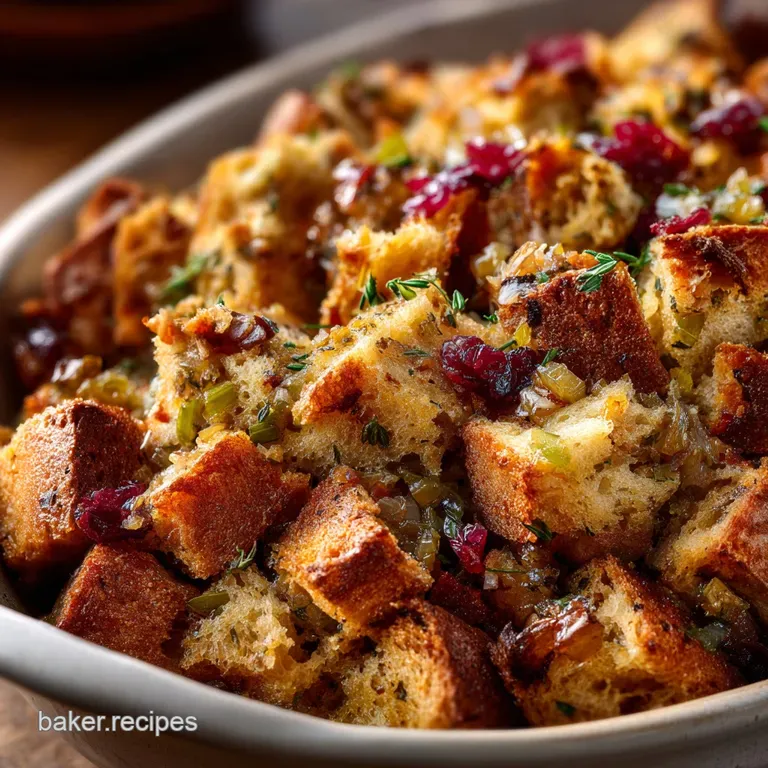
Step 1: Cubing and Drying the Bread for Maximum Absorption
The most critical step in making killer sourdough stuffing cubes is the drying process. Cut your bread and leave it out on trays overnight if possible. If you’re rushing (we've all been there), bake the cubes at 300°F (150°C) until they feel like store-bought croutons.
They must be completely dry before they meet the liquid.
Step 2: Sautéing the Aromatics (Onion and Celery Base)
Melt one stick of butter and gently cook the diced onions and celery until they are perfectly softened and translucent about 8 to 10 minutes. Patience here develops a sweet base flavor. Then, stir in the garlic, sage, thyme, and rosemary.
Cook until you smell that intense, beautiful, nutty aroma, usually about 60 seconds.
Step 3: Combining the Base and Moistening the Mixture
Scrape the warm butter and vegetable mixture over the dry sourdough cubes in a very large bowl. Toss everything lightly but thoroughly. Whisk the eggs and three cups of stock together, then pour this liquid evenly over the bread. Gently fold it together using clean hands or a large spoon.
Let it rest for 15 minutes to fully absorb the moisture before deciding if you need the extra cup of stock.
Chef's Note: If your mix is swimming, you used too much stock. If it feels dusty and dry, add the remaining stock a half cup at a time. The final result should feel uniformly moist but hold its cube shape.
Step 4: Baking Times and Internal Temperature Check
Preheat your oven to 375°F (190°C). Transfer the stuffing to your prepared dish and dot the remaining stick of butter across the top. Cover tightly with foil and bake for 30 minutes to steam the interior.
Remove the foil and bake for another 15 to 20 minutes until the top is golden, crisp, and irresistible. The internal temperature must reach 165°F (74°C) for safety, especially since this is an egg product.
Troubleshooting and Expert Secrets for Fluffy Stuffing
Why Your Stuffing is Dry (and How to Fix It Mid-Bake)
If you pull the foil off and see a dry, sad crust forming, all is not lost! Simply use a turkey baster or a ladle to gently drizzle 1/4 cup of warm stock evenly over the top, cover it back up, and bake for five more minutes. This will reintroduce moisture and save your texture.
Avoiding Overmixing the Sourdough Stuffing Base
When you mix the stock and bread, do not stir vigorously or compress the ingredients. You are folding, not kneading. Overmixing develops gluten and releases starch, which results in a gummy, heavy texture. We want fluffy, tender cubes, not bread pudding.
The Foil Tent Trick for Golden Brown Crusts
When you uncover the stuffing for the last 15 minutes, keep an eye on it. If the edges are browning too quickly, but the center still needs crisping, simply place a piece of foil loosely over the entire pan a "tent." This deflects direct heat, ensuring even browning.
make-ahead Strategies and Preservation Guide
Refrigerating Unbaked Stuffing for 24 Hour Prep
This is a fantastic make-ahead recipe. You can prepare the mixture completely (Steps 1 3) and place it into the baking dish up to 24 hours in advance. Cover it tightly and refrigerate.
CRUCIAL TIP: You must let the dish sit at room temperature for 30– 45 minutes before baking, otherwise the cold baking dish will dramatically increase your overall cooking time.
Freezing Fully Baked Sourdough Stuffing Safely
Yes, you can freeze it! Bake the stuffing completely, let it cool entirely, then wrap it tightly in aluminum foil and then plastic wrap. It keeps well for up to three months. This is especially useful if you are making large holiday batches or perhaps preparing a smaller portion like my Chicken and Stuffing Casserole The Ultimate Creamy Comfort Bake .
Reheating Methods to Retain Moisture and Crispness
To reheat, thaw the frozen stuffing overnight in the fridge. Place it back in the oven at 350°F (175°C), covered with foil, until warm throughout (about 20 minutes). For the final five minutes, remove the foil to re-crisp the top. You'll barely notice it was frozen.
Perfect Pairings: What to Serve Alongside Classic Stuffing
Stuffing is incredibly versatile. While it’s the perfect accompaniment for a roast turkey, it pairs beautifully with almost any substantial main course.
- The Classics: Roast chicken, leg of lamb, or any game bird.
- Alternative Ideas: This classic sourdough stuffing recipe also works beautifully as the foundation for heartier meals. Sometimes I serve it alongside a generous slice of my Pioneer Woman Sausage Stuffing: The Ultimate Savoury Sage Dressing if I need two different textures.
- The Essential Sides: Don't forget the gravy (homemade only!) and a tart cranberry sauce to cut through the richness.

Recipe FAQs
Why is my Sourdough Stuffing coming out too dry and crumbly?
Dryness is often caused by insufficient liquid relative to the bread's absorbency; sourdough, being hearty, can soak up a lot of stock. Ensure you measure the stock accurately, adding slightly more if your bread cubes are extremely dry before mixing, and cover the pan halfway through baking to trap essential steam.
Avoid overbaking, as even a few extra minutes can lead to a dry result.
Can I prepare the Sourdough Stuffing mixture ahead of time?
Yes, you can assemble the stuffing fully, mixing all wet and dry ingredients together, up to 24 hours in advance of baking. Store the mixture covered tightly in the refrigerator, but remember to allow it to come close to room temperature before baking.
Baking it straight from the cold fridge will significantly increase the required cooking time.
What is the safest internal temperature for baked stuffing?
Whether baked inside the cavity of the bird or separately as dressing, all stuffing must reach a minimum internal temperature of 165°F (74°C) to ensure safety. This is particularly crucial when baking inside poultry, as the stuffing absorbs juices that must be fully cooked.
Use an instant read thermometer inserted into the center to confirm doneness.
How do I ensure the top gets crispy without drying out the center?
The best technique is to initially bake the stuffing covered loosely with aluminum foil for the first 30 minutes, which creates a steamy environment that cooks the center evenly. Then, remove the foil for the final 15-20 minutes of baking, allowing the top layer of bread cubes to toast and crisp up beautifully.
This two-stage process guarantees a tender interior and a crunchy crust.
Can I substitute regular white bread for the sourdough?
While you can substitute, using standard white bread will result in a much softer texture and lack the characteristic tangy backbone that sourdough provides. If substituting, use a hearty, rustic loaf (like a country boule) that has been properly cubed and dried for at least 24 hours.
Thin, soft sandwich bread is highly discouraged, as it tends to turn mushy when liquid is added.
How can I adapt this recipe to be vegetarian or vegan?
To make this stuffing vegetarian, simply substitute vegetable stock for any chicken or turkey stock called for and omit any meat drippings. For a vegan preparation, utilize vegetable stock, replace butter with a high-quality vegan butter or olive oil, and use a flax or chia seed egg substitute if the recipe requires eggs for binding structure.
How should I store leftover stuffing, and can I freeze it?
Store cooled leftovers in an airtight container in the refrigerator for up to 4 days, reheating thoroughly before serving. Stuffing freezes exceptionally well; pack it tightly in a freezer safe dish and it will maintain quality for up to two months, though you may notice a slightly softer texture when thawed and reheated.
Classic Sourdough Stuffing With Herbs
Ingredients:
Instructions:
Nutrition Facts:
| Calories | 289 kcal |
|---|---|
| Protein | 9.0 g |
| Fat | 14.0 g |
| Carbs | 32.0 g |
