Easy St Patrick Day Irish Nachos | Pub-Style Crunch

- Effort/Time: Minimal prep / 45 minutes total
- Flavor Hook: Smoky-salt crunch meets velvety melted fats
- Perfect for: High-energy gatherings and holiday-themed snacking
- Mastering the Ultimate Easy St Patrick Day Irish Nachos
- Precision Benchmarks for Your Day Irish Nachos
- The Alchemy of Flavor: Selecting Your Elements
- Minimal Tools for Maximum Efficiency and Cleanup
- The Step-by-Step Thermal Processing Protocol
- Avoiding Sogginess and Cheese Breakdown Pitfalls
- ⚗️ The Scaling Lab: Physics of the Batch
- Flavor Architecture and Creative Ingredient Swaps
- Preservation Physics: Storage and Zero Waste Methods
- Curating the Ideal Pub Experience at Home
- Recipe FAQs
- 📝 Recipe Card
The hiss of cold sour cream hitting a hot potato round is the sound of victory. But getting there is a minefield; I’ve suffered through many "Irish Nachos" that were little more than a pile of limp, oil-soaked potato discs.
There is nothing worse than investing in 1 kg of Russet potatoes and high grade cheese only to serve a soggy, structural failure that requires a fork to excavate. I once ruined a whole party platter by slicing the potatoes too thick and crowding the pan, resulting in steamed, mushy centers that lacked any structural integrity.
I spent months iterating on the moisture-to-starch ratio before I realized that over high heat roasting is a game of surface area and evaporation. The secret isn't just the heat; it's the removal of surface starch and the strategic application of smoked paprika to encourage the Maillard reaction.
We are aiming for a shattering exterior that supports a heavy load of 225 g of sharp Cheddar cheese without buckling under the weight.
The success of these Easy St Patrick Day Irish Nachos relies on starch retrogradation and the physics of the oven's convection currents. By slicing the potatoes to a precise 1/4 inch thickness, we maximize the surface-to-volume ratio, allowing the oven's heat to drive off moisture rapidly.
This creates a rigid, mahogany colored crust that acts as a structural foundation for the toppings. When you hear that distinct "crack" as you bite in, you’ll know the thermal processing worked.
Mastering the Ultimate Easy St Patrick Day Irish Nachos
Achieving the perfect texture for Easy St Patrick Day Irish Nachos requires understanding how heat interacts with vegetable polysaccharides. We aren't just baking potatoes; we are creating a dehydrated, reinforced lattice of starch that can hold up against the moisture of Roma tomatoes and sour cream.
- Surface Dehydration: Rinsing sliced potatoes removes excess amylose, which prevents the rounds from sticking together and allows for a more even crisp.
- Lipid Heat Transfer: The 45 ml of extra virgin olive oil acts as a thermal conductor, ensuring the heat from your [Lodge Cast Iron Baking Pan] penetrates the potato cells evenly.
- The Maillard Reaction: Smoked paprika and garlic powder provide the nitrogen and sugar compounds necessary to accelerate browning at 400°F.
- Protein Cohesion: Using a mix of Cheddar and Monterey Jack ensures a balance between sharp flavor and superior meltability (stretch).
Precision Benchmarks for Your Day Irish Nachos
When deciding how to process your Easy St Patrick Day Irish Nachos, the cooking vessel dictates the final textural outcome. While many reach for a skillet, the increased surface area of a large sheet pan is mathematically superior for moisture evaporation.
| Method | Heat Distribution | Texture Result | Efficiency |
|---|---|---|---|
| Oven Roasting | Consistent 360 degree convection | Shattering edges, fluffy core | High (handles 1 kg at once) |
| Stovetop Searing | Direct bottom-up conduction | Uneven browning, higher oil absorption | Low (requires multiple batches) |
Decision Shortcuts: If you want maximum crunch, slice potatoes to exactly 1/4 inch. If you want a "pub style" feel, use a cast iron skillet for the final cheese melt. If you're short on time, use the oven's "Convection" setting to shave 5 minutes off the roasting time.
The Alchemy of Flavor: Selecting Your Elements
The integrity of Easy St Patrick Day Irish Nachos starts with the chemistry of the potato. Russets are mandatory here because their high starch content (amylopectin) translates to a fluffier interior and a drier, crispier exterior compared to waxy red potatoes.
Ingredient Chemistry Breakdown
| Ingredient | Chemical/Physical Role (Science) | The Pro Secret (Why This Matters) |
|---|---|---|
| Russet Potatoes | High starch-to-water ratio | Ensures the base doesn't turn into a soggy mess under toppings |
| Sharp Cheddar | High protein-to-fat ratio (aged) | Provides intense umami and "the bite" that cuts through potato starch |
| Kosher Salt | Osmotic pressure regulation | Draws out internal moisture during the roasting phase for better crunch |
| Pickled Jalapeños | Acetic acid (vinegar) | Acidity balances the heavy lipids in the cheese and bacon |
- 1 kg Russet potatoes
- Why this? High starch content is essential for creating a rigid, crispy structure. Substitute: Yukon Gold (will be creamier but less crunchy).
- 225 g sharp Cheddar cheese
- Why this? Provides the essential fatty emulsion for a "cheese pull". Substitute: Aged Gouda for a nuttier profile.
- 150 g thick cut bacon
- Why this? Adds smoke and rendered fat (lipids) for flavor depth. Substitute: Smoked turkey bacon.
- 45 ml extra virgin olive oil
- Use [California Olive Ranch EVOO] for a clean, peppery finish.
- 5 g smoked paprika
- Use [McCormick Smoked Paprika] to mimic the flavor of a wood fired oven.
- 115 g Monterey Jack cheese
- Why this? Low melting point ensures a velvety, smooth texture. Substitute: Muenster cheese.
Minimal Tools for Maximum Efficiency and Cleanup
To maintain the "Masterclass" standard for these Patrick Day Irish Nachos, you don't need a kitchen full of gadgets. A focus on high-quality thermal mass will yield better results than any specialized "nacho dish."
- [Lodge 15 inch Cast Iron Skillet] or Large Sheet Pan: Provides the thermal mass needed to keep the potatoes searing even after you open the oven door.
- [Mandoline Slicer]: Essential for 1/4 inch uniformity; inconsistent slices lead to a mix of burnt and raw potatoes.
- [Microplane Grater]: Hand shredding the 225 g of Cheddar is non-negotiable; pre-shredded cheese is coated in potato starch (anti caking agent) which prevents a smooth melt.
The step-by-step Thermal Processing Protocol
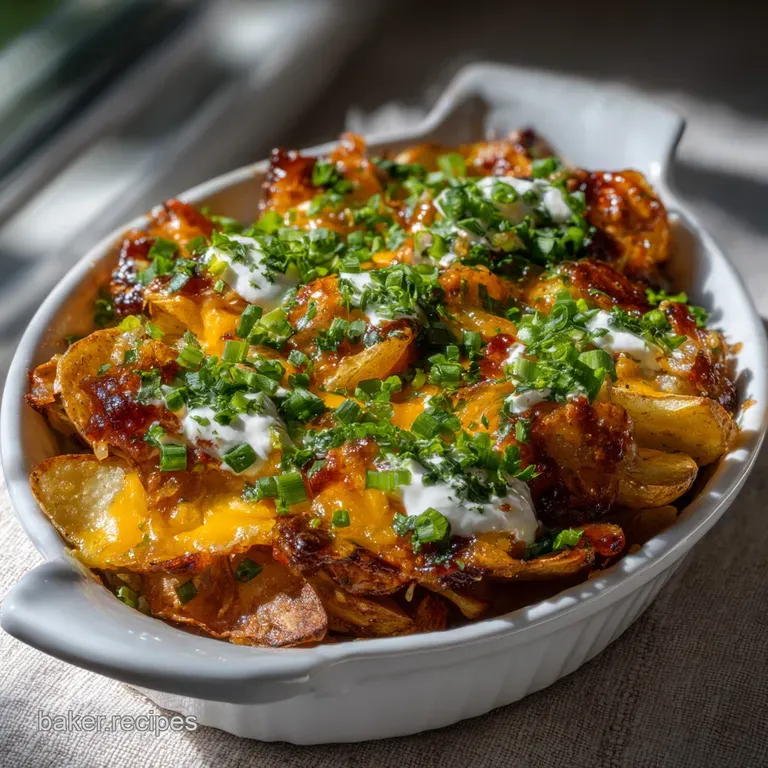
Creating Easy St Patrick Day Irish Nachos is a sequence of moisture management. If you follow these exact checkpoints, you'll avoid the "limp potato" syndrome that plagues most home cooks.
- Preheat oven to 400°F until the internal thermometer stabilizes to ensure immediate searing.
- Slice 1 kg Russet potatoes into 1/4 inch rounds until all pieces are uniform.
- Rinse slices in cold water until the water runs clear to strip excess surface starch. Note: This prevents sticking.
- Pat potatoes completely dry with a lint free towel until no visible moisture remains. Note: Surface water creates steam, not crunch.
- Toss slices with 45 ml olive oil, 5 g garlic powder, 5 g smoked paprika, 5 g salt, and 2 g pepper until every surface is glossy.
- Arrange in a single layer on a sheet pan until no potatoes overlap. Note: Overlapping creates steam pockets.
- Roast for 20 minutes until the bottoms are deep golden and they slide easily.
- Flip each round and roast 10 more minutes until edges are mahogany colored and centers puff slightly.
- Layer with 225 g Cheddar and 115 g Monterey Jack until the potato base is mostly obscured.
- Bake for 5 minutes until the cheese is bubbling and just begins to oil off.
- Garnish with 150 g crumbled bacon, 30 g scallions, 60 g jalapeños, and 1 medium Roma tomato until colors are vibrant and aroma is pungent.
- Dollop 120 ml sour cream over the center until it begins to melt slightly into the crevices.
Chef's Tip: Freeze your 225 g block of Cheddar for 10 minutes before grating. This prevents the fat from softening too much, giving you cleaner shreds that melt more evenly across your Patrick Day Irish Nachos.
Avoiding Sogginess and Cheese Breakdown Pitfalls
The most common failure in any Easy St Patrick Day Irish Nachos recipe is the "Soggy Center." This happens when the moisture from the toppings (like tomatoes and sour cream) migrates into the potato crust via capillary action.
Why Your Potatoes Turn Soft
When potatoes are crowded on a pan, the water evaporating from one slice gets trapped under the next. This creates a steaming environment that breaks down the pectin in the cell walls before the exterior can dehydrate into a crust. To fix this, you must ensure at least 1/2 inch of space between rounds. Similar to how a Slow cooker recipe relies on trapped moisture to tenderize meat, we want the exact opposite here maximum evaporation.
| Problem | Root Cause | The Fix | Pro Protocol |
|---|---|---|---|
| Soggy Rounds | Surface starch and steam | Rinse, dry, and don't overlap | Use a wire rack on the sheet pan for 360 degree airflow |
| Oily Cheese | Overheating (Protein breakdown) | Melt at 400°F for < 5 mins | Pull from oven when cheese is 80% melted; carryover heat finishes it |
| Bland Potatoes | Salt was applied too late | Season before roasting | Use Kosher salt for better surface adherence during the bake |
⚗️ The Scaling Lab: Physics of the Batch
Scaling your Easy St Patrick Day Irish Nachos isn't a simple 1:1 math problem. If you double the recipe to 2 kg of potatoes, you face the "Pan Crowding" crisis.
- The Maillard Killer: Doubling the potatoes on one pan drops the oven temperature too significantly. The potatoes will release moisture simultaneously, dropping the ambient temp below 300°F and turning your roast into a steam. Solution: Use two separate sheet pans on different racks and rotate them halfway through.
- Flavor Saturation: When doubling spices like smoked paprika and garlic powder, scale to 1.5x (7.5 g) instead of 2x. Spices can become overpowering and bitter when used in massive volumes without a corresponding increase in fat and acid.
- Evaporation Paradox: If you try to make these in a deep pot like a Crockpot Meat Sauce recipe, the lack of surface area means the bottom layers will become a mash. Always prioritize horizontal surface area.
Flavor Architecture and Creative Ingredient Swaps
While the classic Day Irish Nachos focus on the potato cheese-bacon trinity, you can alter the outcome significantly by swapping your lipid sources or aromatics.
| Original Ingredient | Substitute | Why It Works |
|---|---|---|
| Sour Cream | Greek Yogurt | Same tang and moisture but adds a protein boost and thicker texture |
| Bacon | Corned Beef (shredded) | Adds a traditional Irish salt cured flavor profile; increases "holiday" authenticity |
| Roma Tomato | Salsa Verde | Adds acidity and heat; prevents the "watery tomato" issue if not seeded |
- For the "St. Paddy's" Twist
- Use leftover shredded corned beef instead of bacon for a more traditional Irish feel.
- For a Vegetarian Style
- Swap bacon for smoked black beans and add extra pickled jalapeños for umami.
- For a Healthier Swap
- Use sweet potatoes; note that they contain more sugar and will caramelize (burn) faster than Russets.
Preservation Physics: Storage and Zero Waste Methods
Easy St Patrick Day Irish Nachos are best consumed within 15 minutes of assembly. However, if you have leftovers, you must combat "starch retrogradation" the process where starch molecules realign into a hard, gritty structure as they cool.
- Storage: Store in an airtight container in the fridge for up to 2 days. Do not freeze once assembled; the sour cream and tomatoes will break down and ruin the texture.
- Reheating: Avoid the microwave at all costs. The microwave vibrates water molecules, which will steam the potato from the inside out, making it rubbery. Instead, use an air fryer at 350°F for 4 minutes or a toaster oven to re-crisp the edges.
💡 ZERO WASTE PHILOSOPHY: Don't discard the potato peels if you peel them (though I recommend keeping them on for texture). Transform: Toss peels in olive oil and salt, then air fry at 400°F for 8 minutes.
Science: The skin contains the most concentrated minerals and fiber, creating a "shattering" snack that’s pure umami.
Curating the Ideal Pub Experience at Home
When you serve these Day Irish Nachos, the presentation is a functional part of the meal. Serving them in a hot cast iron skillet keeps the cheese in its "elastic phase" longer, preventing it from turning into a solid, waxy sheet.
Myth: "You have to peel the potatoes for the best nachos." Truth: Keeping the skins on provides a "structural skin" that prevents the starch from blowing out, resulting in a crispier edge and more "earthy" flavor.
Myth: "Pre-shredded cheese is just as good." Truth: Pre-shredded cheese is coated in cellulose or potato starch. This raises the melting point and results in a "grainy" texture rather than a smooth, velvety flow.
The final result of these Easy St Patrick Day Irish Nachos should be a vibrant, multi textured landscape. The heat of the jalapeños, the cooling effect of the sour cream, and the crunch of the 1 kg of Russet potatoes should hit your palate simultaneously.
It’s a masterclass in balance salty, fatty, acidic, and crunchy. Let's crack on and get these in the oven!

Recipe FAQs
What temperature should the oven be for the best crisp?
400°F (200°C) is optimal. This high heat encourages rapid surface moisture evaporation, which is critical for achieving the necessary structural rigidity. Too low, and the potatoes will steam instead of crisp.
Can I substitute Russet potatoes with Yukon Golds?
Yukon Golds will yield a creamier texture. Russets have a higher starch content, which dries out better to create a hard, load bearing base for the toppings. Yukon Golds have a higher moisture and fat content, leading to a softer final product.
Why are my potato rounds soggy after adding toppings?
Capillary action draws moisture from toppings into the crust. This occurs when the dehydrated potato structure has weak cell walls, often caused by overcrowding the pan during initial roasting.
If you enjoyed controlling cookie spread here, the same fat ratio logic applies to maintaining structure in this potato base.
- Ensure 1/2 inch spacing on the pan
- Rinse off surface starch pre-roast
- Melt cheese quickly under high heat
Is it better to use pre-shredded cheese or grate my own?
Grate your own cheese for superior melt. Pre-shredded products contain anti caking agents like cellulose, which inhibit smooth protein melting and can result in a grainy texture. Freshly grated cheese emulsifies better with the potato lipids.
What is the precise required thickness for slicing?
1/4 inch ensures maximum surface area. This dimension maximizes the ratio of surface exposed to hot air versus the internal volume needing to cook. Thicker cuts trap steam inside, preventing the necessary dehydration for structural integrity.
Must I rinse the sliced potatoes before baking?
Yes, rinsing removes surface starch. Excess surface amylose prevents proper separation and leads to sticking and steaming rather than true crisping. This preparatory dehydration is key to achieving the shattered exterior sought in this recipe.
How can I reheat leftovers without ruining the crunch?
Use the air fryer or toaster oven, not the microwave. Microwaving uses dielectric heating to agitate water molecules, turning the potato soft and rubbery through internal steaming. For perfectly crisp results, see how we manage thermal energy transfer in mastering the Maillard reaction technique.
Easy Irish Nachos Recipe

Ingredients:
Instructions:
Nutrition Facts:
| Calories | 642 kcal |
|---|---|
| Protein | 28.1 g |
| Fat | 41.8 g |
| Carbs | 38.2 g |
| Fiber | 4.1 g |
| Sugar | 3.2 g |
| Sodium | 1265 mg |
