Ultimate Gooey Cinnamon Buns with Vanilla Bean Frosting
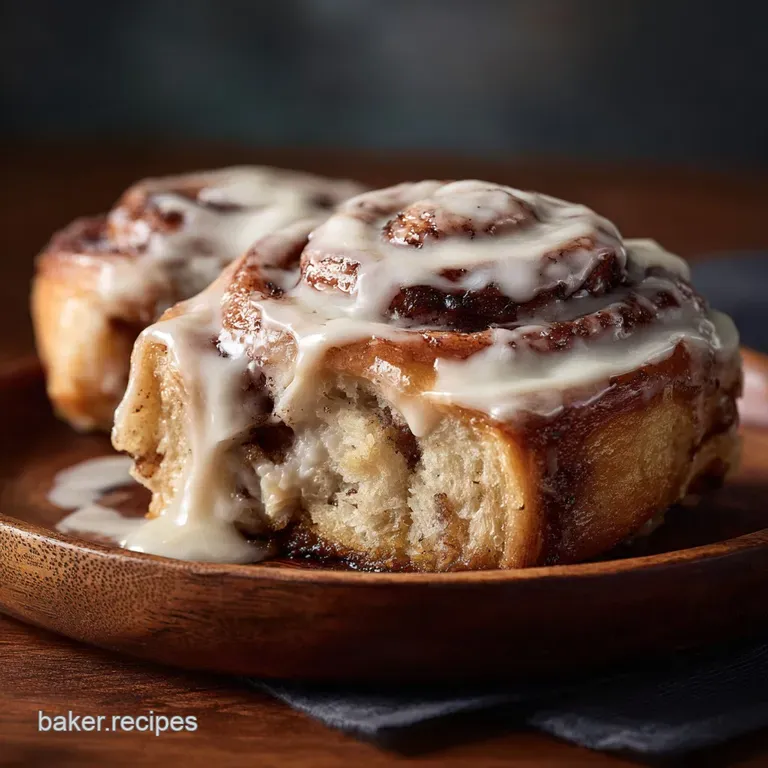
- The Quest for the Perfect, Pull-Apart Cinnamon Buns
- Essential Pantry Staples for Ultimate Swirl Success
- Specialized Gear and Preparatory Steps
- Crafting the Silky, High-Hydration Brioche Base
- Rolling, Slicing, and Achieving the Golden Bake
- Whipping Up the Perfect Vanilla Bean Cream Cheese Topping
- Troubleshooting Common Cinnamon Buns Challenges
- Serving Suggestions and Long-Term Storage Solutions
- Recipe FAQs
- 📝 Recipe Card
The Quest for the Perfect, Pull Apart Cinnamon Buns
There is a vast difference between a mediocre, store-bought swirl and a truly extraordinary, homemade cinnamon bun . Forget those dry efforts that crumble into dust; our goal is the "Morning Glory," an indulgent, pull apart creation defined by its luxurious, ooey gooey texture.
This specific cinnamon buns recipe is modeled after classic brioche techniques, guaranteeing a soft, high rising structure capable of supporting the rich filling.
Achieving perfection requires precision, particularly when handling the yeast and the highly enriched dough, but the results are entirely worth the effort.
Understanding the Key to Chef Doe's Enriched Dough
The secret to a superior pastry often lies in the quality of its foundation. We move beyond simple lean doughs by incorporating copious amounts of whole milk, two large, room temperature eggs, and 85 grams (six tablespoons) of melted butter.
This enrichment process yields a high hydration base that stays wonderfully tender and moist even after baking. Ensuring that the dairy ingredients milk, eggs, and butter are properly tempered (either gently warmed or brought to room temperature) is crucial, as this allows them to emulsify smoothly, creating the signature silky texture of the dough during the kneading process.
Why We Use Brown Sugar and Butter, Not just Cinnamon Dust
While a dash of cinnamon is nice, it’s the method of applying the filling that dictates the ultimate gooeyness of the final product. Our filling consists of 220 grams (one cup) of packed light brown sugar, which inherently carries more moisture than white sugar, combined with a full stick (113 grams) of very soft butter and two generous tablespoons of quality ground cinnamon.
When baked, this mixture doesn't merely flavour the dough; the brown sugar melts and caramelizes slightly, binding the rich butter and preventing the filling from completely leaking out. This creates that desirable, sticky, moist foundation at the bottom of the pan the hallmark of an excellent swirl.
Elevating the Experience: The Vanilla Bean Frosting Philosophy
The perfect counterpoint to the warm, spicy sweetness of the bun is a tangy, luxurious frosting. Rather than a simple milk glaze, we opt for a Vanilla Bean Cream Cheese Topping. By combining 115 grams of softened cream cheese with 30 grams of softened butter and two cups of sifted icing sugar, we create a structure that is both sweet and slightly acidic.
The inclusion of pure vanilla extract or paste is non-negotiable, providing aromatic depth that prevents the frosting from tasting merely sugary. We generously spread this topping over the warm buns, allowing it to slightly melt into the crevices, sealing in the remaining heat and moisture.
Essential Pantry Staples for Ultimate Swirl Success
Successful execution of this cinnamon buns recipe easy to follow hinges on using high-quality components. Beyond the staples of high protein flour and sea salt, attention should be paid to the source of your flavour agents.
We rely heavily on high fat dairy, including whole milk, unsalted butter (needed both for the dough and the filling), and full fat cream cheese for the topping. For the filling, light brown sugar is paramount for its moisture content, and the cinnamon should be fresh whether you prefer the sweeter, milder Ceylon variety or the stronger, spicier Korintje type.
If you are searching for premium ingredients from vendors specializing in fine baking, you might find specific artisanal products not available at standard grocers often sought out by those accustomed to finding quality pastries, perhaps even searching for the best cinnamon buns near me in specialized bakeries.
Specialized Gear and Preparatory Steps
While this recipe is achievable by hand, certain equipment greatly simplifies the process and ensures consistent results.
Flour Power: Choosing High Protein Bread Flour
Though the recipe context lists All-Purpose (AP) flour as an option, prioritizing high protein bread flour is highly recommended. The enriched nature of this dough with its high fat and liquid content requires superior gluten strength to lift and hold its structure.
Bread flour provides that extra protein to develop the necessary elasticity and resilience, especially during the 8-to-10-minute kneading phase.
Sourcing Authentic Vanilla Beans (and Substitutions)
For the best flavour in the frosting, a high-quality vanilla paste or the seeds scraped from a whole vanilla bean are unparalleled. If fresh beans are unavailable, a good quality pure vanilla extract (five millilitres or one teaspoon) should be used.
Given the high sugar content of the icing, the potent, complex flavour of genuine vanilla prevents the final product from tasting one-dimensional.
Dairy Details: Room Temperature Requirements for the Dough
Apart from the initial warmed milk for yeast activation, all other dairy components (the 85 grams of butter for the dough, and the two eggs) must be at room temperature. Cold eggs or butter shock the yeast, slow the mixing process, and prevent the formation of a smooth, uniform batter.
Aim for ingredients that yield slightly to the touch before combining.
The Mixer vs. Hand Kneading Debate: Pro & Cons
A stand mixer fitted with a dough hook is strongly recommended for this cinnamon buns recipe . Kneading this soft, high hydration dough by hand for the required 8– 10 minutes can be a strenuous, sticky process, often leading to excessive incorporation of dusting flour, which dries out the final product.
The mixer handles the workload effortlessly, allowing the dough to achieve the necessary elasticity a key sign that the gluten network is fully formed.
Recommended Pan Sizing for Maximum Surface Area
We use a standard 9x13 inch (approximately 23x33 cm) baking dish. This size is specifically chosen because it ensures the 12 resulting swirls are nestled snugly together, allowing their sides to steam slightly during baking.
This mutual support is vital for producing the characteristic soft, yielding sides rather than the crusty edges you get from baking them individually.
Prep Checklist: Scaling and Mise en Place
Baking is a science of precision. Before beginning, ensure all ingredients are measured (or ideally, weighed 540 grams of flour, 85 grams of butter, etc.) and prepped. This process, known as mise en place , involves softening the butter for the filling and ensuring the milk is at exactly 40°C (105°F) before starting the mixer, greatly minimizing errors and stress during the active preparation time of 35 minutes.
Crafting the Silky, High Hydration Brioche Base

Our dough is essentially a rich brioche, known in cinnamon buns in french pastry circles for its high fat content. The process begins by activating the yeast (detailed below). Once the yeast is frothy, the melted butter and beaten eggs are incorporated.
In a separate bowl, the 540 grams of flour and 5 grams of fine sea salt are combined. The dry ingredients are gradually added to the wet mixture in the stand mixer bowl. The subsequent 8– 10 minutes of mechanical kneading are essential.
Watch as the dough transforms from a shaggy mess into a smooth, elastic mass that pulls cleanly away from the sides of the bowl. This kneading time is crucial for developing the structure needed to support the bulk fermentation.
Related Recipes Worth Trying
- The Ultimate Fluffy Homemade Cinnamon Buns Recipe for Sunday Baking — Forget dry service station pastries This sticky cinnamon buns recipe uses enriched dough for a truly fluffy brioche texture topped with cream cheese glaze...
- Fluffy Overnight Cinnamon Buns The Best Weekend Recipe — Stop searching This overnight cinnamon buns recipe guarantees truly fluffy buns with a deep yeasty flavour topped with tangy cream cheese frosting Your...
- Ultimate Brioche Sticky Cinnamon Buns with Pecan Caramel — Learn how to make the Ultimate homemade sticky cinnamon buns These featherlight brioche buns are soaked in a burnt butter pecan caramel glaze Worth the...
Rolling, Slicing, and Achieving the Golden Bake
After the dough has successfully completed its first rise, it is gently "punched down" to release excess gas. The dough is then rolled out meticulously into a precise 18 x 12 inch (45 x 30 cm) rectangle, about a quarter inch thick.
Achieving this thin, uniform thickness is key to developing those tight, numerous swirls. The prepared filling is spread evenly, leaving a small clean border on the far long edge, which will be pinched to seal the roll. Starting from the long side nearest you, the dough is rolled tightly and uniformly into a log.
For slicing, we adhere to the clever baker’s trick: using unflavored dental floss or thin kitchen twine to cut the log into 12 equal portions, ensuring perfectly round shapes without squashing the structure, which often happens when using a knife.
Whipping Up the Perfect Vanilla Bean Cream Cheese Topping
The final, essential stage of flavour addition is the cream cheese frosting. Ensure the 115 grams of cream cheese and the 30 grams of butter are thoroughly softened. They should be beaten together until smooth and completely lump free before introducing the sifted icing sugar.
Sifting the 240 grams (two cups) of powdered sugar prevents the formation of tiny lumps that are almost impossible to beat out later. The vanilla and salt are then added. If you prefer a thinner glaze that runs into the pan (ideal if you are serving these with a robust cup of coffee, perhaps inspired by pastries found in cinnamon buns montreal ), you can beat in 15 to 30 millilitres of milk or cream until the desired consistency is achieved.
Activating the Yeast: The Milk Temperature Sweet Spot
The success of any yeasted bake hinges on the initial activation. The milk must be precisely warmed to 40°C (105°F). If the milk is too cold, the yeast will remain dormant; if it exceeds 50°C (120°F), the high heat will kill the fragile yeast organisms.
The 2 ¼ teaspoons of active dry yeast are added to the warmed milk along with the quarter cup of granulated sugar (food for the yeast) and allowed to sit for 5 to 10 minutes until a visible layer of foam appears on the surface, confirming viability.
The Windowpane Test: Knowing When Your Dough is Ready
Following the 8– 10 minutes of mechanical kneading, you must check for proper gluten development. The windowpane test involves taking a small piece of dough and gently stretching it.
If you can stretch it thin enough that light passes through without tearing the dough, the gluten is perfectly developed and the dough is ready for its first rise. If it tears easily, knead for another minute or two.
First Proofing: Location and Time Requirements
This initial rise, or "bulk fermentation," is critical for flavour development. The dough should be placed in a lightly oiled bowl, covered tightly, and allowed to rise in a warm, draft free place until it has visibly doubled in size. This typically requires 90 to 120 minutes.
If your kitchen is cold, utilizing a proofer box or simply placing the dough inside an oven with the light on (creating a subtle warmth) will ensure a successful rise.
Creating the Tight Log: Applying Uniform Filling Pressure
When spreading the filling, aim for even pressure to ensure the mixture is uniformly distributed without tearing the soft dough. The key to the final aesthetic is creating a very tight roll, ensuring no air gaps remain between the layers.
This compactness prevents the swirls from unwinding during the final proof and baking stages. Once rolled, the seam must be firmly pinched shut along the entire length to lock the filling in place.
Second Proofing: The Importance of a Puffy Final Rise
After the swirls are cut and placed in the 9x13 inch pan, they must undergo a second, shorter rise. Covered loosely, they need 45 to 60 minutes to puff up slightly and gently touch one another.
This "final proof" fills them with the last pockets of carbon dioxide, ensuring they are light and airy when they hit the oven. Skipping this step results in dense, heavy buns.
Baking Temperature Precision for Even Caramelization
The oven should be preheated to 175°C (350°F). Baking time is typically 25 to 30 minutes. To ensure beautiful, even browning and to guarantee the center swirls cook thoroughly, rotate the pan 180 degrees halfway through the bake.
They are ready when the tops are a rich golden brown, but the centers still look slightly moist and tender. The internal temperature, checked with a probe thermometer, should register around 93°C (200°F).
Troubleshooting Common Cinnamon Buns Challenges
Even experienced bakers face occasional issues when dealing with enriched doughs and long proofing times.
Preventing the Filling from Leaking During Baking
The number one culprit for filling leakage is butter that is too soft or even melted. When preparing the filling, the ½ cup of butter must be softened to a spreadable, mayonnaise consistency, but crucially, it must hold its shape and not be liquid.
If the filling runs too freely before baking, it will inevitably run out and burn on the bottom of the pan. Plus,, ensuring the seam is pinched tightly helps contain the gooey mixture.
My Buns are Dry: Saving an Over Baked Batch
Dryness is almost always caused by overbaking. If you notice your buns are tough and slightly chewy, remove them immediately. While nothing can fully resurrect truly over baked pastry, generous application of the cream cheese frosting while the buns are still warm helps infuse moisture back into the surface layers.
Next time, aim to pull them when they register 200°F (93°C) internally.
The Overnight Cold Proofing Strategy
For bakers seeking convenience or deeper flavour, the overnight cold proofing strategy is excellent. After shaping and placing the cut swirls in the pan (Phase 2, Step 10), cover them tightly and refrigerate overnight (up to 12 hours).
The cold temperature halts the yeast activity, allowing the flavour to develop slowly. When ready to bake, remove the pan from the fridge and allow it to come to room temperature and complete the final rise (about 90 minutes) before proceeding to the baking instructions.
Freezing Unbaked vs. Fully Baked Cinnamon Swirls
Both methods work well for long term storage. To freeze unbaked dough, follow the overnight cold proofing strategy, but wrap the pan extremely well after a brief 30-minute chill and freeze. Thaw overnight in the refrigerator before allowing the final rise.
Fully baked swirls, unfrosted, can be frozen, wrapped individually. Reheat from frozen (or thawed) and then apply fresh frosting.
Recipe Variations: Adding Nuts, Citrus Zest, or Cardamom
While this is a classic cinnamon buns ricardo style recipe (meaning a focus on quality and richness), variations are welcome. For a brightness that cuts through the richness, incorporate the zest of one large orange into the dough and add half a teaspoon of zest to the filling.
Alternatively, to mimic sophisticated, Scandi style pastries, substitute two-thirds of the cinnamon with one teaspoon of pungent ground cardamom, and fold half a cup of toasted pecans into the brown sugar filling. This makes the bun slightly less traditional but infinitely more complex.
Nutritional Snapshot: Calories and Serving Facts
Given the generous use of butter, brown sugar, and cream cheese, this is an indulgent treat designed for special occasions. Each of the 12 large swirls is estimated to contain between 450 and 550 kilocalories, reflecting the high fat and carbohydrate content inherent in enriched doughs and heavy frosting.
Serving Suggestions and Long Term Storage Solutions
There is an art to serving these ultimate swirls. They are best enjoyed within minutes of the frosting being applied, served still slightly warm. For beverage pairings, a strong, bitter element is ideal to balance the sweetness a pot of bold English Breakfast Tea or a dark Americano cuts through the richness beautifully.
Alternatively, pair a swirl with fresh, seasonal berries or sliced oranges for a lighter, refreshing counterpoint to the decadent pastry. If you are left with leftovers, keep them in an airtight container at room temperature for up to two days.
If stored longer, refrigerate, but know that yeasted doughs tend to dry out quickly once chilled, making the freezing options (detailed above) preferable for extended storage.

Recipe FAQs
How do I stop my Cinnamon Buns from turning out dry and tough?
Overbaking is the usual culprit here; the difference between a gooey bun and a tough one is often just three minutes, so keep a keen eye on them. Ensure you pull them when they're golden but the centres still look slightly soft don't wait for rock hard edges, as they'll firm up while cooling.
Also, be generous with the brown sugar filling, as the moisture from the sugar is key to achieving that wonderfully 'ooey gooey' texture.
Can I prep these glorious Cinnamon Buns the night before and bake them in the morning?
Absolutely, that’s a brilliant move for a leisurely weekend breakfast! After the second proofing (step 10), cover the pan tightly with cling film or foil and place it straight into the fridge overnight (up to 12 hours). The cold slows the yeast right down.
The next morning, take the pan out while the oven preheats (about 30 minutes) to let them warm up slightly before baking as usual.
My dough didn't rise was it something I said, or did I kill the yeast?
Ah, the dreaded flat dough! Nine times out of ten, it comes down to temperature, which is a bit fussy, to be fair. Ensure your milk is lukewarm (around 40°C/105°F); anything hotter than a nice bath will sadly deactivate the yeast, rendering your dough useless.
If your kitchen is a bit chilly, use the warm oven/hot water bath trick mentioned in the notes to create a cosy, humid environment for a proper prove.
I don't fancy the cream cheese; is there a simpler frosting or glaze?
Not a bother! If you’re after something a bit quicker and less rich, whip up a classic simple sugar glaze. Just mix two cups of sifted icing sugar with a tablespoon or two of milk or water until smooth and pourable.
Alternatively, for a sophisticated touch, you can skip the frosting entirely and simply drizzle the hot buns with a thick caramel sauce before serving.
How should I store leftover swirls, and what’s the best way to reheat them?
These are definitely at their peak served immediately, piping hot and fresh from the oven! If you happen to have any leftovers, store them unfrosted in an airtight container at room temperature for up to two days.
To revive the magic, microwave a bun for 10-15 seconds until soft, or pop it in a toaster oven for a few minutes, then apply the frosting or glaze they’ll be almost as good as new for that cheeky afternoon cuppa.
Ultimate Ooeygooey Cinnamon Buns

Ingredients:
Instructions:
Nutrition Facts:
| Calories | 732 kcal |
|---|---|
| Protein | 8.2 g |
| Fat | 28.8 g |
| Carbs | 48.9 g |
| Fiber | 6.7 g |
| Sodium | 6778 mg |
