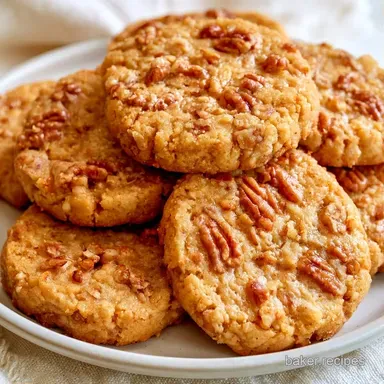
Old Fashioned Pecan Sandies with Toasted Pecans
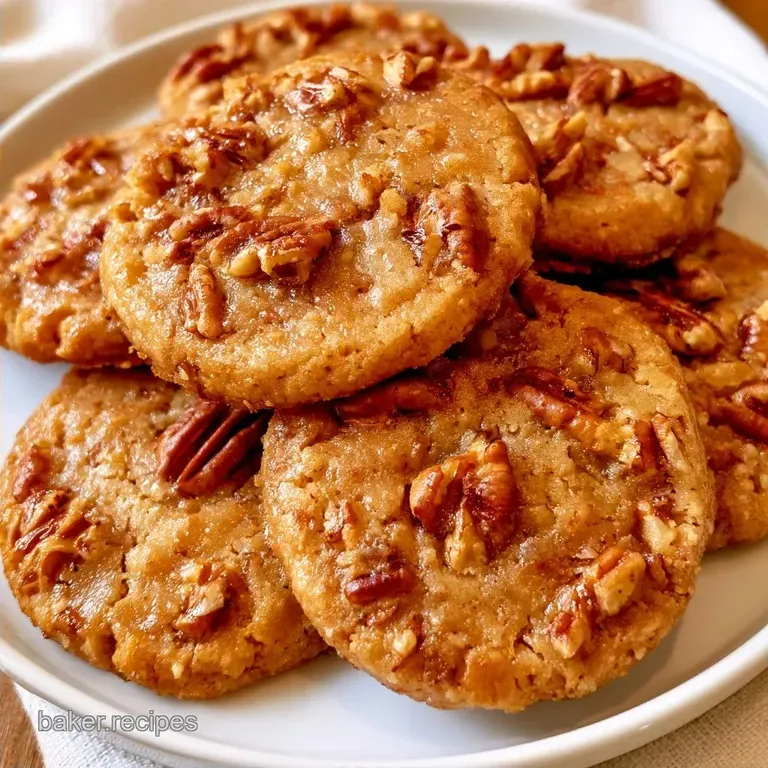
- Time: 15 minutes prep + 12 minutes oven time
- Profile: Buttery, crumbly snap with toasted nut depth
- Perfect for: Holiday cookie tins and afternoon tea
The smell of toasted pecans always reminds me of my grandmother's kitchen during the autumn harvest. In the South, these cookies are more than just sweets; they are a tradition tied to the falling leaves and the first crisp air of the season.
Throughout December, my childhood home would be filled with the aroma of roasted nuts and browned butter.
I used to assume the word "sandy" was just a name, but it actually describes a very specific consistency. It's that delicate, shortbread style crumb that is neither a hard snap nor a chew. These Pecan Sandies capture that essence perfectly.
You can expect a treat that is rich and buttery, with pecans providing an earthy, salty contrast. We will keep the process simple, focusing on a few essential tips that significantly impact the end result.
The Truth About Pecan Sandies
Butter Temperature: Using softened butter allows air to whip into the sugar, which prevents the cookies from turning into hard disks.
Low Agitation: Mixing the flour on the lowest setting stops gluten from forming, which keeps the crumb tender.
Toasted Nuts: Heating the pecans first brings out an oil rich aroma that blends into the dough.
| Method | Time | Texture | Best For |
|---|---|---|---|
| Fast (Raw Nuts) | 15 mins | Mild, soft | Quick cravings |
| Classic (Toasted) | 22 mins | Deep, nutty | Holiday gifts |
The goal here is to create a "short" dough. This means the fat coats the flour particles, blocking water from creating a chewy structure.
Recipe Specs
This batch makes 48 cookies. The process is straightforward, taking about 15 minutes of prep and 12 minutes in the oven. You'll need a basic mixer and a couple of baking sheets.
The Building Blocks
For the dough, we use unsalted butter to control the salt level, though salted butter works if you omit the extra salt. Light brown sugar adds a hint of molasses, which balances the sweetness of the granulated sugar.
All purpose flour provides the structure, while the finely chopped pecans add the signature harvest flavor. The final roll in granulated sugar gives the cookies a shimmering finish and a slight crunch on the exterior.
Necessary Kitchen Gear
You'll need a large mixing bowl and a hand mixer or stand mixer such as KitchenAid to get the butter fluffy. A baking sheet lined with parchment paper is a must to prevent sticking. A small skillet or oven tray works for toasting the nuts.
Ingredients and Substitutes
- 225g unsalted butter, softened Why this? The high fat level creates a sandy consistency (Substitute: Vegan butter block)
- 150g granulated sugar Why this? Ensures the edges stay crisp (Substitute: Caster sugar)
- 50g packed light brown sugar Why this? Contributes moisture and a deeper taste (Substitute: Dark brown sugar for more molasses)
- 5ml pure vanilla extract Why this? Balances the nutty notes (Substitute: Almond extract)
- 1.5g salt Why this? Offsets the heavy richness (Substitute: Sea salt)
- 280g all purpose flour Why this? The ideal protein level for shortbread (Substitute: Pastry flour)
- 115g pecans, finely chopped Why this? Brings an earthy, buttery flavor (Substitute: Walnuts)
- 25g granulated sugar (for rolling) Why this? For extra texture (Substitute: Cinnamon sugar)
| Original Ingredient | Substitute | Why It Works |
|---|---|---|
| Pecans (115g) | Walnuts (115g) | Comparable fat levels. Note: Offers a slightly more bitter profile |
| All Purpose Flour | Pastry Flour | Reduced protein. Note: Results in an even more tender crumb |
| Unsalted Butter | Salted Butter | Equivalent fat. Note: Skip the 1.5g salt in the recipe |
Making the Cookies
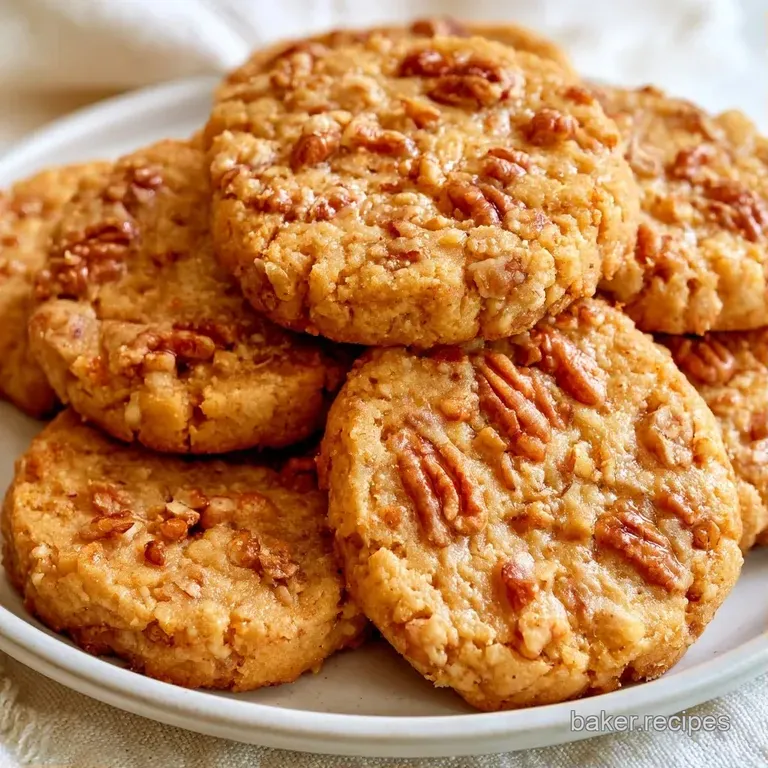
Phase 1: Preparing the Nut Base
- Bring the oven temperature to 350°F (175°C).
- Arrange chopped pecans on a baking sheet and toast for 5-7 minutes until they are golden and fragrant.
- Allow the pecans to cool completely. Note: Incorporating hot nuts can melt the butter and ruin the shape.
Phase 2: Creaming the Aromatics
- Beat the softened butter, granulated sugar, and brown sugar on medium high for 2-3 minutes until light and fluffy.
- Mix in the salt and vanilla extract.
Phase 3: Integrating the Dry Ingredients
- Slowly add the flour using the mixer's lowest speed.
- Stop mixing the moment the flour disappears. Note: Over mixing results in a tough cookie.
- Gently fold in the toasted pecans with a spatula.
Phase 4: Shaping and Baking
- Scoop 1 tablespoon portions and shape them into smooth balls.
- Lightly roll each ball in the finishing sugar.
- Place on parchment lined sheets 2 inches apart.
- Bake for 10-12 minutes until edges are just golden.
Fixing Common Issues
If your cookies spread too much, it usually means the butter was too soft or the kitchen was too warm. You can fix this by popping the rolled balls in the fridge for 15 minutes before they hit the oven.
Another common issue is a "floury" taste. This happens if the flour isn't fully incorporated or if the oven temperature is too low, meaning the starches don't cook through. Always use an oven thermometer to verify you're actually at 350°F.
When Pecan Sandies come out too dark, they lose that delicate sandy quality and become hard. Keep a close eye on them at the 10 minute mark.
Stopping Cookie Spread
Avoiding Floury Taste
Preventing Over browning
| Problem | Root Cause | Solution |
|---|---|---|
| Flat cookies | Butter too warm | Chill dough 15 mins before baking |
| Grainy texture | Sugar not creamed | Beat butter and sugar for full 3 mins |
| Burnt bottoms | Oven too hot | Use a double baking sheet or lower rack |
Adjusting the Batch Size
For a half batch of Pecan Sandies, simply cut all measurements in half. Since no eggs are involved, scaling down is straightforward. Use a smaller baking sheet and check for doneness 2 minutes earlier.
When making double or triple batches, avoid multiplying the salt and vanilla by three. Instead, use 1.5x the salt and vanilla to keep the taste balanced. Roll the dough in small groups to prevent it from getting too warm.
If baking in large quantities, set the oven to 325°F (160°C) and bake for an additional 2-3 minutes. This ensures the center is fully cooked without burning the edges.
- Nutty depth? → Toast pecans 2 mins longer.
- More chew? → Increase brown sugar by 1 tbsp.
- Firmer snap? → Chill dough 15 mins.
Changing the Recipe
Feel free to use walnuts or hazelnuts instead of pecans for a different flavor profile. For a cozy fall twist, stir some ground cinnamon or nutmeg into the flour.
To elevate these cookies, try pairing them with German Chocolate Cake Frosting as a dip. The creamy coconut flavor complements the buttery dough perfectly.
For a maple flavored variation, swap the vanilla extract for 1 teaspoon of maple extract and switch to dark brown sugar. This gives your Pecan Sandies a taste reminiscent of a Vermont maple farm.
Freshness and Storage
Keep your cookies in an airtight container. They will remain fresh at room temperature for approximately 5 days. Steer clear of the refrigerator, as the butter may pick up surrounding odors and the cookies will toughen.
Pecan Sandies are excellent for freezing if you need longer storage. Seal them inside a freezer proof bag for as long as 3 months. Let them thaw at room temperature for 30 minutes, or warm them in a 300°F (150°C) oven for 3 minutes to revive the buttery flavor.
To minimize waste, crumble any broken pieces to garnish vanilla ice cream or mix them into a cheesecake crust.
Serving Your Treats
Arrange the cookies on a wooden platter with some fresh grapes or sliced apples for a beautiful harvest look. Because they are quite rich, they pair well with a bitter black coffee or a tart tea.
If you're putting together a holiday dessert board, these make a great companion to a slice of Southern Pecan Pie. The contrast between the gooey pie and the crumbly cookie is a winner.
For a gift, stack them in a glass jar with ribbons. Since they are sturdy, they handle shipping well if you pack them with parchment paper between layers.
These Best Pecan Sandies are a reliable way to bring a bit of tradition into your home. They're simple, buttery, and have that exact crumb we all love. Happy baking!
Recipe FAQs
What is the secret to perfect pecan sandies?
Creaming the butter and sugars for 2-3 minutes. This process incorporates enough air to ensure a light, fluffy texture instead of a dense, hard cookie.
How to make these cookies without eggs?
Omit eggs entirely. This recipe relies on a high butter-to-flour ratio to provide structure and richness. If you enjoyed mastering the high fat dough balance here, see how the same principle works in our peanut butter cookies.
Which cookies are best for Thanksgiving spreads?
Pecan Sandies are an ideal choice. Their buttery profile and toasted nut depth complement autumn flavors and pair perfectly with holiday tea.
Is it true that toasting the pecans is optional for the flavor?
That's a myth. Heating the pecans for 5-7 minutes is essential to unlock the oil-rich aroma and deep golden color that defines the cookie.
Why did my cookies lose their shape and spread?
The butter was likely too warm. Ensure the butter is softened but still cool to the touch so the dough maintains its structure during baking.
What creates that signature sandy texture?
Mixing the flour on the lowest setting. Stopping the instant the flour disappears prevents gluten development, resulting in a tender, shortbread like crumb.
Old Fashioned Pecan Sandies