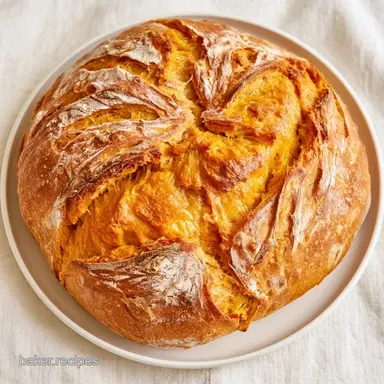
Healthy Pumpkin Sourdough Bread
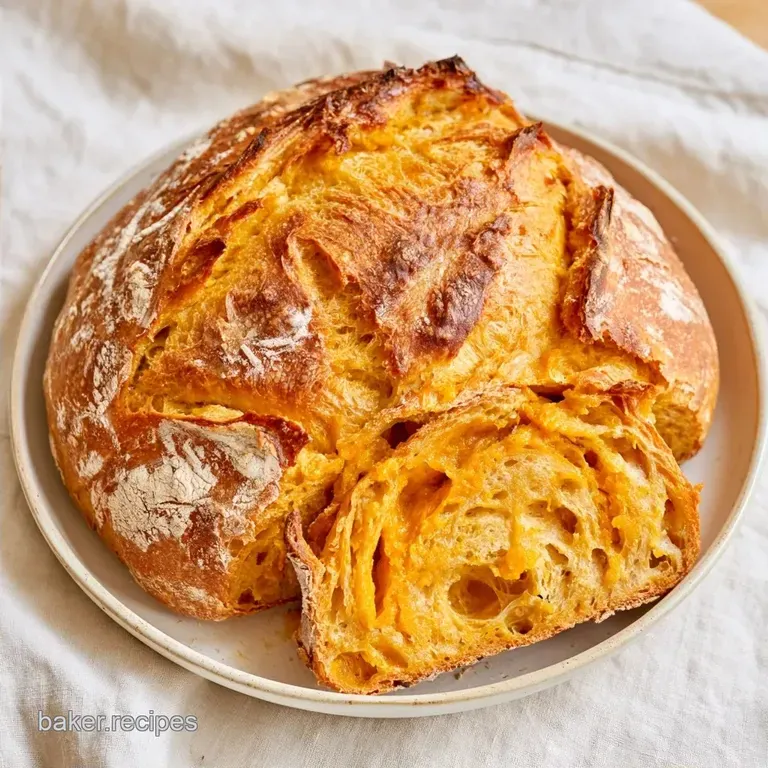
- Time: 30 min active + 18 hours 40 mins resting/proofing
- Flavor/Texture Hook: Dark mahogany crust with a tender, spiced crumb
- Perfect for: Slow autumn weekends and cozy breakfasts
Have you noticed how some bakes capture the essence of a cool October morning while others simply smell like flour? I used to struggle with this, often producing a "pumpkin block" that felt more like a dense cake than a true sourdough. I eventually discovered that the water in the puree was disrupting the gluten bonds.
By refining the hydration and focusing on building dough strength, the results shifted completely. This Pumpkin Sourdough Bread fills your home with a fragrant, autumn harvest scent without requiring any professional bakery equipment.
You can look forward to a loaf with a rich, deep color and a crumb that is soft yet structurally sound. It’s the kind of bread that makes your entire house smell like a cinnamon roll while it's in the oven.
How to Get the Rise
- Puree Balance: Pumpkin adds natural sugars that can distract the yeast, so we use a specific ratio of bread flour to keep it structural.
- Slow Fermentation: A long cold proof allows those warming spices to meld with the sourdough tang, creating a more complex flavor.
- Strength Building: Using stretch and folds instead of heavy kneading helps trap air, similar to the method used in my No Knead Bread recipe.
The key here is the hydration. Serious Eats' testing shows that high moisture ingredients like purees can weaken gluten, so we use a bit of whole wheat flour for extra absorption.
| Method | Time | Texture | Best For |
|---|---|---|---|
| Dutch Oven | 40 mins | Thick, crunchy crust | Classic artisan look |
| Baking Stone | 40 mins | Thinner, crispier bottom | Quick heat recovery |
| Free form Pan | 45 mins | Softer, sandwich style | Easier slicing |
Recipe Specs
| Goal | What to change |
|---|---|
| More Tang | Extend cold proof by 12 hours |
| Sweeter Taste | Add 1 tbsp more maple syrup |
| Denser Crumb | Increase bread flour by 20g |
Gathering Your Essentials
| Component | Purpose | Substitute Notes |
|---|---|---|
| Sourdough Starter | Provides lift and tang | Rye starter works, but tastes earthier |
| Pumpkin Puree | Adds color and moisture | Roasted squash puree is a great swap |
| Bread Flour | Builds the structure | All purpose makes a softer, flatter loaf |
| Maple Syrup | Natural sweetener | Honey works well, though it's floral |
For the Dough
- 1 cup active sourdough starter (227g)
- 3/4 cup unsweetened pumpkin puree (180g) Why this? Provides the signature autumn color and moisture
- 1/2 cup warm water (120ml)
- 3 1/2 cups bread flour (440g)
- 1/2 cup whole wheat flour (60g) Why this? Absorbs extra moisture from the pumpkin
- 2 tsp fine sea salt (12g)
- 2 tbsp maple syrup (30ml)
- 1 tbsp pumpkin spice mix (6g)
For the Crust & Finish
- 2 tbsp water for spraying (30ml)
- 2 tbsp pumpkin seeds (15g)
Right then, if you're missing the pumpkin spice mix, just blend cinnamon, nutmeg, ginger, and cloves. Trust me on this, using a high protein bread flour is the only way to keep this Pumpkin Sourdough Bread from collapsing.
Necessary Baking Gear
While specialized equipment isn't required, a few tools make the process much smoother. A digital scale is essential for precision since measuring cups can vary significantly. I prefer a Dutch oven (such as a Lodge cast iron) to hold in the steam, but any heavy pot is a good substitute.
A bench scraper is also incredibly helpful here, as the pumpkin causes the dough to be stickier than usual. If you don't have one, simply wet your hands with cold water before handling the dough.
Making the Loaf
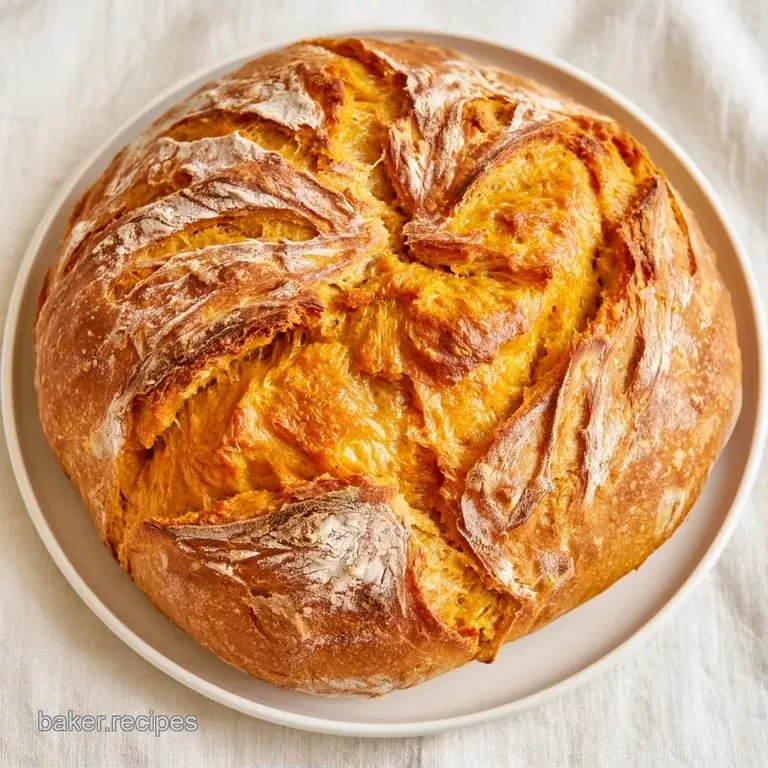
Phase 1: The Mix and Autolyse
- Whisk together the active sourdough starter, warm water, pumpkin puree, and maple syrup in a large bowl until smooth.
- Stir in the bread flour, whole wheat flour, and pumpkin spice mix with a spatula until a shaggy, mahogany colored dough forms.
- Add the salt and incorporate it by squeezing the dough with your hands.
- Cover with a damp cloth and let it rest for 30 minutes Note: this allows the flour to fully hydrate.
Phase 2: Bulk Fermentation & Strength Building
- Perform a "Stretch and Fold": Grab one side of the dough, pull it upward, and fold it over the center. Rotate the bowl and repeat 4 times.
- Repeat this stretch and fold process every 30 minutes for 2 hours. You'll notice the dough becoming smoother and more elastic.
- Cover and let the dough rise at room temperature until it's grown by 50% until it feels airy and smells slightly fermented.
Phase 3: Shaping and Cold Proof
- Gently shape the dough into a round loaf on a floured surface.
- Place in a proofing basket or a bowl lined with a floured towel.
- Let it proof in the fridge for 12 to 16 hours Note: this develops the deep flavor.
Phase 4: The Bake and Cooling
- Preheat your oven to 230°C with the Dutch oven inside.
- Carefully flip the dough into the pot and score the top with a sharp blade.
- Spray the top with the 30ml of water and sprinkle pumpkin seeds over the crust.
- Bake for 20 minutes with the lid on, then remove the lid.
- Bake another 20 minutes until the crust is dark brown and sounds hollow when tapped>.
Fixing Common Issues
Handling the dough can be a bit tricky because of the sugars in the pumpkin. If you find the dough sticking to everything, resist the urge to dump in handfuls of extra flour. This usually leads to a dense loaf. Instead, use a bench scraper or wet your fingers.
Another common issue is the "flat loaf" syndrome. This happens if the dough is over proofed or if the oven isn't hot enough. Always make sure your pot is screaming hot before the dough goes in.
Dough feels too sticky
The pumpkin puree adds significant moisture. If the dough feels like batter, add 1 or 2 extra tablespoons of bread flour during the mix.
Lack of oven spring
The dough may have over proofed. Ensure you move it from the fridge to the oven quickly to keep the gases trapped.
Bottom is too burnt
The heat from the cast iron can be intense. Try placing a baking sheet on the rack below your pot to block some of the direct heat.
| Problem | Fix |
|---|---|
| Sticky Dough | Use wet hands or a bench scraper |
| Flat Loaf | Reduce room temperature proof time |
| Burnt Bottom | Use a heat shield/baking tray below |
Serving and Slicing
Wait at least 1 hour before slicing this Pumpkin Sourdough Bread. I realize it's a challenge, but cutting into it while it's still steaming can result in a gummy interior.
For the best result, toast a thick slice and add some salted butter. The salt beautifully balances the sweetness of the maple and pumpkin. To complete your holiday table's autumn vibe, this bread pairs wonderfully with a Baked Brie appetizer.
Storing Your Bread
Keep your loaf at room temperature in a linen or paper bag for 3 days. Steer clear of plastic bags, as they turn a crisp crust soft and chewy.
Any leftover slices freeze well. Wrap them individually in parchment paper and keep them stored for 3 months. When you're ready to eat, simply toast them for a few minutes.
To reduce waste, once the bread is too stale for sandwiches, cube it and toss it with cinnamon and melted butter for a batch of homemade pumpkin spice croutons.
Alternative Loaf Ideas
Feel free to adapt this Pumpkin Sourdough Bread to your preferences. I often stir in a handful of toasted walnuts or dried cranberries during the second set of stretch and folds for a bit of extra texture.
Pumpkin Sourdough Bread with Discard
If you have a surplus of starter, you can use "discard" to make a quicker loaf. Simply substitute some of the flour and water with more discard, but keep in mind that it won't rise as high.
Savory Pumpkin Sourdough Bread
For a savory version, omit the maple syrup and pumpkin spice. Instead, mix in 1 tsp of dried sage and some crumbled feta cheese during the folding process.
Let's get started. This Pumpkin Sourdough Bread is a satisfying project that brings the best of the harvest straight to your table. Enjoy!
Recipe FAQs
Can you add pumpkin puree to sourdough?
Yes, it adds a beautiful mahogany color and a moist texture. Just ensure you use unsweetened puree to control the sweetness.
How long to bulk ferment pumpkin sourdough?
Let the dough rise until it has increased in volume and feels airy. This process typically takes several hours depending on your kitchen temperature.
When to add pumpkin puree to sourdough?
Whisk the puree together with the active starter, warm water, and maple syrup at the start. This ensures the pumpkin is fully integrated before adding the flours.
How to make sourdough bread lighter?
Perform a series of stretch and folds every 30 minutes during bulk fermentation. If you enjoyed mastering this dough strength technique here, see how we adapt it for our pillowy homemade naan.
How do you prepare a sourdough starter for baking?
Feed your starter with flour and water until it becomes bubbly and active. It should double in size before being mixed into the dough.
Is it true that you can only use white flour for pumpkin sourdough?
That's a myth. This recipe uses a combination of bread flour and whole wheat flour for a deeper, nuttier flavor.
What's the best way to store this pumpkin bread?
Keep the loaf in a linen or paper bag at room temperature. Avoid plastic bags because they turn the crisp crust soft.
Pumpkin Sourdough Bread