Healthy Vegetable Corn Chowder: Silky and Hearty
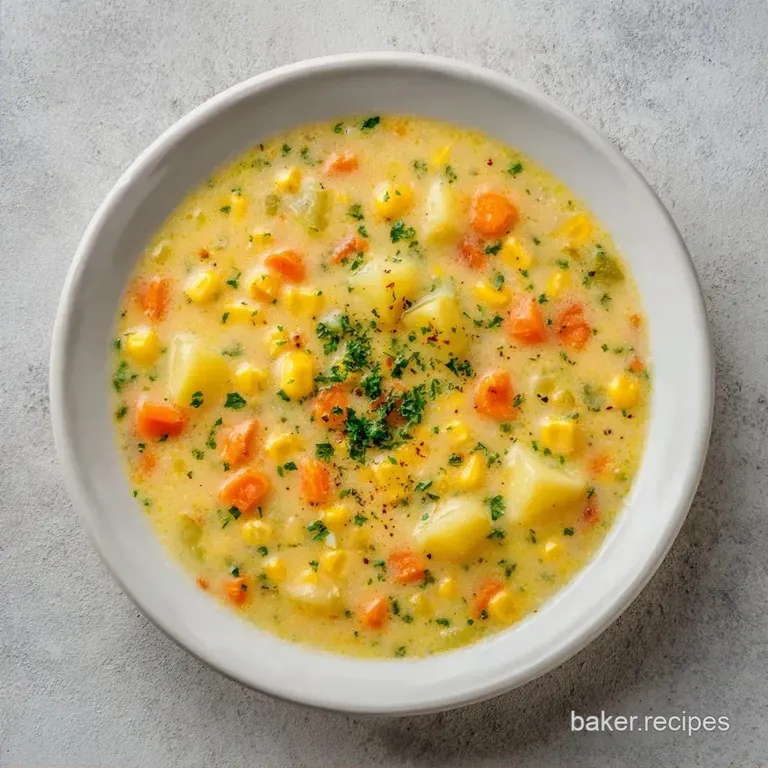
- Time:15 minutes active + 30 minutes cooking
- Flavor/Texture Hook: Silky base with pops of sweet corn and smoky paprika
- Perfect for: Rainy weeknights or a healthy meal prep lunch
Vegetable Corn Chowder
The smell of sautéing onions, celery, and carrots is the universal signal that something comforting is happening in the kitchen. For me, that scent always brings back memories of the foggy coastlines of New England.
Chowders started as a way for sailors and fishermen to make the most of what they had on deck, usually a mix of seafood and potatoes thickened with whatever was available. It was a survival food that turned into a cultural icon, representing warmth and resilience against the Atlantic chill.
But for those of us who want the comfort without the heavy cream or seafood, the garden version is where the magic happens. I spent a lot of time trying to figure out how to get that signature "chowder" feel using only vegetables. Most recipes either end up as a thin soup or a thick porridge. This Vegetable Corn Chowder hits that middle ground, where the liquid is velvety but you still get the satisfying bite of corn kernels and cubed potatoes.
It's more than just a soup. It's a way to bring the essence of a traditional coastal meal into a modern, plant based kitchen. You get the smokiness and the richness, but the finish is clean and bright. Let's crack on with how to make this actually work in your own pot.
Simple Science Behind Texture
To get a chowder right, you have to manage the thickness. We aren't using a flour and butter roux here, which can sometimes make a soup taste "pasty" if not cooked out long enough. Instead, we rely on the ingredients themselves.
- Natural Starch Release: By pulsing a portion of the cooked Yukon Gold potatoes, we release amylopectin. This natural starch binds with the broth to create a creamy body.
- Fat Emulsification: The coconut or cashew milk adds a lipid layer that carries the flavors of the smoked paprika and thyme across your palate more effectively.
- Acid Balancing: A tiny bit of lemon juice at the end cuts through the richness of the plant milk. This prevents the soup from tasting "flat" or overly heavy.
- Layered Aromatics: Cooking the "mirepoix" (onion, carrot, celery) slowly allows the sugars to develop before the liquid hits, which builds a deeper base than just boiling everything together.
Since you're deciding on your ingredients, you might wonder whether to go all out fresh or use the freezer. Here is a quick breakdown of how that choice affects your final bowl.
| Feature | Fresh Corn | Frozen Corn | Impact on Dish |
|---|---|---|---|
| Flavor | Sweet and milky | Concentrated sweetness | Fresh is more "summery," frozen is more consistent |
| Prep Time | 10 mins shucking | 0 mins | Frozen is a massive time saver |
| Texture | Tender pop | Firmer snap | Frozen kernels hold their shape better during simmering |
Component Analysis
Understanding why these specific ingredients are in the pot helps you make better choices if you're missing something. It's not just about following a list, it's about understanding the roles.
| Ingredient | Science Role | Pro Secret |
|---|---|---|
| Yukon Gold Potatoes | Thickening Agent | These have a waxier texture than Russets, so they won't totally disintegrate |
| Coconut Milk | Richness/Body | Use full fat for a velvety feel; light coconut milk makes it more like a broth |
| Smoked Paprika | Depth/Umami | This replaces the smoky flavor usually provided by bacon |
| Lemon Juice | Brightness | Added at the very end to preserve the volatile citrus notes |
The Full Ingredient List
Stick to these quantities for the best balance. I've listed the substitutes right underneath each one so you don't have to go hunting through your cupboards.
- 1 tbsp olive oil Why this? Neutral base for sautéing
- Substitute: Avocado oil or melted vegan butter
- 1 medium yellow onion, diced Why this? Balanced sweetness
- Substitute: Shallots for a milder taste
- 2 medium carrots, diced Why this? Earthy sweetness and color
- Substitute: Parsnips for a more peppery note
- 2 stalks celery, diced Why this? Essential salty herbaceous base
- Substitute: Bok choy stems if you're feeling adventurous
- 3 cloves garlic, minced Why this? Sharp aromatic punch
- Substitute: 1 tsp garlic powder (though fresh is better)
- 2 medium Yukon Gold potatoes, peeled and cubed Why this? Perfect starch for thickening
- Substitute: Red potatoes, though they are slightly denser
- 3 cups frozen corn or fresh corn kernels Why this? The star of the show
- Substitute: Canned corn, but drain and rinse well
- 1 medium red bell pepper, diced Why this? Sweetness and visual pop
- Substitute: Orange pepper or extra carrots
- 4 cups low sodium vegetable broth Why this? Controls salt levels
- Substitute: Water with a bouillon cube
- 1 cup unsweetened coconut milk or cashew milk Why this? Creamy, dairy-free finish
- Substitute: Soy cream or blended silken tofu
- 1 tsp lemon juice Why this? Cuts through the fat
- Substitute: Apple cider vinegar
- 1 tsp dried thyme Why this? Woody, herbal undertone
- Substitute: Dried oregano or marjoram
- 1/2 tsp smoked paprika Why this? Adds "campfire" depth
- Substitute: Cumin for a more earthy, Mexican style vibe
- 1 tsp salt Why this? Enhances all other flavors
- 1/2 tsp black pepper Why this? Subtle heat
- 2 tbsp fresh parsley, chopped Why this? Fresh, green finish
- Substitute: Fresh cilantro or chives
Gear You Will Need
You don't need a professional kitchen for this, but a few specific tools make the process a lot smoother.
- Large Pot or Dutch Oven: A heavy bottomed pot is best. It distributes heat evenly so your onions don't burn in one spot while staying raw in another.
- Immersion Blender: This is the secret weapon for the texture. If you don't have one, you can use a standard blender, but you'll have to transfer the soup in batches, which is a pain.
- Sharp Chef's Knife: All those diced veggies require some prep. A sharp knife makes the dicing faster and safer.
- Wooden Spoon: Perfect for scraping the bottom of the pot to get all those browned bits (the fond) back into the soup.
Step by step Cooking
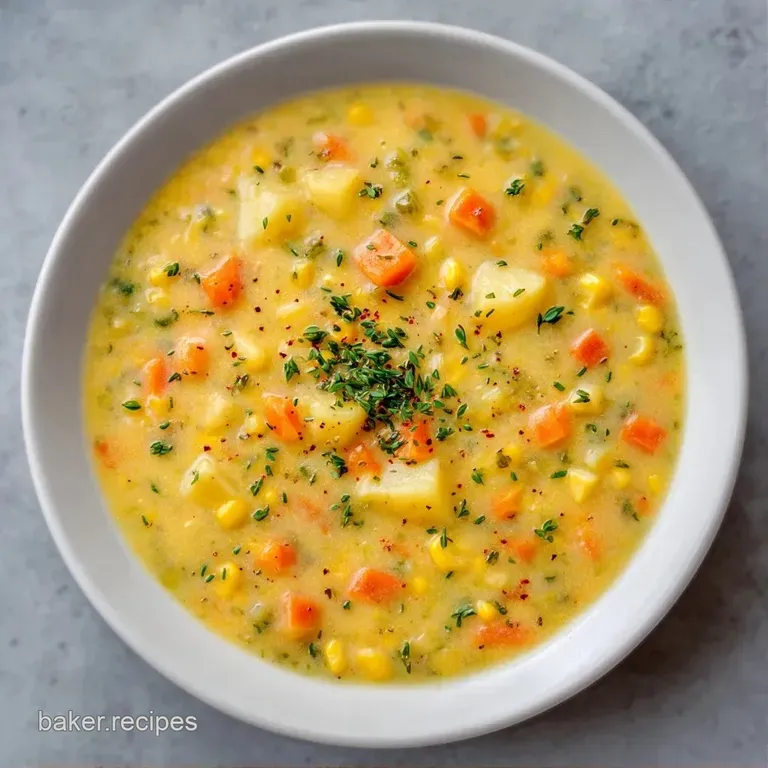
Right then, let's get into the actual flow. Follow these steps in order to ensure the flavors build correctly.
- Sauté the aromatics. Heat the olive oil over medium heat in your pot. Toss in the diced onion, carrots, and celery. Cook for 5–7 minutes, stirring occasionally, until the onions are translucent and the vegetables smell fragrant.
- Add the garlic. Stir in the minced garlic. Cook for only 60 seconds. Note: Garlic burns quickly and turns bitter, so don't let it brown too much.
- Layer the bulk. Stir in the cubed potatoes, red bell pepper, and corn. Sprinkle in the dried thyme, smoked paprika, salt, and pepper. Stir for a minute to coat everything in the oil and spices.
- Simmer the base. Pour in the vegetable broth. Bring the mixture to a boil, then immediately reduce the heat to low. Cover the pot and simmer for 15–20 minutes, until the potatoes are fork tender.
- Create the creaminess. Take your immersion blender and pulse the soup 3 5 times. Do not blend it into a smooth puree. The goal is to crush a few potatoes and corn kernels to release their starches, leaving plenty of whole chunks for texture.
- Integrate the milk. Stir in the coconut or cashew milk and the lemon juice. Simmer for another 2 minutes. Until the soup looks unified and velvety.
- The final touch. Remove the pot from the heat and stir in the fresh chopped parsley. This keeps the parsley bright green and tasting fresh.
Fixing Common Soup Issues
Even with a good plan, things happen. Maybe your corn was extra sweet, or your potatoes were a different variety than expected. Here is how to handle the common hiccups.
Why Your Soup is Thin
If you've finished the recipe and the Vegetable Corn Chowder still feels more like a broth than a chowder, you probably didn't blend enough of the potatoes. The starch is what provides the body.
Why Corn is Too Sweet
Depending on the brand of frozen corn, some batches are almost like candy. This can clash with the savory notes of the thyme and paprika. Adding an extra squeeze of lemon juice or a pinch more salt usually balances this out.
Preventing Potato Mush
If you overcook the potatoes before blending, they can turn into a grainy paste rather than a silky thickener. Keep an eye on them at the 15 minute mark.
| Problem | Root Cause | Solution |
|---|---|---|
| Too watery | Not enough potato blended | Pulse 2-3 more times with the immersion blender |
| Bland taste | Lack of salt or acid | Add 1/2 tsp salt or a dash of lemon juice |
| Grainy texture | Overcooked potatoes | Strain through a coarse sieve or blend more thoroughly |
Common Mistakes Checklist
- ✓ Don't skip the sauté step; boiling raw onions tastes "raw" and lacks depth.
- ✓ Don't over blend; you want a chunky soup, not a corn bisque.
- ✓ Don't add lemon juice at the start; it can mute some of the earthy flavors during the long simmer.
- ✓ Don't use high heat after adding the plant milk; it can separate or curdle.
- ✓ Don't forget to salt your vegetables during the initial sauté to draw out moisture.
Adjusting the Batch Size
Whether you're cooking for one or a crowd, you can't always just double everything and expect the same result. Liquids and spices behave differently as volume increases.
Scaling Down (½ Batch) If you're making a smaller portion, use a smaller pot to prevent the liquid from evaporating too quickly. Reduce the simmering time by about 20%, as smaller chunks of potato will cook faster. For the garlic, use 1 or 2 cloves instead of 1.5.
Scaling Up (2x - 4x Batch) When doubling or tripling the recipe, be careful with the salt and smoked paprika. Start with 1.5x the amount of spices, taste it, and then add more if needed.
Liquids generally reduce less in larger pots, so you might need to reduce the vegetable broth by about 10% to maintain the same thickness. If you're using a standard blender instead of an immersion blender, work in small batches to avoid overflows.
If you find you've made too much, you can always freeze the leftovers, or if you're looking for something different for the next meal, my hearty beef garden vegetable soup is another great way to use up those root vegetables.
Common Soup Misconceptions
There are a few things people always tell me about corn chowders that just aren't true. Let's clear those up.
The Flour Myth Many people think you need a flour roux to make a "real" chowder. In reality, the starch in Yukon Gold potatoes is more than enough to create a creamy texture. Skipping the flour actually makes the Vegetable Corn Chowder taste cleaner and less heavy.
The Heavy Cream Myth There's a belief that you need dairy for that velvety mouthfeel. Plant based fats, like those in coconut milk or cashew cream, provide the same viscosity and "coat the-tongue" feeling. Once you add the smoked paprika, you won't even notice the dairy is gone.
Storage and Waste Tips
Don't let your leftovers go to waste. This soup actually tastes better the next day because the flavors have more time to meld together.
Storage Guidelines Keep your Vegetable Corn Chowder in an airtight container in the fridge for up to 4 days. When reheating, do it slowly over medium low heat. If the soup has thickened too much in the fridge (which happens as the potatoes continue to absorb liquid), just stir in a splash of water or more vegetable broth to loosen it up.
Freezing Instructions This soup freezes surprisingly well for up to 3 months. However, if you used coconut milk, it might separate slightly when thawed. To fix this, just give it a vigorous stir or a quick pulse with the blender after reheating.
Zero Waste Ideas Don't throw away your vegetable scraps. Collect the onion peels, carrot ends, and celery leaves in a bag in your freezer. Once the bag is full, boil them in water for an hour to make your own homemade vegetable broth for the next time you make this recipe.
Also, if you have leftover corn cobs from fresh corn, simmer them in the broth for 10 minutes before adding the other veggies to extract every last bit of sweetness.
Serving and Pairing Ideas
A bowl of Vegetable Corn Chowder is great on its own, but the right pairings turn it into a full experience.
The Classic Pairing You can't beat a crusty piece of sourdough or a warm baguette. The acidity of the sourdough cuts through the creaminess of the soup. If you want something more indulgent, try a grilled cheese sandwich using a sharp vegan cheddar.
Fresh Contrasts Since the chowder is rich and savory, it pairs well with something bright and crisp. A side salad with a lemon vinaigrette or some roasted asparagus provides a great texture contrast. For a more filling meal, you could serve this alongside some Juicy Portabella Steaks for a complete plant based feast.
- Fresh Chives
- For a mild onion hit.
- Cracked Black Pepper
- For a bit of a bite.
- Avocado Cubes
- For extra creaminess and healthy fats.
- Crispy Chickpeas
- For a crunch that replaces the traditional bacon bits.
Right then, you've got everything you need. This Vegetable Corn Chowder is all about patience with the aromatics and a light touch with the blender. It's a dish that proves you don't need complicated techniques or expensive ingredients to make something that feels like a hug in a bowl. Enjoy!
Recipe FAQs
Is vegetable corn chowder healthy?
Yes, it is a nutrient dense choice. This soup is packed with fiber from the corn and potatoes and essential vitamins from the carrots and celery.
What vegetables should be included in corn chowder?
Use a mix of root vegetables and aromatics. Diced carrots, celery, Yukon Gold potatoes, and red bell pepper provide the necessary flavor base and chunky texture.
What is a substitute for cream in corn chowder?
Use unsweetened coconut milk or cashew milk. These plant based options provide the same richness as heavy cream. If you enjoy these corn based flavors, you might also like these crispy corn fritters as a side.
How to make vegan corn chowder?
Sauté onion, carrots, and celery in olive oil before adding garlic, potatoes, corn, and red bell pepper. Simmer with vegetable broth and finish with plant milk and lemon juice for a creamy, animal free meal.
How to thicken the soup without adding flour?
Pulse the soup 3-5 times with an immersion blender. This breaks down a portion of the potatoes and corn kernels, releasing natural starches that thicken the broth.
Is it true you must blend the soup completely for the correct texture?
No, this is a common misconception. Blending completely removes the chunky texture essential to a chowder; only pulse a few times to maintain the whole kernels.
How to store and reheat the leftovers?
Store in an airtight container in the fridge for up to 4 days. Reheat slowly over medium low heat and stir in a splash of vegetable broth if the potatoes have absorbed too much liquid.
Vegetable Corn Chowder