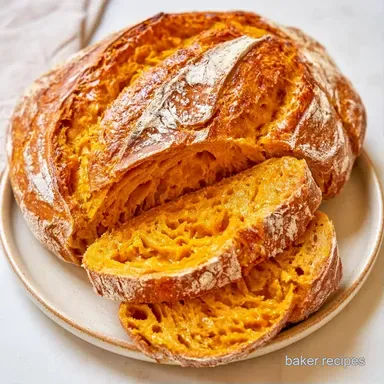
Golden Noknead Pumpkin Sourdough Bread

- Time: 15 min active + 24 hours total
- Flavor/Texture Hook: Tangy crumb with a shattering, golden crust
- Perfect for: Slow autumn weekends or beginner sourdough bakers
The smell of a fresh loaf hit me the second I opened the oven door - that deep, toasted pumpkin aroma mixed with the tang of a wild ferment. It's a scent that immediately makes a house feel like a home, especially when the weather turns cold.
Baking with pumpkin has deep roots in North American harvest traditions, where the goal was always to make the most of the seasonal crop. Traditionally, these were quick breads, but blending that earthy sweetness with a slow sourdough process transforms the loaf into something more substantial.
This NoKnead Pumpkin Sourdough Bread is for anyone who wants an artisan result without spending an hour punching dough on a counter. It's a low stress way to bring those harvest flavors into your kitchen.
Why This Bread Works
- Long Fermentation: Since we aren't kneading, the wild yeast and bacteria do the heavy lifting over 12 to 18 hours. This breaks down the gluten slowly, creating those irregular air pockets.
- Pumpkin Moisture: The puree acts as a natural tenderizer. It keeps the crumb moist and adds a deep orange hue without needing artificial colors.
- Dutch Oven Steam: Baking in a sealed pot traps the moisture escaping from the dough. This keeps the crust soft for longer, allowing the bread to expand fully before the crust hardens.
For a different approach to these seasonal flavors, you might like a pumpkin sourdough recipe that focuses on a more tender crumb.
| Method | Active Time | Texture | Best For |
|---|---|---|---|
| No Knead | 15 mins | Open, airy | Busy schedules |
| Classic | 3 hours | Tight, uniform | Traditionalists |
| Machine | 20 mins | Consistent | Predictability |
What Each Ingredient Does
| Component | Purpose | Substitute Notes |
|---|---|---|
| Bread Flour | High protein for structure | All purpose works but produces a flatter loaf |
| Pumpkin Puree | Color and moisture | Butternut squash puree: Very similar, slightly sweeter |
| Sourdough Starter | Natural leavening | Commercial yeast: Requires much less time and different ratios |
| Honey | Feeds yeast and adds brown | Maple syrup: Adds a distinct woody flavor |
Gathering Your Essentials
- 227g (1 cup) active sourdough starter Why this? Provides the lift and the signature tang.
- 180g (3/4 cup) unsweetened pumpkin puree Why this? Adds moisture and autumnal color.
- 180ml (3/4 cup) warm water Why this? Activates the starter and hydrates flour.
- 420g (3 1/2 cups) bread flour Why this? Stronger gluten for a better rise.
- 12g (2 tsp) sea salt Why this? Controls fermentation and adds flavor.
- 21g (1 tbsp) honey Why this? Helps the crust brown in the oven.
- 15g (2 tbsp) raw pumpkin seeds Why this? Adds a nutty crunch to the top.
- 8g (1 tbsp) flour for dusting Why this? Prevents the dough from sticking.
Tools You'll Need
There's no need for professional bakery equipment here. All you'll need to combine the dough is a large mixing bowl and a sturdy spatula. While I recommend a digital scale for measuring grams, standard measuring cups work just as well.
The most critical tool is a Dutch oven. A cast iron pot with a lid is ideal because of its superior heat retention. If you lack one, any heavy, oven safe pot with a lid is a great alternative.
Bringing It Together
Combining the ingredients for this NoKnead Pumpkin Sourdough Bread is the most straightforward part. Since no kneading is required, the main goal is simply to ensure everything is thoroughly mixed.
- In a bowl, whisk together 227g active sourdough starter, 180ml warm water, 180g pumpkin puree, and 21g honey until smooth.
- Use a spatula to stir in 420g bread flour and 12g sea salt. Note: Stop mixing once no dry flour remains; the dough should be sticky and shaggy.
- Cover the bowl with a damp cloth and let the mixture rest for 30 minutes.
- Seal the bowl tightly with a lid or plastic wrap. Let it ferment at room temperature (around 21°C) for 12 to 18 hours until it looks bubbly and has nearly doubled in size.
- Transfer the dough to a floured surface. Use a dough scraper to fold the edges toward the center to form a round ball.
- Flip the dough so the seam is on the bottom and shape it into a tight ball. Place it on parchment paper and let it rest for 30 minutes.
- Preheat your Dutch oven with the lid on at 230°C (450°F).
- Carefully place the dough into the hot pot. Top with 15g pumpkin seeds and score the surface with a sharp blade.
- Bake for 50 minutes until the crust is a deep mahogany color and the loaf sounds hollow when tapped.
Fixing Common Issues
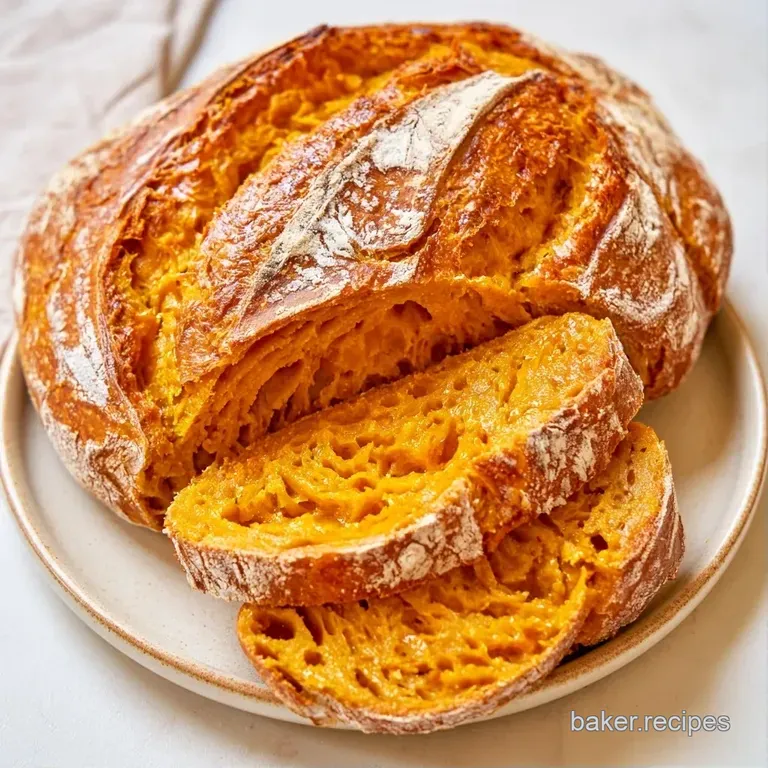
Sometimes a loaf doesn't behave, and that's okay. Most issues with NoKnead Pumpkin Sourdough Bread come down to the starter's strength or the oven's temperature.
Fixing a Flat Loaf
If your bread didn't rise much, your starter might have been too sleepy. Make sure your starter is peaking - bubbling and doubled - before you mix it in. If the room is too cold, the fermentation takes longer than 18 hours.
Preventing a Burnt Bottom
Pumpkin and honey can cause the bottom to brown too quickly. If the base is scorched, try placing a baking sheet on the rack below your Dutch oven to deflect some of the direct heat.
Handling a Gummy Crumb
This usually happens if you cut the bread while it's still hot. The steam is still setting the structure inside. Wait at least two hours before slicing.
| Problem | Fix |
|---|---|
| Flat loaf | Use a more active starter or extend ferment time |
| Burnt bottom | Add a baking sheet to the lower rack |
| Gummy center | Cool completely before slicing |
Adjusting the Batch Size
Adjusting the yield of this recipe is simple, though remember that sourdough timing doesn't always scale proportionally.
When making a half batch, use a roasting pan or a smaller pot. Shorten the baking time by roughly 20%, and always use the hollow sound tap test to confirm it's ready. If you decide to double the recipe, use 1.5x the salt and spices instead of doubling them to ensure the flavor stays balanced.
| Goal | What to change |
|---|---|
| More Nutty | Add 50g toasted walnuts to the dough |
| Sweeter | Increase honey to 30g |
| Heartier | Swap 100g bread flour for rye flour |
Common Bread Myths
Searing or "shocking" the dough doesn't actually create the holes. The open crumb comes from the hydration levels and the long, slow fermentation, not from how you handle the dough at the start.
Another common belief is that you must knead dough to develop gluten. While kneading is one way, "time" does the same work. The enzymes in the sourdough starter naturally organize the gluten proteins over several hours.
Keeping Bread Fresh
Let the loaf cool on a wire rack for a few hours first. Once cool, keep it in a paper or linen bag at room temperature for 3 days. Avoid plastic bags, as they can make the crust soft and chewy.
For long term storage, slice the bread and keep it in a freezer safe bag for 3 months. To refresh, simply toast a slice or heat the full loaf in a 180°C oven for 10 minutes.
As a zero waste tip, don't toss your sourdough discard. You can use it to make an Apple Pie with Discard recipe for a wonderful autumn dessert.
Serving Suggestions
This bread is quite rich, so it pairs well with salty or acidic sides. A sharp cheddar cheese or a salted cultured butter brings out the sweetness of the pumpkin.
It's also a great companion for a bowl of spicy chili or a creamy butternut squash soup. If you want a sweet breakfast, toast a slice and top it with ricotta and a drizzle of honey.
Recipe FAQs
Is it true that you must knead sourdough to get a good rise?
No, this is a common misconception. A long fermentation of 12 to 18 hours allows the wild yeast to build structure and create air pockets without any manual labor.
How do you prepare a sourdough starter for baking?
Feed your starter with flour and water until it is active and bubbly. It must be at its peak before you whisk it together with the warm water and pumpkin puree.
When should the pumpkin puree be added?
Mix it into the bowl during the first step along with the starter and honey. This ensures the moisture is evenly distributed before you stir in the bread flour.
What is the best vessel for baking this loaf?
Bake the dough in a preheated Dutch oven to trap steam and create a shattering crust. If you enjoyed working with high hydration dough here, see how we adapt it for sourdough stuffing.
Noknead Pumpkin Sourdough Bread