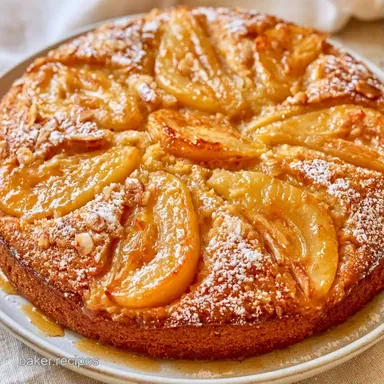
Caramelized Pear and Almond Cake
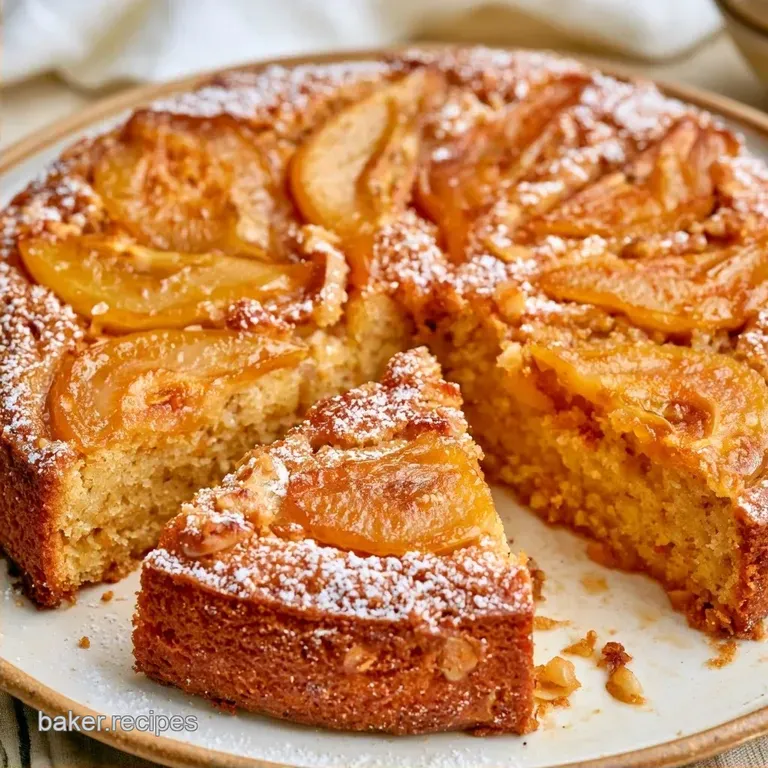
- Time: 25 min active + 45 min baking
- Flavor/Texture Hook: Nutty, buttery crumb with caramelized fruit
- Perfect for: Autumn tea time or a cozy weekend brunch
Baking a Moist Pear and Almond Cake
Why do some fruit cakes turn out soggy while others remain firm and tender? My first attempt at this recipe filled the kitchen with the scent of toasted nuts and cinnamon, though I was worried the pears would simply sink and leave a layer of mush at the bottom.
It’s a frequent concern with fruit heavy desserts. You want the bright, orchard fresh flavor without the cake collapsing into a pudding. This recipe strikes a perfect balance, reminiscent of a cozy village bakery that prioritizes farm fresh ingredients and a slow, careful process.
Expect a cake that is rich and moderately dense, rather than light like a chiffon. The almond flour provides a satisfying substance, while the pears offer bursts of sweetness. It is the sort of treat that becomes even more flavorful after resting for a while.
Why the Texture Actually Works
Almond Flour: This absorbs the moisture from the pears, which keeps the base from getting gummy. It also adds a rich, nutty fat that creates a tighter crumb than a Victoria Sponge recipe would.
Room Temperature Eggs: Beating eggs into melted butter creates a stable emulsion. This traps air and ensures the Pear and Almond Cake rises evenly without needing massive amounts of chemical leaveners.
The Best Ingredients for Flavor
The choice of pear makes a big difference here. I prefer Bosc or Anjou because they hold their shape under heat. If you use a pear that's too soft, it'll dissolve into the batter. The almond extract is the heavy lifter for the aroma, pushing that nutty profile forward so the fruit doesn't overshadow everything.
For the flour, I use a mix of all purpose and almond. The wheat flour provides the structure needed to hold the slices of fruit, while the almond flour adds that signature moistness. If you're looking for a similar vibe with different fruit, my Berry UpsideDown Cake uses a similar logic of balancing fruit moisture with a sturdy base.
| Original Ingredient | Substitute | Why It Works |
|---|---|---|
| Almond Flour (96g) | Finely ground hazelnuts | Similar fat content. Note: Changes the flavor profile to a deeper, toastier nut taste |
| All Purpose Flour (125g) | 1:1 gluten-free Blend | Works for structure. Note: May result in a slightly more fragile crumb |
| Granulated Sugar (150g) | Coconut Sugar | Similar sweetness. Note: Will make the Pear and Almond Cake a darker brown color |
| Pears (3 medium) | Firm Apples | Similar texture. Note: More tart; may need a pinch more cinnamon |
Essential Tools for This Bake
While you don't need a gourmet setup, a 9 inch springform pan is essential. Using a standard cake pan makes it far too difficult to remove a fruit topped dessert without damaging the edges. The removable sides of a springform pan ensure your Pear and Almond Cake stays perfectly intact.
A fine mesh sieve is also required. Almond flour tends to clump, and avoiding those dense pockets of flour is key to a smooth texture. For the final steps, have a sturdy whisk and a rubber spatula ready for folding.
Step by step Baking Guide
Phase 1: Initial Preparation
- Set your oven to 350°F (180°C).
- Butter a 9 inch springform pan and place a parchment paper circle at the base. Note: This ensures the cake releases easily from the pan.
- After peeling and coring, cut the pears into 3mm-thick wedges. Gently combine them with 30ml melted butter and 1.25g ground cinnamon. Note: Using butter encourages caramelization and prevents the fruit from drying.
Phase 2: Mixing the Batter
- In a large bowl, whisk 115g melted, cooled butter and 150g granulated sugar.
- Incorporate 2 large eggs individually, whisking well until the mixture becomes pale and slightly thickened.
- Stir in 5ml vanilla extract and 2.5ml almond extract.
- Sift 96g almond flour, 125g all purpose flour, 7g baking powder, and 1.5g salt directly into the mixture.
- Using a spatula, fold the ingredients together just until the flour streaks disappear. Note: Avoid overmixing to maintain a light texture.
Phase 3: Baking and Finishing
- Transfer the batter to the prepared pan and smooth the surface.
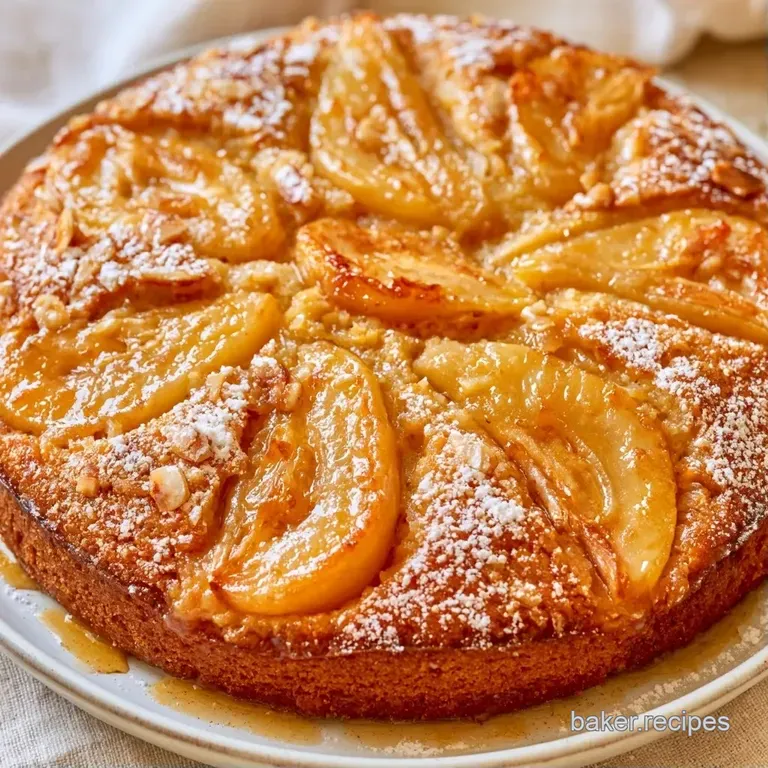
- Arrange the pear slices in concentric circles on top, pressing them in very lightly.
- Bake for 45 minutes until the exterior reaches a mahogany hue and a tester comes out clean.
- Allow the cake to cool slightly before dusting with 25g icing sugar.
Fixing Common Baking Issues
Pears Sinking to Bottom
This typically occurs when the batter is too thin or the fruit is too heavy. Allow your melted butter to cool before whisking in the eggs to maintain a stable emulsion. Opting for firm, ripe pears rather than overripe ones also prevents them from releasing excess moisture and sliding downward.
Cake Center Staying Gummy
A sticky center is often caused by insufficient oven heat or an overcrowded pan. Confirm your oven is fully preheated to 350°F. If using larger pears, cut them into thinner slices (exactly 3mm) so they don't create a moisture barrier that prevents the middle from baking through.
Rubbery Crumb Texture
This is the result of over mixing the batter once the flour is added. Excessive whisking develops too much gluten in the all purpose flour. Instead, use a spatula to fold in the dry ingredients gently. Aim to simply remove the flour streaks rather than creating a perfectly smooth paste.
Uneven Golden Crust
If one side is dark while the other remains pale, your oven may have a hot spot. Rotate the Pear and Almond Cake halfway through the 45 minute bake. Additionally, ensure the pan does not touch the oven walls, which allows hot air to circulate freely around the base.
Switching Up the Flavors
To create a cozy winter vibe, stir in a pinch of ground ginger or cloves when tossing the pears. This intensifies the aroma and turns the Pear and Almond Cake into a festive holiday treat. You can also substitute the vanilla extract with a dash of amaretto or brandy for a more sophisticated flavor.
For a citrusy kick, fold some orange or lemon zest into the batter. This brightens the pears and provides a fresh contrast to the almond flour. If you prefer a flourless version, swap the all-purpose flour for extra almond flour, though you'll need one additional egg to help the cake hold its shape.
For a vegan alternative, use refined coconut oil instead of melted butter and replace the egg with a blend of 1 tbsp ground flax and 3 tbsp water. The texture is slightly heavier, but it still captures that delightful orchard scent.
Keeping the Cake Fresh
Keep the Pear and Almond Cake at room temperature for 2 days, either under a cake dome or loosely covered with foil. Avoid wrapping it too tightly in plastic, as the moisture from the pears can make the texture sticky.
For a longer shelf life, store it in the refrigerator for 5 days. I personally find that a chilled slice is quite refreshing. To warm it up, microwave a piece for 15 seconds or put it in a 300°F oven for 5 minutes.
For freezer storage, wrap individual slices in parchment paper and then foil. They will stay fresh for 3 months. Thaw a slice in the fridge overnight before reheating.
To reduce waste, save your pear cores. Collect them in a freezer bag along with other fruit scraps; after the bag has filled up, simmer the pieces with water and a cinnamon stick to create a simple, fragrant syrup for pancakes.
Serving the Final Slices
This cake is wonderful on its own, but a bit of plain cream or a helping of vanilla bean ice cream helps balance the sweetness. Pairing a warm Pear and Almond Cake with a cold accompaniment is always a win.
To give it a more refined touch, serve it with a drizzle of honey or a small slice of brie. The saltiness from the cheese complements the pear and almond flavors beautifully.
Chef's Note: For a glossy finish, brush the pears with a small amount of warmed apricot jam immediately after removing the cake from the oven. This provides a professional, polished look without altering the flavor too much.
Final Decision Shortcuts
- For a firmer texture: use pears that are 2 days old and slightly under ripe.
- For a deeper nut flavor: toast the almond flour in a dry skillet for 3 minutes before mixing it into the batter.
- For a more moist crumb: swap 20g of sugar for 20g of honey.
And that's it! This Pear and Almond Cake is a reliable, heartwarming dessert that brings a taste of the orchard to your home. Just remember to fold the batter gently and be patient while it cools. Trust me, it's worth the wait to see that rich mahogany crust and smell the toasted almonds. Let's get baking!
Recipe FAQs
Does it matter how I mix the flour?
Use a spatula to fold the ingredients together just until no streaks of flour remain. If you enjoyed mastering the gentle fold here, the same principle works in our vanilla cake for a lighter crumb.
How to prevent pear slices from sinking?
Press the slices very lightly into the batter. Applying too much pressure pushes them to the bottom, while a gentle touch keeps them on the surface.
Is it true that almond flour makes the cake too dense?
That's a myth. Combining almond flour with baking powder creates a tender, moist texture that contrasts perfectly with the sliced pears.
Why did the center stay soggy?
Using oversized pears can add too much moisture to the batter. Stick to three medium pears and bake for the full 45 minutes at 350°F.
Which pan is best for this cake?
A 9 inch springform pan is ideal for this recipe. It allows you to remove the sides easily without damaging the concentric pear arrangement.
What happens if I skip the parchment paper?
The cake may stick to the bottom of the pan during removal. Using a parchment circle ensures the base releases cleanly every time.
Pear And Almond Cake